How Long Should You Do Vibration Plate Daily?
You should start with about 5 to 10 minutes on the vibration plate, two to three times a week. This helps your body get used to the new workout without overdoing it.
Then, gradually increase your sessions by a minute or two each week.
Aim to reach 15 to 20 minutes daily as your body adapts. But remember, never exceed 20 minutes to avoid fatigue or soreness.
It’s important to listen to your body and adjust the intensity accordingly.
If you want to optimize your routine and avoid overuse, exploring more detailed guidance can be really helpful.
Taking it slow and steady ensures you get the most benefit without risking injury.
Key Takeaways
- Beginners should start with 5-10 minute sessions, 2-3 times weekly. Gradually increase the duration and frequency as you get comfortable.
- Aim for 10-20 minutes daily as a general guideline. Just be sure not to go longer than 20 minutes to avoid feeling fatigued.
- If you’re using higher vibration intensity, keep your sessions shorter. This helps reduce the risk of overtraining or discomfort.
- Advanced users can extend their sessions to 20-30 minutes. Some even split this time into multiple intervals throughout the day.
- Always listen to your body. If you notice soreness, dizziness, or joint pain, it’s a good idea to adjust your session length or intensity.
Understanding Vibration Plate Workouts

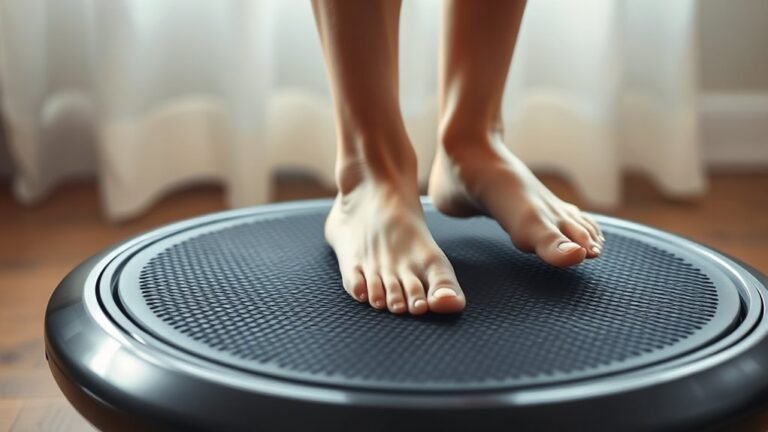
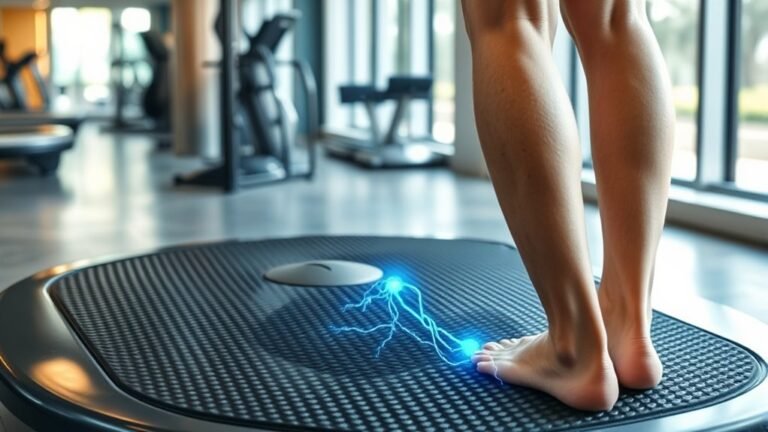
How exactly do vibration plate workouts work? When you stand, sit, or perform exercises on the vibrating platform, it sends rapid vibrations through your muscles. These vibrations force your muscles to contract and relax multiple times per second, activating more muscle fibers than traditional workouts.
Vibration plates send rapid vibrations that make your muscles contract and relax repeatedly, activating more fibers efficiently.
You’ll engage your core, improve circulation, and boost muscle strength without intense movement. The plate’s vibrations also stimulate your nervous system, enhancing balance and coordination.
As you use it consistently, your muscles adapt, and you might notice improved tone and endurance. It’s an efficient way to activate muscles, especially when combined with exercises like squats or planks.
Understanding this process helps you appreciate how vibration plates can complement your fitness routine effectively. It’s a helpful tool to add variety and efficiency to your workouts!
Recommended Daily Usage Time
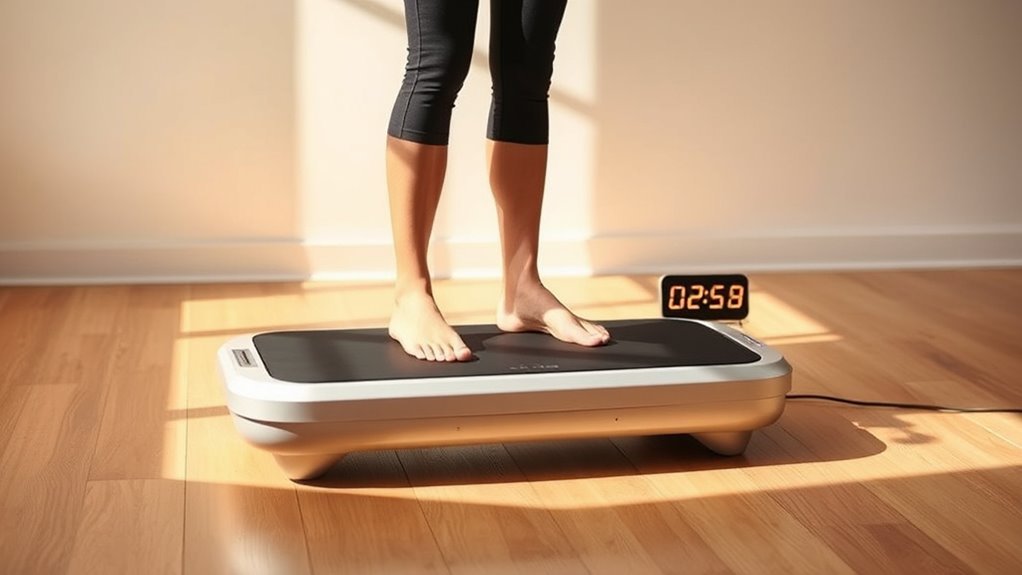
Knowing how vibration plates engage your muscles sets the stage for figuring out the best daily usage time. Typically, you should aim for sessions lasting between 10 to 20 minutes per day.
This duration allows enough time to activate muscles effectively without overworking them. If you’re a beginner, start with shorter sessions around 10 minutes to let your body adapt.
As you get comfortable, gradually increase to 15 or 20 minutes. Remember, consistency matters more than marathon sessions.
Daily use within this time range can enhance circulation, muscle strength, and flexibility. Avoid exceeding 20 minutes daily to prevent fatigue or strain.
Factors Affecting Duration on Vibration Plates

Since everyone’s fitness level and goals differ, the ideal duration on a vibration plate can vary considerably. You’ll want to take into account your current health, experience with vibration training, and specific objectives.
If you’re new, shorter sessions of 5 to 10 minutes may be best to prevent overexertion. More advanced users aiming for muscle toning or endurance might extend sessions up to 20 minutes.
Also, pay attention to your body’s response; discomfort or excessive fatigue signals you should cut back. The vibration intensity and frequency settings also influence how long you should stay on the plate—higher intensities often require shorter durations.
Finally, think about any medical conditions or advice from health professionals to ensure safety and effectiveness during your workouts.
Benefits of Short vs. Long Sessions
Although both short and long vibration plate sessions offer unique advantages, choosing the right duration depends on your fitness goals and schedule. Short sessions, typically under 10 minutes, are great for quick muscle activation and improving circulation without fatigue.
Choosing vibration plate session length depends on your goals—short for quick activation, long for deeper strengthening.
Longer sessions, around 20-30 minutes, can enhance endurance and support deeper muscle strengthening. It really comes down to what you want to achieve and how much time you have.
Here’s what you can expect:
- Short sessions boost energy and focus quickly. They’re perfect if you need a quick pick-me-up.
- Long sessions promote sustained muscle tone and flexibility. They help you build lasting strength over time.
- Short bursts fit easily into a busy day, making consistency easier. It’s all about fitting fitness into your lifestyle.
- Longer use may improve bone density and aid in weight management. So, if you have the time, longer sessions bring extra benefits.
Signs You’re Overdoing It
If you start feeling persistent muscle soreness, dizziness, or excessive fatigue after using the vibration plate, you might be overdoing it. These signs indicate your body isn’t recovering properly.
Also, pay attention to headaches, nausea, or joint pain as well. Ignoring these symptoms can lead to injury or burnout.
| Symptom | What It Means |
|---|---|
| Persistent soreness | Muscles need more rest |
| Dizziness | Overstimulation of the nervous system |
| Excessive fatigue | Insufficient recovery time |
| Joint pain | Possible strain or improper form |
If you notice any of these, reduce your session length or intensity. Listening to your body helps you avoid setbacks and enjoy the benefits safely.
How to Incorporate Vibration Plates Into Your Routine
When you incorporate vibration plates into your routine, start by setting clear goals and choosing exercises that complement your fitness level. Begin with short sessions to see how your body responds.
Here’s a simple way to get started:
- Warm up with light stretching or walking for 5 minutes.
- Use the vibration plate for 5-10 minutes, focusing on basic poses like squats or planks.
- Gradually increase the time and intensity as you get comfortable, aiming for up to 15 minutes daily.
- Cool down with gentle stretches to relax your muscles.
Try to fit these sessions in 3-5 times a week, but don’t forget to give yourself recovery days in between. This way, you build strength safely without risking overuse or injury.
Tips for Maximizing Your Vibration Plate Sessions
To get the most out of your vibration plate sessions, you’ll want to follow ideal duration guidelines tailored to your goals.
Keeping sessions effective means balancing time and intensity without overdoing it. Let’s explore how to enhance your workouts for better results.
Optimal Duration Guidelines
Although vibration plates offer a convenient way to boost fitness, knowing how long to use them each day is key to getting the best results without overdoing it. To optimize your sessions, follow these duration guidelines:
Start with 5 minutes per session to let your body adjust. Then, gradually increase to 15 minutes as you build endurance.
Limit sessions to 20 minutes to avoid muscle fatigue. Using the vibration plate 3-4 times per week helps ensure consistent progress.
Sticking to these limits helps prevent overuse injuries and maximizes benefits like improved circulation and muscle tone. Remember, quality beats quantity—shorter, focused sessions will yield better results than long, exhausting ones.
Pay attention to how your body feels and adjust accordingly to stay safe and effective. It’s all about finding the right balance for you!
Enhancing Session Effectiveness
Since maximizing your vibration plate sessions can considerably boost your results, you should focus on proper posture, varying exercises, and controlled movements. Stand with your knees slightly bent to reduce joint strain and engage your core for better stability.
Don’t stick to just one position—switch between squats, lunges, and planks to target different muscle groups. Move deliberately; avoid letting the machine do all the work.
Controlled movements enhance muscle activation and prevent injury. Also, incorporate short breaks to maintain intensity without overfatiguing.
To track progress, gradually increase session time or vibration intensity as you get stronger. Staying consistent and attentive to form during each session will help you get the most out of your vibration plate workouts and reach your fitness goals faster.
Adjusting Usage Based on Fitness Level
If you’re just starting out, keep your sessions short to let your body adapt.
As you get more experienced, you can increase the time to challenge yourself.
Adjusting your usage based on your fitness level helps you get the most benefit without overdoing it.
Beginners’ Recommended Duration
When you’re just starting out with a vibration plate, it’s best to begin with short sessions to let your body adjust. Overdoing it might cause soreness or dizziness, so ease into it gradually.
Here’s a simple guide to kick off your routine:
- Start with 5 minutes per session to gauge your comfort.
- Perform 2 to 3 sessions per week to allow recovery.
- Maintain a moderate intensity to avoid overwhelming your muscles.
- Increase session length by 1-2 minutes weekly as you feel stronger.
Advanced Users’ Time Adjustment
Although you’ve built a solid foundation with your vibration plate workouts, adjusting your session duration and intensity based on your fitness level will help you maximize results without risking overtraining.
As an advanced user, you can increase your daily time to 20-30 minutes, split into multiple intervals if needed. Focus on varying the intensity, incorporating different exercises, and using higher frequency settings to challenge your muscles effectively.
Pay close attention to your body’s signals—if you feel excessive fatigue or discomfort, reduce the duration or intensity. Remember, quality beats quantity; maintaining proper form and controlled movements is essential.
Frequently Asked Questions
Can Vibration Plates Help With Weight Loss?
Yes, vibration plates can help with weight loss by boosting your metabolism and increasing muscle activity.
But don’t rely on them alone. Combine their use with a proper diet and regular exercise for the best results.
Are Vibration Plates Safe During Pregnancy?
You shouldn’t use vibration plates during pregnancy, as the intense vibrations might pose risks to you and your baby.
Always check with your healthcare provider before starting any new exercise while pregnant for your safety.
It’s better to be safe and choose exercises that are proven to be gentle and beneficial during pregnancy. Your doctor can help guide you on what’s best.
Do Vibration Plates Improve Bone Density?
You can boost bone density by up to 2% with regular vibration plate use!
When you consistently engage, these plates stimulate bone growth, helping you strengthen your skeletal system and reduce osteoporosis risk effectively.
It’s a simple way to support your bones without intense workouts. Just a few minutes regularly can make a difference!
Can Vibration Plates Replace Cardio Workouts?
No, vibration plates can’t replace cardio workouts. They complement your routine by improving muscle strength and circulation.
But you still need traditional cardio to boost heart health, endurance, and burn calories effectively. So, think of vibration plates as a helpful addition, not a substitute.
What Clothing Is Best for Vibration Plate Exercises?
Did you know 80% of users prefer moisture-wicking clothes? You should wear breathable, tight-fitting workout gear for vibration plate exercises.
It keeps you comfortable, prevents slipping, and lets you move freely during your session. Trust me, it makes a big difference!
Conclusion
When using a vibration plate, think of it like tending a delicate garden—you want just enough time to let your muscles bloom without overwhelming them. Short, consistent sessions often nurture steady growth, while longer ones might feel like a sudden storm.
Listen to your body’s gentle whispers and adjust accordingly. By weaving vibration plate workouts thoughtfully into your routine, you’ll harvest lasting strength and balance.
Making every minute on the plate count is key to your wellness journey. Ideally, daily sessions of about 10 to 15 minutes are effective for most people. This duration helps you gain benefits such as improved muscle tone and circulation without overexertion.
Remember, consistency matters more than duration. Keep your vibration plate workouts regular, and you’ll see steady progress toward greater strength and balance over time.