How Much Does Your Bench Press Bar Weight
Your bench press bar usually weighs 45 pounds (20 kg), which is standard for Olympic bars found in most gyms. This is important to know because the bar’s weight adds to the total load you’re lifting.
Some bars, like women’s or specialty bars, weigh less or more. So, it’s a good idea to double-check your bar’s weight to track your lifts accurately.
Ignoring the bar’s weight can mask your true progress and affect your training safely. If you want to get the most from your workouts, it helps to understand how bar weight influences your overall lift.
That way, you can set more realistic goals and see real improvements.
Key Takeaways
- Standard Olympic bench press bars typically weigh 20 kg (44 lbs) without plates attached.
- Women’s bench press bars usually weigh 15 kg (33 lbs), being lighter and shorter than men’s bars.
- Specialty bars like Swiss, cambered, and safety squat bars range from about 25 to 45 lbs depending on design.
- Always verify the exact bar weight at your gym to ensure accurate total load calculation and progress tracking.
- Ignoring bar weight leads to misjudged lifting capacity, inaccurate training data, and potentially unsafe workout adjustments.
Standard Barbell Weights for Bench Press
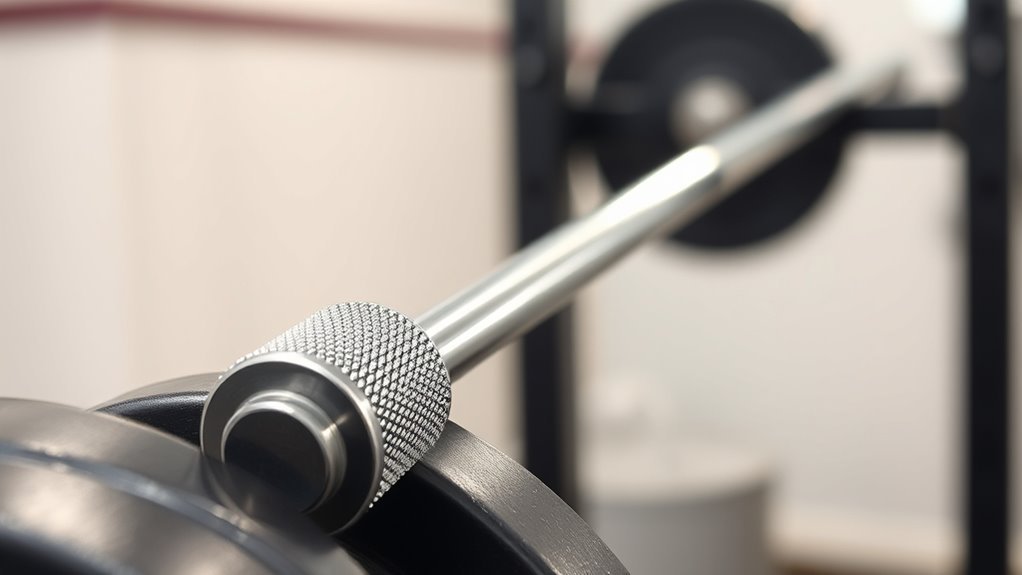
Although it might seem straightforward, knowing the standard barbell weights for bench press is essential for tracking your progress accurately. Most gym barbells used for bench pressing weigh around 20 kilograms (44 pounds).
This weight includes the bar alone, without any plates attached. When you load plates onto the bar, you add to this base weight, so always account for the bar itself to avoid overestimating your lift.
Some gyms might have different bars, like women’s bars or specialty bars, which often weigh less—typically around 15 kilograms (33 pounds). Before you start your session, check your gym’s equipment to confirm the bar’s weight.
This guarantees you log your lifts correctly and track strength gains without confusion or error. Easy, right? Just a quick check before you start can save you a lot of guesswork later on.
Olympic Barbell Weight Specifications
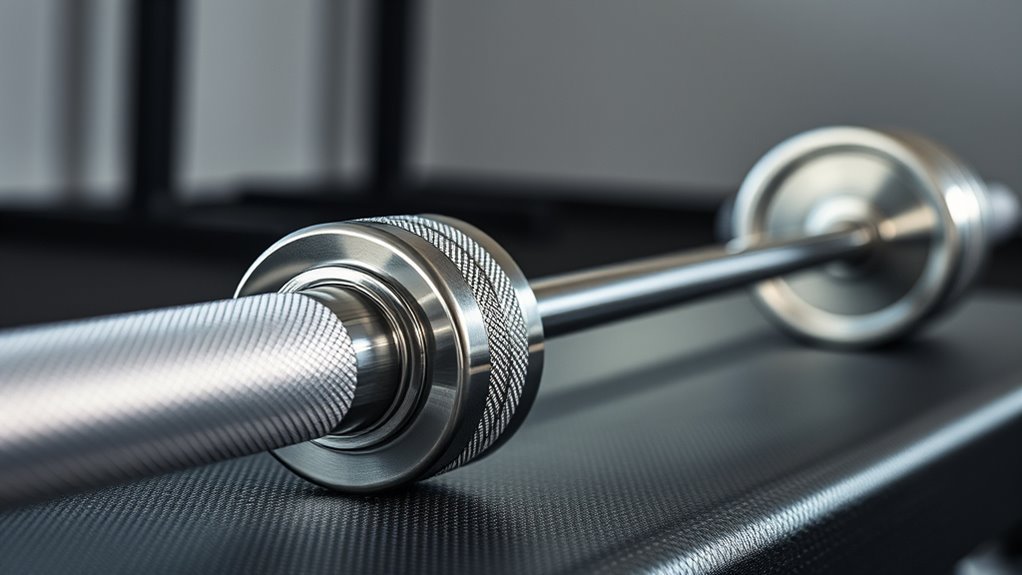
When you pick up an Olympic barbell, you’re handling a standard weight that typically sits at 20 kilograms (about 44 pounds). These bars have specific dimensions and are made from high-quality materials to guarantee durability and performance.
Depending on the type, you’ll also find slight weight variations designed for different lifting needs. So, it’s pretty cool how these barbells are tailored to fit what you’re aiming to lift!
Standard Olympic Bar Weight
Since you’re focusing on bench pressing with an Olympic bar, it’s important to know that the standard Olympic barbell weighs 20 kilograms (44 pounds). This weight is consistent across most gyms, ensuring you have a reliable baseline for your lifts.
When you pick up the bar, keep these key points in mind:
- The 20 kg bar includes the entire metal bar, excluding added plates.
- It feels balanced and sturdy, designed to support heavy weights.
- The standard weight allows you to accurately track progress.
- Knowing this weight helps you calculate your total lift more precisely.
Understanding the standard Olympic bar weight prevents miscalculations and builds your confidence during workouts. So, next time you hit the bench, you’ll know exactly what you’re working with!
Bar Dimensions and Materials
If you want to choose the right Olympic barbell for your bench press, understanding its dimensions and materials is essential.
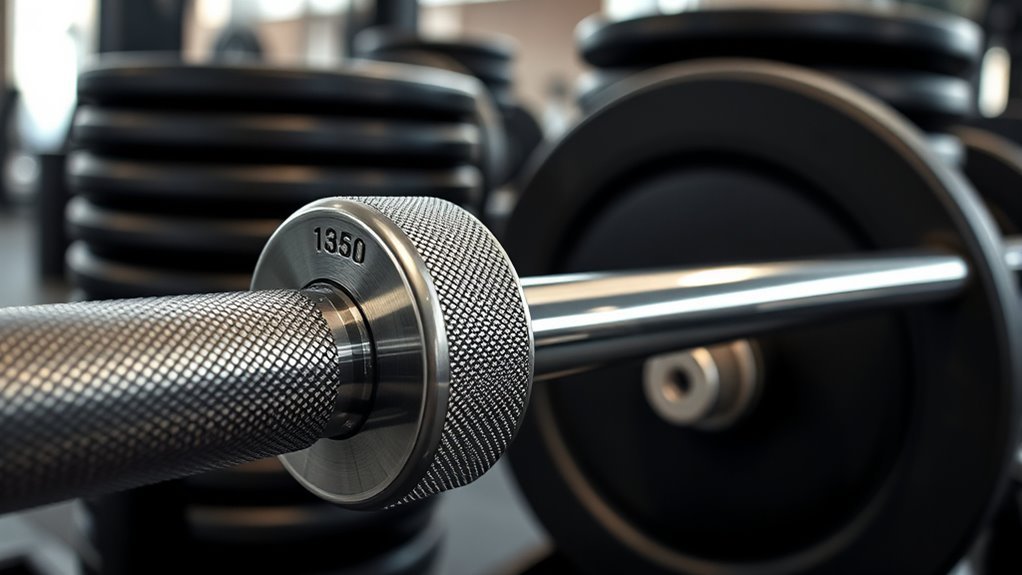
Olympic barbells typically measure 7 feet (2.2 meters) in length and have a diameter of 28mm to 29mm for men’s bars. They’re crafted from high-tensile steel, giving you durability and minimal bending during heavy lifts.
The knurling pattern enhances grip, while the sleeves rotate smoothly thanks to bearings or bushings, reducing stress on your wrists.
| Dimension | Specification |
|---|---|
| Length | 7 feet (2.2 meters) |
| Diameter | 28-29 mm |
| Material | High-tensile steel |
| Sleeve Rotation | Bearings or bushings |
Knowing this helps you pick a bar that feels solid and reliable in your hands.
Weight Variations by Type
Understanding the dimensions and materials of your barbell sets a solid foundation for recognizing how its weight varies by type. Olympic barbells, the most common for bench pressing, come in several variations that affect their weight.
Here’s a quick breakdown:
- Men’s Olympic Barbell: Typically 20 kg (44 lbs), 7 feet long, made of steel with a 28mm diameter.
- Women’s Olympic Barbell: Usually 15 kg (33 lbs), 6.5 feet long, with a slightly thinner 25mm diameter.
- Training Barbell: Lighter bars around 10-15 kg (22-33 lbs), designed for beginners or rehab.
- Specialty Bars: Can vary widely in weight and length, including safety squat or deadlift bars.
Knowing these differences helps you choose the right bar for your strength and technique goals. It’s all about matching the bar to what you want to achieve.
Differences Between Men’s and Women’s Bars
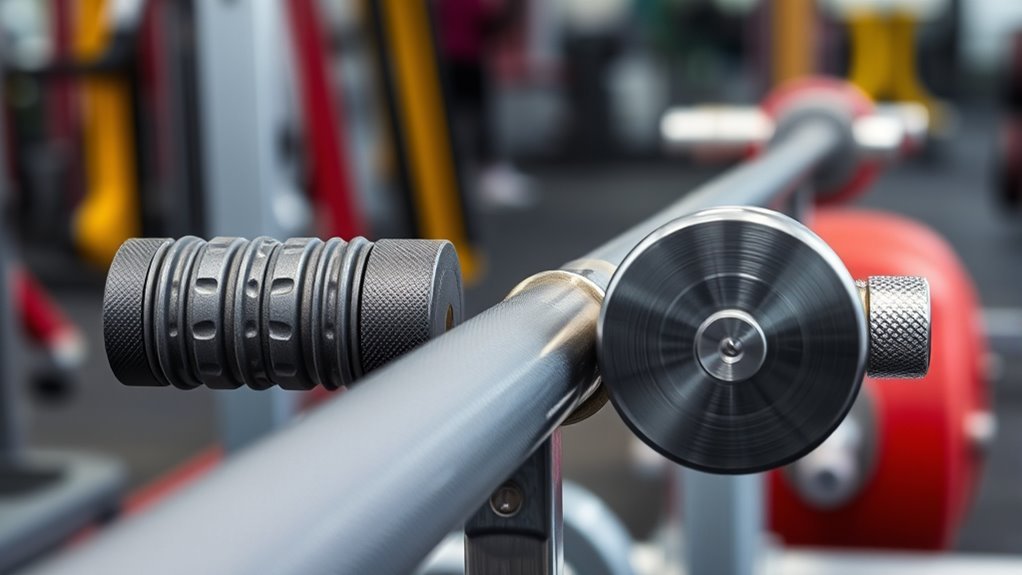
Although both men’s and women’s bench press bars serve the same basic purpose, they differ in weight, length, and diameter to accommodate varying strength levels and grip sizes.
When you choose a bar, you’ll notice men’s bars are heavier and thicker, designed for greater load capacity.
Women’s bars are lighter and slightly shorter, making them easier to handle without compromising performance.
| Feature | Men’s Bar |
|---|---|
| Weight | 20 kg (44 lbs) |
| Length | 7.2 feet |
| Diameter | 28 mm |
| Grip Size | Larger |
| Feature | Women’s Bar |
| Weight | 15 kg (33 lbs) |
| Length | 6.6 feet |
| Diameter | 25 mm |
| Grip Size | Smaller |
Choose the bar that fits your strength and comfort level.
It really depends on what feels best for you!
Specialty Bench Press Bars and Their Weights
When you want to target specific muscle groups or improve your lifting technique, specialty bench press bars can be a great addition to your routine.
These bars vary in design and weight, each serving a unique purpose. Here are four common types you might encounter:
- Swiss Bar – Weighs around 25-30 pounds, featuring multiple grip positions to reduce shoulder strain.
- Cambered Bar – Typically 35 pounds, has a curved shape to increase range of motion.
- Safety Squat Bar – About 45 pounds, designed with padding and handles for comfort and control.
- Fat Bar – Usually 35-45 pounds, thicker diameter to increase grip challenge.
Choosing the right bar helps you focus on specific muscles and enhances your overall bench press performance.
It’s all about finding what works best for you and mixing things up a bit!
How to Measure Your Bench Press Bar Weight Accurately
To measure your bench press bar weight accurately, start by knowing the standard bar weight, which is typically 45 pounds.
If you’re unsure about your specific bar, use a scale to get an exact measurement. This way, you’ll know precisely how much weight you’re lifting every time.
Standard Bar Weight
Since the weight of your bench press bar directly affects your total lift, you need to measure it accurately. Most standard bars weigh around 45 pounds (20.4 kg), but variations exist.
To understand what you’re lifting, consider these common bar weights:
- Standard Olympic Bar: Usually 45 pounds, 7 feet long.
- Women’s Olympic Bar: Typically 33 pounds, 6.5 feet long.
- Training Bars: Lighter bars around 15-35 pounds for beginners.
- Specialty Bars: Can weigh more or less, like safety squat bars or trap bars.
Knowing your bar’s exact weight lets you calculate total load precisely, ensuring you track progress correctly and avoid surprises during lifts. Always check your specific bar’s weight instead of assuming it’s standard.
Using a Scale
Although many lifters assume their bench press bar weighs the standard 45 pounds, you’ll want to use a scale to measure it yourself for accuracy. Start by removing any collars or weights from the bar.
Place the bar carefully on the scale, ensuring it’s balanced and centered. If the scale can’t accommodate the entire bar at once, try measuring each half separately and then add the two measurements together.
Digital bathroom scales work well for this task, but a more precise kitchen or postal scale can give finer readings if the bar is smaller or lighter. Recording the exact weight helps you track your progress accurately and guarantees you load the correct amount during workouts.
This prevents any miscalculations that could affect your training or safety. So, taking the time to measure is definitely worth it!
Impact of Bar Weight on Workout Progress
When you understand how the weight of the bench press bar affects your lifts, you can better track your progress and avoid plateaus. The bar’s weight isn’t just an extra number; it shapes how you measure improvement and adjust your training.
Here’s how it impacts your workout progress:
- Accurate Tracking: Knowing the bar weight ensures your total load reflects true effort.
- Progressive Overload: Properly accounting for the bar helps you increase weights strategically.
- Avoiding Miscalculations: Ignoring bar weight can mask true strength gains or losses.
- Balanced Workouts: Factoring in bar weight prevents under- or overestimating your capacity, keeping your training effective.
Common Misconceptions About Bench Press Bar Weight
You might assume all bench press bars weigh the same or that the bar’s weight is negligible, but these misconceptions can skew your training results. Not all bars are created equal—standard Olympic bars typically weigh 45 pounds, but some specialty bars might be lighter or heavier.
Overlooking the bar’s weight means you could be miscalculating your total lift, leading to inaccurate progress tracking. Another common mistake is thinking the bar’s weight doesn’t affect your performance, but it actually influences your muscle engagement and fatigue.
Finally, you might underestimate the importance of knowing your bar’s exact weight when comparing lifts or setting personal records. Being aware of these facts helps you lift smarter and measure progress more accurately.
Tips for Adjusting Your Lift Based on Bar Weight
Understanding the exact weight of your bench press bar helps you make smarter adjustments to your lifts. When you know the bar’s weight, you can accurately calculate the total load and tailor your training accordingly.
Here’s how to adjust:
- Account for Bar Weight: Always add the bar’s weight to your plate total to track progress accurately.
- Adjust Plate Selection: If you switch bars, recalculate your total weight before lifting.
- Modify Training Intensity: Use the correct total weight to determine your working sets and reps.
- Prevent Overtraining: Avoid assuming plate weight alone equals total load; this helps prevent injury.
It’s simple but makes a big difference in your training results!
Frequently Asked Questions
What Is the Best Grip Width for Bench Pressing?
The best grip width for bench pressing is usually shoulder-width apart. This lets you maximize power while reducing stress on your shoulders.
If you feel discomfort or want to target different muscles more effectively, adjust your grip slightly. It’s all about finding what works best for you.
How Often Should I Replace My Bench Press Bar?
Think of your bench press bar as a trusted sword—replace it when it shows signs of rust, bending, or worn knurling.
Usually, that’s every 1-2 years to keep your workouts safe and sharp. Don’t wait too long!
Can Barbell Knurling Affect My Bench Press Performance?
Yes, barbell knurling can definitely affect your bench press performance by improving your grip and preventing the bar from slipping.
But if the knurling is too rough, it might hurt your hands or make the lift uncomfortable.
On the other hand, if it’s too smooth, you might struggle to maintain control, which can impact how efficiently you lift.
Should I Warm up Before Bench Pressing?
You should definitely warm up before bench pressing. Studies show warming up can boost strength by 20%.
It preps your muscles, reduces injury risk, and helps you lift more effectively. Don’t skip it!
How Does Barbell Flexibility Influence Lifting?
Barbell flexibility affects how the bar bends under load, influencing your lift’s stability and timing. You’ll feel a whip effect that can help or hinder your control.
Conclusion
Now that you know the different bench press bar weights, you’re better equipped to tailor your workouts effectively. Don’t let the bar’s weight sneak up on you—it’s not just the plates that count.
Remember, every little bit adds up when you’re pushing toward your goals. Keep your eyes on the prize, and adjust your lifts accordingly to make steady progress.
After all, slow and steady wins the race in strength training! Knowing exactly how much your bench press bar weighs helps you track your progress more accurately and avoid surprises during your lifts. So next time you hit the gym, factor in the bar weight and plan your sets with confidence. This simple awareness can make a big difference in your strength gains and overall workout success. Keep lifting smart!