How Much Does a Dumbbell Bar Weigh Quickly
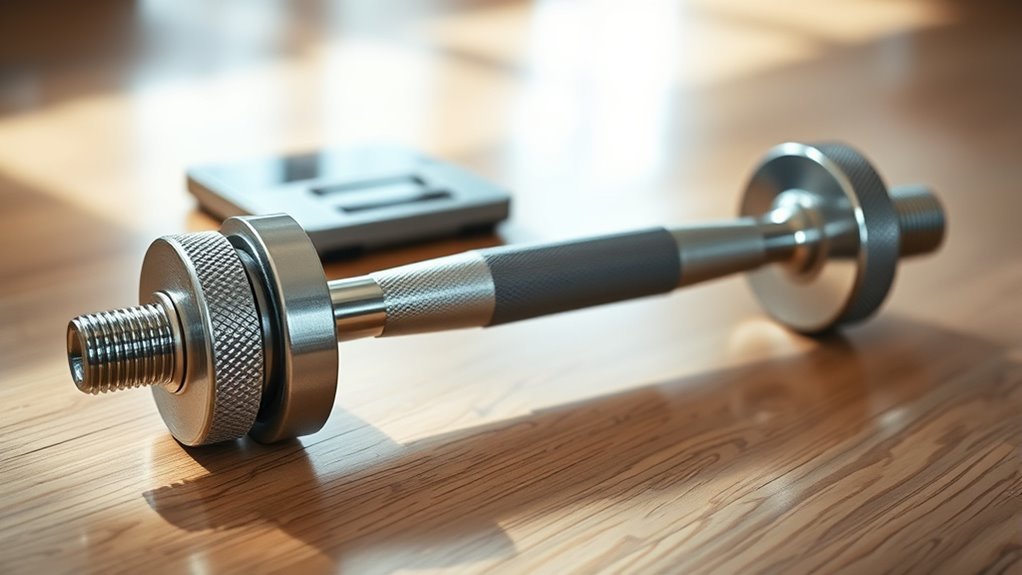
A dumbbell bar typically weighs between 2 to 5 pounds, depending on the type and brand. If you’re wondering, “How much does a dumbbell bar weigh?” it’s good to know the range can vary quite a bit.
Standard adjustable bars often hover around 3 to 4 pounds.
While Olympic bars tend to be heavier, ranging from 5 to 12 pounds.
The material of the bar plays a big role here too.
Steel bars are generally heavier than aluminum ones, and the type of collar—like spin lock collars—adds a bit more weight.
So, if you want to pick the right dumbbell bar for your workout, it definitely pays to understand these details a bit more.
Key Takeaways
- Most adult dumbbell bars typically weigh between 2 to 5 pounds, with common bars around 3 to 4 pounds.
- Olympic dumbbell bars usually weigh between 5 and 12 pounds. It depends on experience level and design.
- Collars and design features add small additional weight. This varies by collar type and material.
- Steel bars tend to be heavier, while aluminum or chrome-plated bars are lighter and easier to handle.
- For exact weight, use a digital scale or check manufacturer specifications for quick verification. That way, you’ll know exactly what you’re working with.
Standard Weight of a Dumbbell Bar
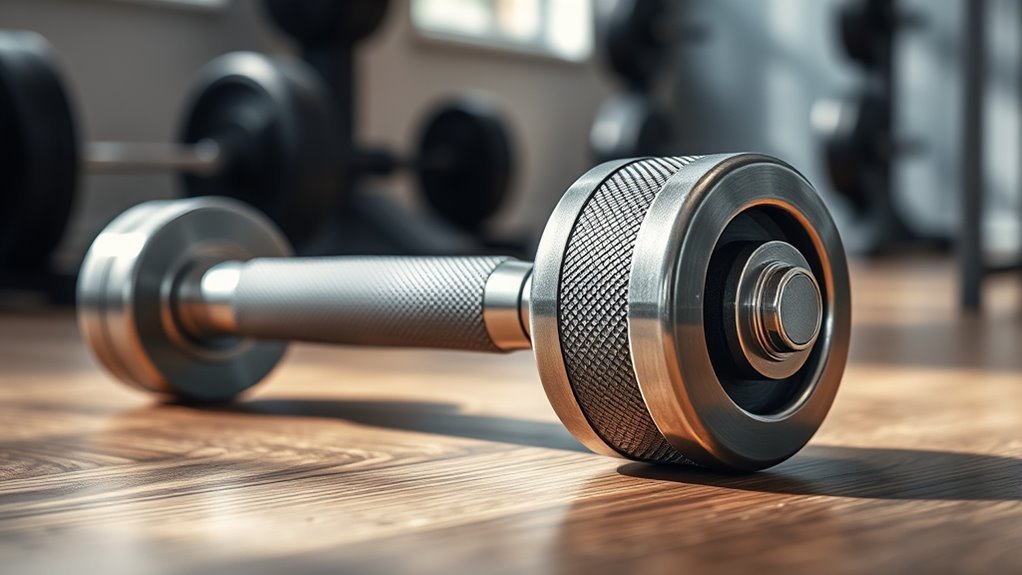
Although dumbbell bars come in various sizes, the standard weight of most adult dumbbell bars typically ranges between 2 to 5 pounds. When you pick up a dumbbell, remember that the bar itself adds to the total weight you’re lifting.
This means you should account for the bar’s weight when calculating your workout load. Most common dumbbell bars weigh around 3 to 4 pounds, striking a balance between sturdiness and ease of use.
If you’re new to weightlifting, this range lets you focus on form without handling excess weight. As you progress, knowing the bar’s weight helps you track your strength gains accurately.
Factors Influencing Dumbbell Bar Weight
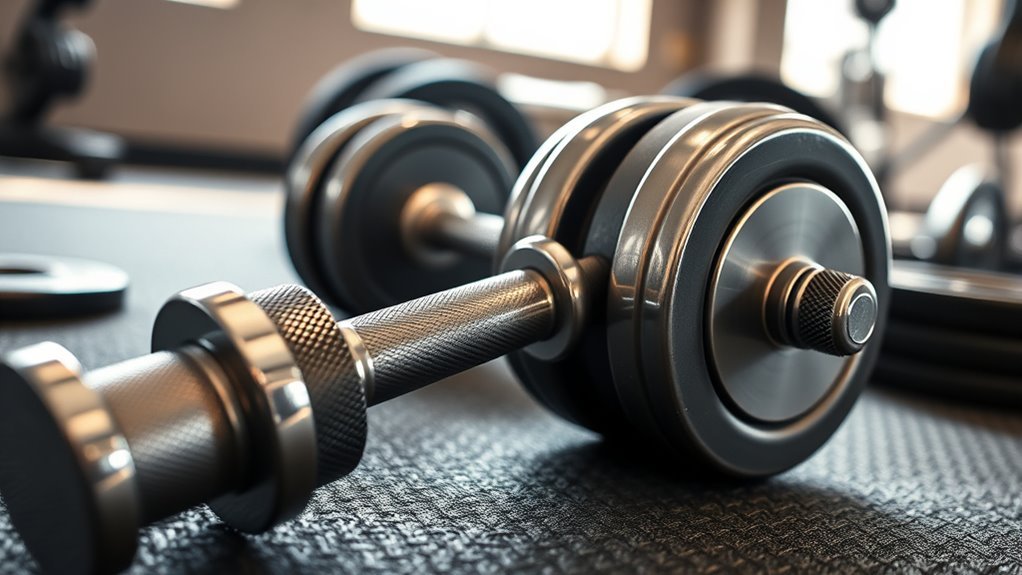
When you choose a dumbbell bar, several factors influence its weight beyond just its size. Understanding these can help you pick the right bar for your workouts.
First up, material plays a big role. Steel bars tend to be heavier than aluminum or plastic-coated ones. The denser the material, the more weight the bar adds.
Then, there’s the length and thickness. Longer and thicker bars naturally weigh more because they have more volume and sturdiness.
Also, don’t forget about design features. Some bars include knurling, collars, or extra reinforcements that add small but noticeable weight increments.
Keep these factors in mind when estimating how much your dumbbell bar weighs. That way, you can manage your lifting routine effectively without any surprises.
Differences Between Fixed and Adjustable Dumbbell Bars
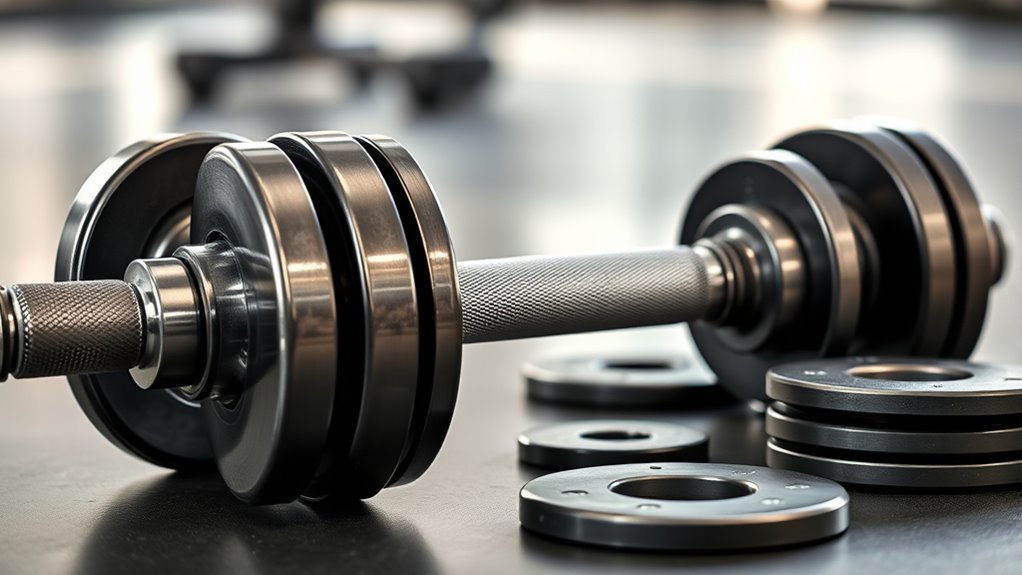
You’ll notice that fixed and adjustable dumbbell bars differ mainly in weight variability and design. Fixed bars have a set weight and are often made from solid materials.
On the other hand, adjustable bars let you change the weight by adding or removing plates. Understanding these differences helps you choose the right bar for your workout needs.
Weight Variability
Since dumbbell bars come in fixed and adjustable types, their weights can vary considerably. Knowing these differences helps you select the right bar for your workout needs.
Here’s what you should keep in mind:
- Fixed Dumbbell Bars: These usually have a set weight, often between 5 to 10 pounds. That makes them consistent and easy to use without adjustments.
- Adjustable Dumbbell Bars: The bar alone often weighs around 2 to 5 pounds. But total weight varies since you add or remove plates.
- Weight Impact: Adjustable bars’ weight changes with plate size and number, while fixed bars keep the same weight every session.
Understanding this variability ensures you pick dumbbells that fit your strength level and training goals. It really helps to know what you’re working with before you start lifting!
Material and Design
Although both fixed and adjustable dumbbell bars serve the same purpose, their materials and designs differ considerably to suit various workout styles. Fixed dumbbell bars usually come made from solid steel or cast iron, giving them a sturdy, uniform weight.
You don’t have to adjust anything, so they’re perfect for quick workouts. Adjustable dumbbell bars, on the other hand, often feature a steel core with plastic or rubber-coated ends to hold weight plates securely.
Their design includes collars or spin locks that let you add or remove plates, making them more versatile but slightly heavier due to extra components. When you choose between the two, consider if you want simplicity and durability or flexibility in weight adjustments to match your training needs.
Weight Variations by Material Type
When choosing a dumbbell bar, understanding how different materials affect its weight can help you make the best decision for your workouts. Each material offers unique benefits and weight characteristics:
- Steel – Steel bars are durable and typically heavier, adding to the overall dumbbell weight. They’re great if you want a solid, long-lasting option.
- Aluminum – Aluminum bars are lighter, making them easier to handle and ideal if you prefer less bar weight to focus more on your plates.
- Chrome-plated steel – These bars combine steel’s strength with a lighter chrome finish, offering moderate weight and corrosion resistance.
Knowing these variations helps you pick a bar that matches your strength level and workout style without surprises. So, you can choose the one that feels right for you!
Typical Weight Ranges for Olympic Dumbbell Bars
If you want to choose the right Olympic dumbbell bar, knowing the typical weight ranges will make your selection easier. Most Olympic dumbbell bars weigh between 5 and 12 pounds. Standard bars usually start around 5 pounds, making them great for beginners or those focusing on higher reps.
Heavier bars, weighing up to 12 pounds, are often used by more experienced lifters who want a solid, balanced feel without adding too much weight. The length of the bar also influences weight—longer bars tend to be heavier. Keep in mind that these bars are designed to hold Olympic-sized plates, which are larger and heavier than standard plates.
How Collar Types Affect Dumbbell Bar Weight
Since collar types secure the weight plates on dumbbell bars, they directly influence the overall weight and stability of your setup. Different collars add varying amounts of weight and affect how firmly plates stay in place.
Collar types secure plates and impact the total weight and stability of your dumbbell setup.
Here’s how collar types impact your dumbbell bar:
- Spin Lock Collars – These screw on tightly, adding a small but noticeable weight. They provide good security but can take longer to adjust.
- Spring Clip Collars – Lightweight and quick to change, they add minimal weight but may not hold plates as securely during intense workouts.
- Lock-Jaw Collars – Usually made of metal, they offer strong grip and add moderate weight, balancing security and convenience.
Choosing the right collar affects not just weight but your workout’s safety and efficiency. So, picking one that fits your routine can really make a difference.
Measuring Your Dumbbell Bar Weight Accurately
To measure your dumbbell bar weight accurately, you can start by using a kitchen scale for a quick estimate. It’s a simple way to get a rough idea of the weight.
Be sure to check the manufacturer’s specifications for exact numbers. That info is usually pretty reliable and can save you some guesswork.
Comparing your bar with standard bars can also help you confirm the weight. It’s like a quick double-check to make sure you’re on the right track.
Using a Kitchen Scale
Although kitchen scales are typically designed for food, you can use one to measure your dumbbell bar’s weight with surprising accuracy. To do this effectively, follow these steps:
- Check the scale’s capacity: Make sure your kitchen scale can handle the dumbbell bar’s weight, usually between 2 to 10 pounds.
- Position the bar carefully: Place the dumbbell bar flat and centered on the scale to get an even reading.
- Calibrate if possible: Zero out the scale before weighing to guarantee precision.
Keep in mind, if your dumbbell bar is too heavy or awkwardly shaped, a kitchen scale might not work well. But for smaller bars, this method is quick and accessible. It lets you measure weight without specialized equipment.
Checking Manufacturer Specifications
When you want the most accurate weight for your dumbbell bar, checking the manufacturer’s specifications is your best bet. Manufacturers provide precise details, including the bar’s weight, material, and dimensions. This info guarantees you know exactly what you’re lifting, avoiding guesswork.
Here’s a quick look at typical specs from popular brands:
| Brand | Dumbbell Bar Weight |
|---|---|
| Rogue | 2.5 lbs (1.13 kg) |
| CAP Barbell | 3 lbs (1.36 kg) |
| Bowflex | 2.2 lbs (1 kg) |
| Titan | 2.75 lbs (1.25 kg) |
Check the manufacturer’s website or product packaging to find these details. This step keeps your workout safe and effective by providing accurate weight info. So, before you start lifting, take a minute to look it up—it really makes a difference!
Comparing With Standard Bars
Since dumbbell bars can vary in weight, comparing yours with a standard bar helps you measure it accurately. Standard bars, like the Olympic barbell, usually weigh around 20 kg (44 lbs), while smaller bars can be much lighter.
To compare effectively, start by identifying the bar type. Check if your dumbbell bar is standard, Olympic, or specialty.
Next, use a reliable scale to weigh both your dumbbell bar and a known standard bar. This way, you get accurate numbers.
Finally, note the differences. Calculate the weight difference to understand your dumbbell bar’s exact weight. It’s pretty straightforward!
Choosing the Right Dumbbell Bar Weight for Your Workout
Deciding on the right dumbbell bar weight plays a crucial role in maximizing your workout effectiveness. You want a bar that complements your strength level without compromising form.
If the bar’s too heavy, you risk injury; too light, and you won’t challenge your muscles enough. Start by considering your current fitness and the exercises you plan to do.
For beginners, a lighter bar—around 2 to 5 pounds—lets you focus on technique. As you progress, heavier bars, typically between 5 to 10 pounds, help build strength and add intensity.
Frequently Asked Questions
Can Dumbbell Bars Be Customized With Different Grip Textures?
Yes, you can customize dumbbell bars with different grip textures to improve comfort and control. Manufacturers often offer options like knurled, rubberized, or foam grips.
This way, you can tailor your workout experience to your preferences and get a better hold on the weights. It really makes a difference in how you feel during your exercise!
How Do Dumbbell Bars Affect Workout Safety and Injury Prevention?
You can reduce injury risk by up to 30% using dumbbell bars with secure grips, which improve control and prevent slips. Choosing bars with ergonomic designs also supports proper wrist alignment, keeping your workouts safer and more effective.
It’s kind of like giving your hands a better hold, so you don’t have to worry about the dumbbells slipping mid-lift. Plus, when your wrists are properly aligned, it helps avoid strain and injuries over time.
Are There Dumbbell Bars Designed Specifically for Rehabilitation Exercises?
Yes, you’ll find dumbbell bars designed specifically for rehabilitation exercises; they’re lighter, adjustable, and offer better grip control.
These features help you safely rebuild strength and improve mobility during recovery without risking further injury.
What Maintenance Is Required to Keep Dumbbell Bars in Good Condition?
You should regularly wipe down dumbbell bars to remove sweat and dirt. This helps keep the bars clean and prevents buildup that can cause damage over time.
Also, check for loose collars or screws to make sure everything stays tight and secure. Don’t forget to oil threaded areas occasionally to prevent rust from forming.
Finally, store your dumbbells in a dry place. Keeping them away from moisture is key to maintaining their good condition.
Can Dumbbell Bars Be Used Effectively for Home Workouts?
You can definitely use dumbbell bars effectively for home workouts—they’re like your trusty paintbrush, letting you sculpt strength in any room. Just add plates, adjust weight, and you’re set for versatile exercises anytime.
It’s super convenient because you can switch up the weights easily. Plus, they don’t take up much space, so they fit perfectly in your home gym setup. Whether you’re into bicep curls or shoulder presses, dumbbell bars have got you covered!
Conclusion
No matter your workout goals, knowing how much your dumbbell bar weighs is like discovering the secret to lifting a mountain with ease! Whether you choose a standard, Olympic, fixed, or adjustable bar, understanding the material and collar types helps you pick the perfect weight.
Measuring it precisely ensures you train smart and safe. So, grab the right bar, and get ready to crush your fitness goals faster than you ever imagined!
When it comes to dumbbell bars, the weight can vary quite a bit. Standard bars usually weigh around 2 to 5 pounds, while Olympic bars can be heavier, often around 5 to 7 pounds. Fixed and adjustable bars each have their own weight ranges depending on design and material. Knowing these details helps you plan your workouts better and avoid surprises.
In the end, understanding how much a dumbbell bar weighs quickly is key to efficient training. Getting this right means you can focus on your reps without guessing, leading to better results and fewer injuries. So, take a moment to check your dumbbell bar’s weight before you start lifting, and watch your progress soar!