How to Move an Elliptical Machine in 3 Simple Steps
To move your elliptical machine safely, start by disconnecting it from power.
Remove all accessories and tighten any loose parts to prevent damage during the move. These simple steps help protect both your machine and your home.
Next, get some help—it’s best not to do this alone. Use a dolly or sliders to lift and transport the elliptical carefully.
Move slowly and avoid sudden movements to keep the floor scratch-free and the machine intact.
Finally, set up your elliptical on a flat, stable surface in its new location.
Reattach all parts and test the machine to ensure it’s stable and working properly.
Keep reading for extra tips that make handling and setup even easier!
Key Takeaways
- Disconnect the elliptical from power and remove all accessories before moving.
- Tighten any loose screws and fold or lock adjustable parts if possible.
- Use a dolly or furniture sliders to transport the elliptical safely and avoid floor damage.
- Lift with your legs and get help to prevent injury during the move.
- Place the elliptical on a flat surface, reassemble parts, and test for proper function after moving.
Prepare the Elliptical for Moving
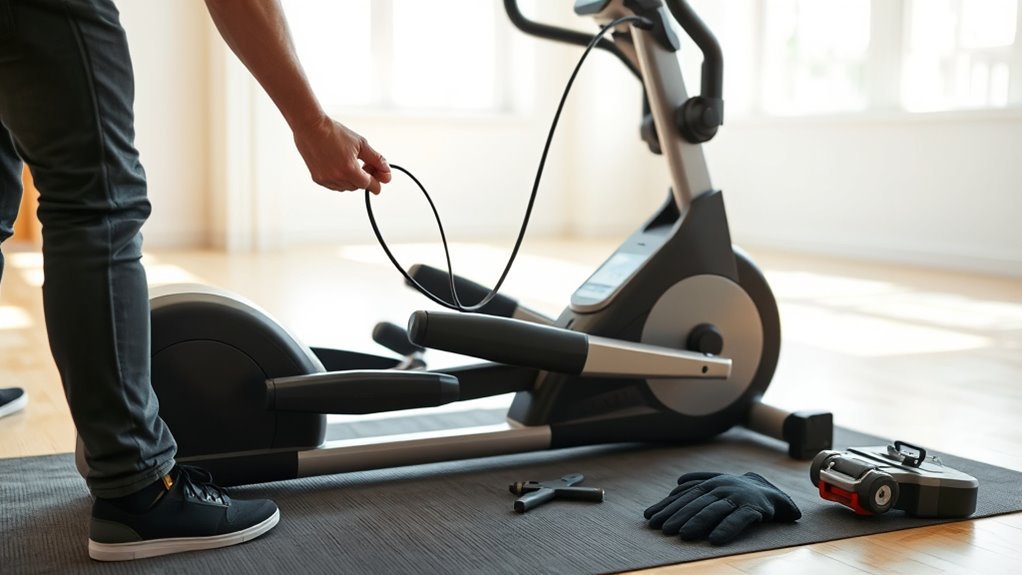
Before you move your elliptical machine, make sure you disconnect it from any power source and remove all accessories. This includes water bottles, heart rate monitors, or any attachments that might get damaged or cause injury during the move.
Next, inspect the machine for any loose parts like screws or bolts; tighten them to prevent rattling or damage. If your elliptical has adjustable pedals or handlebars, lock them in place or fold them down if possible.
Wipe down the machine to remove sweat and dust, which can make handling slippery. Finally, check the user manual for any manufacturer-specific instructions on preparing the elliptical for transport.
Taking these steps guarantees you protect your equipment and makes the moving process smoother and safer. It’s worth the extra effort to avoid any headaches later on.
Safely Transport the Machine
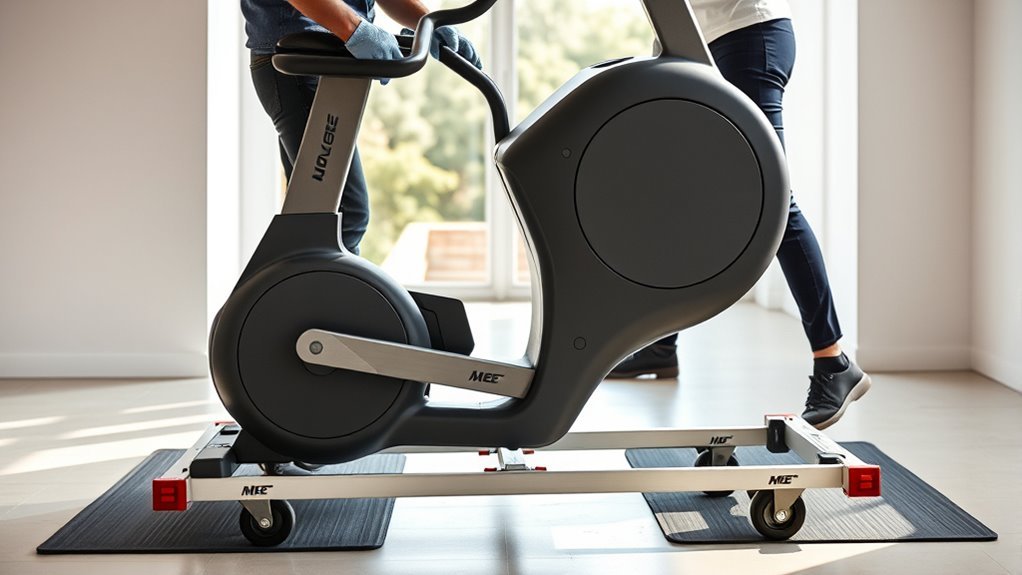
Once your elliptical is prepped and secure, focus on moving it carefully to avoid damage or injury. Use a dolly or furniture sliders to reduce strain and protect floors.
Lift with your legs, not your back, and get help if needed. Move slowly and avoid sudden turns to keep the elliptical stable.
| Step | Tip |
|---|---|
| Use Equipment | Dolly or sliders prevent floor damage |
| Proper Lifting | Bend knees, keep back straight |
| Teamwork | Enlist help for better control |
| Move Slowly | Avoid sudden movements or turns |
Set Up the Elliptical in Its New Location
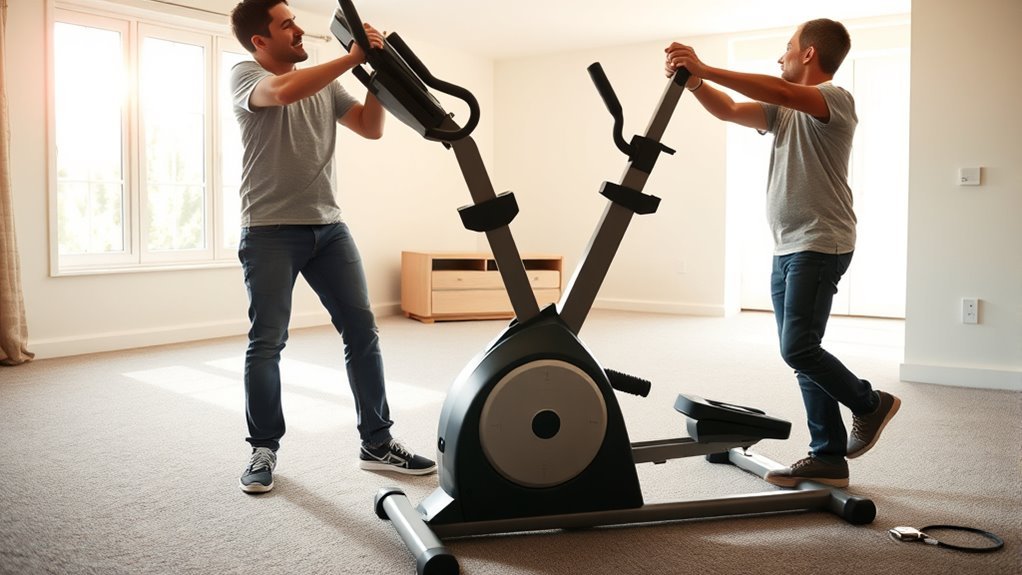
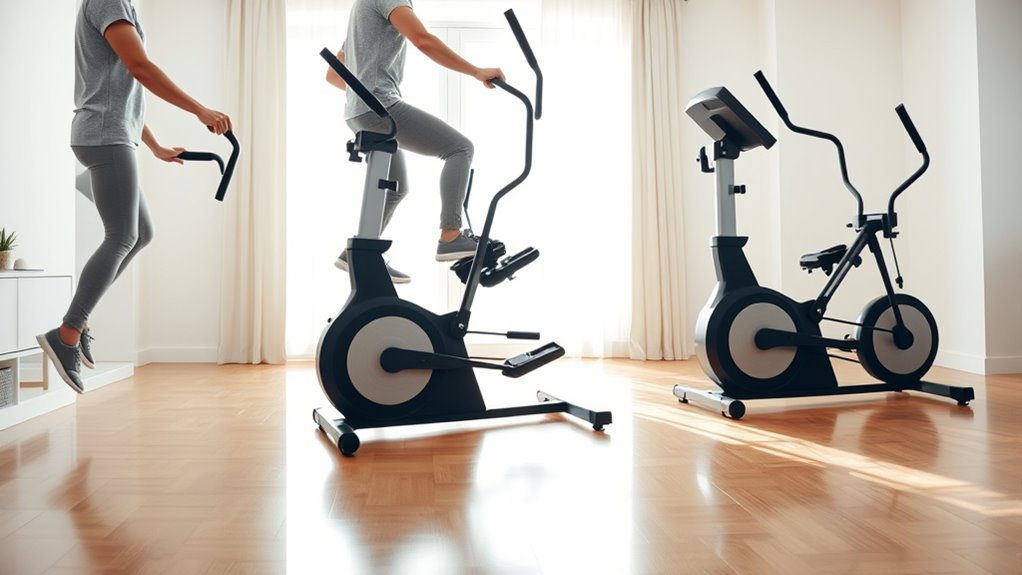
Although moving your elliptical carefully is important, setting it up correctly in its new spot is just as crucial to guarantee smooth operation and safety. First, choose a flat, stable surface that can support the machine’s weight. Avoid placing it near windows or direct sunlight to prevent damage.
Next, reattach any parts you removed during the move, following the manufacturer’s instructions. Make sure all bolts and screws are tightened securely. Level the elliptical using adjustable feet if available to prevent wobbling.
Plug it in and test the machine by starting a short workout session, checking for unusual noises or resistance. Finally, clear the surrounding area to allow for safe movement during exercise. Taking these steps ensures your elliptical is ready for use without issues.
Frequently Asked Questions
How Often Should I Lubricate My Elliptical Machine?
You should lubricate your elliptical machine every three to six months, depending on usage. Regular lubrication keeps it running smoothly and prevents wear.
It’s a good idea to check the manufacturer’s guide for specific recommendations. Also, be sure to use the lubricant they recommend.
Can an Elliptical Machine Be Used Outdoors?
You can take your elliptical outdoors, but it’s not all sunshine and roses. Exposure to weather can damage it, so if you do, keep it covered.
And bring it inside when not in use to prolong its life. That way, you get the best of both worlds—fresh air and a longer-lasting machine.
What Maintenance Extends the Life of an Elliptical?
You can extend your elliptical’s life by regularly cleaning it, lubricating moving parts, and tightening bolts.
Also, make sure to check the power source and inspect for any wear.
Doing these simple maintenance tasks keeps it running smoothly and efficiently for longer.
It’s all about staying on top of these little things so your machine lasts as long as possible.
Are There Specific Flooring Types Best for Ellipticals?
Yes, you’ll want to use rubber or foam mats under your elliptical. They protect your floors, reduce noise, and absorb impact.
Avoid carpet, as it can cause instability and wear down the machine over time. Using the right mat really helps keep everything steady and in good shape.
How Do I Troubleshoot Common Elliptical Errors?
Oh, nothing like a mysterious error code to spice up your workout! Just reset the machine, check connections, and consult the manual.
If that fails, don’t hesitate to call customer support—they love solving your elliptical puzzles.
Conclusion
Now that you’ve mastered moving your elliptical in just three simple steps, you could practically relocate a gym by yourself! No more awkward struggles or bruised egos—just smooth, confident moves that make heavy lifting feel like a breeze.
Imagine impressing your friends as you effortlessly glide your machine into place, ready for your next workout. You’ve got this—moving your elliptical has never been easier or more satisfying!
With these easy tips, moving an elliptical machine is no longer a daunting task. Whether rearranging your home gym or relocating to a new space, these steps ensure a safe and efficient move. So go ahead, move your elliptical with confidence and make your fitness routine seamless!