How to Move an Elliptical in 3 Easy Steps
To move your elliptical easily and safely, start by unplugging it to avoid any electrical issues. Make sure to secure loose parts like pedals and handles with tape or straps. This helps keep everything in place while you move.
Next, use proper lifting techniques to protect yourself from injury. Bend your knees, keep the elliptical close to your body, and don’t hesitate to ask for help if it’s heavy. Trust me, this makes the whole process much easier and safer.
Finally, place your elliptical on a level surface in its new location. Reassemble any parts you removed, tightening them securely. Before you start using it, test for stability and smooth operation to make sure everything is set up perfectly.
Want more tips to make moving your elliptical even safer and smoother? Keep reading!
Key Takeaways
- Unplug the elliptical, remove accessories, and secure pedals and handles to prevent movement during transport.
- Use proper lifting techniques, bending knees and keeping the back straight; get help if the elliptical is too heavy.
- Move the elliptical slowly and carefully, keeping it close to your body for balance and control.
- Place the elliptical on a level surface at the new location before reassembling pedals and handles securely.
- Plug in and test the elliptical to ensure it operates smoothly and safely after moving.
Prepare and Secure the Elliptical
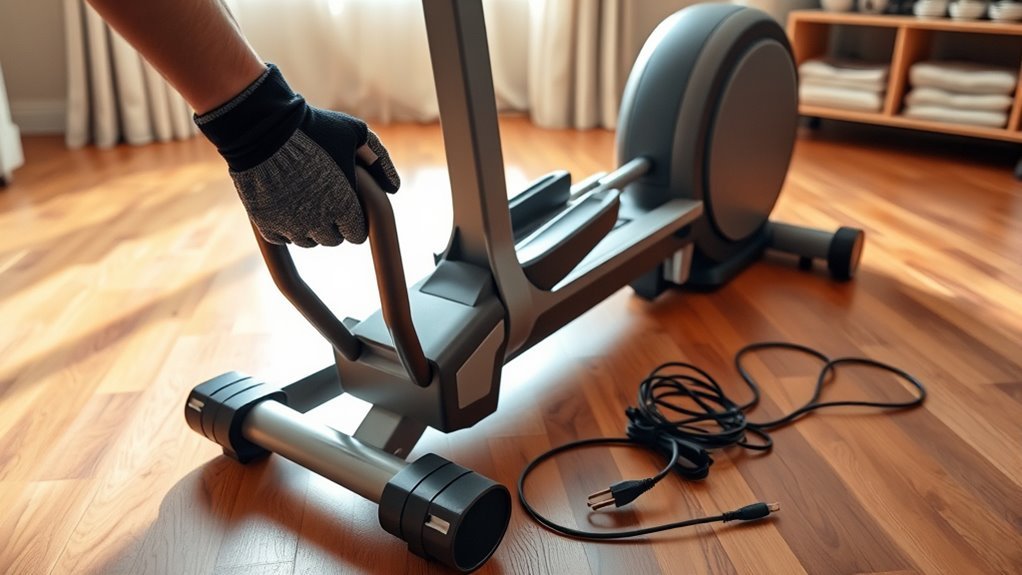
Before you start moving your elliptical, make sure to prepare and secure it properly to prevent damage. First, unplug the machine and remove any accessories or attachments, like water bottle holders or mats.
Always unplug and remove accessories from your elliptical before moving to ensure it stays safe and undamaged.
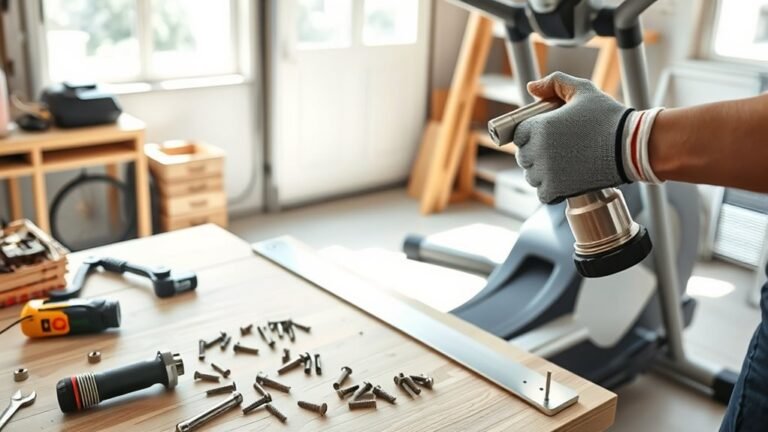
Check the pedals and handles for loose parts, tightening screws if needed. Next, secure the pedals and arms so they don’t swing during the move—use strong tape or straps to hold them in place.
If your elliptical has a display or control panel, cover it with bubble wrap or a soft cloth to protect it from scratches. Finally, clean the elliptical to remove dust or sweat, which can make it slippery to handle.
Taking these steps will keep your elliptical safe and ready for the next stage of moving. It’s really worth doing this prep work to avoid any issues later on.
Use Proper Lifting and Moving Techniques
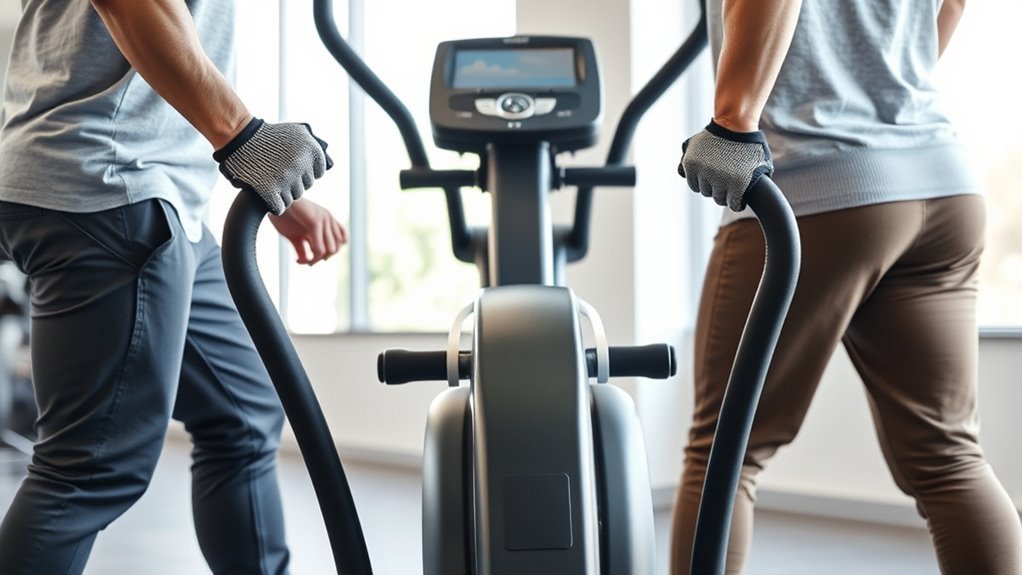
Once your elliptical is properly prepared and secured, it’s time to move it carefully to avoid injury or damage. Start by bending your knees and keeping your back straight as you lift; this helps protect your spine.
Use your legs to power the lift, not your back. If the elliptical is too heavy, don’t hesitate to ask for help—two people lifting is safer and more efficient.
When carrying, keep the elliptical close to your body to maintain control and balance. Move slowly and communicate with your partner if you have one.
Avoid twisting your body while carrying the elliptical. If you need to navigate stairs or tight spaces, take your time and plan your path ahead.
Using proper lifting techniques keeps you safe and your elliptical intact. So, take it easy and be careful!
Position and Reassemble the Elliptical
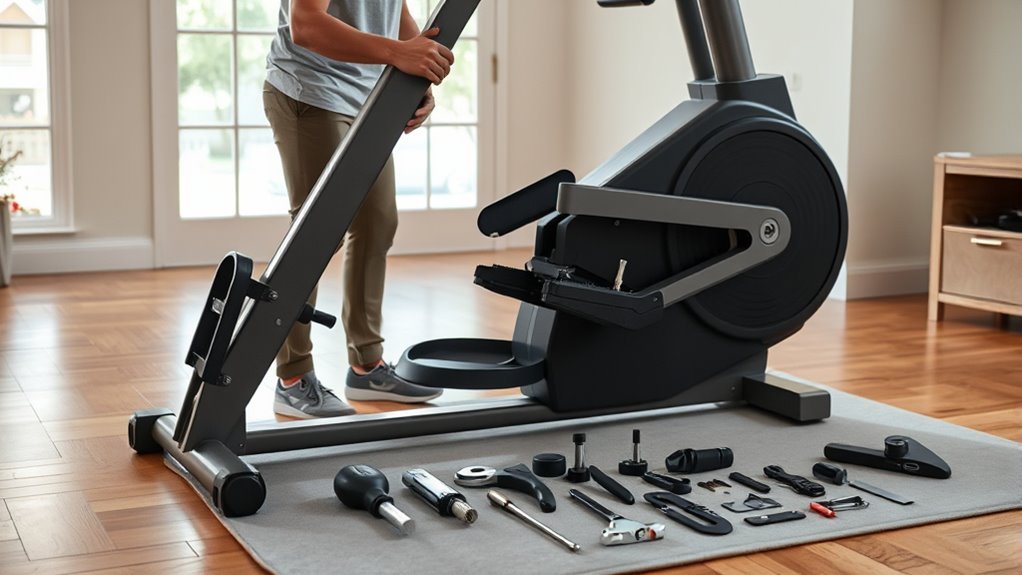
As you set the elliptical in its new spot, make sure the surface is level and spacious enough for comfortable use. Begin reassembling by referring to your notes or photos for guidance.
Start with the larger components, such as the pedals and handles, securing them firmly with the appropriate tools. Tighten bolts and screws evenly to ensure stability.
Reconnect any electrical components carefully, making sure wires aren’t pinched or strained. Once assembled, check all moving parts for smooth operation and adjust if necessary.
Finally, plug in the elliptical and test it to confirm everything works correctly. Taking your time during this step prevents damage and guarantees your elliptical functions safely and efficiently in its new location.
Frequently Asked Questions
Can I Disassemble the Elliptical for Easier Transport?
Yes, you can disassemble the elliptical for easier transport. Just make sure to keep track of all screws and parts.
Follow the manual carefully, and ask for help if it’s heavy or complicated. This way, you can avoid damage or injury.
How Do I Protect My Floors While Moving the Elliptical?
Want to avoid scratches and dents while moving your elliptical? Use furniture sliders or thick blankets under the machine.
You’ll protect your floors and make moving easier without worrying about damage or heavy lifting.
What Tools Are Needed to Move an Elliptical Safely?
You’ll need furniture sliders, a dolly, moving straps, and gloves to move your elliptical safely. These tools help protect your floors, provide grip, and make lifting easier,
reducing the risk of injury or damage.
Using the right gear really makes a difference. Plus, it saves you a lot of hassle when moving heavy equipment like an elliptical.
Is It Better to Hire Professional Movers for Heavy Fitness Equipment?
You’ll probably find it’s better to hire professional movers for heavy fitness equipment since they’ve got the right tools and experience.
Plus, they’ll save you time and prevent potential injury or damage during the move. It just makes the whole process a lot smoother and less stressful.
How Do I Reset the Elliptical’s Electronics After Moving?
To reset your elliptical’s electronics, unplug it for about 5 minutes, then plug it back in. This power cycle clears errors and resets the console.
If needed, consult the manual for specific reset instructions. It’s pretty straightforward once you get the hang of it!
Conclusion
Moving your elliptical isn’t just about shifting a machine—it’s like turning a new page in your fitness journey. As you secure and lift it carefully, you’re handling more than metal; you’re embracing change and commitment.
When you finally place and reassemble it in its new spot, you’re setting the stage for fresh goals and renewed energy. Trust the process—each step symbolizes your dedication to health and growth.
Remember, moving an elliptical can feel challenging, but breaking it down into easy steps makes it manageable. By doing so, you ensure your equipment stays in great shape and your fitness routine stays on track. So, take your time, stay safe, and enjoy the excitement of bringing your elliptical to a new space where your health and fitness journey can continue to thrive!