How to Protect Your Knees From Bad Effects on Elliptical Machines
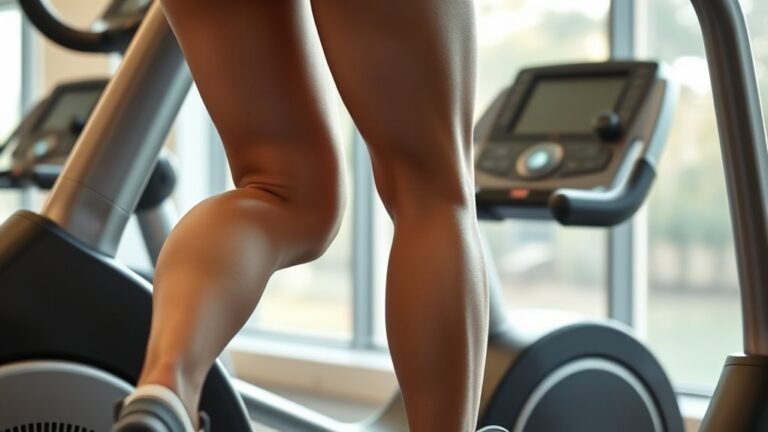
To protect your knees from the bad effects of elliptical machines, it’s important to choose the right equipment. Look for a machine with smooth, adjustable resistance and a natural stride length. This helps reduce joint stress and keeps your knees comfortable during workouts.
Make sure to keep your feet flat and aligned straight ahead. Your knees should track over your toes to avoid unnecessary strain.
Start your workouts with low resistance and a moderate incline. Maintain an upright posture with an engaged core and hips to support your knees properly.
Don’t forget to warm up before and cool down after each session.
Also, strengthening your leg and hip muscles can provide better knee support and prevent injuries.
Understanding and applying these strategies can go a long way in safeguarding your knees while enjoying elliptical workouts.
Key Takeaways
– Select an elliptical with adjustable resistance, smooth stride (18–22 inches), and sturdy frame to minimize knee strain and ensure stable movement.
This helps keep your knees happy while you work out.
– Keep feet flat, aligned straight ahead, and knees tracking over toes to distribute weight evenly and prevent joint discomfort.
It might feel a bit strange at first, but it really makes a difference.
– Start with low resistance and moderate incline, gradually increasing to avoid overloading knees and maintain proper posture.
Take it slow and listen to your body.
– Strengthen quadriceps, hamstrings, calves, and hip muscles to support knee stability and reduce injury risk during elliptical workouts.
Strong muscles around your knees act like a natural brace.
– Pay attention to knee pain or swelling, rest when needed, and consult a professional if discomfort persists to protect long-term knee health.
Don’t push through pain — your knees will thank you later.
Understanding Knee Anatomy and Elliptical Impact
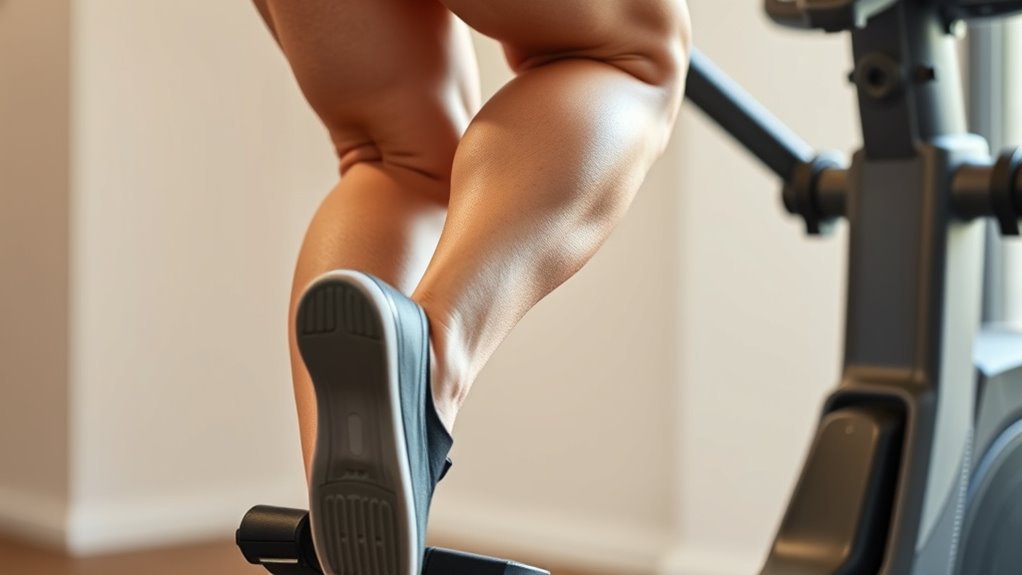
Although your knees are designed to handle weight and movement, understanding their anatomy helps you use elliptical machines safely. Your knees connect your thigh bone to your shin bone, relying on cartilage and ligaments to absorb shock and maintain stability.
When you use an elliptical, the smooth, low-impact motion reduces strain compared to running or jumping. This motion minimizes stress on your joint surfaces and soft tissues.
However, if your form is off or resistance too high, you risk overloading your knees. Knowing how your knees work allows you to adjust your workout to protect cartilage and ligaments, preventing pain or injury.
Choosing the Right Elliptical Machine for Knee Health
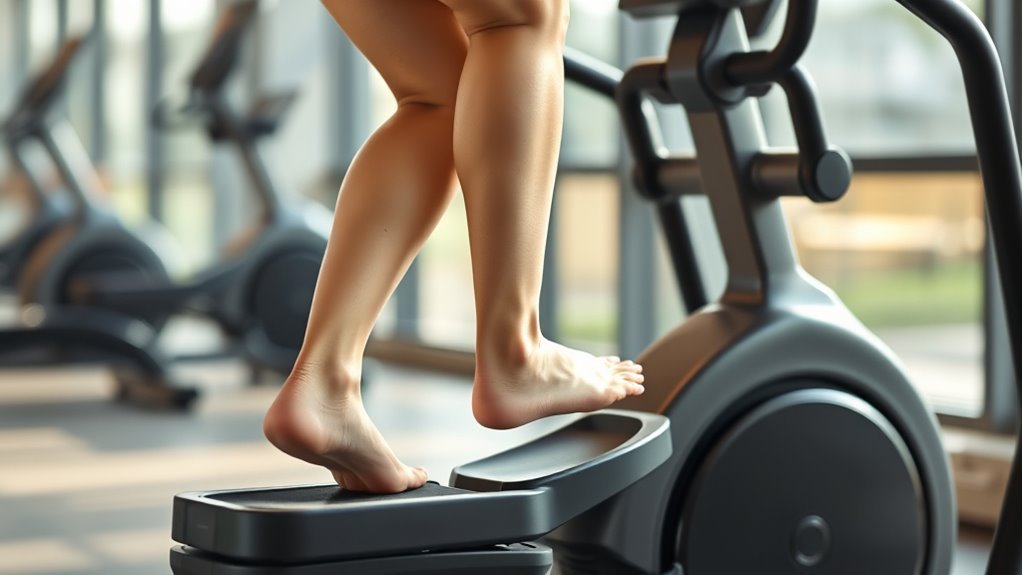
When selecting an elliptical machine, you want one that supports your knee health by offering adjustable resistance and a smooth, natural stride. Look for machines with a longer stride length to reduce joint strain and ensure the pedals move fluidly.
Stability is key—choose a model with a sturdy frame to prevent wobbling that might stress your knees.
Here’s a quick comparison to guide you:
| Feature | Low Impact on Knees | Potential Stress |
|---|---|---|
| Stride Length | 18–22 inches | <18 inches |
| Resistance Type | Magnetic | Motor-driven jerky |
| Frame Stability | Heavy-duty steel | Lightweight plastic |
Picking the right machine minimizes knee stress and keeps your workouts safe and effective. So, take your time and choose wisely!
Proper Foot Placement and Pedal Positioning
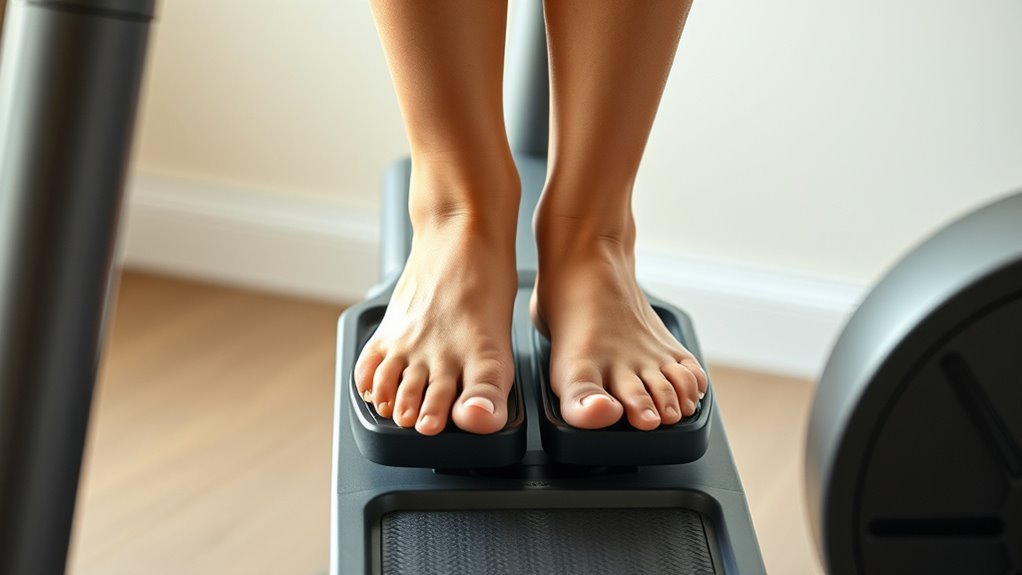
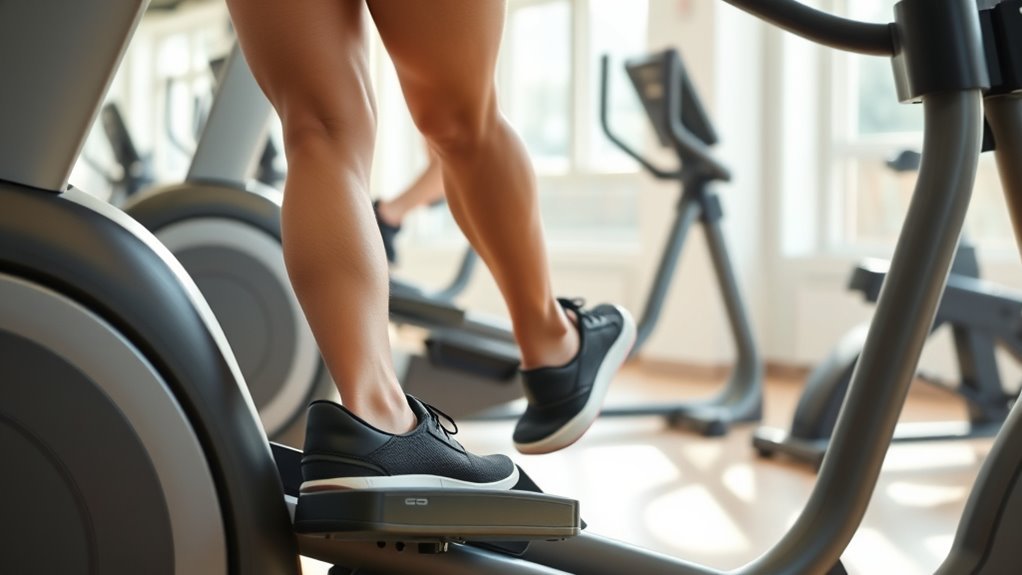
To keep your knees safe on an elliptical, focus on placing your feet correctly with proper alignment. Make sure the pedals are angled comfortably to support natural movement.
Maintain consistent pressure throughout your stride to avoid unnecessary strain. It really helps to keep everything smooth and easy on your joints. Just take it step by step, and your knees will thank you!
Correct Foot Alignment
How you position your feet on the elliptical pedals directly impacts your knee health and workout effectiveness. To keep your knees safe, make sure your feet are aligned straight ahead, not turned inward or outward.
This alignment helps distribute weight evenly and prevents unnecessary strain on your knee joints. Place your entire foot on the pedal, avoiding pressure on just the toes or heels, which can cause imbalance and discomfort.
Keep your knees tracking over your toes as you move; misalignment can lead to joint pain or injury. Regularly check your foot position during your workout and adjust if you notice any twisting or slipping.
Optimal Pedal Angle
Although foot alignment sets the foundation, adjusting the pedal angle plays a crucial role in reducing knee stress and enhancing your elliptical workout. Proper pedal positioning ensures your knees track naturally, preventing undue strain or twisting.
To optimize pedal angle, consider these tips:
- Keep your feet flat and centered on the pedals to distribute pressure evenly.
- Adjust the pedal tilt so your toes point slightly upward, avoiding excessive plantar flexion.
- Align your knees with your feet during motion to maintain a natural tracking path.
- Experiment with slight angle changes to find a comfortable position that feels stable without forcing your joints.
Fine-tuning your pedal angle can improve comfort, protect your knees, and boost your overall elliptical performance. Give these adjustments a try, and you might notice a big difference in how your knees feel during your workout!
Consistent Foot Pressure
When you maintain consistent foot pressure on the pedals, you help stabilize your movements and reduce unnecessary knee strain. Focus on distributing your weight evenly across your entire foot, not just the heels or toes.
This balanced placement ensures your knees track properly during each elliptical stride. Avoid lifting your heels or pushing too hard with your toes, as uneven pressure can cause joint stress.
Adjust the pedal position so your feet stay comfortably aligned, preventing twisting motions that strain your knees. Keep your feet flat and engage your core to support steady pedal movement.
Adjusting Resistance and Incline to Minimize Knee Stress
Since your knees bear much of the impact during elliptical workouts, adjusting the resistance and incline properly can substantially reduce stress on them. You want to find the right balance that challenges your muscles without overloading your joints.
Adjusting resistance and incline on the elliptical helps reduce knee stress while still challenging your muscles.
Here’s how to adjust resistance and incline to protect your knees:
- Start with low resistance to avoid excessive joint strain.
- Gradually increase resistance as your strength and endurance improve.
- Keep incline moderate; too steep can increase knee pressure.
- Listen to your body—reduce incline or resistance if you feel knee discomfort.
Maintaining Correct Posture and Alignment During Workouts
Keep your spine straight and hips level to reduce unnecessary knee strain while using the elliptical.
Focus on tracking your knees so they move in line with your feet to avoid twists or misalignment.
These simple adjustments can help protect your knees throughout your workout.
Spine and Hip Position
Although it’s easy to focus on your legs while using an elliptical machine, maintaining proper spine and hip alignment plays a crucial role in protecting your knees. When your spine and hips are out of alignment, extra stress transfers to your knees, increasing injury risk.
To keep everything in balance, try these tips: Stand tall with a neutral spine, avoiding slouching or leaning forward. Engage your core muscles to support your lower back and hips.
Also, keep your hips level and square, preventing them from tilting or rotating. Align your hips over your knees and feet to distribute weight evenly. It really helps keep things stable and reduces strain.
Knee Tracking Techniques
A key aspect of protecting your knees on an elliptical is ensuring proper knee tracking throughout your workout. This means your knees should move in line with your feet, avoiding inward or outward collapse that strains ligaments.
Focus on keeping your knees aligned with your toes, especially during each pedal stroke. To maintain this, engage your core and hips to stabilize your lower body.
Avoid locking your knees; instead, keep a slight bend to absorb impact smoothly. If you notice your knees drifting, slow down and reset your posture.
Using mirrors or recording yourself can help you monitor your form. By practicing these knee tracking techniques, you reduce unnecessary stress, prevent injury, and ensure your elliptical sessions remain safe and effective.
Incorporating Warm-Up and Cool-Down Routines
Before hopping on the elliptical, you should prepare your muscles with a proper warm-up to boost blood flow and reduce stiffness. This step helps protect your knees by increasing flexibility and lowering injury risk.
After your workout, cooling down aids muscle recovery and prevents joint strain.
Follow these warm-up and cool-down tips:
- Start with 5 minutes of light cardio, like walking or slow cycling.
- Perform dynamic stretches targeting your legs, such as leg swings and lunges.
- After exercising, reduce your pace gradually for 3–5 minutes on the elliptical.
- Finish with static stretches focusing on your quads, hamstrings, and calves.
Incorporating these routines consistently supports knee health and enhances your elliptical workouts. Give it a try—you’ll notice a difference!
Strengthening Supporting Muscles to Protect Knees
When you strengthen the muscles around your knees, you give them better support and stability during elliptical workouts. Focus on exercises targeting your quadriceps, hamstrings, and calves. These muscles help absorb impact and reduce knee strain.
Try incorporating squats, lunges, and leg presses into your routine to build strength effectively. Don’t forget to engage your hip muscles, like the glutes and abductors. They play a fundamental role in maintaining proper knee alignment.
Consistently working on these muscle groups enhances joint stability. This improves your overall form and reduces injury risk. Make sure you aim for balanced strength on both legs to prevent imbalances that could stress your knees.
Strengthening supporting muscles complements your elliptical training. It keeps your knees healthier and more resilient over time. So, it’s definitely worth the effort!
Recognizing Signs of Knee Discomfort and When to Rest
Although elliptical workouts are generally low-impact, you might still experience knee discomfort if you push too hard or use improper form. It’s important to recognize early signs to prevent injury.
Pay attention to:
- Persistent pain during or after your workout
- Swelling or stiffness around the knee joint
- A clicking or popping sensation when moving
- Reduced range of motion or difficulty bending the knee
If you notice any of these symptoms, take a break from your elliptical routine. Rest allows inflammation to subside and prevents worsening damage.
You might want to consider consulting a healthcare professional if the pain continues beyond a few days or gets worse. Listening to your body and resting when needed helps protect your knees and keeps your workouts safe and effective.
Frequently Asked Questions
Can Elliptical Workouts Help With Existing Knee Arthritis?
Yes, elliptical workouts can help ease knee arthritis pain by providing low-impact exercise that strengthens muscles around your knee.
Just make sure to adjust the settings for comfort and avoid overdoing it to prevent worsening symptoms. It’s all about finding the right balance for you.
Are Knee Braces Necessary When Using an Elliptical Machine?
You don’t always need knee braces when using an elliptical, but if you feel pain or instability, they can provide extra support.
Listen to your body and consult a doctor if you’re unsure about wearing one. It’s always better to be safe and get professional advice.
How Often Should I Replace the Elliptical Pedals to Protect Knees?
Imagine smooth, steady steps—replace your elliptical pedals every 6 to 12 months to keep that rhythm.
Worn pedals can cause uneven pressure, risking knee strain, so stay proactive and protect your joints with timely changes.
Do Elliptical Machines Benefit People Recovering From Knee Surgery?
Yes, elliptical machines can benefit you during knee surgery recovery by providing low-impact cardio. They help improve mobility and strength without stressing your joints.
Just start slowly and follow your doctor’s advice closely. Taking it easy at first really makes a difference.
Can Different Elliptical Stride Lengths Affect Knee Joint Health?
Yes, different elliptical stride lengths can affect your knee joint health. Using a stride length that fits your natural movement reduces strain, preventing discomfort and injury.
It’s a good idea to adjust it to match your height and comfort. That way, you get safer workouts and keep your knees happy.
Conclusion
Think of your knees as the hinges of a well-crafted gate—they need care to swing smoothly without creaking or strain. By choosing the right elliptical, adjusting settings wisely, and keeping your posture aligned, you oil those hinges and keep them moving freely.
Listen to your body’s signals and strengthen the muscles around your knees. With this mindful approach, you’ll glide through your workouts like a gate opening effortlessly to fresh, healthy movement every day.
Protecting your knees from the bad effects on elliptical machines is all about balance. When you pick the right elliptical and use it correctly, you reduce unnecessary stress on your joints. Staying aware of your posture and muscle strength ensures your knees stay healthy and pain-free. This way, you can enjoy the benefits of elliptical workouts without worrying about knee pain or injury. Taking these simple steps helps your knees stay strong and flexible, making every elliptical session a safe and effective part of your fitness routine.