Are Treadmills Bad for Your Knees and How Can You Protect Them While Running?
Treadmills aren’t inherently bad for your knees if you use them correctly. Running on a treadmill can actually be easier on your joints compared to hard outdoor surfaces. The cushioned treadmill surface absorbs some of the impact, which helps protect your knees.
You can further protect your joints by maintaining proper form. Keep a slight bend in your knees and an upright posture. Also, try to keep your speed moderate and use a gentle incline around 1-3%. This reduces the stress on your knees.
Avoid overextending your stride because that can increase impact and strain. These simple habits minimize strain and help prevent common knee injuries.
So, keep these tips in mind and explore more ways to safeguard your knees while running. It’s all about running smart to stay injury-free!
Key Takeaways
- Treadmills generally reduce knee impact because they have cushioned, controlled surfaces. This is better than running on hard outdoor terrain.
- But keep in mind, running with poor form or going too fast can still put stress on your knees. This applies whether you’re on a treadmill or outside.
- Try to use treadmills that have softer surfaces or built-in cushioning systems. These help absorb shock and protect your knee joints.
- It’s also important to maintain good running form. Keep a slight bend in your knees, take short strides, and run at a moderate speed—around 4 to 7 mph—to reduce knee strain.
- Setting your treadmill incline between 1 and 3% can make your run feel more natural. Plus, it helps reduce joint impact more effectively.
Understanding Knee Stress During Running
Although running offers great cardiovascular benefits, it can place significant stress on your knees. Every time your foot strikes the ground, your knee absorbs a force several times your body weight.
This repetitive impact can strain your ligaments, cartilage, and surrounding muscles. If your form isn’t right or you push too hard, your knees might suffer more than they should.
You might feel soreness or stiffness, warning signs that your joints need care. Understanding this stress helps you recognize why protecting your knees matters.
How Treadmill Surfaces Affect Knee Impact
When you run on a treadmill, the surface beneath your feet plays a crucial role in how much impact your knees absorb. Softer, cushioned surfaces reduce shock, lessening stress on your joints, while harder surfaces can increase impact forces.
Understanding different treadmill surfaces helps you choose one that protects your knees.
| Surface Type | Cushioning Level | Knee Impact Effect |
|---|---|---|
| Rubber Mat | High | Absorbs shock, gentle |
| Wooden Deck | Medium | Moderate cushioning |
| Plastic Belt | Low | Minimal shock absorption |
| Spring-Loaded | Very High | Excellent shock absorption |
| Concrete (Outdoor) | None | High impact, harsh on knees |
Choosing a treadmill with good cushioning can help you run comfortably and protect your knees. So, picking the right surface really makes a difference!
Common Knee Injuries Linked to Running
Choosing a treadmill with proper cushioning helps reduce the stress on your knees, but even with the best surfaces, running can still lead to knee injuries. You might experience runner’s knee, which causes pain around your kneecap due to overuse or improper form.
Iliotibial band syndrome is another common issue, where the tissue on the outside of your thigh becomes tight and inflamed, irritating your knee. Patellar tendinitis, an inflammation of the tendon connecting your kneecap to your shinbone, can also develop from repetitive strain.
Additionally, meniscus tears might occur if you twist your knee awkwardly during a run. Being aware of these injuries helps you recognize symptoms early and adjust your routine or seek treatment to protect your knees and keep running safely.
Benefits of Treadmill Running for Joint Health
Because treadmills provide a controlled and cushioned running surface, they can substantially reduce the impact on your joints compared to running on hard outdoor pavement. This softer surface helps absorb shock, lessening stress on your knees, hips, and ankles.
When you run on a treadmill, you also avoid uneven terrain, which can cause sudden twists and increase injury risk. The consistent surface allows you to maintain a steady pace, reducing unnecessary joint strain.
Plus, many treadmills let you adjust speed and incline gradually, giving you control to build strength without overloading your joints. Overall, treadmill running supports joint health by offering a safer environment that minimizes repetitive impact, helping you stay active while protecting your knees in the long run.
Proper Running Form to Protect Your Knees
Although treadmill surfaces can reduce joint impact, maintaining proper running form is essential to protect your knees from strain and injury. Focus on landing softly with your feet beneath your hips to avoid excessive stress.
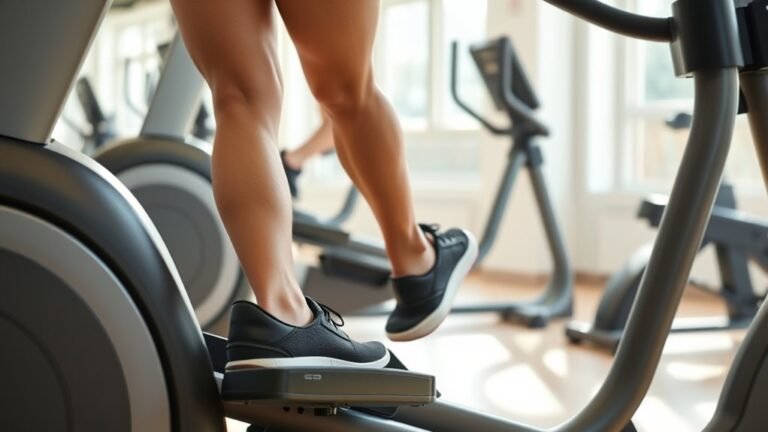
Keep your knees slightly bent and avoid locking them to absorb shock effectively. Engage your core and maintain an upright posture to distribute forces evenly throughout your body.
Maintain a slight knee bend and upright posture to absorb shock and evenly distribute impact.
Shorten your stride to prevent overextending, which can increase knee pressure. Swing your arms naturally to help with balance and rhythm.
Avoid looking down at your feet; instead, keep your gaze forward to promote better alignment. By practicing these form tips consistently, you’ll reduce knee strain and enjoy safer, more comfortable treadmill runs.
Recommended Treadmill Settings to Minimize Knee Strain
To protect your knees on a treadmill, you’ll want to adjust your settings carefully.
Keeping the incline between 1-3% can reduce joint impact, while sticking to a moderate speed helps avoid unnecessary strain.
Let’s look at how these tweaks make a difference in knee comfort.
Ideal Incline Levels
When you set your treadmill’s incline, choosing the right level can markedly reduce knee strain during your workout. Experts recommend keeping the incline between 1% and 3% for most sessions. This range mimics outdoor running conditions and helps distribute impact forces more evenly across your joints.
Going too steep, above 5%, increases stress on your knees and can cause discomfort or injury over time. On the other hand, running entirely flat (0% incline) may increase repetitive impact, so a slight incline is beneficial.
Start with 1% and adjust based on how your knees feel, focusing on a level that challenges you without causing pain. This balance helps protect your knees while maintaining an effective workout.
Optimal Speed Range
If you want to protect your knees during treadmill workouts, choosing the right speed is essential. Running too fast increases impact, while too slow may cause stiffness.
Aim for a speed that feels comfortable and natural, typically between 4 to 7 mph for most runners. This range helps reduce joint strain and maintain proper form.
| Speed (mph) | Knee Impact Level |
|---|---|
| 3.0 – 4.0 | Low |
| 4.0 – 5.5 | Moderate |
| 5.5 – 7.0 | ideal Balance |
| Above 7.0 | High |
Adjust your speed gradually, and listen to your body. Avoid sudden bursts — this approach keeps your knees safer and your workouts more effective.
Strengthening Exercises to Support Knee Stability
Although running on a treadmill can strengthen your legs, incorporating specific exercises that target muscles around your knees will better support stability and reduce injury risk. Focus on strengthening your quadriceps, hamstrings, and calf muscles to create a balanced support system for your knees.
Try exercises like squats, lunges, and step-ups to engage these key muscle groups. Don’t forget to include hip-strengthening moves such as clamshells or side leg lifts, as strong hips help maintain proper knee alignment during running.
Additionally, work on your core to improve overall stability. By regularly performing these targeted exercises, you’ll enhance knee support, reduce strain, and enjoy treadmill running with less discomfort or risk of injury.
Consistency is key—make strength training part of your routine. It really makes a difference!
When to See a Doctor for Knee Pain After Running
Experiencing knee pain after running on a treadmill isn’t uncommon, but knowing when to consult a doctor can prevent minor issues from becoming serious.
If your knee pain lasts more than a few days, worsens despite rest, or limits your ability to walk or bend your knee, it’s time to see a healthcare professional.
Sudden swelling, a popping sound during the injury, or instability where your knee feels like it might give out also warrant prompt medical attention.
Don’t ignore persistent discomfort or pain that disrupts your daily activities.
Early diagnosis and treatment can help you avoid long-term damage and get you back to running safely with proper care and guidance.
Frequently Asked Questions
Can Treadmill Running Improve Overall Cardiovascular Fitness?
Yes, treadmill running can improve your cardiovascular fitness by providing consistent aerobic exercise. You can boost heart health, endurance, and lung capacity while controlling speed and incline to match your fitness level and goals.
It’s pretty convenient too, since you can run regardless of the weather. Plus, adjusting the settings lets you tailor your workout to exactly what you need. So, it’s a great way to stay on track and make steady progress.
How Do Outdoor Running and Treadmill Running Compare for Calorie Burn?
Think of outdoor running as a wild river, burning more calories with natural resistance. It’s like your body has to work a bit harder to keep up.
Treadmill running, on the other hand, is a calm stream—steady but slightly easier. You’ll burn calories in both, but the outdoors gives you that extra edge.
What Are the Best Shoes Specifically Designed for Treadmill Running?
You’ll want shoes with good cushioning, like the Brooks Ghost, ASICS Gel-Nimbus, or Nike Air Zoom Pegasus. They absorb treadmill impact well, offer stability, and keep your feet comfortable during your indoor runs.
These shoes are designed to handle the unique demands of treadmill running, so you get both support and comfort. Plus, they help reduce the risk of injury by cushioning every step.
Can Treadmill Workouts Help With Weight Loss More Than Walking Outside?
Sure, if you want to race a hamster in a wheel! Treadmills can boost weight loss by controlling speed and incline.
But outside walking offers fresh air and scenery—you’ll burn calories either way, so pick what keeps you moving!
How Does Treadmill Running Affect Mental Health and Stress Levels?
Running on a treadmill boosts your mental health by releasing endorphins, reducing stress, and improving mood. It also offers a controlled environment, letting you focus and stay consistent.
This helps manage anxiety and enhance overall well-being. Plus, knowing exactly what to expect can make the whole experience less stressful and more enjoyable.
Conclusion
So, worried your treadmill is secretly plotting against your knees? Don’t panic just yet. While pounding the belt might sound like a villainous act, a little care—like proper form, smart settings, and some knee-friendly exercises—can keep you running smoothly.
Remember, your knees aren’t fragile antiques; treat them well, and they’ll keep up. But if pain crashes the party, don’t play hero—get it checked. Your knees will thank you, and so will your future self.
In short, treadmills aren’t necessarily bad for your knees if you take the right precautions. Maintaining good running form, adjusting treadmill settings to reduce impact, and incorporating knee-strengthening exercises are key to protecting your joints. Listening to your body and addressing any knee pain early can prevent long-term damage. So, enjoy your treadmill workouts confidently, knowing you’re taking smart steps to safeguard your knees while running.