How Much Incline Is Ideal on a Treadmill?
You should start your treadmill incline at 1-3% to mimic outdoor conditions and avoid overexertion. This small incline helps your workout feel more natural and can reduce the impact on your joints. It’s a great way to get comfortable with incline training without pushing yourself too hard.
As you progress, gradually increase to 5-7% for a balanced intensity that boosts calorie burn and muscle strength without stressing your joints. This range is ideal for getting more out of your treadmill sessions while still being safe.
Higher inclines (8%+) work well for short strength intervals but aren’t ideal for long sessions.
Adjust incline based on your goals and fitness level, and prioritize good posture for safety. Keep going to discover how to make incline workouts even more effective. You’ve got this!
Key Takeaways
– Beginners should start with a 1-3% incline to simulate outdoor walking and avoid overexertion.
It’s a gentle way to get your body used to the treadmill without pushing too hard right away.
– A moderate incline of 5-7% balances workout intensity with joint safety for longer sessions.
This level helps you get a good workout while keeping things safe for your knees and hips.
– Higher inclines above 8% are best for short, targeted strength or muscle toning intervals.
These steeper angles really challenge your muscles but aren’t meant for long durations.
– Gradually increase incline by 1-2% weekly or biweekly to reduce injury risk and promote adaptation.
Taking it slow helps your body adjust and keeps you from getting hurt.
– Maintaining good posture and listening to your body ensures safe and effective incline workouts.
Always pay attention to how you feel and adjust when needed—you’ll get the most out of your treadmill time that way.
Benefits of Using an Incline on a Treadmill

When you add an incline to your treadmill workout, you boost the intensity without increasing speed. This means you can challenge your muscles more effectively while reducing joint impact.
Inclines engage your glutes, hamstrings, and calves, helping you build strength and tone your lower body. You’ll also improve your cardiovascular fitness since walking or running uphill forces your heart and lungs to work harder.
Plus, using inclines can break the monotony of flat treadmill sessions, keeping your workouts more interesting and motivating. Incline workouts also enhance your balance and stability by requiring more control and coordination.
How Incline Affects Calorie Burn

How much more energy do you burn by adding an incline to your treadmill workout? Even a small incline can markedly increase your calorie burn because it forces your muscles to work harder.
When you walk or run uphill, your body recruits extra muscle groups, especially in your glutes, hamstrings, and calves. This boosts your overall energy expenditure. Here’s how incline affects calorie burn:
- A 5% incline can increase calorie burn by up to 50% compared to flat running.
- Higher inclines require more effort, leading to greater cardiovascular and muscular engagement.
- You burn more calories per minute, making workouts shorter but more effective.
- Incline training can help break plateaus by challenging your body differently than flat terrain.
Adding incline is a smart way to maximize your treadmill workouts. Give it a try and see the difference!
Optimal Incline for Beginners
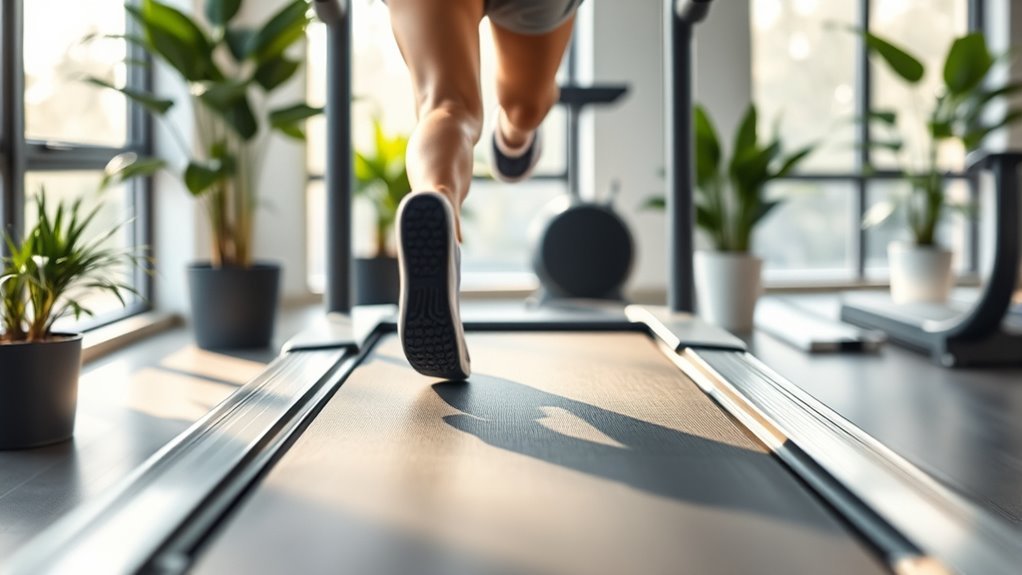
When you’re just starting out, setting the incline between 1% and 3% is a smart choice to avoid overexertion. You can gradually increase the incline as your fitness improves to challenge yourself safely.
This steady progression helps build endurance without risking injury. It’s all about taking it one step at a time and listening to your body.
Starting Incline Levels
Although starting on a treadmill might feel intimidating, setting a gentle incline between 1% and 3% can help you build endurance without overwhelming your muscles. This slight incline mimics outdoor walking conditions, increasing calorie burn and activating more muscles safely.
You’ll find it easier to maintain proper posture and breathing at these levels as you adapt. Keep your pace comfortable and focus on consistency.
Consider these tips for starting incline levels:
- Begin with 1% incline to simulate flat outdoor terrain
- Increase to 2-3% as you feel more confident
- Avoid inclines above 3% initially to prevent strain
- Listen to your body and adjust based on comfort
Starting gently sets a solid foundation for your treadmill workouts. Give it a try and see how your body responds!
Gradual Incline Progression
As you get comfortable with initial incline levels, gradually increasing the incline helps you build strength and endurance without risking injury. Start by adding just 1% to 2% incline every week or two, depending on how your body feels.
This slow progression lets your muscles adapt and prevents overuse injuries. Pay attention to your breathing and muscle fatigue—if you feel excessive strain, hold the incline steady until you feel ready to increase.
Using gradual incline progression also keeps your workouts challenging and engaging, which helps maintain motivation. Remember, consistency beats intensity when you’re beginning.
Stick to manageable increments, and soon you’ll notice improvements in your stamina and leg strength, making your treadmill sessions more effective and enjoyable.
Ideal Incline for Endurance Training
If you want to boost your endurance, setting the treadmill incline between 1% and 3% mimics outdoor running conditions and challenges your muscles more effectively. This slight incline helps improve cardiovascular fitness without overloading your joints.
It also increases calorie burn, making your workouts more efficient. When you train on an incline in this range, you build stamina and prepare your body for varied terrain.
Here’s why this incline range works well for endurance training:
- Simulates natural outdoor running resistance
- Enhances aerobic capacity
- Reduces impact compared to steeper inclines
- Encourages longer workout sessions without excessive fatigue
Using Incline to Build Muscle Strength
When you increase the treadmill incline beyond 5%, you engage your muscles more intensely, helping you build strength in your legs, glutes, and core. Walking or running uphill forces your muscles to work harder against gravity, which stimulates muscle growth and endurance.
To maximize strength gains, consider intervals where you alternate between flat and steep inclines. This variation challenges your muscles differently and prevents plateaus.
Focus on maintaining good posture and controlled movements to target the right muscle groups effectively. Adding incline also engages stabilizing muscles, improving overall balance and coordination.
Impact of Incline on Joint Health
When you adjust the incline on your treadmill, you can reduce joint stress while still engaging key muscles effectively. Using the right incline level helps protect your joints and boosts muscle benefits without overdoing it.
Let’s explore safe incline guidelines to keep your workouts both effective and joint-friendly. It’s all about finding that sweet spot where you challenge yourself but don’t strain your body.
Joint Stress Reduction
Although running or walking on a flat treadmill surface can strain your joints, adding an incline reduces impact by encouraging a more natural gait and distributing pressure more evenly.
When you increase the incline, you lessen the pounding on your knees and hips, which helps prevent joint pain and long-term wear.
Inclines also promote better posture, reducing unnecessary stress on your lower back.
By adjusting the slope, you can control how much pressure your joints absorb.
Consider these benefits of incline for joint stress reduction:
- Lowers joint impact forces compared to flat surfaces
- Encourages proper foot strike and alignment
- Reduces repetitive stress injuries by varying movement patterns
- Supports cartilage health through controlled loading
Using incline wisely can protect your joints and keep you moving pain-free.
Muscle Engagement Benefits
Increasing the incline on your treadmill activates more muscle groups, which helps support and protect your joints from strain. When you walk or run uphill, your calves, hamstrings, glutes, and even your core work harder to stabilize your body.
This increased muscle engagement improves joint stability by reinforcing the muscles around your knees, hips, and ankles. Stronger muscles act as shock absorbers, reducing the impact forces transmitted to your joints.
Over time, this can lead to better joint health and decreased risk of injuries. Plus, engaging diverse muscles helps correct imbalances that could contribute to joint pain.
Safe Incline Guidelines
Engaging your muscles through incline workouts supports joint health, but it’s important to use safe incline levels to avoid unnecessary strain. When you increase the treadmill incline, your joints—especially knees and hips—work harder.
To protect them, keep the incline moderate and listen to your body’s signals. Avoid sudden, steep inclines that could cause discomfort or injury.
Here are some guidelines to follow:
- Start with a 1-2% incline to simulate outdoor walking and reduce joint impact.
- Gradually increase incline by no more than 1% per session to allow adaptation.
- Limit incline to around 5-7% for longer workouts to balance intensity and joint safety.
- Stop or reduce incline immediately if you feel joint pain or excessive fatigue.
Following these tips helps you build strength without compromising joint health. Give your body time to adjust, and you’ll be on your way to safer, more effective workouts.
Adjusting Incline Based on Fitness Goals
When you tailor the treadmill incline to your fitness goals, you can maximize your workout’s effectiveness. If you aim to build endurance, keeping a moderate incline between 1% and 3% simulates outdoor running without overwhelming your muscles.
For fat loss and calorie burning, increasing the incline to 5%–7% challenges your cardiovascular system and engages more muscle groups, boosting metabolism. If strength and muscle toning are your priorities, use higher inclines of 8% or more, focusing on shorter intervals to prevent fatigue.
Tips for Safely Incorporating Inclines Into Your Workout
Although adding incline can enhance your treadmill workout, you should introduce it gradually to avoid injury and excessive fatigue. Start by increasing the incline by just 1-2% and monitor how your body responds.
Don’t rush into steep inclines; your muscles and joints need time to adapt. Always maintain proper posture to reduce strain, keeping your back straight and shoulders relaxed.
Incorporate incline intervals rather than steady inclines to build endurance safely. Finally, listen to your body—if you feel pain or excessive discomfort, lower the incline or take a break.
- Warm up before increasing incline to prepare muscles
- Use moderate incline levels initially (1-3%)
- Combine incline with walking or jogging intervals
- Stay hydrated and rest adequately between sessions
Frequently Asked Questions
Can Incline Settings Vary by Treadmill Brand or Model?
Yes, incline settings can vary by treadmill brand or model. You’ll find differences in maximum incline levels, adjustment increments, and motor power.
How Does Treadmill Incline Compare to Outdoor Hill Running?
Treadmill incline simulates outdoor hill running by increasing effort, but you won’t get natural terrain variations or wind resistance. You’ll still build strength and endurance, but outdoor hills challenge your balance and muscles differently.
It’s kind of like comparing apples to oranges. On a treadmill, the surface is consistent and predictable, which makes it easier on your joints. Meanwhile, outdoor hills force you to adapt to uneven ground and changing conditions, which can help improve your agility and proprioception.
Is Incline Training Effective for Weight Loss Alone?
Incline training’s like adding rocket fuel to your weight loss—it’s effective alone because it boosts calorie burn and muscle engagement.
But combining it with good nutrition and cardio maximizes your results, so don’t rely on incline alone.
Can Incline Walking Replace Running for Cardio Benefits?
Yes, incline walking can replace running for cardio benefits if you push yourself enough. It boosts heart rate, burns calories, and reduces impact on joints.
How Often Should Treadmill Incline Settings Be Changed?
You should change your treadmill incline settings every few sessions to challenge different muscles and prevent plateaus.
Mixing inclines keeps workouts engaging and helps improve strength, endurance, and calorie burn effectively over time.
Plus, switching things up can make your routine less boring and more motivating. So, don’t be afraid to adjust that incline now and then!
Conclusion
So, you want the perfect treadmill incline? Just set it to “suffer” and call it a day—kidding! The ideal incline really depends on your goals. Are you torching calories, building muscle, or just pretending you’re climbing Everest?
Start small, listen to your joints, and adjust as you go. It’s all about finding what feels right for you without causing pain or injury.
Remember, the only thing you should incline to is having fun. If your treadmill starts feeling like a medieval torture device, maybe dial it back a notch!
In conclusion, the ideal treadmill incline varies based on your fitness goals. Whether you want to burn more calories, strengthen your legs, or improve endurance, starting with a moderate incline—around 1% to 3%—is usually best. This helps mimic outdoor walking or running and reduces joint stress. Always listen to your body and gradually increase the incline to avoid injury. The key is to find a balance that challenges you while keeping your workout enjoyable and sustainable. After all, the best treadmill incline is one that keeps you motivated and coming back for more!