How Do Vibration Plates Help Varicose Veins
Vibration plates help your varicose veins by stimulating your leg muscles to contract, which boosts blood flow and reduces blood pooling. This improved circulation aids venous return, easing swelling, heaviness, and discomfort without relying on compression devices or surgery.
The gentle pulses from vibration plates also promote vein elasticity and overall circulation, supporting vein health in a natural way. Using them regularly as part of your routine can deliver noticeable relief.
If you want to understand how they work in detail and how to use them safely, keep exploring the benefits. It’s a simple, non-invasive option that many find helpful for managing varicose veins.
Key Takeaways
- Vibration plates stimulate leg muscles, which helps enhance venous return and reduce blood pooling in varicose veins. Basically, they get your legs working better without much effort.
- The rapid pulses from the plates activate muscle contractions. This improves circulation and supports vein elasticity, making your veins healthier overall.
- Plus, they promote lymphatic drainage. That means less swelling and heaviness in your legs, which can feel like a big relief.
- Using vibration plates regularly can improve how your vein valves function. This helps lower venous pressure in a gentle, non-invasive way.
- Think of vibration plates as a natural, supportive tool. They work well alongside lifestyle changes to manage varicose vein symptoms effectively.
Understanding Varicose Veins and Their Causes
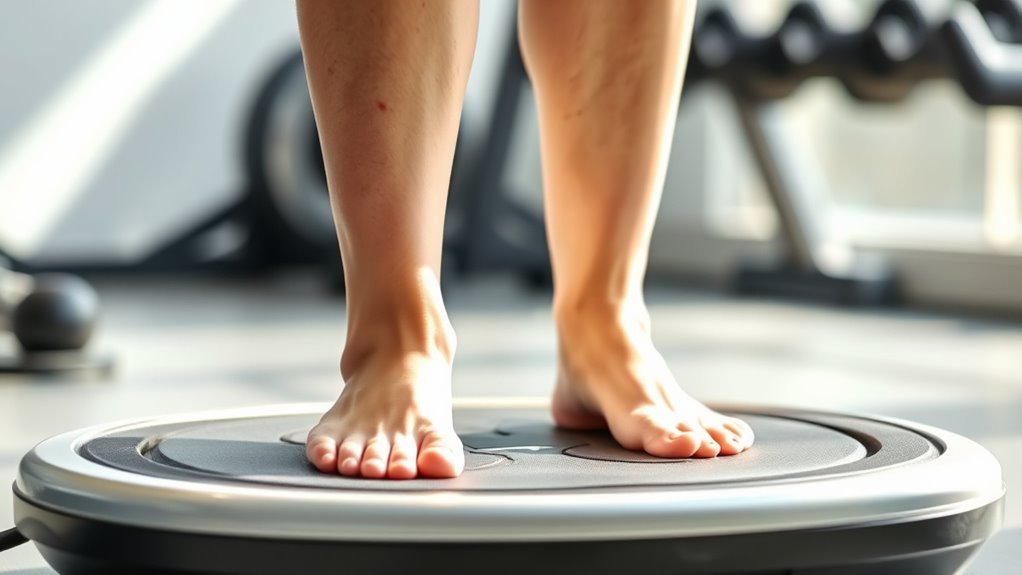
Although varicose veins often appear as a cosmetic concern, they result from weakened valves and damaged vein walls that cause blood to pool and veins to enlarge. You might notice these twisted, bulging veins mostly on your legs, where blood fights gravity to return to your heart.
When the valves inside your veins don’t close properly, blood leaks backward and collects, increasing pressure and causing the veins to stretch. Factors like genetics, age, pregnancy, prolonged standing, and obesity can make you more prone to varicose veins.
Understanding these causes helps you recognize why lifestyle changes and certain therapies might reduce symptoms and prevent worsening. Taking care of your vein health early can make a difference before varicose veins become painful or lead to complications.
The Science Behind Vibration Plate Therapy
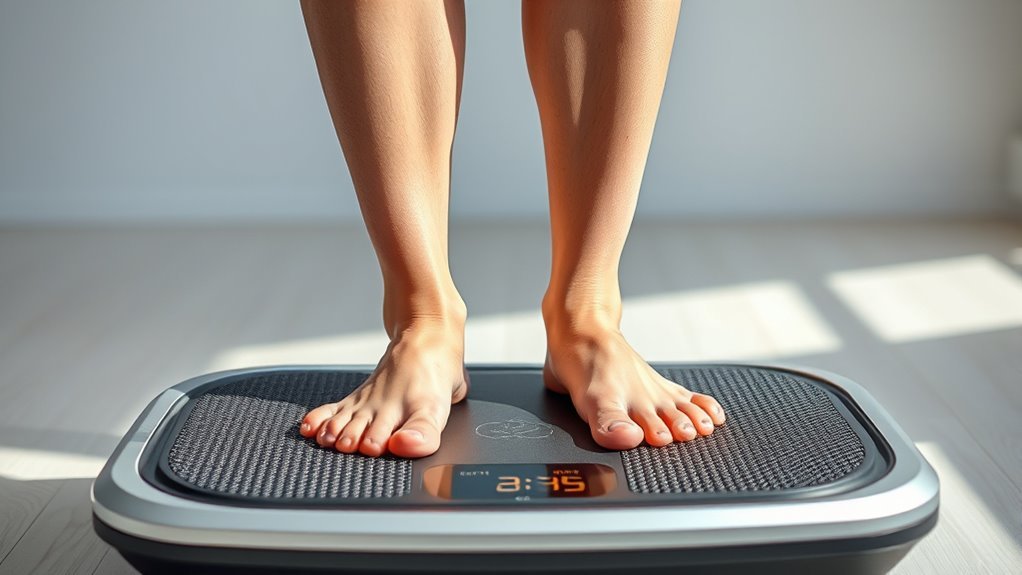
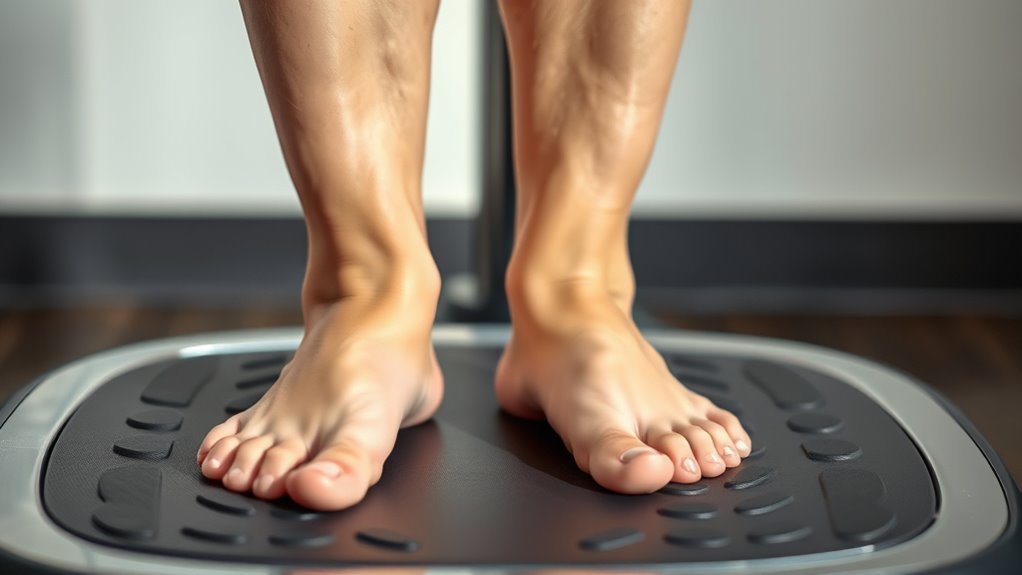
When you stand or exercise on a vibration plate, the device sends rapid, gentle pulses through your muscles and veins, stimulating circulation and muscle contractions. These vibrations activate your muscle spindles, causing reflexive muscle tightening, which helps improve muscle tone and strength.
This process also engages your lymphatic system, encouraging the removal of toxins and excess fluid. The mechanical oscillations influence the endothelial cells lining your blood vessels, promoting nitric oxide production, which supports vessel flexibility.
How Vibration Plates Improve Blood Circulation
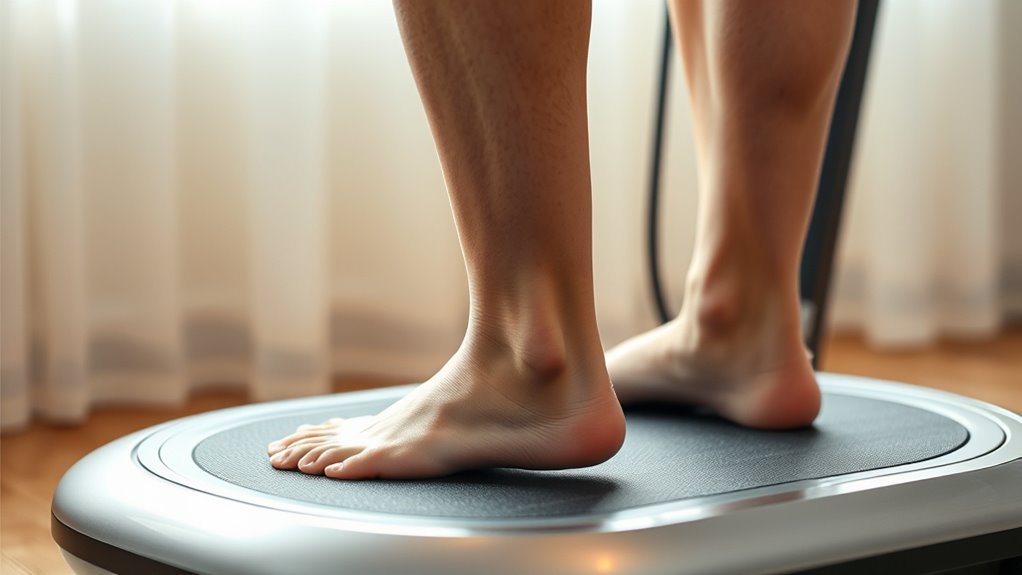
You’ll notice that vibration plates help boost your blood flow by enhancing venous return and stimulating capillary circulation. This increased movement reduces blood pooling, which often contributes to varicose veins.
Let’s explore how these effects work together to improve your overall vascular health. It’s pretty interesting how simple vibrations can make such a difference!
Enhancing Venous Return
Since your veins rely on muscle contractions to push blood back toward the heart, vibration plates can play a crucial role by stimulating these muscles. When you stand or perform light exercises on a vibration plate, the rapid oscillations cause your muscles to contract involuntarily.
These contractions act like a natural pump, helping to propel blood upward against gravity. This enhanced venous return reduces pooling of blood in your legs, which is a common problem with varicose veins.
Stimulating Capillary Flow
Building on how vibration plates enhance venous return, they also stimulate capillary flow, which plays a key role in improving blood circulation at a microvascular level.
When you use a vibration plate, the mechanical oscillations cause tiny capillaries to dilate and contract rhythmically. This action boosts nutrient and oxygen exchange while accelerating waste removal from tissues.
As a result, your skin and muscles receive better nourishment. This helps support vein health and reduces discomfort often linked to varicose veins.
| Benefit | Mechanism | Effect on Circulation |
|---|---|---|
| Capillary dilation | Rhythmic mechanical stress | Increased blood flow |
| Nutrient delivery | Enhanced capillary exchange | Improved tissue health |
| Waste removal | Stimulated microcirculation | Reduced toxin buildup |
| Oxygen supply | Enhanced capillary perfusion | Better cellular function |
| Microvascular tone | Improved vessel elasticity | Healthier veins |
Reducing Blood Pooling
How does a vibration plate help reduce blood pooling in your legs? When you stand or sit for long periods, blood tends to collect in your lower limbs, causing discomfort and worsening varicose veins.
Vibration plates activate your leg muscles through rapid, gentle oscillations. This stimulation causes muscle contractions that push blood back toward your heart.
This enhanced muscle pump effect prevents blood from stagnating in your veins. Plus, the vibrations promote venous valve function, which reduces the chance of blood flowing backward and pooling.
By improving overall circulation, vibration plates help decrease swelling and heaviness in your legs. Using them regularly can support healthier veins and reduce symptoms linked to varicose veins.
In the end, this makes your legs feel lighter and more energized throughout the day.
Effects of Whole-Body Vibration on Venous Health
When you use whole-body vibration, it boosts your blood circulation, helping veins work more efficiently. This improved flow can lower the pressure in your veins, easing discomfort linked to varicose veins.
Understanding these effects helps you see how vibration plates support your venous health. It’s pretty neat how something as simple as vibration can make a difference!
Improved Blood Circulation
Although varicose veins can cause discomfort and swelling, you can improve your venous health by enhancing blood circulation through whole-body vibration. When you use a vibration plate, the gentle vibrations stimulate your muscles and blood vessels, encouraging blood to flow more efficiently back to your heart.
This increased circulation helps prevent blood from pooling in your veins, which is a common issue with varicose veins. By promoting better blood flow, vibration plates can reduce the feeling of heaviness and fatigue in your legs.
Additionally, this improved circulation supports the delivery of oxygen and nutrients to your vein walls, helping maintain their strength and elasticity. So, incorporating whole-body vibration into your routine offers a practical way to boost venous health naturally and effectively.
Reduced Venous Pressure
Along with improving blood circulation, whole-body vibration also helps reduce venous pressure, a key factor in managing varicose veins. When you use a vibration plate, the rhythmic contractions of your muscles encourage blood to flow more efficiently back to your heart.
This reduces the pressure in your veins, which often causes them to become swollen and painful. By lowering this venous pressure, you ease the strain on your vein walls and valves, helping prevent further vein damage.
Consistent use of vibration plates can promote healthier veins and reduce symptoms like swelling and discomfort. So, incorporating whole-body vibration into your routine can be a practical way to support your vein health and manage varicose veins more effectively.
Muscle Activation and Venous Return Enhancement
Because vibration plates stimulate your muscles through rapid, small movements, they help activate muscle fibers that support blood flow. This muscle activation plays a vital role in enhancing venous return—the process of blood flowing back to your heart.
When your leg muscles contract, they squeeze the veins, pushing blood upward and preventing it from pooling in your lower limbs. Using a vibration plate regularly can improve this muscle pump function, reducing the pressure that contributes to varicose veins.
As your muscles engage more effectively, venous valves work better, minimizing blood backflow and swelling. So, by boosting muscle activity, vibration plates support healthier circulation, which can ease the discomfort associated with varicose veins and promote overall vein health.
Comparing Vibration Plates With Traditional Treatments
When you consider managing varicose veins, vibration plates offer a different approach compared to traditional treatments like compression stockings or surgical procedures. Instead of relying on external pressure or invasive methods, vibration plates stimulate your muscles to enhance blood flow naturally.
While compression stockings help by physically supporting veins and surgery removes or closes damaged veins, vibration plates work by activating your leg muscles to improve venous return. This method is non-invasive and can be done at home, making it convenient for daily use.
However, vibration plates may not replace medical treatments for severe cases but can complement them by boosting circulation. So, if you’re looking for a less intrusive way to support vein health, vibration plates could be a valuable addition to your routine.
Recommended Usage and Safety Tips for Vibration Plates
To get the most benefit from vibration plates while protecting your veins, you should follow recommended usage guidelines and safety tips. Start with short sessions, around 10-15 minutes, and gradually increase as your body adapts.
Use low to moderate intensity settings to avoid overstressing your veins. Always stand with slightly bent knees to reduce pressure on your joints and improve circulation.
Wearing compression stockings during sessions can support your veins even more. Avoid using vibration plates if you’re pregnant, have deep vein thrombosis, or suffer from severe cardiovascular issues without consulting your doctor first.
Keep hydrated and listen to your body. If you experience pain, dizziness, or swelling, stop using the vibration plate right away.
Following these precautions helps ensure safe, effective use of vibration plates for varicose vein support. It’s all about taking it easy and paying attention to how you feel.
Real-Life Experiences and Clinical Findings on Vibration Plate Benefits
Although individual results vary, many people report noticeable improvements in vein health and reduced discomfort after using vibration plates consistently. You might find that your legs feel less swollen and heavy, and the appearance of varicose veins may diminish over time.
Clinical studies support these experiences, showing enhanced blood circulation and lymphatic drainage with vibration therapy. When you use a vibration plate, the muscle contractions help stimulate blood flow, which can reduce pressure on your veins and alleviate symptoms.
However, it’s important to combine this with proper lifestyle habits like regular walking and leg elevation. Keep in mind, vibration plates aren’t a cure but can be a helpful part of managing varicose veins alongside medical advice.
Frequently Asked Questions
Can Vibration Plates Prevent Varicose Veins From Developing?
You can’t rely solely on vibration plates to prevent varicose veins, but they can improve circulation and muscle tone.
Using them alongside regular exercise and healthy habits really boosts your chances of avoiding vein issues.
So, think of vibration plates as a helpful tool—not a magic fix.
Stay active and take care of your overall health to keep those veins in check!
Are Vibration Plates Suitable for All Age Groups With Varicose Veins?
You might think vibration plates suit all ages, but they’re not always safe for everyone with varicose veins. Always check with a doctor first since age, health, and vein severity affect how well they work for you.
It’s important to remember that what works for one person might not be ideal for another. So, a quick chat with your healthcare provider can help you decide if vibration plates are a good fit for your situation.
How Long Does It Take to See Visible Results From Vibration Plate Use?
You’ll usually see visible results from vibration plate use within 4 to 6 weeks, provided you use it consistently 3 to 4 times a week.
Results can vary based on your body’s response and overall health. So, keep at it and listen to what your body tells you along the way.
Can Vibration Plates Be Used Alongside Compression Stockings?
Absolutely, you can kill two birds with one stone by using vibration plates alongside compression stockings.
Just make sure to consult your doctor first, so you’re safe and get the best results from both treatments.
Do Vibration Plates Help Reduce Pain Associated With Varicose Veins?
Yes, vibration plates can help reduce pain from varicose veins by improving blood circulation and relaxing your muscles. They stimulate your veins, which may ease discomfort and swelling.
This can make you feel more comfortable overall. It’s a simple way to give your legs some relief without too much effort.
Conclusion
Using vibration plates for varicose veins is like giving your legs a gentle wake-up call. They encourage better blood flow and muscle activity, which is crucial when dealing with varicose veins.
By stimulating circulation and enhancing venous return, these plates help reduce the discomfort and swelling that often come with varicose veins. It’s a way to support your legs without invasive treatments.
While vibration plates aren’t a complete cure, incorporating vibration therapy alongside traditional treatments can bring noticeable relief. Just remember to use them safely and consistently for the best results.
In summary, vibration plates offer a helpful boost for managing varicose veins by improving circulation and reducing symptoms. When combined with other treatments, they can make a real difference in comfort and leg health. So, if you’re looking for a non-invasive option to support your veins, vibration therapy might be worth trying.