How to Identify Ziva Dumbbells in KG
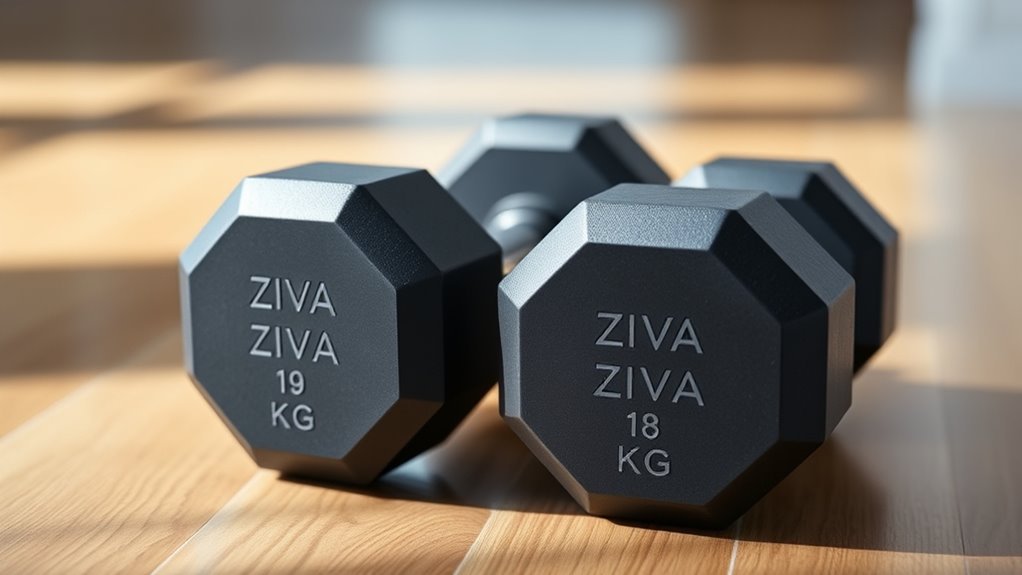
You can identify Ziva dumbbells in kilograms by checking for clear weight markings engraved or printed on the handle or plates. These markings are usually in standard increments like 2, 4, 6, or 8 kg, making it easier to spot the exact weight.
Feel the ergonomic grip and note the durable material, which is often cast iron or steel. This quality construction really sets Ziva dumbbells apart from others.
To be sure, weigh them on a reliable scale to confirm their accuracy. If you want to choose the right weight and spot authentic features, keep exploring further details. It’s always good to know exactly what you’re lifting!
Key Takeaways
- Check for clear kilogram weight markings engraved or printed on both sides of the dumbbell handle or plates.
- Verify the dumbbell weight using a reliable scale to confirm it matches the labeled kilograms precisely.
- Identify Ziva dumbbells by their ergonomic knurled steel grips and durable, high-grade material construction.
- Look for standardized kg increments and consistent branding logos unique to Ziva models on the dumbbell surface.
- Confirm color schemes and weight plate shapes that correspond to Ziva’s recognized design and weight range patterns.
Understanding Ziva Dumbbell Weight Markings
How can you quickly tell what weight your Ziva dumbbells are? Look for the weight markings typically engraved or printed on the dumbbell’s handle or plates. These markings usually display the weight in kilograms (kg), making it easy to identify.
Sometimes, the numbers are raised or colored for better visibility, so check both sides of the dumbbell. If the markings are worn, you can compare the dumbbell’s size and thickness to others in your set, as heavier weights tend to be bulkier.
Common Weight Increments for Ziva Dumbbells in KG
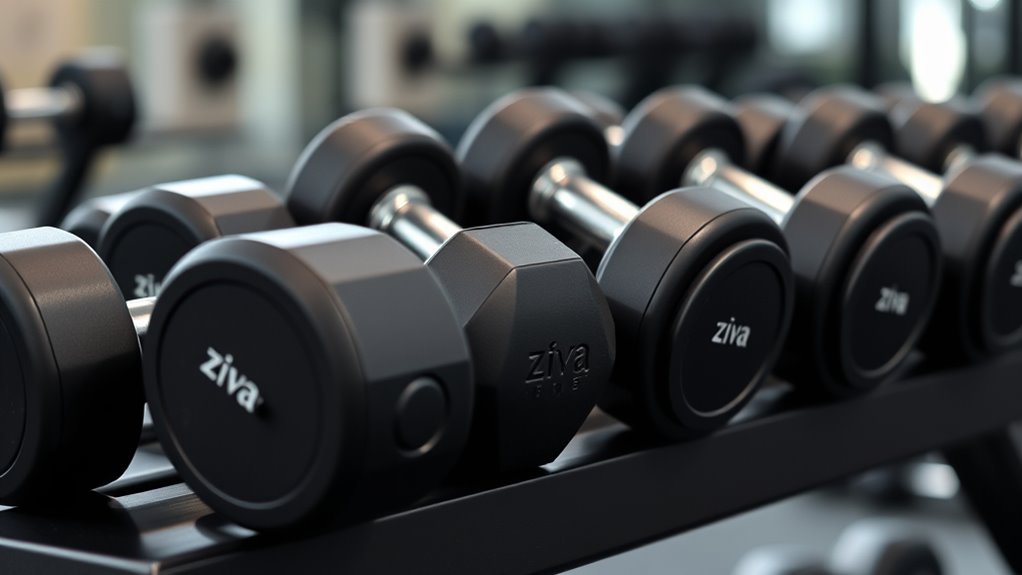
When you pick up Ziva dumbbells, you’ll notice they come in standard weight sizes measured in kilograms. These weights usually increase in consistent increments, which makes it easier to track your progress.
Let’s look at the most popular sets and how their weight ranges are organized. It really helps when you know what to expect, right?
Standard Ziva Weight Sizes
Wondering what weight options Ziva dumbbells offer? You’ll find they cover a practical range to fit various strength levels and workout needs.
Here are the standard Ziva weight sizes you can expect:
- 2 kg – Perfect for beginners or light toning exercises.
- 4 kg – Great for intermediate users focusing on endurance.
- 6 kg – Ideal for those building moderate strength.
- 8 kg – Suitable for advanced workouts requiring heavier resistance.
These standard sizes make it easy to select the right dumbbells for your routine. Each weight is clearly marked in kilograms, helping you quickly identify and choose what fits your training goals.
Increment Patterns Explained
Although Ziva dumbbells come in standard weights, their increment patterns play an essential role in helping you progress smoothly. Typically, Ziva offers increments of 1 to 2 kilograms between lighter weights, allowing you to increase resistance gradually without overwhelming your muscles.
As the weights get heavier, increments usually jump by 2 to 5 kilograms, supporting strength gains while preventing plateaus. You’ll notice common jumps like 2 kg between 2 kg and 4 kg dumbbells, then 5 kg between 10 kg and 15 kg sets.
These increments let you tailor your workouts precisely, ensuring steady improvement. By understanding these patterns, you can select the right dumbbell weights to match your current ability and training goals effectively.
Popular Sets and Ranges
Since choosing the right dumbbell set is essential for effective training, Ziva offers popular ranges that cater to various fitness levels. You’ll find their dumbbells come in common weight increments that make progression straightforward.
Here are the typical sets you can expect:
- 1 kg to 5 kg, increasing by 0.5 kg – perfect for beginners focusing on toning.
- 2 kg to 10 kg, increasing by 1 kg – ideal for intermediate users building strength.
- 5 kg to 20 kg, increasing by 2.5 kg – suited for advanced lifters pushing heavier weights.
- Adjustable sets covering 2 kg to 24 kg with smaller increments for versatility.
These ranges help you identify Ziva dumbbells easily and tailor your workouts efficiently. It’s all about finding what fits your level and goals.
Identifying Material Types and Their Impact on Weight
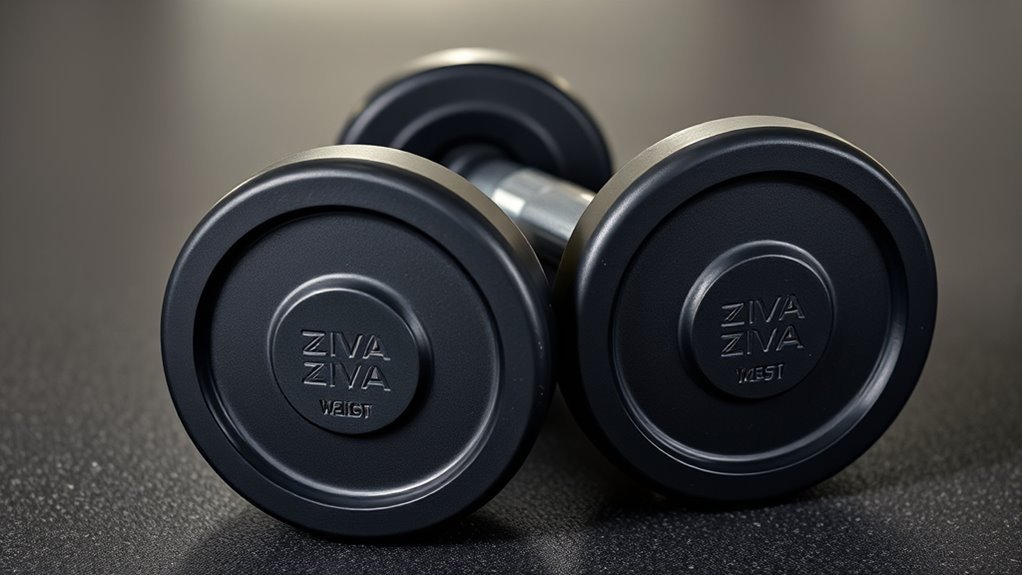
When choosing Ziva dumbbells, you’ll want to recognize the common materials like cast iron, rubber, and steel. Each material affects the dumbbell’s weight and durability differently, so knowing this helps you pick the right one for your workouts.
Let’s explore how these material types impact both weight and longevity. Understanding this can make a big difference in your training experience.
Common Dumbbell Materials
Understanding the materials used in Ziva dumbbells can help you choose the right set for your workouts. Different materials affect durability, grip, and overall feel.
Here are four common types:
- Cast Iron: Classic and sturdy, it offers a solid feel and long-lasting performance.
- Steel: Often used in adjustable dumbbells, it provides strength and a sleek appearance.
- Rubber-Coated: Protects floors and reduces noise, making it ideal for home gyms.
- Neoprene: Lightweight with a comfortable grip, perfect for light workouts and beginners.
Each material suits different workout styles and environments. Knowing these will guide you in picking Ziva dumbbells that match your needs without guessing.
Material Weight Differences
Different materials not only affect the feel and durability of Ziva dumbbells but also influence their overall weight and balance. When you pick up a dumbbell, you might notice that cast iron feels denser and heavier for its size compared to rubber-coated options.
Steel dumbbells often offer a sleek design but can vary in weight depending on their hollow or solid construction. Rubber-coated dumbbells tend to be lighter, as the rubber adds cushioning without substantially increasing weight.
Understanding these material weight differences helps you choose dumbbells that match your training needs and comfort. When identifying Ziva dumbbells by weight, pay attention to the material composition since two dumbbells with the same size might differ in kilograms due to their materials.
Durability and Weight Impact
Although material types vary, each one directly affects both the durability and weight of Ziva dumbbells, influencing how they perform over time. When you choose your dumbbells, understanding these impacts helps you pick the right set for your needs.
Cast iron offers excellent durability but adds considerable weight. It’s ideal for heavy lifting and those who want something sturdy.
Neoprene coating reduces wear and tear, protecting the dumbbells from scratches. It does add a bit of extra weight, though.
Rubber-coated dumbbells absorb shock and noise, which extends their lifespan. Plus, they offer a comfortable grip.
Steel components provide strength with less bulk. That means you get lighter dumbbells without sacrificing durability.
Visual Cues to Differentiate Ziva Dumbbell Models
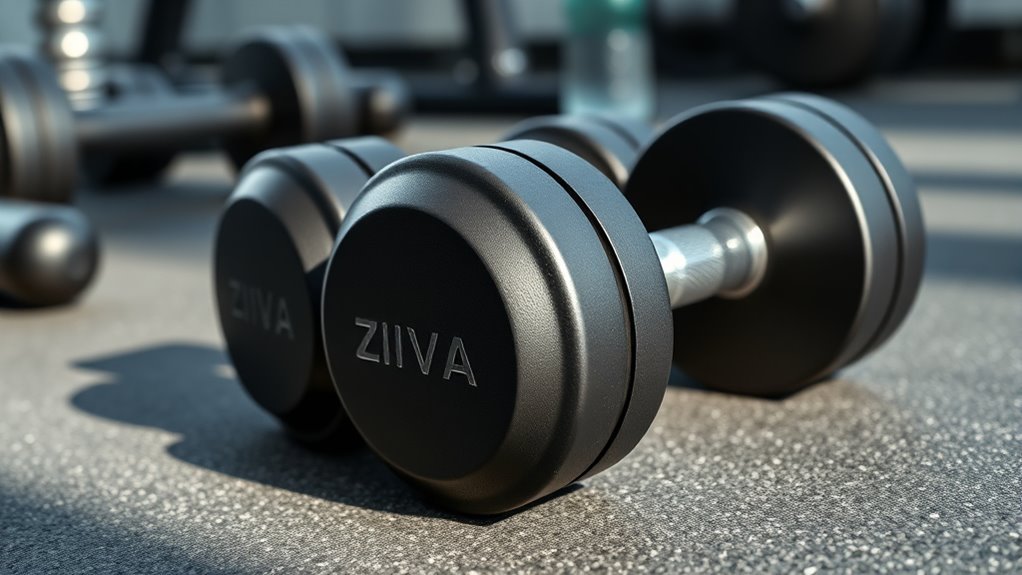
When you look closely at Ziva dumbbells, you’ll notice distinct visual cues that help identify each model quickly. First, check the handle design—some models feature knurled steel grips, while others have smooth rubberized handles for better comfort.
The shape of the weight plates also varies: classic round plates indicate older models, whereas hexagonal or uniquely contoured plates signal newer releases. Pay attention to the color scheme; Ziva often uses specific colors for different weight ranges or series, such as black with silver accents or solid matte finishes.
The logo placement and style can differ slightly, too, with some dumbbells showcasing engraved logos and others printed ones. By focusing on these visual details, you can distinguish Ziva dumbbell models at a glance without needing extra tools.
Using Manufacturer Labels and Serial Numbers
How can you quickly verify the exact model of your Ziva dumbbell? Check the manufacturer labels and serial numbers. These details offer a reliable way to identify your dumbbell accurately.
Here’s what you should do:
- Locate the manufacturer label, usually found on the handle or inner side.
- Read the serial number printed on the label, which uniquely identifies the product.
- Cross-reference the serial number with Ziva’s official database or website.
- Confirm the model and production batch based on the serial number information.
It’s pretty straightforward once you know where to look! Just follow these steps, and you’ll have the exact model info in no time.
Verifying Weight Accuracy With a Scale
Since accuracy is crucial for effective training, you’ll want to verify your Ziva dumbbells’ weight using a reliable scale. Start by selecting a digital or mechanical scale that offers precise measurements in kilograms.
Place each dumbbell gently on the scale, ensuring it’s centered to avoid errors. Note the displayed weight and compare it to the weight indicated on the dumbbell’s label or manufacturer’s specifications.
If the weight differs markedly, your dumbbell might be mislabeled or counterfeit. To be sure, weigh each dumbbell multiple times and average the results.
This way, you can trust that your equipment matches your workout needs, preventing injuries and ensuring progress. Regularly verifying weight accuracy helps maintain the integrity of your training routine.
Comparing Ziva Dumbbells to Other Brands in KG
Although many dumbbell brands offer similar weight ranges, Ziva dumbbells stand out for their precise kilogram measurements and consistent quality. When you compare Ziva to other brands, keep these points in mind:
- Accuracy: Ziva dumbbells often have tighter weight tolerances, ensuring what you lift matches the label.
- Material: They use durable, high-grade materials that resist wear better than many competitors.
- Grip and Comfort: Ziva offers ergonomic designs that reduce hand fatigue during workouts.
- Weight Increments: Their kilogram increments are standardized, making it easier to track progress precisely.
Tips for Selecting the Right Weight for Your Fitness Level
When choosing the right weight for your fitness level, you need to balance challenge with safety to maximize progress. Start by selecting a weight that allows you to complete your exercise with proper form but feels challenging by the last few reps.
Balance challenge and safety by choosing a weight that maintains proper form yet feels tough by the last reps
If you’re new to strength training, begin with lighter Ziva dumbbells, around 2-5 kg, to build endurance and avoid injury. As you gain strength, gradually increase the weight in small increments.
Pay attention to how your muscles feel during and after workouts—if you struggle to finish sets or experience pain, reduce the weight. Remember, consistency matters more than lifting heavy.
Choosing the right Ziva dumbbells helps you train effectively while minimizing risk. This way, you stay motivated and on track toward your fitness goals.
Frequently Asked Questions
Where Are Ziva Dumbbells Manufactured?
Ziva dumbbells are manufactured in China. When you buy them, you’ll often find manufacturing details on the packaging or product description.
It’s always a good idea to check those to confirm the origin. Especially if you want authentic Ziva fitness equipment.
Are Ziva Dumbbells Suitable for Outdoor Use?
Yes, you can use Ziva dumbbells outdoors, but keep in mind they’re best suited for dry, flat surfaces.
Avoid wet or rough areas to prevent damage and maintain their grip and finish over time.
It’s all about keeping them in good shape while you get your workout done!
What Is the Warranty Period for Ziva Dumbbells?
You know what they say, “A stitch in time saves nine.”
Ziva dumbbells usually come with a one-year warranty. So, if you spot any defects or issues, you can rely on their support within that period.
Can Ziva Dumbbells Be Used for Rehabilitation Exercises?
Yes, you can use Ziva dumbbells for rehabilitation exercises. They come in various weights, so you can start light and gradually increase resistance.
This approach helps you rebuild strength safely and effectively during your recovery process. It’s a smart way to get back on track without overdoing it.
Do Ziva Dumbbells Come With a Storage Rack?
You won’t find a towering Ziva dumbbell storage rack turning your room into a gym fortress—they don’t come with one.
But you can easily grab a separate rack to keep your weights organized and tidy. It’s a simple way to keep things neat without any hassle.
Conclusion
Think of identifying Ziva dumbbells like reading a map on a fitness journey. Each marking and material is a signpost guiding you to the right weight, just as stars lead sailors home.
By trusting labels, visual cues, and scales, you guarantee your workout path is clear and effective. So, take these tools as your compass, helping you lift with confidence and reach your strength goals without losing your way.
When it comes to Ziva dumbbells in KG, look closely at the engraved or printed weight markings. These are usually clear and precise, making it easy to spot the exact kilogram measurement. Also, check the texture and color coding, as Ziva often uses consistent designs to differentiate weights.
Using a reliable scale can confirm the dumbbell’s weight if you’re unsure. This way, you can be sure you’re lifting the right load. Identifying Ziva dumbbells in KG correctly ensures your workouts are safe, effective, and tailored to your strength level. Keeping track of the right weight helps you progress steadily without injury or guesswork.