
Can Gym Memberships Be Paid With HSA?
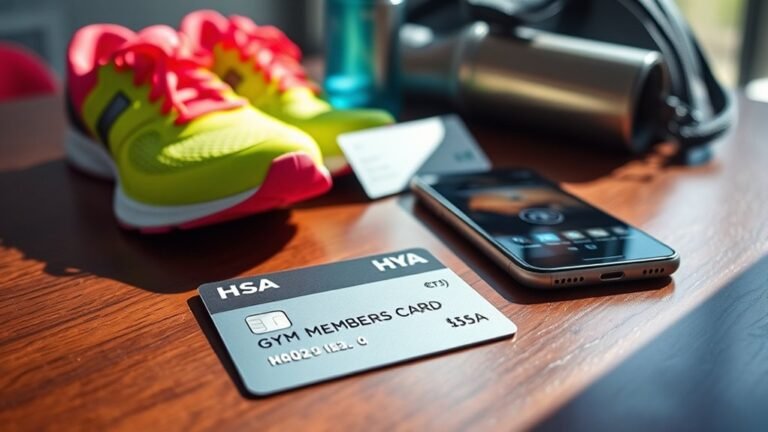
You generally can’t use your HSA to pay for a standard gym membership because the IRS considers it a personal expense, not a qualified medical one.
That means your typical gym fees won’t qualify for HSA spending.
However, if your doctor prescribes gym use for a specific medical condition and you have proper documentation, it may qualify.
Some fitness programs and equipment designed for medical treatment can also be eligible.
Keep this in mind, and you’ll find ways to make the most of your HSA for wellness expenses.
So, while a regular gym membership usually isn’t covered, there are exceptions worth exploring if your health requires it.
Key Takeaways
- Gym memberships are generally not qualified medical expenses and typically cannot be paid with HSA funds.
- However, HSA funds can pay for gym memberships if they are prescribed by a doctor for a specific medical condition.
- You’ll need proper documentation, like a doctor’s prescription or a letter stating medical necessity, to qualify those gym expenses.
- Keep in mind, using HSA funds for gym memberships that aren’t qualified can lead to taxes and a 20% penalty if you’re under 65.
- On the bright side, wellness programs and prescribed fitness classes can qualify for HSA reimbursement, as long as they’re medically necessary and you have the right paperwork.
Understanding Health Savings Accounts

Although Health Savings Accounts (HSAs) might seem complex at first, they offer a straightforward way for you to save money tax-free for medical expenses. You contribute pre-tax dollars, which lowers your taxable income, and your funds grow tax-free.
When you use the money for qualified medical costs, you won’t owe taxes on withdrawals. HSAs are paired with high-deductible health plans, so you’ll want to confirm you qualify before opening one.
You can also invest your HSA balance to build savings over time. Remember, the money rolls over year to year, unlike flexible spending accounts, so you can accumulate funds for future healthcare needs.
You control the account, making it a flexible tool for managing medical expenses smartly. It’s a great way to keep your healthcare finances organized and efficient.
IRS Guidelines on Qualified Medical Expenses

When you use your HSA funds, the IRS requires that expenses must be qualified medical costs to remain tax-free. This means the expense should primarily treat or prevent a physical or mental illness.
The IRS defines qualified medical expenses in Publication 502, covering items like doctor visits, prescriptions, and certain medical equipment. You can’t just spend your HSA on anything health-related; it has to meet IRS standards.
Qualified medical expenses must meet IRS standards as outlined in Publication 502, including doctor visits and prescriptions.
If you use your HSA for non-qualified expenses, you’ll owe income tax plus a penalty if you’re under 65. So, it’s essential to check if your expense qualifies before using HSA money.
Understanding these guidelines helps you avoid unexpected taxes and ensures your HSA remains a valuable tax-advantaged tool for healthcare costs.
Are Gym Memberships Considered Eligible Expenses?

Determining whether gym memberships qualify as eligible expenses for your HSA can be tricky. Generally, the IRS doesn’t consider gym memberships as qualified medical expenses. This means you usually can’t use your HSA funds to pay for a standard gym membership without facing tax penalties.
The IRS views gym fees as personal expenses, not medical care. However, it’s important to keep in mind that only specific expenses related to medical care qualify for HSA payments. Routine fitness costs typically don’t meet the IRS’s criteria.
Exceptions for Medical Necessity and Prescriptions
You can use your HSA to pay for gym memberships if a doctor prescribes it for a specific medical condition. To qualify, you’ll need a prescription that clearly states the medical necessity.
Understanding these requirements helps you avoid surprises when submitting your expenses. So, make sure to get all the details from your doctor before you sign up.
Medical Necessity Criteria
How can gym memberships qualify for HSA payments under medical necessity? To make your gym membership eligible, you must have a specific medical condition, like obesity, hypertension, or diabetes, diagnosed by a healthcare professional.
Your doctor needs to recommend exercise as part of your treatment plan, clearly stating that the gym membership is essential for managing or improving your health. This recommendation must be documented and retained with your HSA records.
Without this written justification, gym costs typically won’t qualify. Remember, the IRS requires that expenses be primarily for the prevention or treatment of an illness or injury.
Prescription Requirements
When can gym memberships qualify for HSA payments without a formal prescription? Generally, a gym membership alone won’t qualify unless you have a doctor’s recommendation or it meets medical necessity criteria.
However, exceptions exist where you might not need a formal prescription if you can show a few things. For example:
- A documented diagnosis linking exercise to treatment
- A letter from a healthcare provider outlining fitness as part of therapy
You might also qualify if you’re participating in a structured program targeting a specific health condition. Or if you can prove that the membership addresses a chronic illness or rehabilitation.
Without these, your HSA likely won’t cover gym fees. So, to make sure you’re eligible, check with your HSA administrator and keep all your medical documentation handy.
This way, you can avoid denied claims and get the most out of your HSA benefits.
Alternative Fitness-Related Expenses Covered by HSAs
You might not realize that your HSA can cover more than just gym memberships. Eligible wellness expenses like fitness classes or even certain fitness equipment could qualify for reimbursement.
Knowing what counts can help you make the most of your HSA funds for your health. It’s a smart way to invest in your well-being without extra out-of-pocket costs.
Eligible Wellness Expenses
Wondering what fitness-related expenses you can cover with your HSA beyond traditional gym memberships? Your HSA can help pay for several eligible wellness expenses that support your overall health.
These include fitness classes prescribed by a doctor for a specific medical condition and weight loss programs to treat obesity or related illnesses.
It also covers physical therapy sessions aimed at rehabilitation, plus smoking cessation programs to improve lung health.
Fitness Equipment Coverage
Although HSAs traditionally cover gym memberships and fitness classes, they can also be used to pay for certain fitness equipment that supports your health goals. Items like blood pressure monitors, heart rate monitors, and even some types of home exercise equipment may qualify if prescribed by a doctor for a specific medical condition.
For instance, if your physician recommends a treadmill to improve your cardiovascular health, you can use HSA funds to purchase it. However, general fitness gear like yoga mats or dumbbells usually aren’t eligible unless prescribed.
Always check IRS guidelines or consult your HSA administrator before buying. Using your HSA for approved fitness equipment can be a smart way to invest in your health while benefiting from tax advantages.
How to Use HSA Funds for Wellness Programs
Since wellness programs often qualify as preventive care, you can use your HSA funds to cover membership fees and related expenses. To make the most of your HSA, first verify that the wellness program is eligible under IRS guidelines.
Then, keep detailed records of all payments and receipts for reimbursement or tax documentation. It really helps to stay organized when you’re dealing with these expenses.
Here’s how you can use your HSA funds effectively for wellness programs:
- Pay for fitness classes designed to improve your health
- Cover costs for programs focusing on weight loss or smoking cessation
You can also use funds for stress management workshops prescribed by a healthcare provider. Plus, you might reimburse expenses for wellness coaching that addresses chronic conditions.
Just make sure everything fits the IRS rules, and you’ll be good to go!
Risks of Using HSA for Non-Qualified Expenses
If you use your HSA funds for non-qualified expenses, you could face significant penalties and taxes. The IRS imposes a 20% penalty on the amount you withdraw for non-eligible costs if you’re under 65. Plus, that amount is taxed as ordinary income.
This can quickly add up and reduce the benefits of your HSA. So, it’s really important to keep your receipts and confirm you only spend on qualified medical expenses.
| Risk Type | Penalty Rate | Additional Consequence |
|---|---|---|
| Non-Qualified Use | 20% | Income tax on withdrawal amount |
| Age 65 or older | 0% | Income tax still applies |
| No documentation | Potential audit | Disallowed expenses identified |
Also, avoid using your HSA for gym memberships unless they qualify under IRS rules. It’s better to be safe than sorry!
Tips for Maximizing Your HSA Benefits for Fitness
When you want to make the most of your HSA for fitness, focus on spending only on IRS-approved expenses like certain physical therapy sessions or prescribed weight loss programs.
To maximize your benefits, keep these tips in mind:
- Keep detailed documentation and prescriptions from healthcare providers.
- Use your HSA debit card for qualified fitness-related expenses to simplify tracking.
- Consult IRS guidelines regularly to stay updated on eligible expenses.
- Coordinate with your healthcare provider to get recommendations that qualify for HSA spending.
It’s pretty straightforward when you stick to these steps. Just remember, staying organized and informed really helps you get the most out of your HSA!
Frequently Asked Questions
Can I Use an HSA for Virtual Fitness Classes?
You generally can’t use your HSA for virtual fitness classes unless a doctor specifically prescribes them for a medical condition.
Otherwise, most virtual workouts don’t qualify as eligible medical expenses under HSA rules.
Are Personal Training Sessions Covered by HSAS?
Wondering if personal training sessions qualify for HSA payments? They typically don’t unless prescribed by a doctor for a specific medical condition.
How Do HSAS Compare to FSAS for Fitness Expenses?
HSAs let you save and invest money tax-free with no use-it-or-lose-it rule. This means your funds can roll over year after year, giving you more control over your savings.
On the other hand, FSAs have a lower contribution limit and typically require you to spend the money within the plan year. So, you might feel pressured to use it or lose it.
When it comes to fitness expenses, HSAs offer more flexibility. You can use the money for a wider range of fitness-related costs without worrying about strict deadlines.
Can Family Members Use My HSA for Gym Fees?
Of course, you’d love to let your family use your HSA for gym fees, but sadly, only you can spend those funds tax-free.
Do HSA Providers Offer Special Discounts for Gym Memberships?
Some HSA providers do offer special discounts for gym memberships, but it varies. You should check with your specific HSA administrator or benefits portal to see if they have partnerships or promotions that can help you save on gym fees.
It’s a good idea to ask directly or explore the resources your HSA offers. That way, you won’t miss out on any potential savings!
Conclusion
While you want wellness and workouts, remember your HSA has rules to respect. Gym memberships generally aren’t qualified, but certain medical necessities might make them manageable.
Stay savvy, stick to IRS standards, and seek alternative fitness funds that fit your HSA. By balancing benefits and boundaries, you’ll boost both your body and your bank balance.
Use your HSA wisely, watch out for risks, and win with well-planned wellness payments! Paying for gym memberships with an HSA is usually off-limits unless prescribed by a medical professional for a specific condition.
So, always double-check what your HSA covers before swiping that card. Being informed helps you maximize your health savings account while supporting your fitness goals smartly.