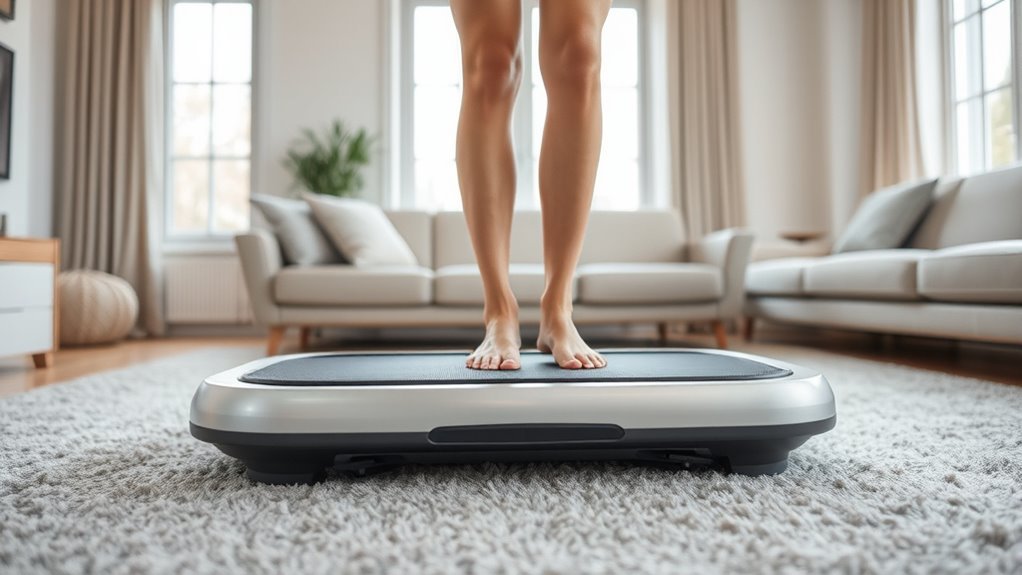
How to Use a Vibration Plate Safely on Carpet
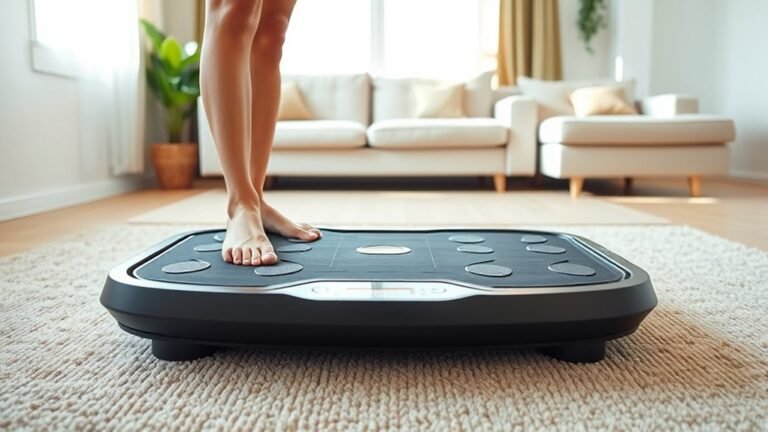
To use a vibration plate safely on carpet, start by choosing a low-pile, firm carpet. This helps keep the plate stable and prevents it from wobbling during use.
If your carpet is thick or plush, try placing a stable, flat mat or board underneath the vibration plate for extra support.
You might need to adjust the vibration settings slightly higher to compensate for the energy absorbed by the carpet.
When you’re on the plate, perform controlled movements and engage your core to help maintain balance.
Also, keep the area around the plate clear and make sure to tighten any loose parts regularly.
This will help avoid slipping or damage to your equipment.
If you want more tips on setup, safety, and maximizing your workout, feel free to explore further guidance.
Key Takeaways
- Place the vibration plate on a low-pile or flat-weave carpet. This helps keep it stable and makes sure the vibrations work effectively.
- To stop it from wobbling and to protect your carpet, put a firm, level base under the plate. A rubber mat or wooden board works great for this.
- You might want to increase the vibration frequency or amplitude just a bit. This helps make up for the carpet absorbing some of the vibrations, but don’t push it too far.
- Keep your movements controlled and engage your core muscles while exercising. This not only boosts stability but also lowers the chance of wobbling.
- Don’t forget to check the equipment regularly. Tighten any loose parts and store the plate in a dry, cool spot when you’re not using it. This will help it last longer.
Understanding the Impact of Carpet on Vibration Plate Performance
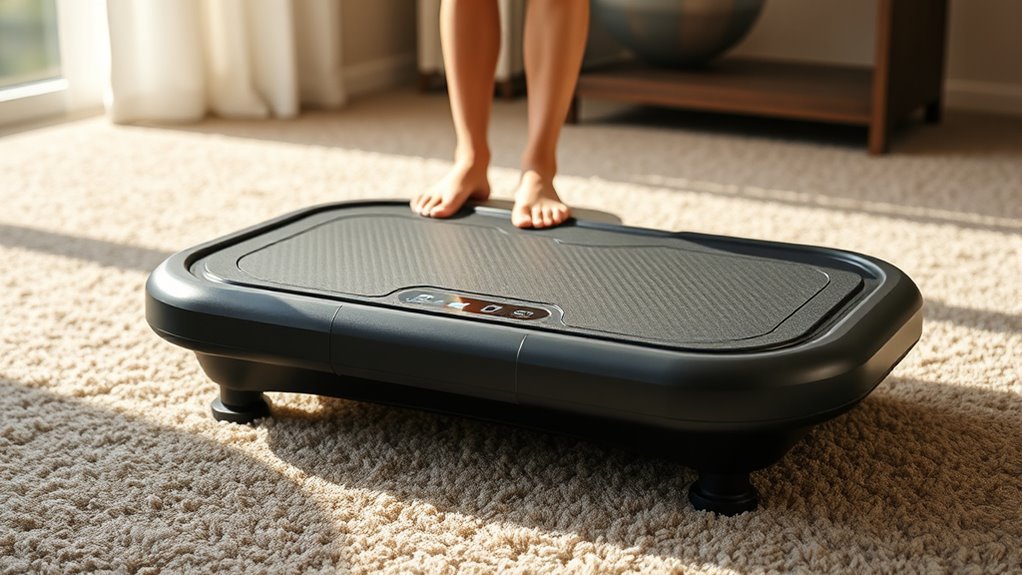
Although vibration plates are designed to deliver consistent motion, placing one on carpet can affect its performance. When you set your vibration plate on carpet, the soft surface absorbs some of the vibrations, reducing the intensity you feel.
This absorption can make your workout less effective because the plate’s energy dissipates into the carpet fibers rather than transferring fully to your body. Plus, the uneven support carpets provide can cause the vibration plate to wobble or shift, which might affect your balance and safety during use.
You might also notice that the machine works harder to maintain its vibration frequency, potentially leading to increased wear over time. Knowing these impacts helps you make informed decisions about where and how to use your vibration plate effectively.
Choosing the Right Carpet Type for Your Vibration Plate
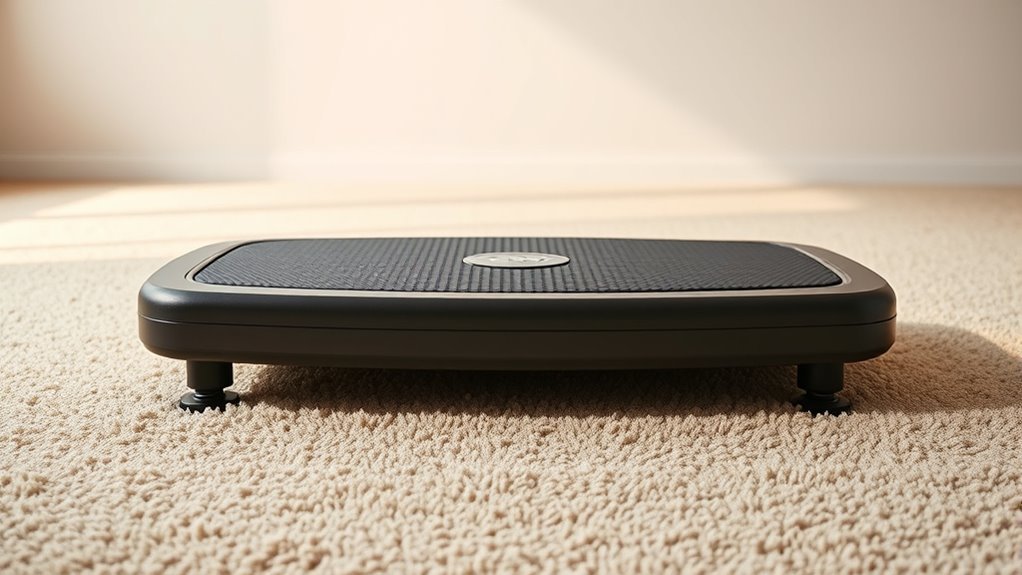
When selecting a carpet for your vibration plate, you’ll want to prioritize firmness and low pile height to guarantee stability and ideal vibration transfer.
Avoid plush or shaggy carpets as they absorb too much vibration, reducing the device’s effectiveness.
Instead, opt for low-pile or flat-weave carpets that provide a firm surface without cushioning the vibrations.
Choose low-pile or flat-weave carpets for firm support that won’t dampen your vibration plate’s effectiveness.
Natural fiber carpets like sisal or jute work well because they’re dense and durable.
Synthetic carpets with tight weaves can also be suitable, but make sure they’re not too soft.
Choosing the right carpet type helps keep your vibration plate steady, ensuring your workouts remain safe and effective.
Preparing Your Carpeted Area for Vibration Plate Use
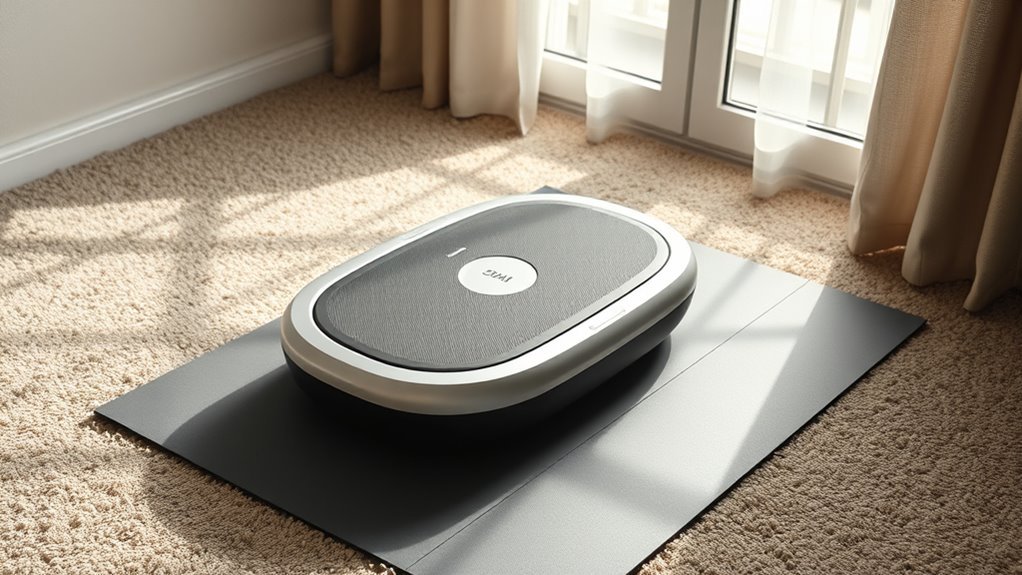
Before setting up your vibration plate, check how thick your carpet is to make certain of stability. Place a protective mat under the machine to prevent slipping and wear.
Also, clear the area around your plate to give yourself plenty of room to move safely. This way, you’ll have a secure and comfortable workout space.
Assess Carpet Thickness
Since carpet thickness can considerably affect the stability and effectiveness of your vibration plate, you need to measure it carefully. Use a ruler or tape measure to find the carpet’s pile height—ideally, it should be less than half an inch.
Thicker carpets might cause your plate to wobble or sink, which reduces its performance and increases the risk of injury. Also, check for any padding beneath the carpet; thick padding can amplify instability.
If your carpet is too thick, consider moving the plate to a thinner carpeted area or a hard surface. Evaluating carpet thickness helps ensure your vibration plate stays level and functions properly.
Use Protective Mats
Although your carpet provides some cushioning, placing a protective mat under your vibration plate considerably enhances stability and protects both the equipment and your flooring. Protective mats are designed to reduce movement and prevent the vibration plate from sinking or wobbling on soft surfaces like carpet.
When you use a mat, it distributes the weight evenly, which keeps the machine steady during workouts and minimizes wear on your carpet fibers. Plus, mats act as a barrier, preventing dirt and moisture from damaging the base of your vibration plate.
Choose a mat made from durable, non-slip material that fits your vibration plate’s footprint. By adding this simple layer, you’ll extend the life of both your equipment and your carpet while ensuring safer, more effective exercise sessions.
Clear Surrounding Space
Adding a protective mat under your vibration plate helps stabilize the machine, but you’ll also want to clear the surrounding space to guarantee safe, unrestricted movement.
Remove any furniture, rugs, or objects within at least 3 feet around the plate. This prevents accidental tripping and allows you to maintain balance during use.
A tidy area also lets the machine operate without obstruction or damage.
| Reason to Clear Space | Benefit |
|---|---|
| Prevents tripping hazards | Enhances user safety |
| Allows full machine motion | Improves workout effectiveness |
| Protects nearby items | Avoids costly damage |
| Provides ample ventilation | Maintains machine longevity |
Give yourself room to move freely and focus on your workout without distractions or risks. It really makes a difference!
Using a Stable Base or Platform Under the Vibration Plate
When you place a vibration plate on carpet, you’ll want to use a stable base or platform underneath to guarantee safety and effectiveness. Carpets can soften the vibration and cause instability, so a solid, level surface helps maintain the machine’s balance.
Using a rubber mat, wooden board, or specialized vibration platform ensures the plate stays steady, preventing wobbling that could lead to slips or falls. It also protects your carpet from wear and tear caused by the plate’s movement.
A rubber mat or wooden board keeps your vibration plate stable and protects your carpet from damage.
Make sure the base is large enough to support the entire plate without overhanging edges. Before starting your session, check that the platform doesn’t shift when you step on it.
This simple step enhances your workout’s safety and maximizes the vibration plate’s performance on carpeted floors.
Adjusting Vibration Plate Settings for Carpeted Surfaces
Because carpet absorbs some of the vibration, you’ll need to modify your vibration plate settings to maintain effective workout intensity. Start by increasing the frequency or amplitude slightly to compensate for the dampened vibrations.
Monitor how your body responds and make incremental changes to avoid strain. Here’s how to fine-tune your settings:
- Increase vibration frequency by 5-10 Hz above your usual level
- Raise amplitude gradually, but stay within the device’s safe range
- Shorten session duration if you feel less stability
- Use lower intensity for balance exercises on carpet
- Test settings on a low level first before moving higher
Adjusting carefully ensures you get the benefits without overdoing it on a softer surface like carpet. Just take it step by step, and listen to your body!
Safety Tips to Prevent Slipping and Movement
Although carpet cushions vibrations, it can also cause your vibration plate to slip or shift during use. To keep steady, place a non-slip mat or rubber pad under the plate.
Always check the surface before starting, ensuring it’s clean and free from debris. Avoid using the plate on plush or uneven carpet, as it increases movement risk.
Make sure your feet stay firmly planted and balanced during exercises to prevent accidents.
| Tip | Why It Matters |
|---|---|
| Use a non-slip mat | Prevents shifting and slipping |
| Clear the area | Removes obstacles causing imbalance |
| Keep feet stable | Maintains balance and safety |
Following these tips helps you stay safe and get the most from your vibration plate on carpet.
Protecting Your Carpet and Vibration Plate From Damage
Taking steps to keep your vibration plate stable on carpet also helps protect both the carpet and the equipment from damage. You want to avoid indentations, tears, or wear on your carpet and prevent unnecessary strain on the vibration plate’s base.
Here’s how to do it effectively: Use a thick, non-slip mat beneath the vibration plate to distribute weight evenly. Clean the carpet regularly to prevent dirt buildup that can scratch the equipment.
Avoid placing the vibration plate directly on high-pile or fragile carpets. Also, check and tighten any loose parts on the vibration plate to reduce vibrations that cause damage.
When you’re not using it, store the vibration plate in a dry, cool area to keep it in good condition. These simple steps will really help extend the life of both your carpet and vibration plate.
Maximizing Workout Effectiveness While on Carpet
When you use a vibration plate on carpet, you need to adjust your workout to maintain balance and intensity. Carpets absorb some vibrations, so increase the duration or intensity slightly to get similar muscle activation.
Focus on controlled movements to prevent instability caused by the soft surface. Engage your core to stay steady and avoid injury.
Maintain control and engage your core to stay stable and prevent injury on soft surfaces.
Use lower body positions, like squats or lunges, which stabilize you more effectively than standing exercises. To boost effectiveness, incorporate resistance bands or light weights while on the plate.
Monitor your form closely since the carpet can make you wobble more than a hard floor. With these tweaks, you’ll maximize your workout’s benefits and safely harness your vibration plate’s power, even on carpeted surfaces.
Frequently Asked Questions
Can Vibration Plates Be Used on Carpet in Cold Weather?
You can use vibration plates on carpet in cold weather, but make sure the carpet is firm and the plate is stable.
Cold might affect the plate’s motor, so keep it in a warm room if possible. It’s all about keeping things steady and cozy!
How Often Should I Clean the Vibration Plate After Use on Carpet?
You should clean your vibration plate after every use on carpet to prevent dust and debris buildup.
Wipe it down with a damp cloth and mild cleaner. Just make sure it’s unplugged before you start.
Are There Specific Shoe Recommendations for Using Vibration Plates on Carpet?
You’ll want shoes that offer gentle support rather than heavy-duty grip. Opt for lightweight sneakers with flexible soles—they’ll help you stay steady on your vibration plate without turning your carpet into a slip ‘n slide!
Lightweight kicks are key here. They keep your feet comfy and let you move naturally on the plate.
Plus, flexible soles adapt better to the vibrations, giving you that perfect balance between grip and comfort.
Does Carpet Thickness Affect the Warranty of My Vibration Plate?
Yes, carpet thickness can influence your vibration plate’s warranty if it causes instability or damage.
Always check your manufacturer’s guidelines to guarantee you’re using the plate on a surface that won’t void your warranty.
It’s a good idea to be cautious because an unstable setup might lead to wear or even malfunction.
Can Vibration Plates Help Reduce Carpet Odors or Dust Mites?
Think of a vibration plate as a gentle breeze—it won’t clear carpet odors or dust mites.
You’ll need specialized cleaning methods for that. The plate’s vibrations primarily target your muscles, not microscopic intruders.
Conclusion
Using a vibration plate on carpet requires a mix of old-school caution and modern know-how. By choosing the right carpet, stabilizing your base, and adjusting settings, you’ll keep both your equipment and floor safe.
Don’t forget safety tips to prevent slipping and protect your investment. With these steps, you’ll maximize your workout’s effectiveness without worrying about damage or instability.
So, lace up like it’s the Victorian era and get ready to shake things up safely! Using a vibration plate safely on carpet means paying attention to stability and surface type. Always ensure your vibration plate sits firmly and doesn’t wobble on the carpet. You might want to place a solid board or mat underneath to create a steady base.
Adjust your workout intensity to suit the carpet’s softness, and always follow the manufacturer’s guidelines. By taking these precautions, you can enjoy the benefits of your vibration plate without risking damage to your floor or your fitness gear. Stay safe, stable, and keep shaking with confidence!