
How Does a Treadmill Help You Lose Weight?
Using a treadmill is a fantastic way to help you lose weight because it boosts your calorie burn through steady or intense cardio workouts.
When you use a treadmill, you engage large muscle groups, which raises your heart rate and metabolism. This means you keep burning fat even after your workout ends.
You can easily adjust the speed and incline on the treadmill to keep challenging yourself and avoid hitting a plateau.
Plus, combining treadmill workouts with strength training helps build lean muscle, which speeds up fat loss even more.
There’s actually a lot more to explore when it comes to how mixing up your routines and tracking your progress can supercharge your results.
It’s all about keeping things fresh and consistent to maximize your weight loss journey!
Key Takeaways
- Treadmill workouts increase your heart rate and calorie burn by engaging large muscle groups. This helps promote fat loss effectively.
- You can adjust the speed and incline to keep things challenging. This prevents plateaus and helps you stay on track with your weight loss progress.
- Regular treadmill exercise also boosts your metabolism and supports lean muscle growth. This means you’ll burn calories even when you’re not working out.
- Mixing in interval training and varying your workouts on the treadmill can maximize fat burning. Plus, it keeps your motivation high so you don’t get bored.
- Tracking your progress on the treadmill is super helpful. It allows you to set goals, tackle challenges, and stay consistent with your weight loss efforts.
The Science Behind Treadmill Workouts and Weight Loss

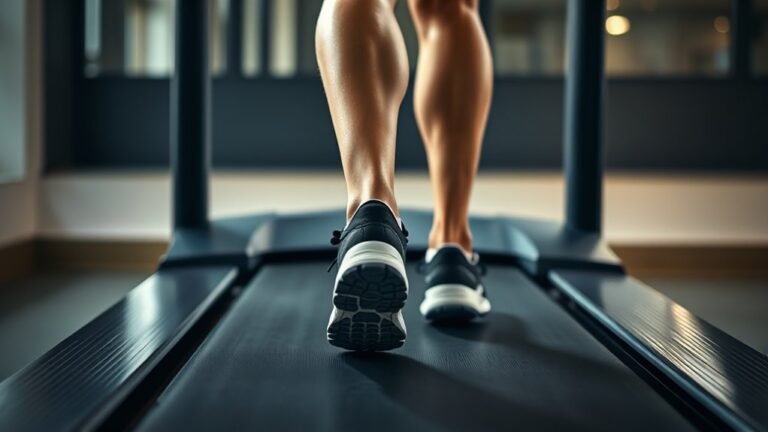
Although you might think any exercise will help you shed pounds, treadmill workouts specifically boost weight loss by increasing your heart rate and calorie burn efficiently. When you use a treadmill, you engage large muscle groups like your legs and core, which demand more energy.
Treadmill workouts target large muscles, boosting calorie burn and heart rate to effectively support weight loss.
This increased energy demand forces your body to burn stored fat for fuel. Plus, consistent treadmill sessions improve cardiovascular fitness, allowing you to exercise longer and at higher intensities over time.
The treadmill’s adjustable speed and incline let you tailor workouts to challenge yourself progressively, preventing plateaus. By maintaining a steady pace or incorporating intervals, you maximize calorie expenditure.
In short, treadmill workouts create a controlled environment where your body burns more calories, accelerating fat loss and improving overall fitness. It’s a smart way to get the most out of your workout!
How Treadmill Exercise Boosts Metabolism
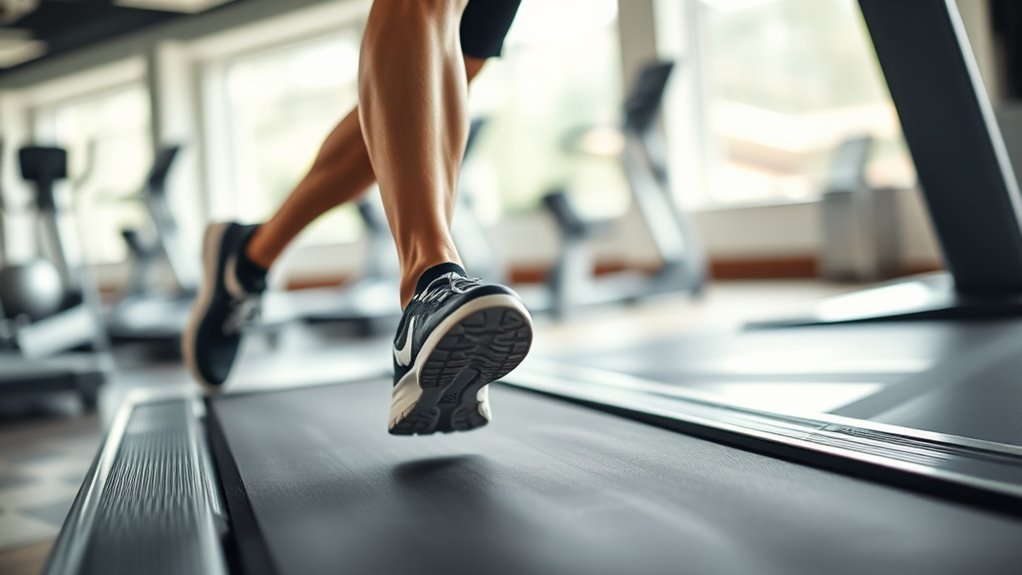
When you use a treadmill, you increase your calorie burn both during and after your workout. Your body keeps consuming oxygen at a higher rate afterward, which means you keep burning calories even while resting.
Plus, activating and building muscle on the treadmill helps boost your metabolism over time. It’s like giving your body a little engine tune-up that keeps things running efficiently. So, the benefits don’t just stop when you step off the treadmill!
Increased Calorie Burn
Because treadmill workouts engage multiple muscle groups simultaneously, they substantially increase your calorie burn both during and after exercise. When you walk, jog, or run on a treadmill, your legs, core, and even your arms work together, demanding more energy from your body.
This heightened effort forces your metabolism to kick into higher gear, helping you burn more calories per minute compared to many other exercises. By adjusting the speed and incline, you can further challenge yourself, boosting the intensity and calorie expenditure.
Consistent treadmill sessions help you create a calorie deficit, which is essential for weight loss. So, by regularly using the treadmill, you efficiently burn more calories, making it an effective tool to support your weight loss goals.
Enhanced Post-Exercise Oxygen Consumption
Increasing your treadmill intensity not only burns more calories during your workout but also ramps up your metabolism afterward. This boost is called Enhanced Post-Exercise Oxygen Consumption (EPOC), where your body continues to consume oxygen at a higher rate to recover.
After a treadmill session, your body works harder to restore oxygen levels, clear out lactic acid, and repair muscles. This process requires extra energy, so you keep burning calories even while resting.
The harder and longer you push yourself on the treadmill, the greater this afterburn effect becomes. By consistently challenging yourself with treadmill workouts, you can elevate your metabolism for hours post-exercise.
This helps accelerate fat loss and improve weight management beyond just the time spent running or walking. Pretty cool, right?
Muscle Activation and Growth
Though treadmill workouts primarily focus on cardio, they also activate and strengthen multiple muscle groups, which plays a key role in boosting your metabolism. When you walk or run on a treadmill, your legs, glutes, and core engage to maintain balance and propel you forward.
This muscle activation not only burns calories during your session but also promotes muscle growth over time. As your muscle mass increases, your resting metabolic rate rises, meaning you burn more calories even when you’re not exercising.
Incorporating incline settings or interval training further challenges your muscles, enhancing strength and endurance. By regularly using the treadmill, you build lean muscle, which supports long-term weight loss and metabolic health.
Types of Treadmill Workouts for Effective Fat Burning

When you choose the right treadmill workout, you can maximize fat burning and keep your routine exciting. Here are three effective types to try:
- Interval Training: Alternate between high-intensity sprints and slower recovery periods. This method spikes your metabolism and burns more calories in less time.
- Incline Walking: Increase the treadmill’s incline to engage more muscles, especially in your legs and glutes. This boosts calorie burn without needing to run.
- Steady-State Cardio: Maintain a consistent, moderate pace for an extended period. This helps build endurance and steadily burns fat.
Mixing these workouts prevents boredom and challenges different muscle groups. Plus, it helps you lose weight more efficiently.
Switching up treadmill workouts keeps things fresh and targets multiple muscles for better weight loss results.
Just tailor your sessions to fit your fitness level and goals for the best results. Easy, right?
The Role of Intensity and Duration in Weight Loss
You’ll want to find the right balance between speed and time on your treadmill to maximize calorie burn. Increasing intensity boosts how many calories you burn per minute, but longer workouts can also add up.
Understanding how these factors work together helps you create a plan that fits your weight loss goals. It’s all about what works best for you and keeping it consistent.
Balancing Speed and Time
Finding the right balance between speed and time is essential for maximizing weight loss on a treadmill. You want to challenge your body without overexerting yourself.
Here’s how you can strike that balance effectively:
- Start Moderate: Begin with a comfortable speed for a longer duration to build endurance and avoid injury.
- Increase Intensity Gradually: As your fitness improves, slightly boost your speed while maintaining or slightly reducing your workout time. This helps keep your body adapting.
- Mix It Up: Alternate between faster bursts and slower recovery periods. Adjust the time and speed for an ideal calorie burn without burnout.
Impact on Calorie Burn
How much you burn on a treadmill depends largely on the intensity and duration of your workout. When you push yourself harder—whether by increasing speed, incline, or both—you elevate your heart rate and boost calorie burn.
Longer sessions mean you keep burning calories for an extended period, amplifying weight loss results. However, balance is key; overdoing intensity can lead to fatigue or injury, while too little effort won’t challenge your body enough to shed pounds.
Aim for workouts that raise your heart rate to a moderate or vigorous level and last at least 30 minutes. By mixing up your treadmill routine with intervals or steady-state efforts, you’ll maximize calorie burn and keep your metabolism revved, helping you lose weight more effectively.
Combining Treadmill Workouts With Strength Training
Although treadmill workouts boost your cardiovascular fitness and burn calories, combining them with strength training can accelerate your weight loss and improve muscle tone. When you add strength exercises, you increase muscle mass, which raises your resting metabolic rate.
This means you burn more calories even when resting. To get the most out of this combo, consider these tips:
- Alternate treadmill sessions with strength workouts to allow muscle recovery.
- Incorporate compound strength exercises like squats, lunges, and push-ups to engage multiple muscle groups.
- Use interval training on the treadmill to complement strength days, maximizing fat burn and endurance.
Tracking Progress and Staying Motivated
Why does tracking your progress matter so much when working toward weight loss? It keeps you accountable and helps you see real results, which fuels motivation. When you log your treadmill workouts—distance, speed, calories burned—you create a clear picture of your improvement.
This data highlights your consistency and effort, making it easier to set realistic goals. Plus, noticing small wins encourages you to push harder.
Staying motivated can be tough, but using progress tracking tools, like apps or journals, turns your treadmill sessions into measurable achievements. Celebrate milestones and adjust your routines based on what you learn.
Overcoming Common Challenges With Treadmill Training
Even the most dedicated treadmill users face hurdles that can slow progress or dampen enthusiasm. You might struggle with boredom, inconsistent schedules, or physical discomfort.
To overcome these challenges, try these strategies:
- Vary Your Workouts: Change your speed, incline, or try interval training to keep things interesting and avoid plateaus.
- Set Realistic Goals: Create a schedule that fits your lifestyle to maintain consistency without burnout.
- Address Discomfort: Wear proper footwear and adjust your posture to prevent pain or injury during sessions.
Tips for Maximizing Calorie Burn on a Treadmill
To maximize calorie burn on a treadmill, you need to challenge your body with varied intensity and duration. Mix steady-state cardio with intervals to keep your metabolism high.
Adjust incline settings to engage different muscles and increase effort. Don’t forget to warm up and cool down to prevent injury and aid recovery.
Here’s a simple plan to boost calorie burn:
| Workout Type | Duration | Intensity |
|---|---|---|
| Steady-state | 30 minutes | Moderate (60-70%) |
| Interval | 20 minutes | High (80-90%) |
| Incline Walking | 25 minutes | Moderate-High |
Switch between these workouts regularly. Tracking your progress helps you stay motivated and guarantees you’re continually pushing your limits.
Frequently Asked Questions
Can Treadmill Workouts Improve Cardiovascular Health Beyond Weight Loss?
Yes, treadmill workouts boost your cardiovascular health by strengthening your heart and lungs, improving circulation, and increasing endurance. You’ll feel more energetic and reduce risks of heart disease, all while building a stronger, healthier body.
It’s not just about losing weight—these workouts help your heart work more efficiently. Plus, regular treadmill sessions can make everyday activities feel easier and less tiring. So, it’s a win-win for your health and fitness!
Is Treadmill Running Safer Than Outdoor Running?
Running on a treadmill is like walking on a controlled river—you’re safer from unpredictable rocks and currents.
You’ll avoid uneven terrain, weather, and traffic hazards, making treadmill running generally safer than outdoor running for you.
How Do Treadmill Belts and Cushioning Affect Joint Health?
Treadmill belts and cushioning absorb impact, reducing stress on your joints compared to harder surfaces. This helps prevent injuries and joint pain.
It lets you exercise longer and recover faster. So, you can keep your workouts safe and effective without worrying about your joints.
Can Using a Treadmill Help With Mental Health and Stress Reduction?
Picture yourself jogging steadily, sweat dripping as your worries fade—yes, using a treadmill boosts your mood by releasing endorphins.
You’ll feel less stressed, more focused, and mentally refreshed after each session.
It’s like hitting the reset button for your brain. Plus, staying active regularly can really help keep anxiety at bay.
What Are the Best Shoes to Wear on a Treadmill?
You should wear lightweight, supportive running shoes with good cushioning and a flexible sole on a treadmill. They’ll protect your feet, absorb impact, and provide stability.
This helps you stay comfortable and prevent injuries during your workout. It’s all about keeping your feet happy while you exercise!
Conclusion
When it comes to losing weight, you know that slow and steady wins the race. Using a treadmill consistently helps you burn calories, boost your metabolism, and build endurance.
By mixing up your workouts and staying motivated, you’ll see real progress over time. Remember, combining treadmill sessions with strength training maximizes fat loss.
Keep pushing yourself—you’ve got the power to transform your body and reach your goals one step at a time. A treadmill is a fantastic tool for weight loss because it offers a controlled environment to increase your heart rate and burn calories efficiently.
Plus, it’s easy to adjust the speed and incline to match your fitness level, making your workouts both challenging and enjoyable. So, lace up your shoes and make the treadmill a key part of your weight loss journey—you’ll see the results if you stay consistent and dedicated.