
Author: Admin

  • How Many People Can Bench Their Body Weight Step by Step

    You can bench your body weight by building strength gradually since most untrained people lift around 60-70% of their weight, while trained lifters often reach or exceed 100%. Your progress relies on consistent training, proper form, recovery, and nutrition.

    Factors like gender, age, and experience also affect how quickly you get there. If you stick to a smart plan and stay patient, you’ll boost your chances—and there’s plenty more to explore on how to make this happen.
  • How Many Laps Around a Gym Equal One Mile?

    You’ll usually need to run about 10 laps around a standard indoor gym track to complete one mile, since many gym tracks measure roughly 1/10th of a mile per lap.

    However, track sizes can vary widely—from 100 meters to 200 meters or more—so the exact lap count might differ. Measuring your specific track’s length helps you tally laps accurately and plan your workout better.

    Keep going to discover how to measure your track and adjust your run for precise distance tracking.

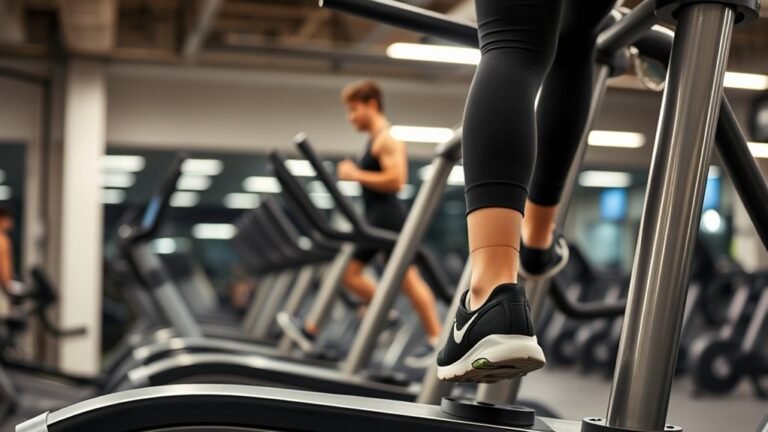
  • How Many Inches of Stride Does an Elliptical Need at the Gym?

    You’ll want an elliptical stride length between 16 and 22 inches at the gym, depending on your height and comfort. If you’re under 5’5”, aim for 16-18 inches; between 5’5” and 6’0”, 18-20 inches works well; over 6’0”, go for 20-22 inches.

    Choosing the right stride length helps you move naturally, reduces joint strain, and improves workout effectiveness. Keep looking to discover how stride length impacts intensity and joint health.

  • How Many Inches of Elliptical Stride Are Ideal at the Gym?

    You’ll want an elliptical stride between 16 and 22 inches, depending on your height and workout goals. If you’re under 5’4″, aim for 16-18 inches; between 5’4″ and 5’10”, 18-20 inches works best; and over 5’10”, 20-22 inches is ideal.

    The right stride keeps your movement natural, protects your joints, and maximizes muscle engagement. If you adjust it correctly, your workouts will feel smoother and more effective.

    Keep exploring to find what suits you perfectly. It’s all about finding that sweet spot where you feel comfortable and challenged at the same time.

  • How Many Calories Do You Burn on a Treadmill?

    You burn between 200 and 900 calories per hour on a treadmill, depending on your weight, speed, and incline. Heavier people burn more calories since moving extra weight demands more energy.

    Increasing your speed or adding incline boosts your calorie burn by working more muscles and raising your heart rate. Walking, jogging, or running all differ in intensity and calories burned.

    If you want to improve your treadmill workouts and tailor them to your goals, there’s plenty more to learn. So, keep experimenting and find what works best for you!

  • How Many Calories Should You Burn on a Treadmill

    You should aim to burn between 150 and 400 calories per treadmill session, depending on your weight, speed, and workout intensity. Heavier individuals burn more calories at the same pace, and increasing speed or incline boosts your calorie burn.

    Focus on balancing duration and intensity to maximize results without overdoing it. Tracking your heart rate helps tailor your workout effectively.

    Keep going to discover tips for setting goals and getting the most from your treadmill time.

  • How Many Calories Does a Vibration Plate Burn?

    You typically burn about 3 to 5 calories during a 10 to 30-minute vibration plate session, depending on workout intensity and exercises performed. Factors like your body weight, muscle mass, and exercise style can influence this number.

    Using resistance exercises and proper posture can boost calorie burn. Though it’s not a high-calorie burner like running, vibration plates help with muscle activation and circulation.

    Keep going to discover how to maximize your workout results.

  • How Many Calories Does the Elliptical Burn?

    You can burn between 180 and 400 calories in 30 minutes on the elliptical, depending on your weight, workout intensity, and style.

    Heavier individuals burn more calories, and increasing resistance or using interval training boosts your calorie burn even further.

    Longer workouts increase total calories burned, as long as you maintain effort. Combining steady pace with varied intensity helps maximize results.

    Keep exploring for tips on boosting your elliptical workouts and tracking your progress effectively.

  • How Many Calories Do You Burn on a Vibration Plate

    You can burn between 90 and 250 calories in a 30-minute session on a vibration plate, depending on your body weight and workout intensity. Using higher vibration speeds, adding dynamic movements like squats, and engaging multiple muscle groups boosts calorie burn.

    While it burns fewer calories than running, it strengthens muscles, improves circulation, and supports flexibility. Keep going to discover how to maximize your results and combine vibration with other exercises for the best effect.

  • How Many Calories Do You Burn on a Vibration Plate

    You can burn roughly 90 to 200 calories during a vibration plate workout, depending on your weight, session length, and intensity. These plates activate muscles through rapid oscillations, causing involuntary contractions that enhance strength and circulation with less effort.

    While they don’t burn as many calories as running or cycling, they offer unique benefits for muscle tone and recovery. If you want to get the most out of your sessions and understand how they compare to other exercises, keep exploring.