Author: Admin

  • How to Calculate Bench Press Weight for Your Strength Level

    To calculate your bench press weight, first estimate your one-rep max (1RM). You can do this by using manageable reps and formulas like Epley.

    Then, choose a percentage based on your goal—strength (85-95%), hypertrophy (65-85%), or endurance (50-65%). Multiply your 1RM by this percentage to find your target weight.

    Beginners should start light, focusing on form. Advanced lifters can add small increments as they progress.

    Tracking progress and recovery helps you adjust weights safely. Keep exploring to find how to optimize your routine further.


  • How to Build Traps With Dumbbells Step by Step

    To build your traps with dumbbells, first warm up with dynamic stretches and shoulder mobility drills. Use proper equipment like adjustable dumbbells and a mirror to monitor form.

    Start with dumbbell shrugs: stand tall, grip weights at your sides, lift shoulders slowly toward ears, squeeze traps, then lower controlled. Add upright rows and farmer’s walks to target traps differently.

    Focus on posture, breathing, and gradual weight increase to avoid injury. Keep going to uncover more techniques for powerful, well-rounded traps.

  • How to Build Pecs With Dumbbells Step by Step

    To build your pecs with dumbbells, start by choosing exercises like dumbbell chest presses and flys that target different chest areas. Use proper form—control your reps, keep your elbows slightly bent, and maintain a stable position.

    Begin with manageable weights, gradually increasing them as you get stronger. Don’t forget to warm up and rest between sets to avoid injury.

    Focusing on these basics sets a solid foundation; there’s more to optimize your chest gains ahead. So, stick with it and you’ll see progress!

  • How to Build Lats With Dumbbells Step by Step

    To build your lats with dumbbells, start by warming up with dynamic stretches and light rows.

    Use adjustable dumbbells and a bench for support. Focus on exercises like bent-over and single-arm dumbbell rows.

    Keep your movements controlled and engage your back muscles fully. Also, make sure to maintain proper form by using a mirror.

    Perform 3–4 sets of 8–12 reps per exercise. Rest for 48 hours between sessions to let your muscles recover.

    Mastering these basics sets a strong foundation for targeted, efficient lat development. You’ll notice better results as you stay consistent!

  • How to Build a Power Rack in 7 Easy Steps

    To build a power rack in seven easy steps, start by gathering sturdy steel, bolts, and essential tools. Design a detailed blueprint that fits your space.

    Cut and prep steel components carefully, then assemble the upright frames. Attach cross beams and safety bars securely, followed by installing J-hooks and accessories.

    Finally, test the rack’s stability, tightening bolts and making any adjustments. Stick around, and you’ll find tips on ensuring your rack is both safe and durable.

  • 7 Tips on How to Bench Press More Weight

    To bench press more weight, focus on mastering proper technique—keep your feet flat, back slightly arched, and grip just wider than your shoulders. Gradually increase weight using progressive overload, and strengthen supporting muscles like triceps and shoulders.

    Incorporate variations like incline or close-grip presses to target weak spots. Prioritize nutrition, quality sleep, and consistent warm-ups.

    Track your progress closely and adjust your workouts when needed. Stick with these strategies, and you’ll soon discover greater strength gains.

  • How to Apply Treadmill Lubricant in 10 Easy Steps

    To apply treadmill lubricant in 10 easy steps, first gather the recommended silicone lubricant and tools. Unplug your treadmill, then carefully lift the belt at the midpoint to expose the deck.

    Next, apply lubricant in a zigzag pattern along the deck’s center. Spread it evenly, then lower the belt back into place.

    Plug it in and run the treadmill at a slow speed to help distribute the lubricant. Finally, wipe off any excess.

    Follow these easy steps to keep your treadmill running smoothly and longer. There’s more helpful detail ahead for ideal care.

  • How to Add Weight to Dumbbells in 5 Easy Steps

    Start by checking your dumbbells for damage and find their max weight capacity. Next, pick compatible weight plates or attachments that suit your exercise style.

    Securely fasten the weights using collars or locking mechanisms designed for your dumbbells to avoid movement. Test stability by gently moving them and doing light lifts to ensure balance.

    Finally, adjust your workout—lower reps with heavier weight and warm up well. Follow these steps, and you’ll be prepared for safer, more effective strength gains with added weight.

  • How to Add More Weight to Dumbbells Step by Step

    To add more weight to your dumbbells, first check your dumbbell bars and select compatible weight plates that fit securely. Slide the plates onto the handles, then fasten them tightly using collars or clamps to prevent slipping.

    If you have adjustable dumbbells, use weight plate adapters for easy changes. You can also use homemade inserts or resistance bands for added load, but always inspect your equipment regularly for safety.

    Keep going to discover more tips on optimizing your dumbbell setup. It’s easier than you think once you get the hang of it!

  • How Tight Should a Treadmill Belt Be and How to Adjust It

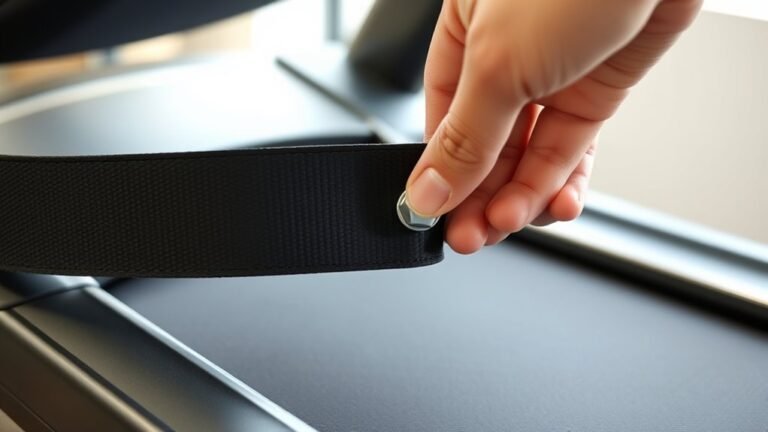
    Your treadmill belt should lift about 2 to 3 inches in the center—tight enough to prevent slipping but loose enough to glide smoothly.

    To adjust, unplug the machine, then use an Allen wrench to turn the rear tension bolts a quarter turn clockwise to tighten or counterclockwise to loosen.

    Make small adjustments, check alignment, and guarantee the belt stays centered. Keep consistent tension for safety and performance.

    Keep going to discover detailed steps and maintenance tips.