How to Use Vibration Plates to Help Back Pain
You can ease back pain by using a vibration plate regularly. Start with low intensity and short sessions around 5-10 minutes, three times a week. This helps your muscles relax and supports spinal alignment without overstraining.
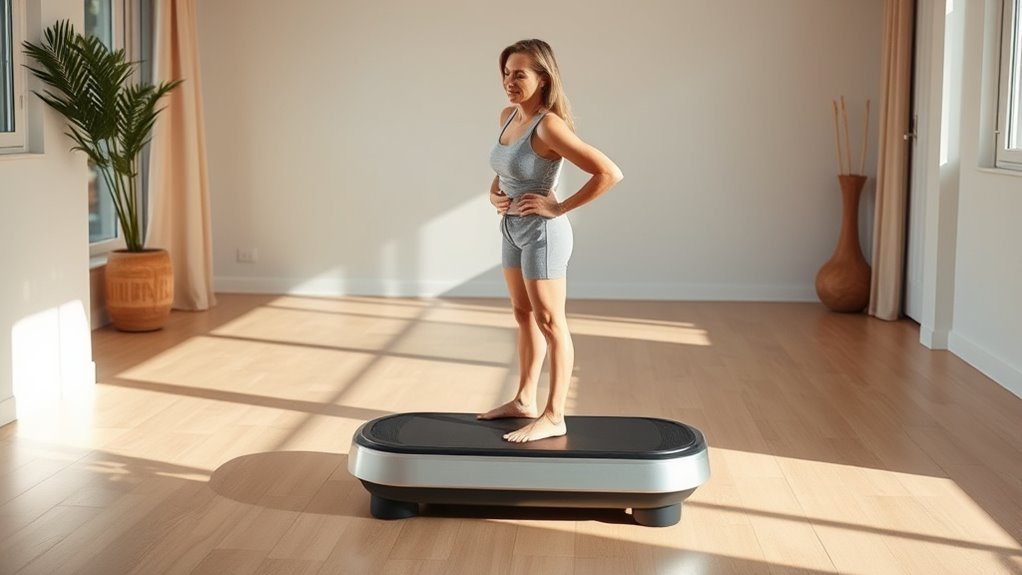
Stand with knees slightly bent, feet shoulder-width apart, and engage your core to support your spine. Stretch gently beforehand to prepare your muscles and reduce the risk of injury.
Increase intensity gradually as you become comfortable. Always listen to your body and stop if pain worsens.
To maximize benefits and guarantee safety, it helps to learn more about proper techniques and precautions.
Using vibration plates correctly can be a gentle, effective way to manage back pain and improve your overall back health.
Key Takeaways
- Start with low-intensity sessions of 5-10 minutes, gradually increasing to 10-15 minutes as tolerated. Aim for three times weekly for consistent relief.
- Make sure to maintain proper posture: feet shoulder-width apart, knees slightly bent, spine neutral, core engaged, and weight evenly distributed during use.
- It’s also helpful to incorporate gentle stretching of the lower back, hamstrings, and hip flexors before your sessions. This reduces injury risk and improves flexibility.
- When choosing a vibration plate, look for one with adjustable frequency (5-50 Hz). This way, you can target relaxation or muscle strengthening depending on your back pain needs.
- And don’t forget — consult a healthcare provider before starting. Avoid overexertion, and combine vibration therapy with physical therapy and other treatments for the best results.
Understanding the Benefits of Vibration Plates for Back Pain
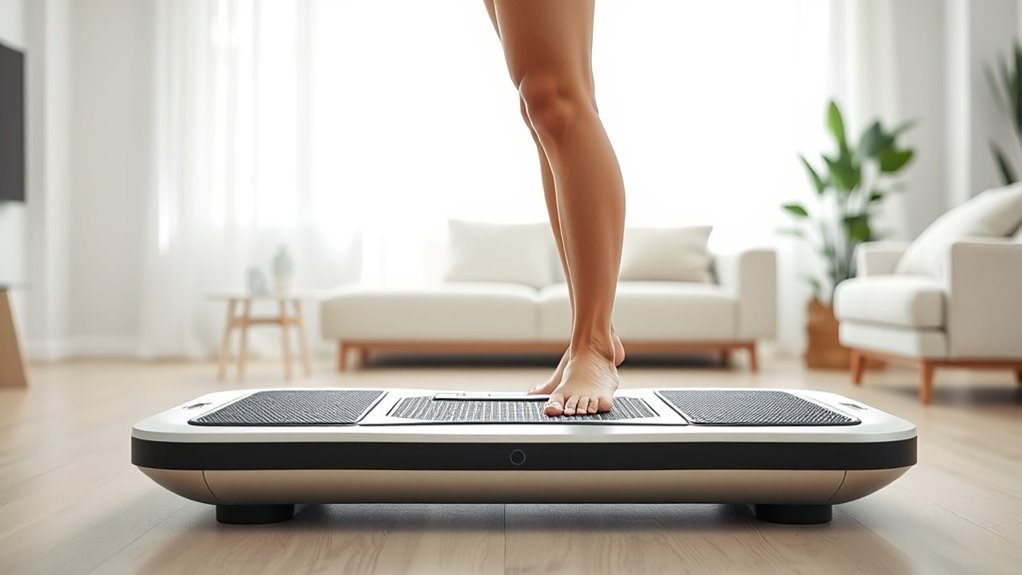
Although you might be skeptical at first, vibration plates can offer significant relief for back pain by stimulating muscles and improving circulation. When you stand or perform exercises on a vibration plate, the rapid vibrations activate your deep muscle fibers, which often remain underused.
This muscle activation helps strengthen your core, providing better support for your spine. Additionally, the increased blood flow from the vibrations promotes healing by delivering oxygen and nutrients to damaged tissues.
You’ll also notice reduced muscle stiffness and tension, which often contribute to discomfort. Using a vibration plate regularly can enhance your flexibility and range of motion, making daily movements easier and less painful.
Choosing the Right Vibration Plate for Your Needs
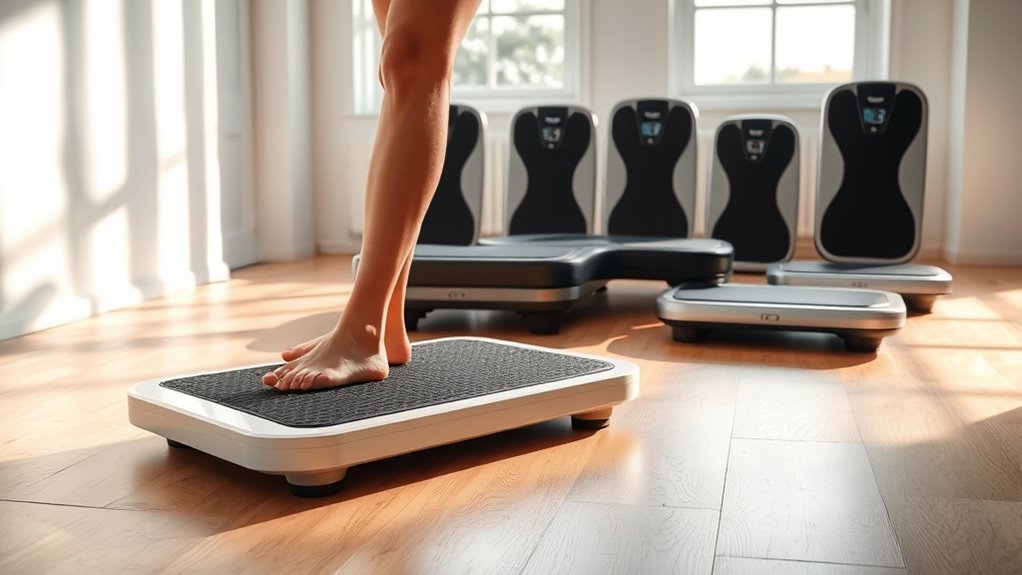
You’ll want to contemplate the vibration frequency that best suits your back pain needs, as different settings can target various muscle groups and pain levels.
Make sure the platform size is large enough for comfortable positioning and offers solid stability to keep you safe during use.
Picking the right vibration plate will help you get the most effective relief. Trust me, it makes a big difference!
Vibration Frequency Considerations
When selecting a vibration plate to ease your back pain, understanding vibration frequency is essential because it directly impacts how your muscles and spine respond. Frequencies typically range from 5 to 50 Hz.
Lower frequencies (around 5-15 Hz) promote gentle muscle activation and relaxation. This can be ideal if your back pain is acute or you’re just starting out.
Higher frequencies (20-50 Hz) provide more intense stimulation, helping strengthen muscles and improve circulation. But they might be too aggressive if your pain is severe.
You’ll want to choose a plate with adjustable frequency settings so you can customize your sessions as your condition improves. Always start at a low frequency and gradually increase to find what best soothes your back without causing discomfort.
Platform Size and Stability
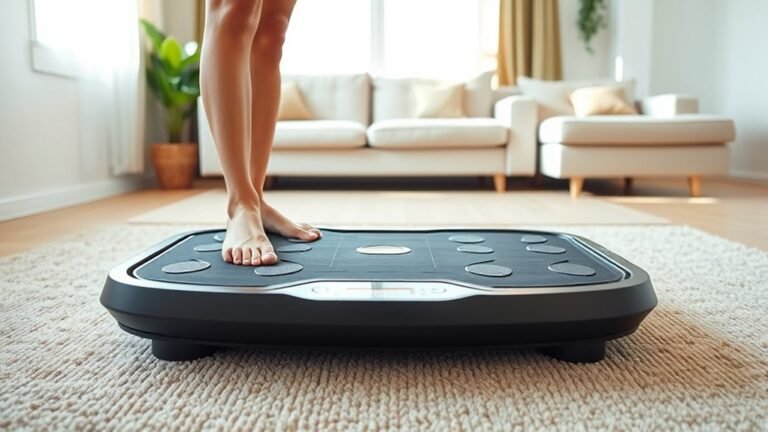
Since a vibration plate needs to support your movements safely, its platform size and stability become crucial factors to contemplate. You want enough space to stand, sit, or perform exercises comfortably without feeling cramped.
A larger platform lets you adjust your stance and maintain balance easily, reducing the risk of slips or falls. Stability is equally important; a vibration plate that wobbles or shifts can worsen your back pain or cause injury.
Look for models with non-slip surfaces and sturdy bases that stay grounded during use. Choosing a plate with solid construction ensures it can handle your weight and movement without compromising safety.
Prioritizing platform size and stability helps you get the most benefit from vibration therapy while protecting your back. It’s definitely worth taking the time to find the right fit for you.
Preparing Your Body Before Using a Vibration Plate
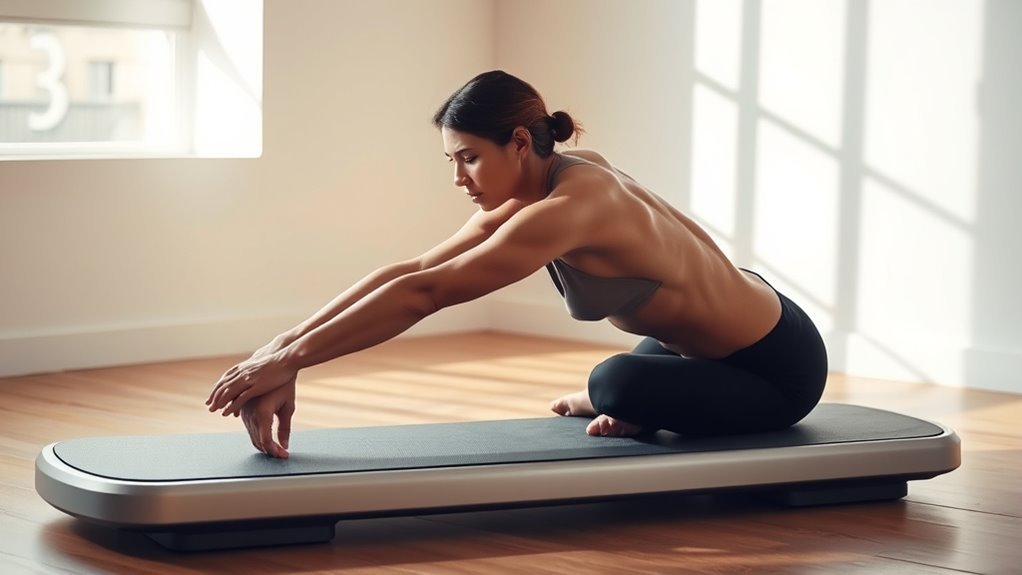
Before jumping on the vibration plate, take a few minutes to do some gentle stretches to loosen your muscles. This helps get your body ready and prevents any tightness.
Make sure you maintain proper posture alignment to protect your back during the session. It’s super important to keep that in check.
Preparing your body this way helps you get the most benefit and reduces the risk of discomfort. So, it’s definitely worth the extra few minutes!
Gentle Stretching Techniques
How can you prepare your body effectively for a vibration plate session? Start with gentle stretching techniques to loosen your muscles and increase blood flow. Focus on areas that tend to get tight, like your lower back, hamstrings, and hip flexors.
Try seated spinal twists to gently mobilize your spine, and hamstring stretches to ease tension along your legs. Incorporate gentle cat-cow stretches on all fours to warm up your back and improve flexibility.
These movements help reduce stiffness, making your vibration plate session more effective and comfortable. Remember to move slowly and avoid any stretches that cause pain.
Spending just five to ten minutes on these stretches primes your body, so you’ll get the most benefit from the vibration plate without risking injury. It’s a simple step that really pays off!
Proper Posture Alignment
Although you’ve loosened up your muscles with gentle stretches, maintaining proper posture alignment is essential to maximize the benefits of your vibration plate session and protect your back from strain.
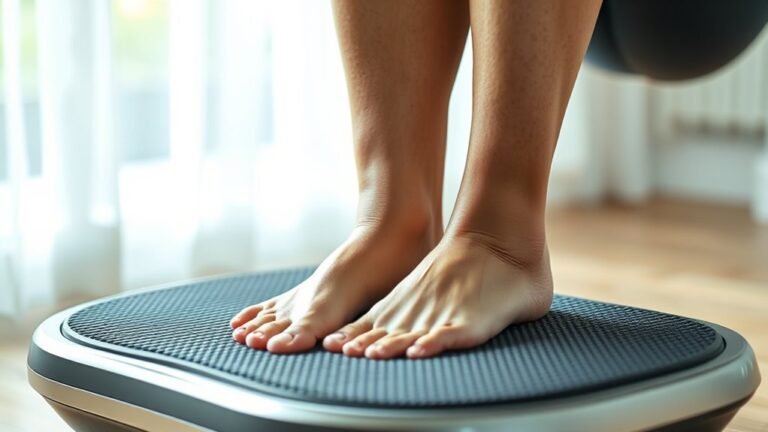
Stand tall with your feet shoulder-width apart, keep your knees slightly bent, and engage your core muscles to support your spine. Avoid locking your joints or leaning forward. This positioning helps distribute vibration evenly, enhancing muscle activation without causing discomfort.
| Posture Element | Key Tips |
|---|---|
| Feet Position | Shoulder-width apart, flat |
| Knee Alignment | Slightly bent, not locked |
| Spine | Neutral, maintain natural curves |
| Shoulders | Relaxed, down and back |
| Core Engagement | Tighten gently, support spine |
Proper alignment guarantees a safer, more effective vibration therapy experience. Just keep these points in mind, and you’ll get the most out of every session!
Basic Vibration Plate Exercises to Alleviate Back Pain
Since vibration plates stimulate muscle engagement and improve circulation, you can use simple exercises on them to ease your back pain effectively. Start with gentle pelvic tilts while standing on the plate; this activates your lower back and core muscles.
Next, try slow squats to strengthen your legs and support your spine. You can also perform seated stretches by sitting on the plate and leaning forward to release tension in your lower back.
Another effective move is the bridge exercise—lie down with your feet on the plate and lift your hips upward, engaging your glutes and lower back muscles. Keep your movements controlled, and limit sessions to 10-15 minutes.
These basic exercises help reduce stiffness and improve flexibility, making your back feel stronger and more comfortable over time. Give them a try, and you might just notice a real difference!
Proper Posture and Positioning on the Vibration Plate
Mastering proper posture and positioning on the vibration plate can considerably boost the benefits of your exercises and reduce the risk of strain. Stand with your knees slightly bent and feet shoulder-width apart to maintain balance and avoid locking your joints.
Keep your core engaged and your back straight to support your spine and prevent slouching. When using the plate, distribute your weight evenly across both feet to ensure stable vibrations and minimize pressure on any one area.
If you choose to sit or perform specific stretches on the plate, make sure your spine stays aligned and avoid any positions that cause discomfort. Always listen to your body—adjust your posture if you feel tension or pain, making sure your positioning promotes relief rather than aggravation.
Recommended Duration and Frequency of Vibration Plate Sessions
When you start using a vibration plate to ease back pain, it’s important to keep your sessions short and consistent. Begin with brief sessions to let your body adapt and avoid overexertion.
Here’s a simple guideline to help you establish an effective routine:
- Start with 5-minute sessions to gauge your comfort and response.
- Use the vibration plate 3 times a week to allow recovery between sessions.
- Gradually increase session length to 10-15 minutes as you build tolerance.
- Maintain consistency by scheduling sessions on the same days for better results.
Sticking to this plan helps your body get used to the vibration without overdoing it. And before you know it, those short sessions will feel just right!
Precautions and Contraindications for Using Vibration Plates
Although vibration plates can offer relief for back pain, you should take certain precautions to avoid injury or worsening symptoms. First, consult your healthcare provider before starting, especially if you have conditions like osteoporosis, herniated discs, or cardiovascular issues.
Also, avoid using the vibration plate if you’re pregnant or have a pacemaker. Start with low intensity and short sessions to see how your body responds.
Stop immediately if you experience increased pain, dizziness, or numbness. Make sure you maintain proper posture to prevent strain, and never use the plate as a substitute for professional medical treatment.
Combining Vibration Plate Therapy With Other Back Pain Treatments
To get the most benefit from vibration plate therapy, consider using it alongside other treatments for back pain. Combining therapies can really boost your recovery and give you more thorough relief.
Here are four ways to integrate vibration plate therapy with other treatments:
- Physical Therapy – Try using vibration sessions before or after your exercises. This can help improve muscle activation and flexibility.
- Massage Therapy – Follow up vibration therapy with a massage. It’s great for reducing muscle tension and improving circulation.
- Heat and Cold Therapy – You can alternate between using the vibration plate and applying heat or cold packs. This combo helps manage inflammation and pain.
- Core Strengthening Exercises – Pair your vibration plate sessions with targeted core workouts. This supports your spine better and adds to your overall back health.
Frequently Asked Questions
Can Vibration Plates Help With Sciatica Pain?
Yes, vibration plates can help with sciatica pain by improving blood flow and reducing muscle tension.
Just make sure you start gently, listen to your body, and consult a healthcare professional before beginning any new treatment.
Are Vibration Plates Safe for Elderly Users With Back Pain?
Like walking on clouds, vibration plates can be safe for elderly users with back pain if you start slow and consult a doctor first.
You’ll want gentle sessions to avoid overloading fragile muscles or joints.
It’s all about taking it easy and listening to your body.
If anything feels off, it’s best to stop and check in with your healthcare provider.
How Do Vibration Plates Compare to TENS Units for Pain Relief?
You’ll find vibration plates stimulate muscles and improve circulation, while TENS units target nerves to block pain signals directly. Both help, but TENS offers more focused pain relief; vibration plates support overall muscle health.
Basically, vibration plates get your muscles moving and blood flowing, which is great for general well-being. On the other hand, TENS units work by zapping the nerves to stop pain signals in their tracks.
Can Vibration Plate Use Improve Posture Long-Term?
Yes, you can improve your posture long-term by regularly using a vibration plate. It strengthens your core muscles and enhances balance.
This helps you maintain proper alignment throughout daily activities and reduces strain on your back. So, it’s a pretty effective way to support better posture over time.
Do Vibration Plates Affect Spinal Alignment or Disc Health?
Vibration plates can improve spinal alignment by strengthening core muscles supporting your spine, but they won’t directly change disc health.
Use them carefully and consult a professional to avoid excessive strain or worsening any existing disc issues. It’s always best to be cautious, right?
Conclusion
Using vibration plates to ease your back pain is like giving your spine a gentle, rhythmic massage. It wakes up tired muscles and soothes discomfort.
When you choose the right plate, prepare your body, and maintain proper posture, you’re setting the stage for relief. It’s like waves gently rippling through a calm sea, spreading comfort through your back.
Just remember to listen to your body and use vibration therapy wisely. Combining it with other treatments or exercises can boost your results.
Vibration plates can be a helpful tool in managing back pain when used correctly. They stimulate muscles and improve circulation, which can reduce stiffness and promote healing. So, let vibration guide you toward a stronger, pain-free you—one small step at a time.