Can You Sit on a Vibration Plate?
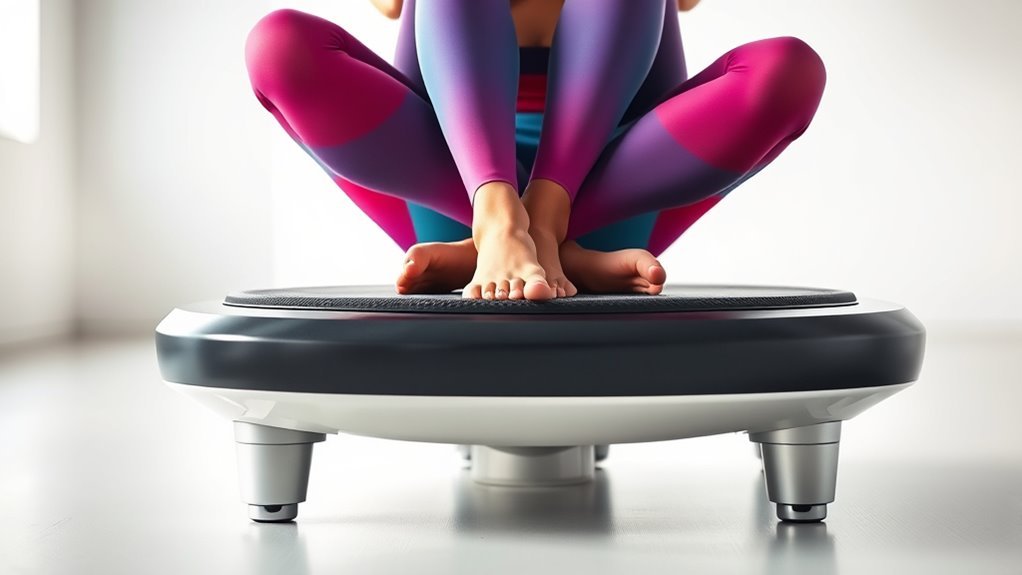
You can sit on a vibration plate to gently stimulate your muscles, improve circulation, and relax without putting too much strain on your body. This makes sitting on a vibration plate a great option for those new to vibration training or anyone with mobility concerns.
Sitting engages your core and helps with posture, adding extra benefits to your session.
Just keep your back straight and feet supported to stay comfortable and safe. It’s a simple way to enjoy the benefits of vibration therapy without overexerting yourself.
If you want to explore how sitting compares to standing or learn some exercises you can try while seated, keep reading.
Key Takeaways
- Yes, sitting on a vibration plate is possible and can provide gentle muscle stimulation and improved circulation.
- Just make sure to maintain proper posture: sit upright with a straight back, keep your feet flat, and engage your core muscles for safety.
- Sitting reduces muscle engagement compared to standing, but it still offers benefits, especially for beginners or those with limited mobility.
- You can also try incorporating seated upper body and core exercises to enhance muscle tone while using the vibration plate.
- Start with short sessions, about 5-10 minutes initially, and be sure to stop if you experience any discomfort, dizziness, or numbness.
Understanding How Vibration Plates Work
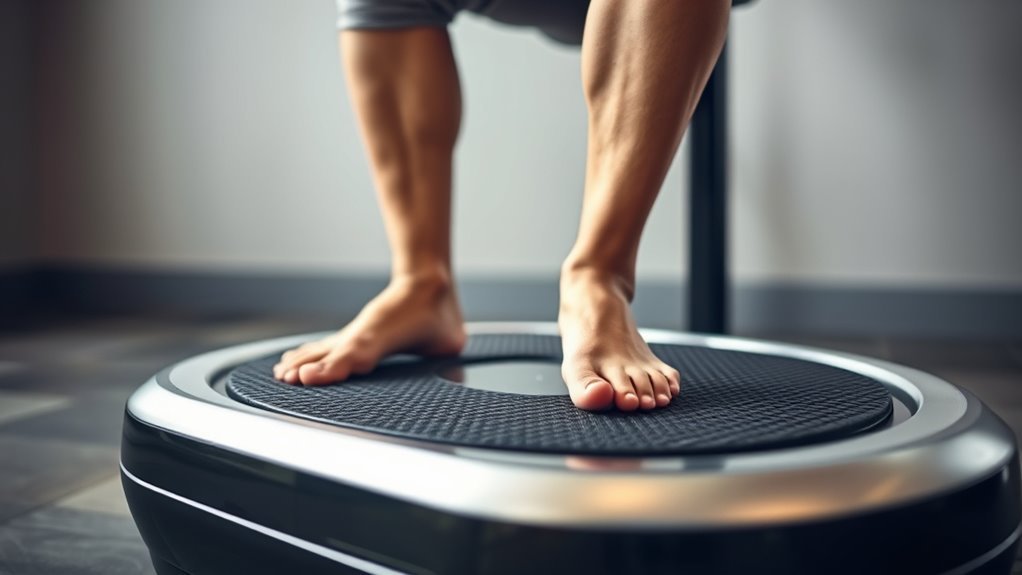
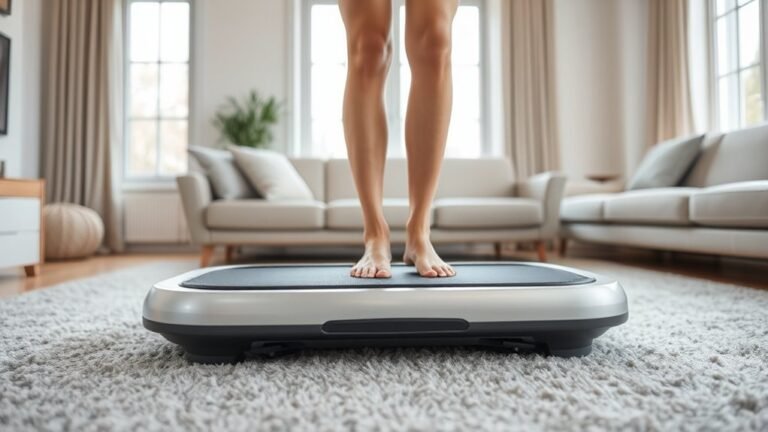
Although vibration plates might seem simple, they use rapid oscillations to stimulate your muscles and improve circulation. When you stand or sit on the vibrating platform, these quick movements cause your muscles to contract and relax repeatedly.
This involuntary muscle activity can enhance muscle strength and flexibility over time. The vibrations also promote blood flow, which aids in recovery and reduces muscle soreness.
You’ll notice the plate’s frequency and amplitude control how intense the vibrations feel, allowing you to adjust settings to your comfort and goals. Understanding this mechanism helps you appreciate why vibration plates can be effective tools for muscle activation and circulation without requiring strenuous exercise on your part.
Common Ways to Use a Vibration Plate
Now that you know how vibration plates stimulate your muscles and improve circulation, let’s explore the different ways you can use them.
These versatile devices offer various positions and exercises to fit your fitness goals and comfort level.
Vibration plates provide adaptable exercises and positions tailored to your fitness goals and comfort.
Here are some common ways to use a vibration plate:
- Standing: Engage your legs and core while performing squats or calf raises.
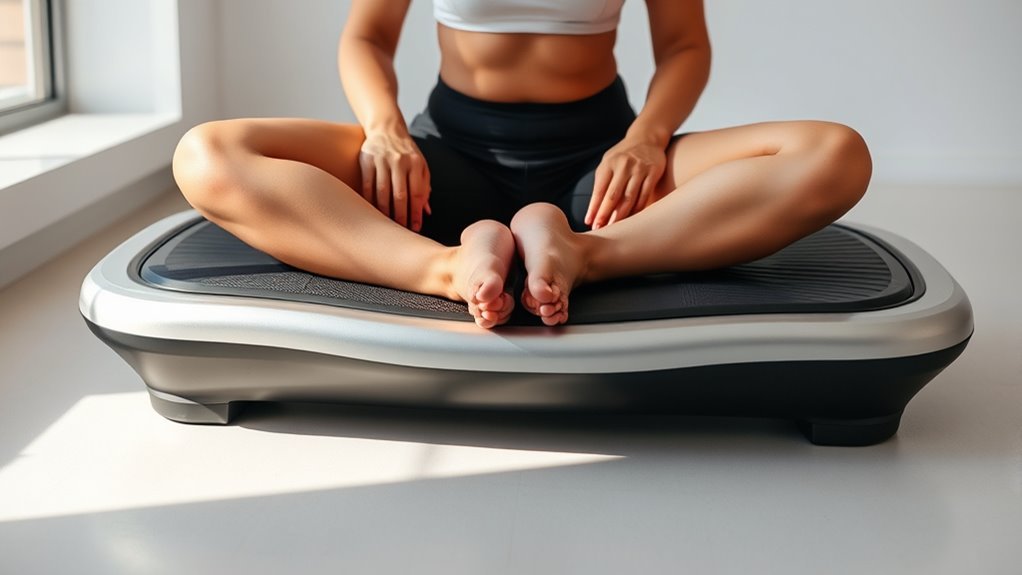
- Sitting: Place your glutes on the platform to target lower body muscles gently.
- Lying down: Position your back on the plate for light full-body vibrations.
- Planking: Rest your forearms on the plate to intensify your core workout.
Give these positions a try and see which ones feel best for you. They can be a great addition to complement your routine.
Benefits of Sitting on a Vibration Plate
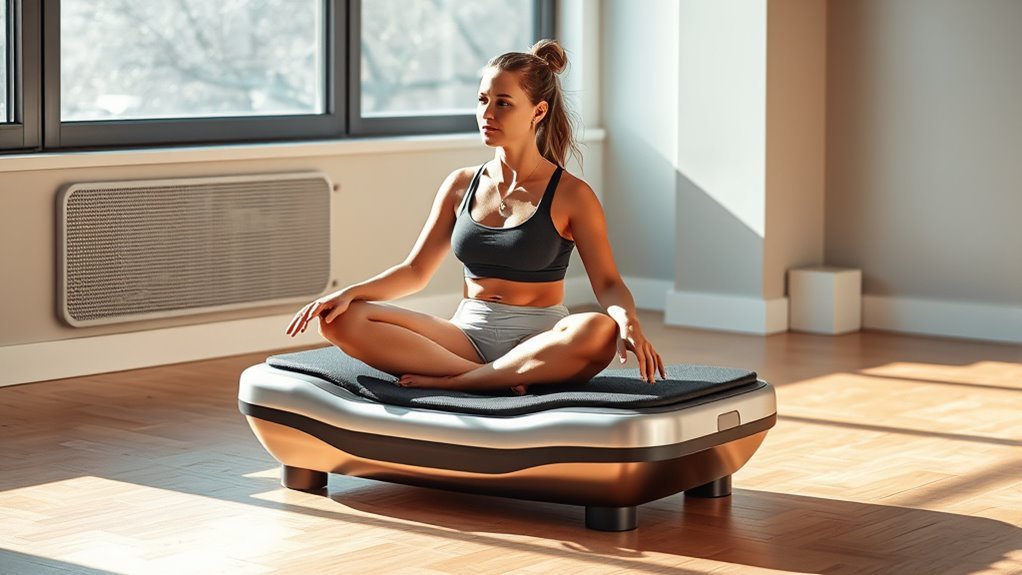
Why should you consider sitting on a vibration plate? Sitting lets you enjoy the device’s benefits with less effort, which is perfect if standing is tough for you.
It stimulates muscle contractions, boosts circulation, and can help you relax. Plus, it’s a gentle way to engage your core and slowly improve your posture over time.
Here’s a quick look at key benefits:
| Benefit | Description | Ideal For |
|---|---|---|
| Muscle Activation | Stimulates muscles gently | Beginners, seniors |
| Circulation Boost | Increases blood flow | Those with poor circulation |
| Relaxation | Eases tension and stress | People needing calm |
| Posture Support | Engages core, supports spine | Office workers |
Potential Risks of Sitting During Vibration Plate Use
You might not realize that sitting on a vibration plate can affect your circulation and put extra stress on your spine.
It also reduces how much your muscles engage compared to standing or exercising on the plate.
Let’s look closer at these potential risks before you decide to sit during your vibration sessions.
Circulation Concerns
How does sitting on a vibration plate affect your circulation? When you sit, the vibrations pass through your lower body, which might influence blood flow differently than standing or exercising.
While vibration plates can help stimulate circulation, sitting might cause uneven pressure and restrict movement. This could lead to circulation issues.
You might notice numbness or tingling in your legs or feet. There could also be increased pressure on your veins, which might cause discomfort.
Plus, sitting reduces muscle contractions, limiting natural blood flow. You might even experience temporary pooling of blood in your lower extremities.
To avoid these problems, keep an eye on how your body feels and try not to sit on the plate for too long. It’s a good idea to switch positions or add in some light movement to help keep your circulation healthy while using the plate.
Impact on Spine
Although vibration plates offer benefits, sitting on them can place unexpected stress on your spine. When you sit, the vibrations travel directly through your pelvis and upward along your spinal column, potentially causing discomfort or strain.
Your spine isn’t designed to absorb repetitive jolts in a seated position, which may lead to misalignment or aggravate existing back issues. If you have any spinal conditions or lower back pain, sitting on a vibrating platform could worsen them.
It’s important to maintain proper posture and avoid prolonged sessions while seated to minimize risk. Instead, standing or performing exercises on the plate can better support spinal health by distributing vibrations more evenly and engaging muscles that stabilize your spine.
Muscle Engagement Reduction
When sitting on a vibration plate, your muscles don’t engage as fully as they do while standing or exercising.
This reduced muscle activation means you miss out on many benefits vibration plates offer. Your body relies on muscle tension to respond to vibrations, and sitting limits this response.
Here’s what you should consider about muscle engagement reduction when sitting:
- Core muscles activate less, decreasing stability benefits
- Leg muscles receive minimal stimulation compared to standing
- Reduced muscle engagement limits calorie burn and toning
- Prolonged sitting may cause muscle fatigue or discomfort without strengthening
To maximize results, standing or performing exercises on the vibration plate is more effective. Sitting might feel easier, but it won’t engage your muscles enough to improve strength or fitness meaningfully.
Proper Posture and Positioning While Sitting
To get the most from sitting on a vibration plate, you’ll need to maintain proper posture and positioning. Sit upright with your back straight and shoulders relaxed to avoid unnecessary strain.
Place your feet flat on the plate or the floor, depending on the model, ensuring even weight distribution. Keep your core engaged to support your spine and prevent slouching.
Avoid leaning too far forward or backward, as this can reduce vibration effectiveness and increase discomfort. Position your hands on your thighs or at your sides to help maintain balance without gripping tightly.
Comparing Sitting vs. Standing on a Vibration Plate
Since sitting and standing on a vibration plate engage your muscles differently, choosing the right position can impact your workout results. When you stand, your body activates more muscles to maintain balance and posture, boosting overall strength and circulation.
Sitting, however, targets specific muscle groups more gently, making it ideal for recovery or those with limited mobility. Here’s how they compare:
- Standing: Engages core, legs, and stabilizer muscles intensely
- Sitting: Focuses on lower body and reduces strain on joints
- Standing: Burns more calories due to higher muscle activation
- Sitting: Offers a lower-impact option, better for injury recovery
Recommended Exercises to Perform While Seated
You can get a great workout by focusing on seated upper body exercises while on the vibration plate. Engaging your core with specific movements helps improve stability and strength.
Let’s explore some effective exercises you can do without standing up. It’s easier than you might think, and super convenient!
Seated Upper Body Workouts
How can you effectively strengthen your upper body while staying seated on a vibration plate? You can target your arms, shoulders, and back with simple, focused movements that complement the plate’s vibrations.
Try these exercises to maximize your workout:
- Seated Shoulder Press: Hold light dumbbells or resistance bands and press upward, engaging your shoulders.
- Bicep Curls: Use dumbbells or bands to curl your arms, activating your biceps.
- Tricep Extensions: Extend your arms behind your head or to the sides to work your triceps.
- Seated Rows: Hold a resistance band, pull towards your torso, and squeeze your shoulder blades together.
These exercises enhance muscle tone and strength while you benefit from the vibration plate’s additional stimulation. And the best part? You get all this without even leaving your seat!
Core Strengthening Movements
Building on the upper body exercises, focusing on your core while seated on a vibration plate can greatly enhance stability and balance. Try seated pelvic tilts by gently rocking your hips forward and backward, engaging your lower abs.
You can also perform seated abdominal twists: sit upright, hold a light medicine ball or weight, and slowly rotate your torso side to side. Another effective move is the seated knee lift—lift one knee toward your chest, hold briefly, then lower it.
These movements activate deep core muscles, improving posture and reducing lower back discomfort. Remember to maintain good posture throughout, keeping your spine straight and shoulders relaxed.
Incorporating these core strengthening exercises while on the vibration plate maximizes your workout efficiency and supports overall functional fitness. Give them a try and feel the difference!
Tips for Safe and Effective Use of a Vibration Plate
Although vibration plates offer numerous benefits, using them safely and effectively requires some key considerations. To get the most out of your sessions while minimizing risks, you should follow these tips:
Start with shorter sessions, around 5-10 minutes. Then, gradually increase as your body adapts.
Begin with brief 5-10 minute sessions and slowly extend duration as your body gets accustomed.
Maintain proper posture, whether standing, sitting, or performing exercises. This helps you avoid strain.
Wear comfortable, supportive shoes to help absorb vibrations and protect your joints.
Stay hydrated and listen to your body. Stop immediately if you feel dizzy, nauseous, or uncomfortable.
Frequently Asked Questions
Can Vibration Plates Help With Weight Loss?
Yes, vibration plates can help with weight loss by boosting your metabolism and increasing muscle activity.
However, you’ll get better results combining vibration workouts with a healthy diet and regular exercise routines for effective fat burning.
Are Vibration Plates Suitable for Elderly Users?
Yes, vibration plates can be suitable for elderly users if you use them carefully and consult your doctor first. They help improve balance and muscle strength.
Just make sure to start slow and avoid high intensity to stay safe. It’s all about taking it easy and listening to your body.
How Long Should Each Vibration Plate Session Last?
You should start with 10-15 minute sessions on a vibration plate, gradually increasing to 20-30 minutes as you get comfortable.
Always listen to your body and avoid overdoing it to prevent fatigue or injury.
Taking it slow at first really helps you get used to the vibrations without feeling overwhelmed.
Just pay attention to how you feel, and don’t push yourself too hard.
Can Vibration Plates Improve Bone Density?
Yes, vibration plates can help improve bone density by stimulating bone growth through mechanical vibrations.
You’ll want to use them consistently and combine with weight-bearing exercises for the best results. Strengthening your bones over time takes a bit of effort, but it’s definitely worth it.
Do Vibration Plates Require Regular Maintenance?
You’ll need to perform regular maintenance on vibration plates, as 75% of users report improved device longevity with proper care.
Clean the surface, check screws, and avoid moisture to keep it working efficiently and safely. It’s pretty straightforward, but sticking to these habits really makes a difference.
Conclusion
Sitting on a vibration plate is like planting a seed—you’re nurturing your body in a gentle, grounded way. While it’s not the most common use, it can still stimulate muscles and improve circulation if you maintain proper posture.
Just like a tree needs strong roots to grow tall, your body needs mindful positioning to get the most from the vibration. So, stay aware, be safe, and let each session help you grow stronger from the ground up.
If you’re wondering, “Can you sit on a vibration plate?” the answer is yes, but with some caution. Proper posture is key to avoid strain and to maximize muscle engagement. Sitting can still activate different muscle groups and promote blood flow, making it a useful option for those who prefer a gentler approach.
Remember, the benefits come when you use the vibration plate mindfully. So, whether you’re sitting or standing, focus on your form to get the best results.