
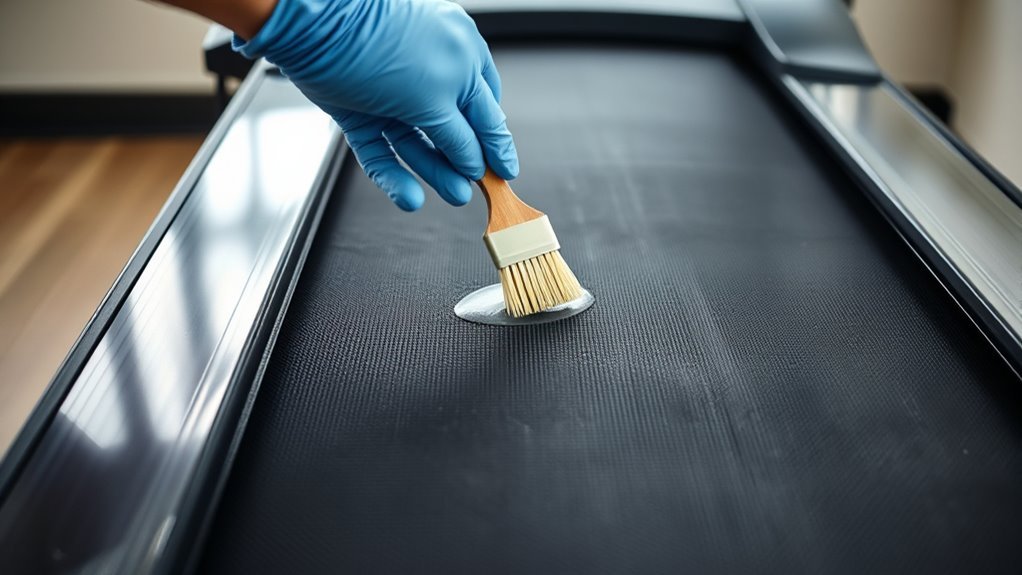
How Do You Lube a Treadmill in 10 Easy Steps
To lube your treadmill in 10 easy steps, first gather a silicone-based lubricant and unplug the machine. This step is crucial for safety and ensures you don’t accidentally start the treadmill while working on it.
Next, locate and carefully lift the belt to expose the deck beneath. You want to apply the lubricant evenly along the deck to keep the treadmill running smoothly and reduce friction that can cause wear and tear.
After applying the lubricant, lower the belt back in place, making sure it’s centered and tensioned correctly. This helps maintain proper functioning and prevents the belt from slipping during use.
Now, plug the treadmill back in, turn it on, and run it at a low speed to evenly distribute the lubricant across the deck. This step is key to ensuring the lube gets where it needs to be for optimal performance.
Finally, wipe off any excess lubricant and clean up your workspace. Regular lubrication like this extends the life of your treadmill and keeps your workouts smooth and enjoyable.
Keep following for a detailed guide to keep your treadmill running smoothly.
Key Takeaways
- Unplug the treadmill and clear your workspace to make sure everything’s safe before you start lubricating.
- Next, find the walking belt and lift it up to reveal the deck surface underneath.
- Apply a silicone-based lubricant evenly along the deck, following what the manufacturer recommends.
- Then, manually move the belt a bit and run the treadmill at a slow speed so the lubricant spreads out nicely.
- Finally, wipe off any extra lubricant, check that the belt’s aligned and tensioned right, plug the treadmill back in, and give it a test run.
Gather the Necessary Supplies

Before you begin lubing your treadmill, gather all the necessary supplies to guarantee a smooth process. You’ll need a silicone-based treadmill lubricant, which is safe for the belt and deck.
Avoid using oil or WD-40, as these can damage your machine. Have a clean cloth handy to wipe away any dirt or dust before applying the lubricant.
A flathead screwdriver might come in handy if you need to adjust the belt tension later. Make sure you have a well-lit, spacious area to work in, so you can easily access all parts of your treadmill.
Having everything ready upfront saves you time and prevents interruptions while you’re in the middle of maintaining your treadmill. It just makes the whole job a lot easier!
Unplug and Prepare the Treadmill

Before you start lubing your treadmill, make sure it’s completely unplugged to avoid any accidents.
Clear the area around the machine so you have enough space to work safely.
Taking these steps will help you prepare for a smooth maintenance process.
Ensure Power Is Off
How do you make sure your treadmill is safe to work on? First, unplug it completely from the power outlet. This step is vital because even if the machine appears off, it may still have residual power that could cause the belt to move unexpectedly.
After unplugging, double-check by pressing the start button to confirm it doesn’t turn on. This guarantees no electrical current runs through the treadmill. Avoid relying solely on the power switch, as it might not cut off all energy.
Taking these precautions protects you from accidental electrical shocks or injuries while lubing the treadmill. Always handle the machine with care and never attempt maintenance while it’s connected to power. Safety first makes your task easier and risk-free.
Clear Surrounding Area
Once you’ve confirmed the treadmill is completely powered off and unplugged, clear the surrounding area to give yourself enough room to work safely. Remove any objects, furniture, or clutter nearby that might get in your way or cause accidents.
This space allows you to move freely around the treadmill, access all sides, and prevents tripping hazards. Make sure the floor is clean and dry to avoid slipping.
If possible, work in a well-lit area so you can clearly see the belt and motor area. Having an open, organized workspace not only improves safety but also makes the lubrication process more efficient.
Taking these simple steps prepares you to lube your treadmill effectively without distractions or risks.
Locate the Belt and Deck Area
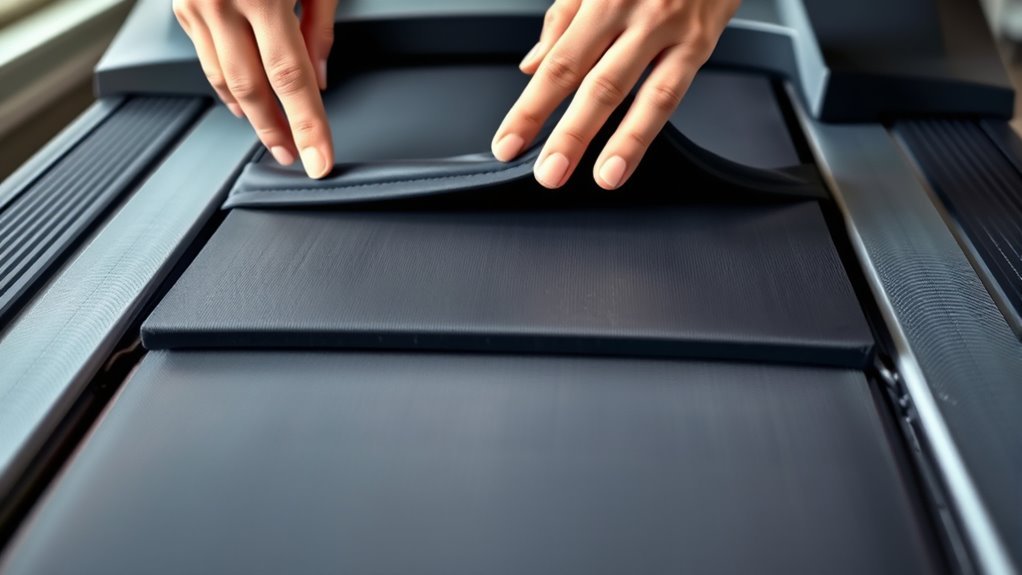
To properly lubricate your treadmill, you’ll need to access the belt and deck area where friction occurs. This is the vital part between the moving belt and the stationary deck beneath it.
Here’s how to locate it:
- Unplug the treadmill to ensure safety before inspection.
- Look for the walking belt that stretches along the treadmill’s length.
- Identify the deck, which is the flat surface underneath the belt.
- Check the sides of the treadmill for screws or covers that may need loosening to access the belt and deck area.
Knowing exactly where the belt meets the deck helps you apply lubricant effectively, reducing wear and extending the treadmill’s life.
Make sure you have clear access before moving on.
Lift the Treadmill Belt Carefully
Before applying lubricant, you’ll want to lift the treadmill belt carefully to expose the deck underneath. Gently lift one side of the belt, making sure you don’t stretch or damage it.
Use your fingers to ease the belt upward, creating enough space to apply lubricant later. Just be careful not to pull too hard, as this can misalign the belt or damage the motor.
If you feel resistance, pause and adjust your grip. It’s better to be cautious here than to risk any damage.
Here’s a quick reminder of what to expect:
| Action | Feeling | Outcome |
|---|---|---|
| Lift belt gently | Cautious care | No damage |
| Avoid stretching | Mindful touch | Belt stays aligned |
| Create space | Controlled | Easy access to deck |
Apply the Lubricant Evenly
You’ll want to choose the right lubricant designed specifically for treadmills to keep things running smoothly.
Make sure to apply it evenly under the belt to avoid any uneven wear or damage. Using proper techniques guarantees your treadmill stays in great shape for longer.
Choosing the Right Lubricant
Although selecting the right lubricant is crucial, applying it evenly guarantees your treadmill runs smoothly and lasts longer.
To choose the proper lubricant, keep these points in mind:
- Use a silicone-based lubricant, as it’s designed specifically for treadmills and won’t damage the belt or deck.
- Avoid petroleum-based products; they can degrade the components and void your warranty.
- Check your treadmill’s manual for manufacturer recommendations to ensure compatibility.
- Purchase lubricants from reputable brands or authorized dealers to avoid counterfeit or substandard products.
Choosing the right lubricant ensures effective friction reduction, protects your treadmill, and extends its lifespan.
Once you have the correct lubricant, applying it evenly becomes straightforward and effective. This helps you maintain a smooth, quiet, and long-lasting treadmill experience.
Proper Application Techniques
Selecting the right lubricant sets the stage for a smooth application process, but how you apply it makes all the difference in performance. To start, lift the treadmill belt slightly and apply the lubricant directly to the deck, not the belt itself.
Use a small, precise amount—usually a few drops—spread evenly along the length of the running surface. Be careful not to over-lubricate, as excess can attract dust and cause slipping.
After applying, manually move the belt a few times to distribute the lubricant evenly before turning the machine on. Then, run the treadmill at a slow speed for a few minutes to make sure the lubricant spreads thoroughly.
This even application reduces friction and prolongs your treadmill’s lifespan, keeping your workouts smooth and quiet. It’s a small step that really makes a big difference!
Spread the Lubricant Across the Deck
How do you guarantee the lubricant covers the treadmill deck evenly? After applying the lubricant, you need to spread it thoroughly to ensure smooth belt movement and reduce wear.
Follow these steps:
- Use a clean cloth or your fingers to gently spread the lubricant along the deck surface.
- Start from the front and move toward the back, covering the entire width of the deck.
- Apply light pressure to avoid removing too much lubricant but enough to distribute it evenly.
- Inspect the deck for any dry spots and reapply lubricant if necessary.
Lower the Belt Back Into Place
Once you’ve spread the lubricant evenly across the deck, the next step is to lower the belt back into place. Carefully lift the belt edges and guide it down onto the treadmill deck, making sure it sits flat without wrinkles or folds.
Take your time to align the belt properly so it stays centered during use. Avoid forcing or stretching the belt, as this could cause damage.
Check both sides to confirm the belt rests evenly along the deck surface. If your treadmill has tension adjustments, now’s a good time to verify the belt isn’t too loose or tight.
Proper placement ensures smooth operation and extends your treadmill’s lifespan. Once positioned correctly, you’re ready to move on to the next step without risking belt misalignment.
Plug in and Turn on the Treadmill
First, find a nearby power source and plug in your treadmill securely. Next, check the control panel for any signs of issues or error messages.
Once everything looks good, turn on the machine to prepare for lubrication. Easy, right? Just a couple of quick steps and you’re set!
Locate Power Source
Where should you connect your treadmill to get it up and running? First, locate a nearby power outlet that’s easily accessible and dedicated to avoid overloading circuits.
Then, follow these steps:
- Uncoil the treadmill’s power cord carefully to prevent damage.
- Plug the cord securely into the power outlet, ensuring a firm connection.
- Confirm the outlet is functioning by testing it with another device if needed.
- Turn on the treadmill using the main power switch, usually found on the frame near the base.
Check Control Panel
After connecting your treadmill to a power source and switching it on, turn your attention to the control panel. Make sure the display lights up and all buttons respond when pressed. This confirms the treadmill’s electronics are functioning properly before you begin lubrication.
If the screen stays blank or shows error messages, double-check the power connection and reset the machine if needed. The control panel often includes start, stop, speed, and incline buttons—test each one briefly to ensure they work smoothly.
Confirming the control panel’s responsiveness helps you avoid issues during use and guarantees the treadmill is ready for maintenance. Once you’re confident the panel operates correctly, you can move on to the next step in lubing your treadmill safely and effectively.
Power Up Machine
Before you begin lubing your treadmill, make sure to plug it into a reliable power source and switch it on. This step is essential to ensure the machine is ready for maintenance and that the belt can move smoothly during lubrication.
Follow these steps to power up your treadmill properly:
- Locate the power cord and plug it firmly into a grounded outlet.
- Check that the circuit breaker or fuse is intact to prevent power issues.
- Turn on the main power switch, usually found near the base or control panel.
- Start the treadmill at a low speed to confirm it’s running correctly before applying lubricant.
Powering up your treadmill correctly helps you maintain it safely and effectively.
It’s a simple step, but it makes all the difference when you’re taking care of your machine.
Run the Treadmill at Low Speed
Although it might seem simple, running the treadmill at a low speed is a crucial step to evenly distribute the lubricant beneath the belt. You want to set the speed to about 1-2 mph to avoid any sudden belt movement that might displace the lubricant unevenly.
Running it for 5 minutes ensures the lubricant spreads uniformly, reducing friction and wear.
Keep these points in mind:
| Step | Tip |
|---|---|
| Speed Setting | 1-2 mph for safety |
| Duration | 5 minutes for even spread |
| Monitor | Watch for unusual noise or belt slipping |
This approach helps maintain your treadmill’s smooth operation and prolongs its lifespan. Just take it slow and steady to keep everything running smoothly.
Wipe Off Excess Lubricant and Clean Up
Once the treadmill belt has evenly distributed the lubricant, you’ll want to wipe off any excess to prevent dirt buildup and slipping hazards. Cleaning up properly keeps your treadmill running smoothly and safely.
Here’s what you should do next:
- Turn off and unplug the treadmill to ensure safety while cleaning.
- Use a clean, dry cloth to gently wipe the belt’s surface, removing any visible lubricant residue.
- Check the sides and underneath the belt for stray lubricant and clean those areas as well.
- Dispose of used cloths or paper towels properly, and wash your hands after finishing.
Taking these simple steps helps you keep your treadmill in great shape and ready for your next workout.
Frequently Asked Questions
How Often Should I Lube My Treadmill?
You should lube your treadmill every three to six months, depending on how often you use it.
If you run daily or start to notice friction, it’s a good idea to lubricate more often.
Regular lubrication keeps your treadmill running smoothly and helps extend its lifespan. Just a little maintenance goes a long way!
What Type of Lubricant Is Best for Treadmills?
Picture a knight oiling his armor—silicone-based lubricants work best for your treadmill. They reduce friction without attracting dust, unlike petroleum-based ones.
Can I Use WD-40 to Lubricate My Treadmill?
You shouldn’t use WD-40 to lubricate your treadmill. It’s not designed for treadmill belts and can cause damage.
Instead, use a silicone-based lubricant made specifically for treadmills. This will keep it running smoothly and protect the motor.
Will Lubrication Affect Treadmill Warranty?
Yes, lubrication usually won’t void your treadmill’s warranty if you use the recommended lubricant and follow the manufacturer’s instructions carefully.
Always check your warranty terms to guarantee proper maintenance won’t affect coverage. It’s a good idea to keep everything documented just in case.
How Do I Know if My Treadmill Needs Lubrication?
You’ll know your treadmill needs lubrication if the belt squeaks, feels sticky, or slows down.
Check your manufacturer’s guidelines too—they often recommend lubrication every few months based on usage to keep things running smoothly.
It’s a simple step that can really extend the life of your treadmill and keep your workouts consistent.
Conclusion
Now that you’ve lubed your treadmill, you’re all set to keep it running smoothly and quietly. Just like greasing the wheels keeps a machine humming, regular lubrication prevents wear and tear, extending your treadmill’s life.
Remember to stick to these simple steps every few months, and you’ll avoid any unexpected breakdowns. A little care goes a long way, so keep your treadmill in tip-top shape.
By following this easy treadmill maintenance routine, you ensure a safer and more efficient workout experience. Consistent treadmill lubrication not only reduces noise but also helps maintain optimal performance. So, make lubing your treadmill a regular habit and enjoy every workout without a hitch!