How Do You Spell Dumbbell Correctly
You spell dumbbell with two Bs in the middle—d-u-m-b-b-e-l-l—because it’s a combination of “dumb” (meaning silent) and “bell.”
This word comes from the idea of a silent bell used for exercise, which is pretty interesting when you think about it.
The double B appears as a result of joining these two words together. Many people misspell dumbbell by dropping one of the Bs or mixing up the letters altogether.
If you say it slowly—”dumb-bell”—it can help you remember the correct spelling.
Keep following along, and you’ll uncover more tips and interesting facts about this word.
Key Takeaways
- The correct spelling is “dumbbell” with a double “b” in the middle.
- It combines the words “dumb” (silent) and “bell” (shape of the weight).
- Say the word slowly as “dumb-bell” to remember the double “b”.
- Avoid common misspellings like “dumbel,” “dumbell,” or “dumbbel.”
- The spelling is consistent across American and British English with no variations.
Common Misspellings of Dumbbell
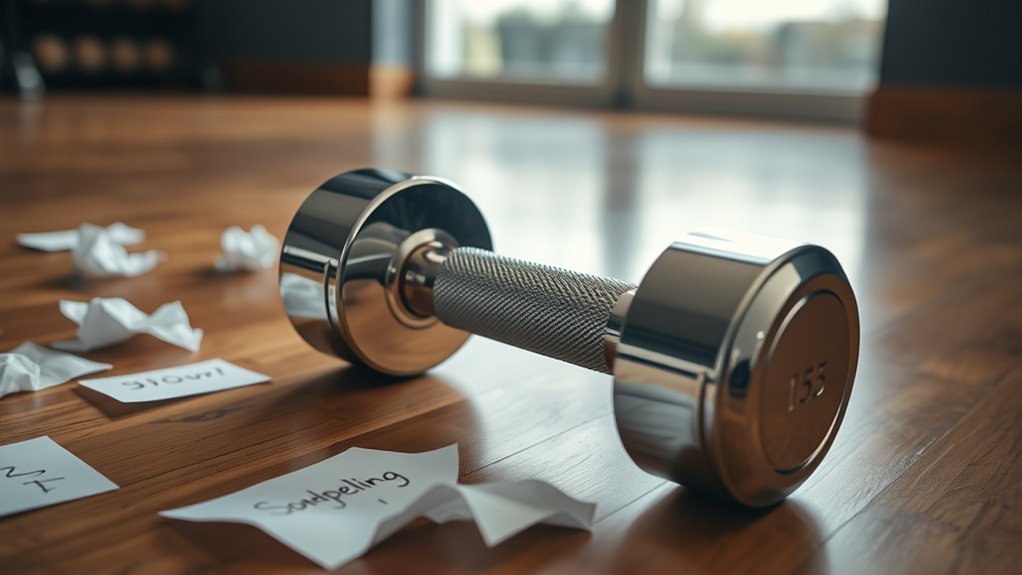
Why do so many people misspell “dumbbell”? It’s easy to confuse the double “b” in the middle. You might drop one “b,” writing “dumbel,” or mistakenly add an extra letter, resulting in “dumbbelll.”
Others mix up the order and write “dumbbel” or “dumbbel.” Since the word sounds like “dumb” plus “bell,” you might be tempted to separate it or add a space, like “dumb bell.”
People often jumble the letters or split dumbbell into two words due to its sound and double consonants.
Some spell it as “dumbell,” thinking it ends with a single “l.” When typing quickly, it’s common to transpose letters or omit one, especially with double consonants.
To spell “dumbbell” correctly, remember it has two “b”s and ends with “ell.” Paying attention to these details helps you avoid common mistakes.
Etymology and Origin of the Word Dumbbell

Although “dumbbell” might seem like a modern gym term, it actually dates back several centuries. You’ll find its origins in the 18th century when people used “dumb bells” as training tools.
The term originally described a bell without a clapper, making it “dumb” or silent. These silent bells allowed people to practice ringing motions without noise.
Over time, this evolved into a handheld weight used for exercise, keeping the name but changing its purpose. When you look at the word’s history, you see how language adapts and transforms with culture and technology.
Breakdown of the Word Dumbbell
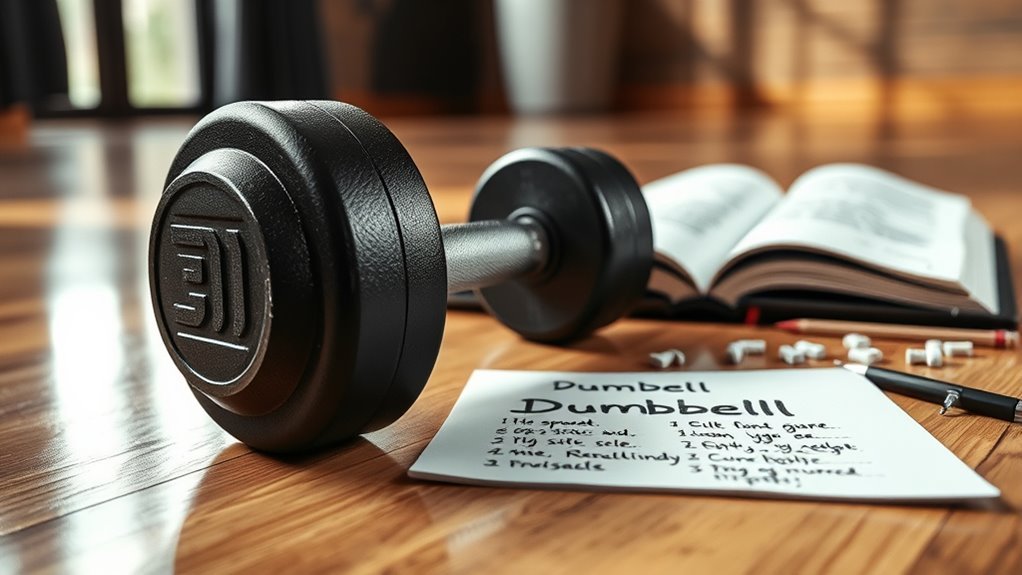
Understanding the origins of “dumbbell” gives you insight into its structure. The word combines two distinct parts—”dumb” and “bell”—each contributing to its meaning and spelling.
When you break it down, you can see why it’s spelled as one word and why certain letters appear as they do. Here’s a quick breakdown to help you:
- Dumb: Refers to silence; originally, bells that made no sound.
- Bell: The shape of the original weight resembled a bell.
- Compound word: Two words joined without a space or hyphen.
- Double “b”: Result of merging “dumb” and “bell,” keeping the repeated consonant.
- Pronunciation link: The spelling reflects how the word sounds when spoken.
Tips to Remember the Correct Spelling
Since the word “dumbbell” combines two parts, you can use simple tricks to remember its spelling, like focusing on the double “b” in the middle. Think of it as “dumb” plus “bell,” which naturally leads to the repeated “b.”
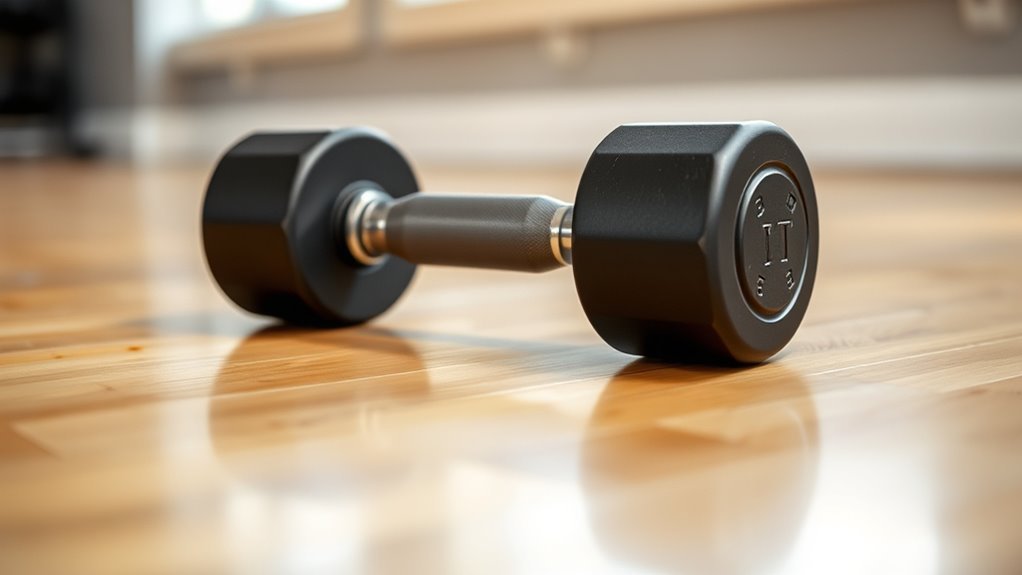
When writing, say the word slowly to yourself: dumb-bell. This helps reinforce the double consonant. Another tip is to visualize the object—a weight with two round ends—reminding you of the “bell” part.
You can also write the word several times, emphasizing the double “b” to build muscle memory. Avoid confusing it with similar words like “dumble” or “dumbel.”
Dumbbell in Different English Dialects
You might notice that “dumbbell” is spelled the same in both American and British English, but regional accents can change how it sounds.
Understanding these pronunciation differences can help you recognize the word more easily. Let’s explore how these variations affect the way people say “dumbbell” across different English dialects.
American Vs British Spelling
Although you might expect differences in spelling between American and British English for many words, “dumbbell” remains consistent across both dialects. Whether you’re reading a fitness guide in the US or the UK, you’ll see the word spelled the same way.
This consistency helps avoid confusion when discussing workout equipment internationally.
Here are some points to consider about the spelling of “dumbbell” in American vs British English:
- No alternate spellings exist for “dumbbell” in either dialect.
- Both use the compound form combining “dumb” + “bell.”
- The word’s origin and usage remain unchanged.
- Standard dictionaries from both regions list the same spelling.
- This uniformity simplifies communication in fitness contexts worldwide.
Regional Pronunciation Variations
When discussing “dumbbell,” you’ll notice that pronunciation shifts depending on the English dialect. In American English, people usually say it as “DUM-bel,” with the emphasis on the first syllable and a clear “bell” sound.
In British English, you might hear it pronounced more like “DUM-buhl,” where the second syllable is softer and less distinct. Australians often follow the British pattern but sometimes shorten it further to sound like “DUM-bul.”
If you listen closely, regional accents can affect vowel sounds, making the word sound slightly different even within the same country. Understanding these variations helps you recognize the word regardless of how it’s spoken and confirms that, no matter the accent, the spelling “dumbbell” stays consistent.
How to Use Dumbbell in a Sentence
How can you incorporate the word “dumbbell” naturally in your sentences? Start by focusing on clear, practical contexts where dumbbells are relevant.
Whether you’re describing workouts, equipment, or fitness routines, using “dumbbell” accurately helps your message connect better.
Using “dumbbell” precisely enhances clarity when discussing workouts or fitness equipment.
Here are some ways you can use “dumbbell” in a sentence:
- “I lifted a 15-pound dumbbell to strengthen my arms.”
- “She adjusted the dumbbell weight before starting her set.”
- “The gym offers various dumbbell sizes for different exercises.”
- “He prefers dumbbell workouts to improve muscle balance.”
- “You can perform curls and presses with a single dumbbell.”
The Role of Dumbbells in Fitness Vocabulary
Because dumbbells are common in many workouts, understanding their role in fitness vocabulary helps you communicate more clearly about exercise routines and equipment. When you know the term “dumbbell,” you can effectively follow instructions, share workout tips, or ask questions at the gym.
This word specifically refers to handheld weights used for strength training, distinguishing them from barbells or kettlebells. Using the correct term shows your familiarity with fitness concepts, which builds credibility and confidence in conversations.
It also helps you read workout plans accurately, as different exercises require precise equipment. So, mastering the spelling and meaning of “dumbbell” isn’t just about language—it’s a practical tool that supports your fitness journey and connects you with others who share your goals.
Visual Mnemonics for Spelling Dumbbell
Although spelling “dumbbell” might seem tricky at first, using visual mnemonics can make it much easier for you to remember. Visual mnemonics link images with spelling patterns, helping your brain recall tricky parts.
Picture a dumbbell with two “bells” on each end to remind you of the double “ll” at the end. You can also visualize the “dumb” part as a silent, heavy weight that doesn’t speak but is still important.
Here are some effective visual mnemonic ideas:
- Imagine a dumbbell shaped like the letters “d-u-m-b” stacked.
- Visualize two bells ringing at the end for the double “ll.”
- Picture the word split: “dumb” (quiet) + “bell” (loud).
- Think of each letter as a weight plate.
- Envision a silent “b” as an invisible part of the dumbbell.
These images make spelling memorable and fun!
Frequently Asked Questions
What Is the Weight Range of Standard Dumbbells?
Standard dumbbells usually range from 1 to 50 pounds. But you’ll find lighter ones for beginners and heavier ones for advanced lifters.
Choose weights that challenge you without compromising your form during workouts. It’s all about finding the right balance for your strength level.
How Do Dumbbells Differ From Barbells?
Dumbbells let you work each arm independently, improving balance and coordination, while barbells let you lift heavier weights with both hands simultaneously.
You’ll find dumbbells offer more movement variety, but barbells are great for building maximum strength.
Are Adjustable Dumbbells More Cost-Effective?
Absolutely, adjustable dumbbells save you a fortune! Instead of buying a mountain of weights, you get one set that does it all.
You’ll have plenty of room and money left for snacks after your workout!
Can Dumbbells Be Used for Rehabilitation Exercises?
Yes, you can use dumbbells for rehabilitation exercises. They help improve strength, flexibility, and range of motion.
Just start with light weights and increase gradually. Make sure you follow your therapist’s guidance to avoid injury.
What Materials Are Dumbbells Commonly Made From?
Imagine you’re lifting a cast iron dumbbell your grandfather used. Dumbbells are commonly made from cast iron, steel, rubber, or neoprene.
These materials offer durability and grip, helping you train effectively and safely every time. It’s pretty cool how each material brings something a little different to the table.
Conclusion
Now that you know how to spell “dumbbell” correctly, you’ll avoid common mistakes like “dumbell” or “dumbbel.” Imagine Sarah, a fitness blogger, who once lost readers because of misspelled keywords.
After mastering the spelling, her posts gained more traction and credibility. By remembering the double “b” and using simple tricks, you’ll spell it right every time—boosting your confidence whether you’re writing or chatting about fitness gear.
Keep practicing, and it’ll stick! Correct spelling of dumbbell not only improves your writing but also helps you communicate clearly about fitness equipment, workouts, and training routines. So next time you type or talk about dumbbells, you’ll do it with confidence and accuracy.