How Can You Build Muscle Using Just Dumbbells?
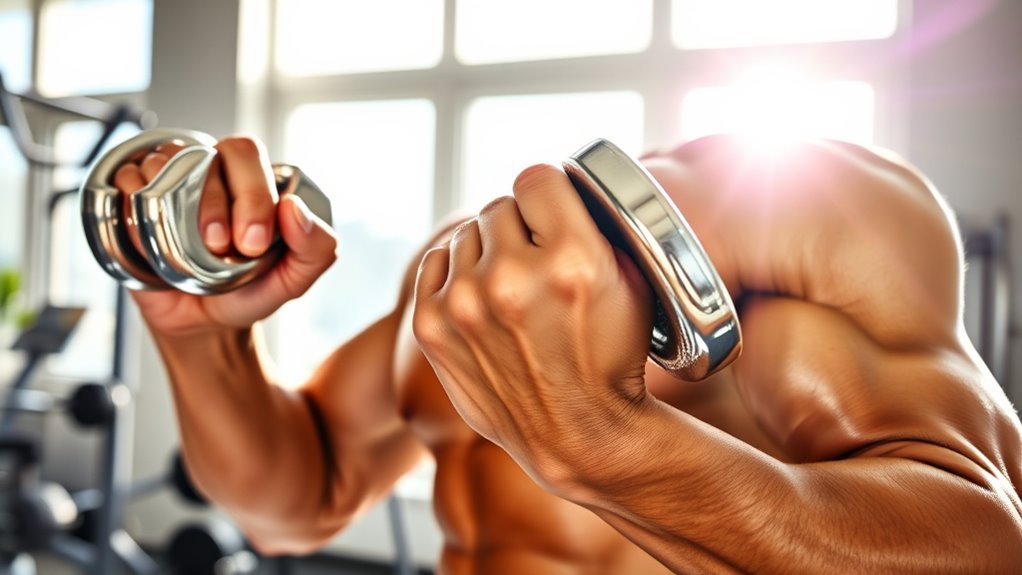
You can build muscle with just dumbbells by consistently challenging your muscles using a mix of compound and isolation exercises. Dumbbell workouts are a great way to increase strength and muscle mass without needing a full gym setup.
Focus on proper form to get the most out of each movement and avoid injury.
Gradually increase weights or reps to apply progressive overload, which is key for muscle growth. Don’t forget to balance your workouts with adequate rest to allow your muscles to recover and grow stronger.
Pair your workouts with protein-rich meals and stay well hydrated to support muscle repair and growth.
Using dumbbells also engages stabilizing muscles, boosting overall strength and improving coordination.
Keep progressing and adjusting your routine as you get stronger, and you’ll unlock even more effective strategies to build muscle using just dumbbells. It’s all about consistency and smart training!
Key Takeaways
- Use compound and isolation dumbbell exercises to target multiple muscle groups and promote balanced muscle growth. This way, you’ll hit all the key areas effectively.
- Gradually increase dumbbell weight, reps, or sets over time to apply progressive overload and stimulate muscle gains. It’s all about challenging your muscles just enough to grow.
- Maintain proper form with controlled movements, neutral wrists, and engaged core to prevent injury and maximize effectiveness. Trust me, form is everything when lifting.
- Schedule workouts to train each muscle group 2-3 times weekly with sufficient rest for recovery and muscle repair. Remember, your muscles grow when you rest, not just when you work out.
- Support training with nutrient-dense meals rich in protein and carbs, especially consuming protein within an hour post-workout. Feeding your body right helps those gains stick around!
Benefits of Using Dumbbells for Muscle Growth
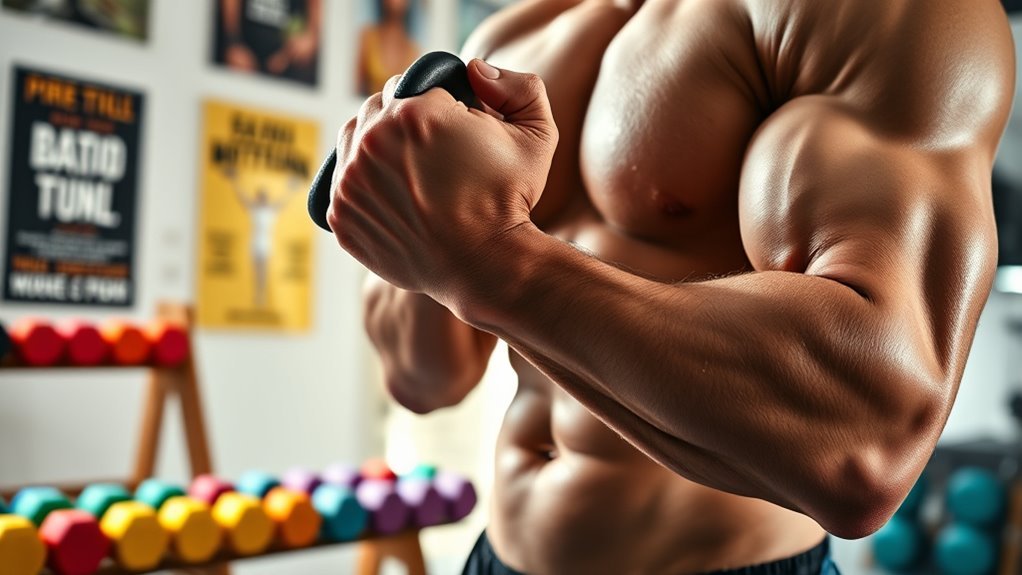
Although many workout tools exist, dumbbells offer unique benefits that can boost your muscle growth effectively. You get greater range of motion compared to machines, allowing muscles to engage fully and develop more evenly.
Dumbbells require you to stabilize the weight, activating smaller supporting muscles that often go unnoticed with barbells or machines. You also enjoy more exercise variety, easily adjusting weights and angles to target different muscle groups.
This versatility helps prevent plateaus by constantly challenging your muscles in new ways. Additionally, dumbbells promote balanced strength since each arm works independently, reducing muscle imbalances.
Their compact size means you can work out anywhere without bulky equipment. Overall, dumbbells provide a flexible, efficient, and effective way to build muscle safely and progressively.
Essential Dumbbell Exercises for Full-Body Strength
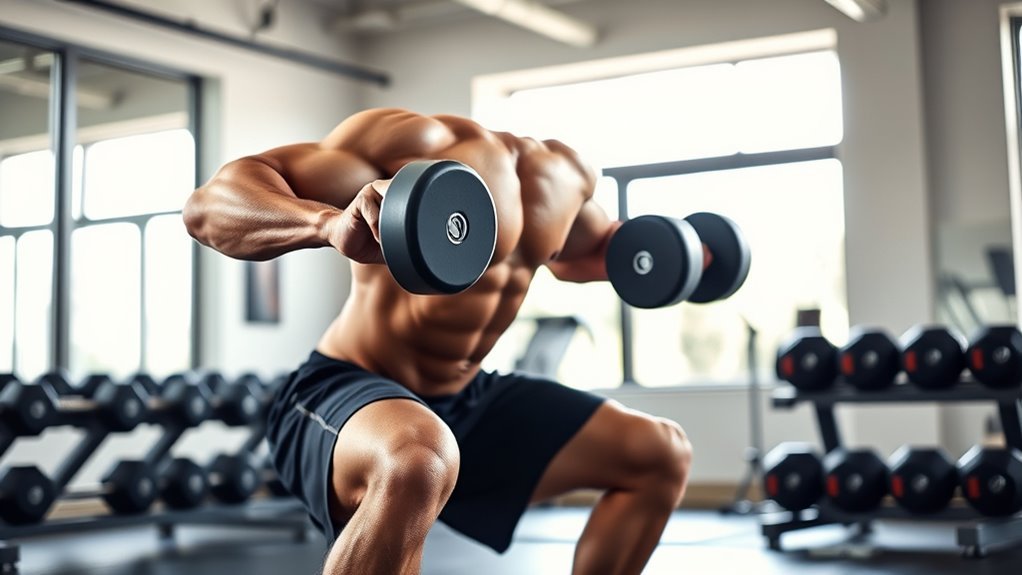
To build full-body strength with dumbbells, you’ll want to focus on compound movements that work multiple muscle groups at once.
Alongside these, targeted isolation exercises help you make certain that you get the most out of your workouts. It’s all about hitting those big muscle groups while also giving some extra attention where it counts.
Compound Dumbbell Movements
When you focus on compound dumbbell movements, you engage multiple muscle groups simultaneously, making your workouts more efficient and effective. Exercises like the dumbbell squat to press combine lower and upper body strength, targeting your quads, glutes, shoulders, and triceps in one fluid motion.
The dumbbell renegade row works your back, core, and arms, improving stability and power. Incorporate dumbbell lunges with bicep curls to simultaneously build leg and arm muscles. These compound moves demand coordination and balance, activating your core for added support.
Targeted Muscle Isolation
While compound movements build overall strength, targeted muscle isolation lets you focus on specific areas to correct imbalances and enhance definition.
Using dumbbells, you can zero in on muscles that need extra work without involving others, making your workouts more efficient. This approach helps you sculpt your physique and prevent injury by strengthening weaker points.
Here are essential dumbbell exercises for isolation:
- Bicep Curls: Focus on your biceps for arm strength and shape.
- Dumbbell Flyes: Target the chest muscles to improve upper body definition.
- Tricep Kickbacks: Isolate the triceps to enhance arm tone and stability.
- Lateral Raises: Build shoulder width and improve posture.
Try incorporating these moves to fine-tune your muscle development using just dumbbells. You’ll see the difference!
Designing a Balanced Dumbbell Workout Routine
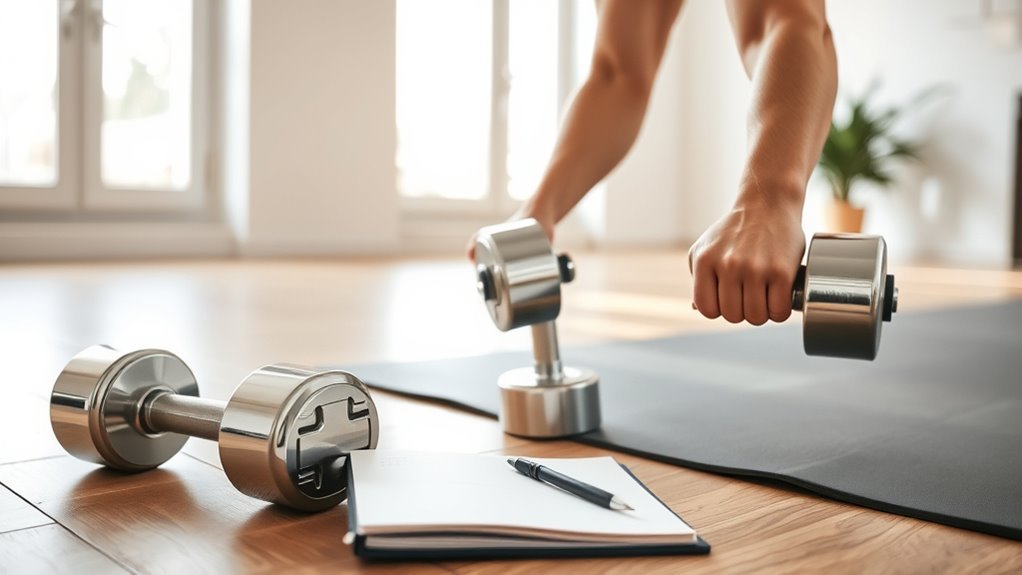
When designing your dumbbell workout, balancing compound and isolation exercises is key to maximizing muscle growth. You’ll want to schedule workouts to allow enough recovery time between sessions for each muscle group.
Paying attention to frequency and rest will help you avoid burnout and keep progressing. It’s all about finding that sweet spot where you challenge your muscles but also give them time to recover.
Compound Vs Isolation Exercises
Because compound and isolation exercises target your muscles differently, understanding their roles is key to designing a balanced dumbbell workout routine. Compound exercises engage multiple muscle groups and joints simultaneously, making them efficient for building overall strength and muscle mass.
Isolation exercises focus on a single muscle, helping you correct imbalances and enhance muscle definition. Incorporate both types to maximize growth and prevent plateaus.
Here’s what to keep in mind:
- Compound moves like dumbbell squats and presses build foundational strength.
- Isolation moves like bicep curls and tricep extensions target specific muscles.
Balance your routine by pairing compound exercises with isolation work. Use compound exercises to stimulate muscle growth, and isolation for refinement.
This approach guarantees you build strength and sculpt muscles effectively using just dumbbells.
Frequency and Recovery Strategies
To build muscle effectively with dumbbells, you need to balance how often you train with adequate recovery time. Aim to work each muscle group 2-3 times per week, allowing 48 hours between sessions targeting the same muscles. This frequency promotes growth without overtraining.
Incorporate active recovery, like light stretching or low-intensity cardio, on rest days to boost blood flow and reduce soreness. Prioritize sleep and nutrition since they’re essential for muscle repair and growth.
Listen to your body—if you feel persistent fatigue or joint pain, consider adding more rest. By managing workout frequency and recovery smartly, you’ll maximize gains and avoid burnout, making your dumbbell routine both effective and sustainable.
Progressive Overload With Dumbbells
As you aim to build muscle with dumbbells, mastering progressive overload becomes essential. This principle means gradually increasing the demands on your muscles to stimulate growth. Without it, your progress will plateau.
To apply progressive overload with dumbbells, focus on:
- Increasing the weight you lift as you get stronger
- Adding more repetitions or sets to your routine
- Slowing down the tempo to increase time under tension
- Reducing rest time between sets for added intensity
Track your workouts to ensure consistent progression. Remember, small, steady improvements lead to significant muscle gains over time. This approach keeps your muscles challenged and growing without needing fancy equipment.
Incorporating Compound Movements With Dumbbells
When you incorporate compound movements with dumbbells, you engage multiple muscle groups simultaneously, making your workouts more efficient and effective. Exercises like dumbbell squats with shoulder presses, renegade rows, and dumbbell deadlifts target various muscles at once, boosting strength and coordination.
These moves increase calorie burn and promote balanced muscle growth by activating both prime movers and stabilizers. By using dumbbells, you also improve your range of motion and correct muscle imbalances more easily than machines permit.
To maximize results, focus on controlled, deliberate movements that challenge your muscles through full ranges of motion. Incorporating compound exercises into your routine ensures you build functional strength that translates well to daily activities and other workouts.
Plus, it saves you time and enhances overall muscle development. So, give these dumbbell compound exercises a try—you’ll likely notice the difference in your strength and fitness!
Tips for Proper Form and Injury Prevention
Although lifting dumbbells can be highly effective, maintaining proper form is essential to prevent injuries and get the most out of your workouts. Focus on controlled movements and avoid rushing through reps.
Keep your core engaged to support your spine and stabilize your body. Remember, poor technique can lead to strains or joint issues, so prioritize quality over quantity.
Here are some quick tips to keep you safe and effective:
- Start with lighter weights to master form before increasing load
- Keep your wrists neutral to avoid strain during lifts
- Maintain a straight back and avoid hunching or arching
- Use a mirror or record yourself to check your posture and alignment
Stay mindful, and your muscles will thank you!
Nutrition Strategies to Support Muscle Building
To build muscle effectively, you need to fuel your body with the right nutrients that support recovery and growth. Focus on consuming enough protein—about 1.6 to 2.2 grams per kilogram of body weight daily—to repair and build muscle fibers.
Include lean meats, dairy, legumes, or plant-based proteins in your meals. Don’t neglect carbohydrates; they replenish glycogen stores and provide the energy needed for your dumbbell workouts.
Opt for whole grains, fruits, and vegetables. Healthy fats are essential too; they support hormone production and overall health.
Stay hydrated, as water aids muscle function and recovery. Timing matters—try to eat a balanced meal or snack containing protein and carbs within an hour after training to maximize muscle repair.
Prioritize consistent, nutrient-dense meals to fuel your gains. It really makes a difference when you keep at it regularly!
Tracking Progress and Adjusting Your Dumbbell Training
Proper nutrition fuels your workouts, but tracking your progress guarantees you’re making the most of your dumbbell training. You need to monitor your strength gains, muscle growth, and endurance regularly.
Keep a workout log to note weights used, reps, and sets. Adjust your routine when you hit plateaus by increasing weights, reps, or changing exercises. Also, pay attention to how your body feels to avoid injury.
Here’s how to track and adjust effectively:
- Record every workout’s weights, reps, and sets
- Take weekly photos or measurements to track muscle growth
- Increase dumbbell weight or reps when exercises feel easier
- Modify exercises to target muscles differently or prevent boredom
Frequently Asked Questions
Can Dumbbells Replace Gym Machines Entirely for Muscle Building?
You can replace gym machines with dumbbells for muscle building since they offer versatile exercises and engage stabilizer muscles.
However, some machines target specific muscles more safely or precisely.
How Often Should I Clean and Maintain My Dumbbells?
You should clean and maintain your dumbbells weekly to prevent rust and grime buildup. After each use, wipe them down with a damp cloth.
Also, make it a habit to periodically check for loose parts or any damage. This helps keep them safe and effective for your workouts.
Are Adjustable Dumbbells as Effective as Fixed-Weight Dumbbells?
Adjustable dumbbells are like a Swiss Army knife—they’re just as effective as fixed weights if you use them right.
You’ll enjoy versatility and convenience without sacrificing the muscle-building power you need for solid gains.
They let you switch up your weight quickly, which is great for mixing different exercises.
Can Dumbbell Workouts Help With Muscle Endurance as Well as Growth?
Yes, dumbbell workouts can boost both muscle endurance and growth. By adjusting reps, sets, and weights, you’ll challenge your muscles differently.
This helps improve stamina while promoting strength gains effectively with consistent effort. So, mixing up your routine is key to seeing those results.
Is It Safe to Use Dumbbells for Muscle Building Without a Spotter?
Using dumbbells without a spotter is like riding a bike with training wheels—you’re generally safe if you choose manageable weights and maintain proper form.
Always prioritize control and avoid going too heavy to prevent injury.
It’s all about knowing your limits and listening to your body. Just take it step by step, and you’ll be good!
Conclusion
You might think building serious muscle requires fancy machines or a crowded gym, but dumbbells prove otherwise. With just these simple tools, you can craft a full-body routine and challenge your muscles with progressive overload.
Plus, you can even nail compound movements—all without the gym’s chaos. So, if you’ve been waiting for the perfect setup, remember: sometimes, the “basic” dumbbell in your hand is all you really need to transform your strength.
Building muscle using just dumbbells is not only effective but also convenient. By incorporating a variety of exercises that target different muscle groups, you can achieve balanced growth and improve overall fitness. The key lies in consistent training, gradually increasing weights, and focusing on proper form.
In short, dumbbells offer a versatile and accessible way to build muscle, making them an excellent choice whether you’re a beginner or looking to enhance your home workout routine. So grab those dumbbells and start building muscle today!