Do You Wear Shoes on a Vibration Plate and How to Use It
You should wear supportive shoes on a vibration plate to protect your feet, improve stability, and reduce discomfort from vibrations. Wearing shoes provides cushioning and helps you maintain balance during your workout.
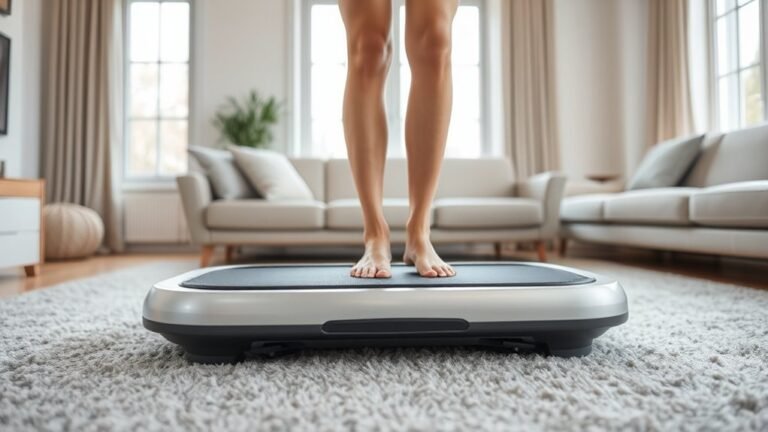
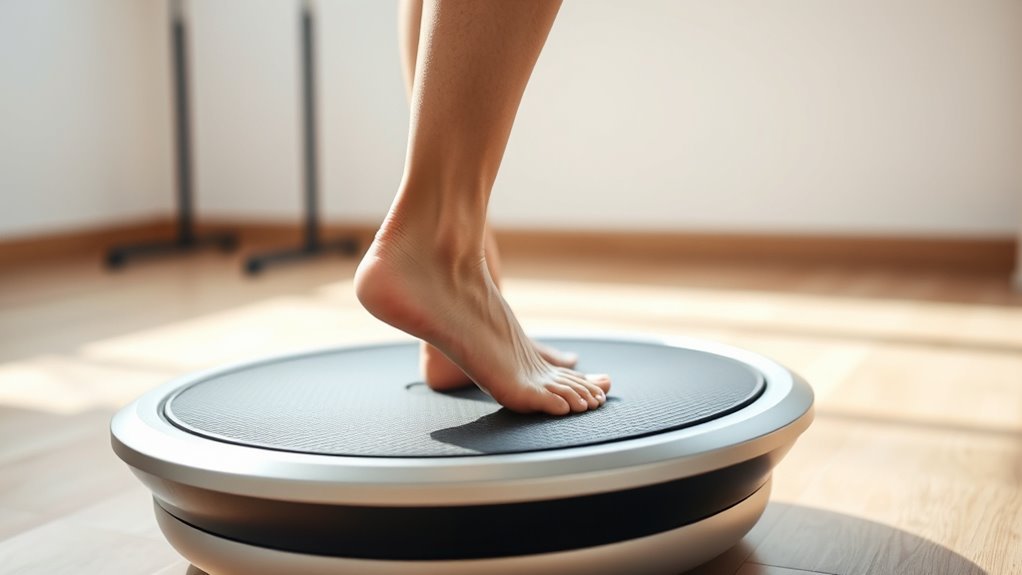
However, if the surface is clean and safe, going barefoot can increase muscle engagement and sensory feedback, giving you a different experience.
Start with a proper stance—feet shoulder-width apart, knees slightly bent, and core engaged.
Keep your sessions short, around 10-15 minutes, especially when you’re just beginning.
Combining vibration plate workouts with other exercises can boost your overall results.
Keep going for tips on how to maximize the benefits and stay safe while using your vibration plate!
Key Takeaways
- Wearing supportive shoes on a vibration plate provides cushioning, stability, and protects your feet from injury during exercises. It helps keep you comfortable and safe while you work out.
- Going barefoot can actually enhance muscle engagement, balance, and sensory feedback. But make sure the surface is clean and safe to avoid any injuries before you try it.
- Keep in mind, thick, cushioned soles can reduce how effective the vibrations are. On the other hand, minimalist or thin-soled shoes let the vibrations pass through better, which boosts muscle activation.
- When you’re starting out, keep the intensity low and sessions short—think 10-15 minutes, 2-3 times a week. Then, slowly increase how long and how often you use the plate to get the best results.
- Also, focus on maintaining a proper stance: feet shoulder-width apart, knees slightly bent, and your core engaged. Try combining the vibration with exercises like squats to maximize the benefits.
Benefits of Using a Vibration Plate
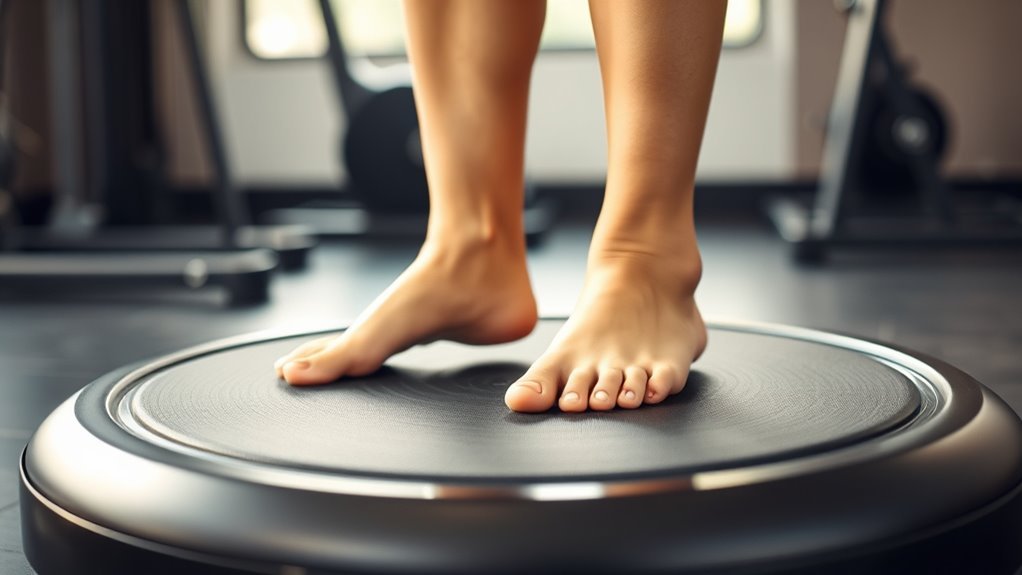
Although vibration plates may seem simple, they offer several benefits that can enhance your fitness routine. When you use one regularly, you can improve muscle strength and tone more efficiently.
The vibrations cause your muscles to contract rapidly, activating more muscle fibers than traditional exercises. This means you get a more intense workout in less time.
You’ll also notice improved circulation, which helps with recovery and reduces muscle soreness. Additionally, vibration plates can boost your balance and flexibility by challenging your body to stabilize during use.
If you’re short on time or looking for a low-impact option, incorporating vibration plate sessions can complement your workouts and aid in overall fitness progress. Just remember to maintain proper form to maximize benefits and avoid injuries.
Pros and Cons of Wearing Shoes on a Vibration Plate
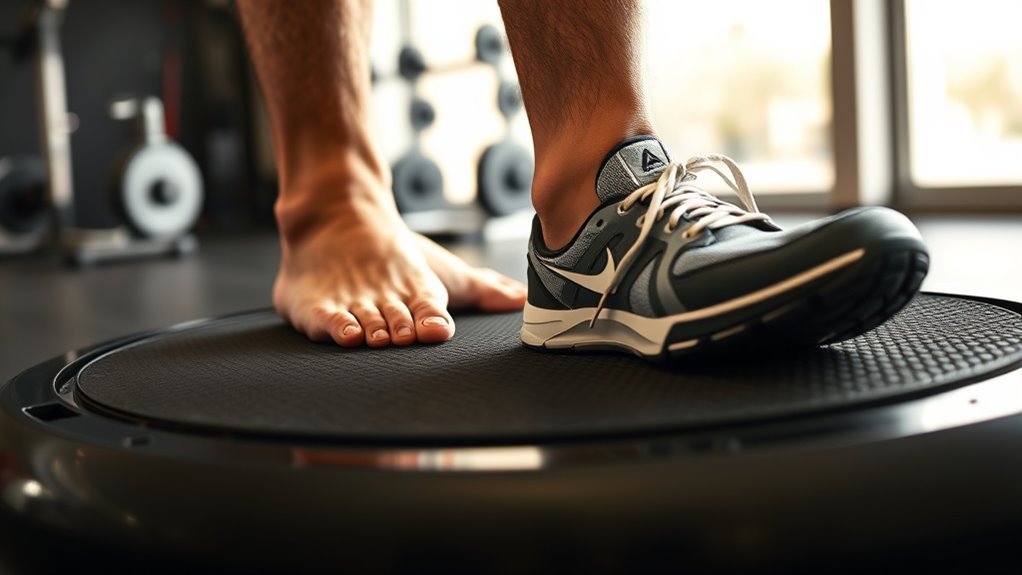
Wearing shoes on a vibration plate can provide extra support and protect your feet from hard surfaces.
However, shoes might also reduce the direct stimulation you get from the vibrations.
Let’s weigh the benefits against the potential drawbacks to see what works best for you.
Shoe Benefits on Plate
Since your feet directly contact the vibration plate, choosing whether to wear shoes can impact both comfort and effectiveness. Wearing shoes provides cushioning, which can reduce discomfort from the plate’s vibrations, especially if you’re new to this workout.
Shoes also offer better support and stability, helping you maintain balance during exercises. They protect your feet from potential injuries like slipping or stubbing toes on the machine.
Additionally, shoes with good grip prevent your feet from sliding, allowing you to focus on your workout without distraction. If you have foot conditions or sensitive skin, shoes act as a barrier, making the session more comfortable.
Potential Drawbacks Wearing Shoes
While shoes offer cushioning and support on a vibration plate, they can also limit your connection to the machine’s surface. Wearing shoes may reduce the direct stimulation your muscles and nerves receive, potentially decreasing the effectiveness of your workout.
The shoe’s sole can absorb some vibrations, dampening the intensity that reaches your body. Plus, bulky or poorly fitting shoes might interfere with your balance, making it harder to maintain proper posture during exercises.
Some vibration plates are designed for barefoot use, and shoes could reduce your grip, increasing the risk of slipping. If you want maximum vibration transfer and better proprioception, going barefoot might be more beneficial.
However, you’ll need to weigh comfort against these potential drawbacks when deciding whether to wear shoes.
Advantages of Going Barefoot on a Vibration Plate
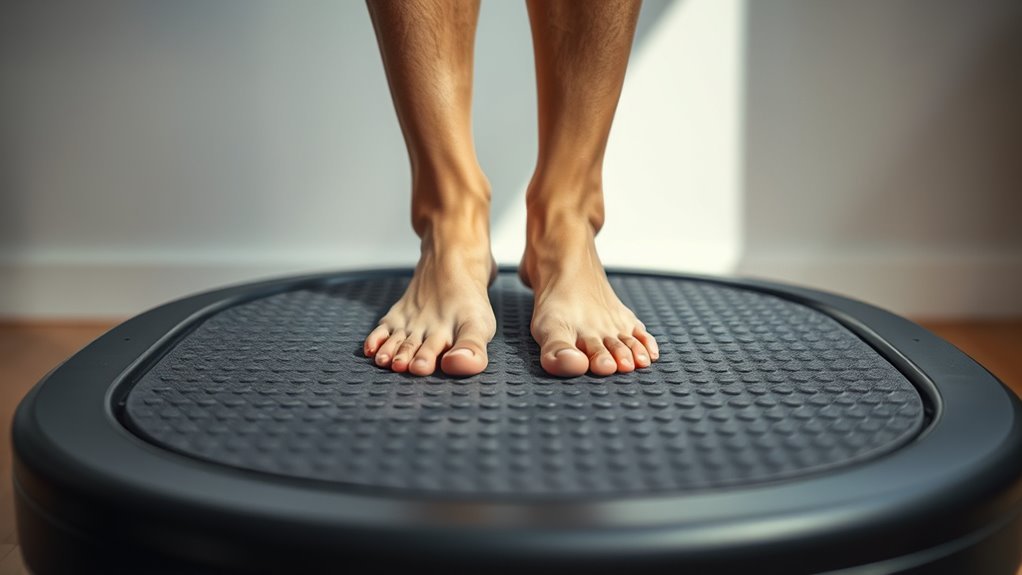
When you go barefoot on a vibration plate, your muscles work harder to maintain balance and stability.
You also get better sensory feedback from the vibrations, helping you adjust your posture more effectively.
This can lead to a more engaging and efficient workout experience. Give it a try and feel the difference for yourself!
Enhanced Muscle Engagement
Although wearing shoes offers protection, going barefoot on a vibration plate lets your muscles work harder and engage more effectively. Without shoes, your feet directly feel the vibrations, prompting smaller stabilizing muscles to activate for balance and control.
This increased muscle engagement leads to better strength development and improved workout results.
| Muscle Group | Engagement Level (With Shoes) | Engagement Level (Barefoot) |
|---|---|---|
| Calves | Moderate | High |
| Foot Intrinsics | Low | High |
| Quadriceps | Moderate | Moderate |
| Hamstrings | Moderate | Moderate |
| Stabilizer Muscles | Low | High |
Going barefoot challenges your muscles more, enhancing overall activation and training efficiency. It’s a simple change that can make a big difference in your workouts!
Improved Sensory Feedback
Because your feet have direct contact with the vibration plate when you’re barefoot, you get sharper sensory feedback that helps your body adjust more quickly and effectively. This direct connection allows your nervous system to detect subtle changes in vibration and balance, improving your proprioception—your sense of body position.
As a result, you can maintain better posture and stability during exercises. Wearing shoes can dull this feedback because the soles act as a barrier, reducing the stimuli your feet receive.
When you go barefoot, your muscles and joints respond more dynamically because the sensory information is clearer. This heightened awareness not only enhances your workout quality but also helps prevent injuries by making you more attuned to how your body moves on the vibration plate.
How Shoe Type Affects Your Vibration Plate Workout
Choosing the right shoes can substantially impact your vibration plate workout‘s effectiveness and comfort. When you wear shoes with thick, cushioned soles, the vibrations can get dampened, reducing the intensity your muscles experience.
On the other hand, shoes with thin, firm soles allow more direct transmission of vibrations, enhancing muscle activation. You’ll find that minimalist or flat-soled shoes offer better stability and balance, which helps you maintain control during exercises.
Avoid shoes with overly soft or gel-filled soles since they can absorb too much vibration, lessening workout benefits. If you prefer barefoot training, ensure the surface is clean and safe, as this increases sensory feedback and muscle engagement.
Ultimately, your shoe choice can either amplify or hinder your vibration plate results. So, pick wisely to get the most out of your workout!
Proper Stance and Posture on a Vibration Plate
When you stand properly on a vibration plate, you maximize muscle engagement and reduce the risk of injury. Start with your feet shoulder-width apart, knees slightly bent, and core engaged.
Keep your back straight and shoulders relaxed to maintain balance and avoid strain. Avoid locking your knees or leaning too far forward.
Here’s a quick guide to proper stance and posture:
| Body Part | Position | Tips |
|---|---|---|
| Feet | Shoulder-width apart | Keep heels flat |
| Knees | Slightly bent | Avoid locking |
| Back | Straight | Engage core |
| Shoulders | Relaxed | Don’t hunch |
| Head & Neck | Neutral, looking forward | Avoid tilting up or down |
Follow these tips to get the most from your vibration plate safely. You’ll feel better and stay injury-free!
Recommended Duration and Frequency for Vibration Plate Use
Although vibration plates offer many benefits, using them for the right amount of time and frequency is key to seeing results without overdoing it. Generally, start with sessions lasting 10 to 15 minutes, two to three times per week.
Start with 10-15 minute vibration plate sessions, two to three times weekly for effective and safe results.
This allows your body to adapt and reduces the risk of muscle fatigue. As you get comfortable, you can gradually increase session length up to 20 minutes and use the plate up to five times weekly.
Remember, more isn’t always better; your muscles need recovery time to benefit fully. Consistency matters more than duration, so stick to a routine that fits your schedule.
Listening to your body and avoiding excessive use guarantees you maximize gains while preventing burnout or strain. Just take it step by step, and you’ll get the most out of your vibration plate sessions.
Safety Tips to Prevent Injury While Using a Vibration Plate
To prevent injury while using a vibration plate, you need to prioritize proper form and listen to your body’s signals. Always stand with your knees slightly bent to absorb the vibrations, and avoid locking your joints.
Start with low intensity and short sessions, gradually increasing as your body adapts. Make sure to wear supportive shoes to protect your feet and maintain balance.
Keep your core engaged to stabilize your posture and reduce strain on your back. Stop immediately if you feel pain, dizziness, or excessive discomfort.
Don’t use the vibration plate if you have certain medical conditions without consulting a healthcare professional first. Finally, verify the surface you place the vibration plate on is stable and non-slip to prevent falls or accidents.
Combining Vibration Plate Training With Other Exercises
Integrating vibration plate training with your regular workout routine can boost your overall fitness and target muscles more effectively. You can use the vibration plate as a warm-up tool before strength training or cardio to activate muscles and improve circulation.
Adding bodyweight exercises like squats, lunges, or planks on the vibration plate really intensifies muscle engagement and balance. For a full-body workout, try alternating between vibration plate sessions and traditional exercises. This way, you maximize results without overfatiguing yourself.
Just make sure to wear appropriate shoes for stability and support during combined routines. By blending vibration plate training with other exercises, you’ll enhance muscle tone, flexibility, and endurance more efficiently. It makes your workouts more dynamic and effective overall.
Frequently Asked Questions
Can Vibration Plates Help Improve Bone Density?
Yes, vibration plates can help improve bone density by stimulating bone cells through mechanical vibrations.
You’ll want to use them regularly and combine with weight-bearing exercises to maximize bone health benefits effectively.
It’s a great way to give your bones a little extra boost alongside your usual workout routine.
Is Vibration Plate Training Suitable for Pregnant Women?
Sure, because nothing says “relaxing pregnancy” like shaking on a platform!
But seriously, you shouldn’t use vibration plates while pregnant. Consult your doctor first; safer exercises exist to keep you and baby healthy without the risk.
How Noisy Are Vibration Plates During Use?
Vibration plates can be somewhat noisy, but it varies by model. You’ll notice a low hum or buzzing during use.
Choosing a high-quality, well-padded plate helps reduce noise, so you won’t disturb others nearby. It really makes a difference in keeping things quieter.
Do Vibration Plates Require Maintenance or Calibration?
Yes, vibration plates need occasional maintenance and calibration to keep them running smoothly. You should clean the surface regularly and check for any loose parts.
Also, it’s important to follow the manufacturer’s guidelines. This helps guarantee accuracy and prolong the machine’s lifespan. Taking these steps ensures your vibration plate stays in great shape.
Can Vibration Plates Aid in Weight Loss?
While sitting still burns few calories, using vibration plates activates muscles intensely. You’ll boost metabolism and calorie burn, aiding weight loss when combined with diet and exercise.
Don’t expect miracles alone, but over time, you can see real support. It’s a helpful tool to add to your routine, not a magic fix.
Conclusion
Using a vibration plate can boost your fitness, but did you know it can increase muscle strength by up to 30%? Whether you wear shoes or go barefoot, your choice impacts comfort and results.
Remember to maintain proper posture and start slow to avoid injury. Stick to recommended durations and combine vibration training with other exercises for the best outcome.
When it comes to wearing shoes on a vibration plate, it’s generally recommended to wear athletic shoes for better support and cushioning. Barefoot use can provide a more intense vibration effect but might be less comfortable or safe depending on your balance and foot sensitivity.
Embrace this tool confidently—it’s designed to help you get stronger and healthier every day. By choosing the right footwear and following safe practices, you can maximize your benefits from vibration plate workouts and improve muscle strength effectively.