How Does an Incline Treadmill Build Glutes?
Using an incline treadmill builds your glutes by increasing hip extension, which activates the glute muscles more than flat walking. Walking uphill forces your glutes to work harder to lift and propel your body forward, which improves strength and tone.
As you increase the incline, even more muscle fibers in your glutes get recruited. This helps you develop endurance and power over time.
By adjusting the incline and keeping proper form, you maximize the benefits for your glutes. So, keep at it!
You’ll soon discover the best ways to tailor your workouts for stronger, more sculpted glutes.
Key Takeaways
- Walking on an incline treadmill increases gluteus maximus activation through greater hip extension and uphill propulsion demands. It really makes your glutes work harder than walking on a flat surface.
- Steeper inclines, usually between 5-15%, recruit more glute muscles. This helps enhance strength, endurance, and muscle tone much more effectively compared to just flat walking.
- Incline walking also engages stabilizing glute muscles, like the gluteus medius and minimus. This not only boosts your balance but also improves hip alignment, which is great for overall movement.
- When you do incline treadmill workouts regularly, it promotes muscle fiber recruitment and adaptation. Over time, this leads to stronger and more powerful glutes.
- Plus, combining incline walking with proper form and controlled intensity maximizes glute development. It also helps reduce the risk of injury, so you can keep progressing safely.
The Role of Glute Muscles in Incline Walking
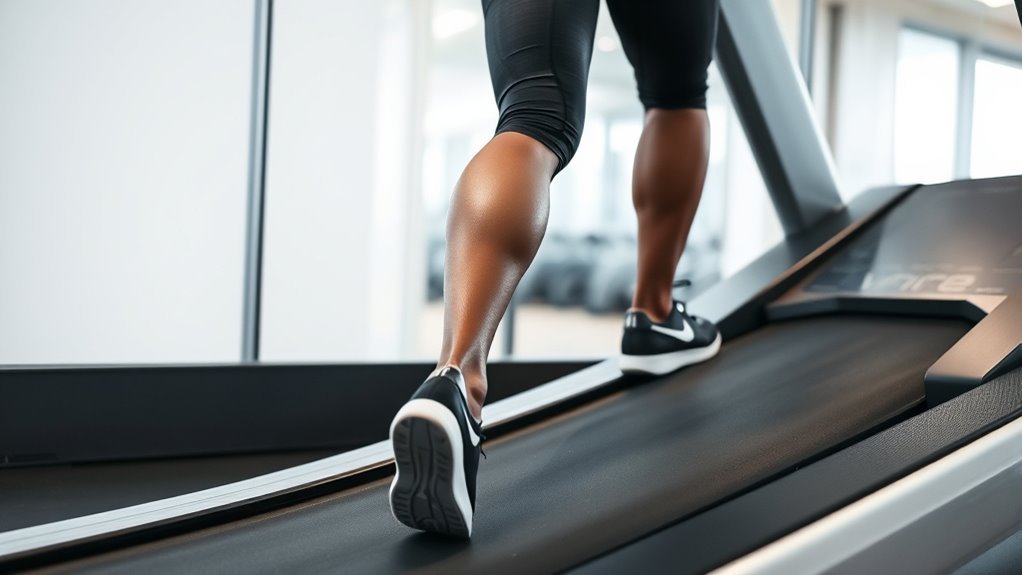
When you walk on an incline treadmill, your glute muscles work harder than they do on flat ground. Your glutes—especially the gluteus maximus—are responsible for extending your hips and stabilizing your pelvis as you push upward against the slope.
This extra effort activates these muscles more intensely compared to walking on a level surface. As you step forward and drive your body uphill, your glutes contract to help lift and propel you.
You’ll also engage the gluteus medius and minimus to maintain balance and proper alignment. By consistently using an incline treadmill, you encourage your glutes to adapt and strengthen, improving both their endurance and power.
This targeted activation is key to enhancing your overall lower body strength and posture. So, next time you hit the treadmill, try adding some incline to really put those glutes to work!
How Incline Elevation Affects Muscle Engagement
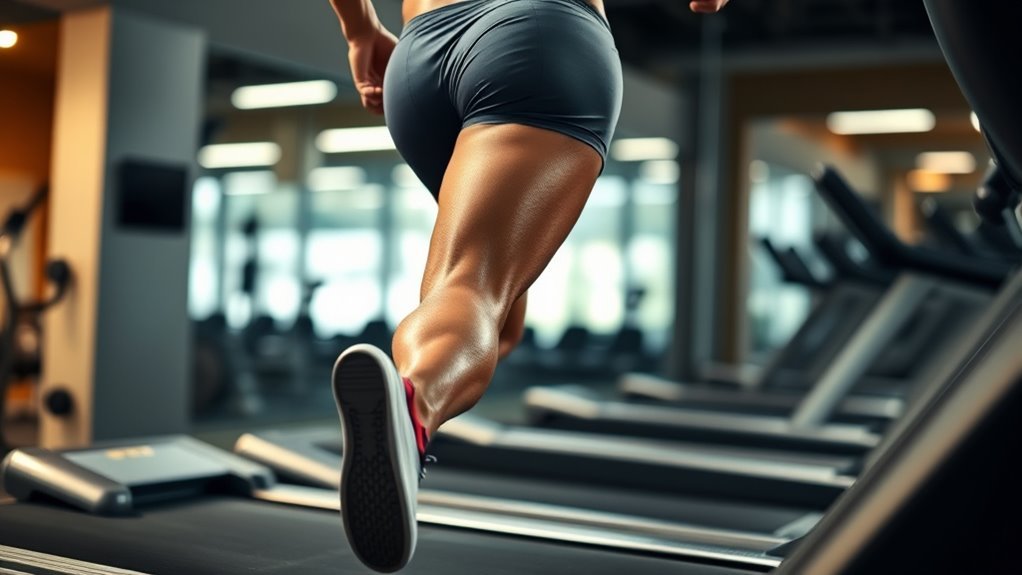
When you increase the incline on a treadmill, your glutes have to work harder to propel you upward. This higher elevation boosts muscle activation and pulls more fibers into action.
As a result, you engage your glutes and surrounding muscles more effectively with every step. It’s like giving your workout an extra push without even thinking about it.
Increased Glute Activation
Because incline treadmills simulate uphill walking or running, they force your glute muscles to work harder than on flat surfaces. When you step onto an incline, your glutes engage more intensely to extend your hips and propel you upward.
This increased demand activates both the gluteus maximus and medius, essential for strength and stability. As you maintain your pace, the incline challenges your muscles to sustain higher force output, promoting greater activation.
This heightened engagement not only helps build muscle but also improves endurance in your glutes. By regularly incorporating incline treadmill workouts, you ensure your glutes are consistently activated more than during level walking or running.
That makes your training more effective in targeting and strengthening these key muscles. So, adding incline sessions can really up your glute game!
Enhanced Muscle Recruitment
How exactly does incline elevation enhance muscle recruitment during your treadmill workouts? When you increase the treadmill’s incline, your body naturally engages more muscle groups to maintain balance and propel you upward.
This means your glutes, hamstrings, calves, and even your core activate more intensely compared to walking or running on a flat surface. The steeper the incline, the greater the demand on these muscles, forcing them to work harder.
You’ll notice your glutes firing more as they help extend your hips with each step. Plus, your hamstrings and calves assist in pushing off the incline, creating a coordinated effort among these muscle groups.
This enhanced muscle recruitment not only builds strength but also improves endurance and overall muscle tone, making your workouts more effective.
Benefits of Incline Treadmill Workouts for Glute Development

When you use an incline treadmill, your glutes work harder, boosting muscle activation and strength. This extra effort helps you build a more toned and powerful backside.
Plus, it supports better posture, making your overall form look and feel improved. It’s a win-win for both strength and style!
Increased Muscle Activation
Although walking on a flat surface engages your glutes to some extent, using an incline treadmill considerably boosts muscle activation in this area. When you walk or run uphill, your glutes work harder to extend your hips and propel you forward.
This increased effort targets the gluteus maximus more effectively than flat walking. Here’s how incline treadmill workouts ramp up muscle activation:
- Elevate hip extension due to uphill incline
- Engage stabilizing muscles for balance on the slope
- Increase stride length, activating glute fibers
Plus, you’ll require more force with each step, which intensifies the muscle contraction. It also recruits both fast-twitch and slow-twitch muscle fibers, giving your glutes a more comprehensive workout.
Enhanced Glute Strength
Because incline treadmill workouts demand greater effort from your glutes, they help you build enhanced strength more effectively than flat-surface walking or running. When you walk or run uphill, your glute muscles work harder to propel you forward and stabilize your hips.
This increased resistance forces your glutes to adapt by becoming stronger over time. By consistently challenging these muscles, you improve their power and endurance, which benefits various physical activities beyond treadmill workouts.
Unlike level-ground exercise, incline walking activates the glutes in a way that mimics real-world movements like climbing stairs or hills. So, it’s a functional strength builder.
Incorporating incline treadmill sessions into your routine is a practical strategy to develop stronger, more resilient glute muscles efficiently. Give it a try and feel the difference!
Improved Posture and Tone
As you challenge your glutes on an incline treadmill, you naturally engage muscles that support proper alignment, helping improve your posture. This workout strengthens your core and lower back, reducing the risk of slouching and discomfort.
Plus, toning your glutes leads to a firmer, more sculpted appearance that enhances your overall silhouette. Here’s how incline treadmill workouts improve posture and tone:
- Activate deep stabilizing muscles that keep your spine aligned
- Encourage an upright stance by strengthening hip extensors
- Reduce lower back strain through balanced muscle engagement
- Enhance muscle tone for a lifted, firm gluteal area
- Promote better movement patterns for daily activities
Comparing Flat vs. Incline Treadmill Glute Activation
When you switch from a flat treadmill to one with an incline, your glutes have to work harder to propel you forward. On a flat surface, your glutes assist but don’t face much resistance, so they engage less intensely.
With an incline, the angle forces your glute muscles to generate more power with each step, increasing activation profoundly. This means your glutes contract more forcefully and frequently, promoting strength and growth over time.
The incline also recruits additional stabilizing muscles around your hips, enhancing overall muscle engagement. So, if your goal is to target and build your glutes, incorporating incline treadmill workouts provides a more effective stimulus than sticking solely to flat walking or running.
This difference makes incline training a smart choice for glute development. It’s a simple change that really boosts your results!
Optimal Incline Settings for Targeting Glutes
To maximize glute activation on an incline treadmill, you need to find the right angle that challenges your muscles without overexerting you. Generally, inclines between 5% and 15% are effective for targeting your glutes.
Start lower and gradually increase the incline as your strength and endurance improve. Too steep, and you’ll risk fatigue or poor form.
Keep these tips in mind for ideal settings:
- Begin at 5% incline to warm up and engage glutes.
- Increase incline to 10–12% for focused glute work.
- Avoid inclines above 15% to maintain balance and safety.
- Adjust speed to maintain controlled, deliberate steps.
- Listen to your body and modify incline if you feel strain.
This approach ensures you hit your glutes efficiently without injury.
Recommended Workout Durations and Intensities
Although the ideal workout duration varies, you should aim for sessions lasting between 20 to 40 minutes to effectively build your glutes on an incline treadmill. Start with moderate intensity, using a 5-7% incline and a pace that challenges you but allows you to maintain proper form.
As your strength improves, increase either the incline or speed to push your glutes harder. Incorporate intervals by alternating between higher intensity bursts for 1-2 minutes and recovery periods at a lower incline or slower pace. This method maximizes muscle activation and endurance.
Avoid overdoing it; listen to your body to prevent fatigue or injury. Consistency matters more than duration alone, so stick to a routine that balances effort and recovery to build your glutes efficiently.
Combining Incline Treadmill With Other Glute Exercises
Building your glutes on an incline treadmill works best when you add other targeted exercises to your routine. This combo approach helps you maximize muscle engagement and sculpt your glutes more effectively.
Maximize glute gains by combining incline treadmill workouts with targeted exercises for full muscle engagement.
After your treadmill session, focus on these key exercises to enhance your results:
- Squats: Activate all glute muscles and build strength.
- Lunges: Target the gluteus medius and improve balance.
- Glute bridges: Isolate and strengthen the glute muscles.
- Deadlifts: Engage the hamstrings and glutes for power.
- Step-ups: Mimic hill climbing, boosting glute endurance.
Try to incorporate these exercises 2-3 times a week alongside your incline treadmill workouts. This balanced approach guarantees you target your glutes from multiple angles.
It’ll speed up your progress and help prevent plateaus. Keep at it consistently, and you’ll notice the difference!
Common Mistakes to Avoid When Using an Incline Treadmill
When you push too hard on the incline or neglect proper form, you risk injury and reduce the effectiveness of your workout. One common mistake is leaning heavily on the treadmill’s handrails, which takes the load off your glutes and lessens muscle engagement.
Another is setting the incline too steep too soon, causing strain instead of strengthening. Avoid running or walking with a slouched posture; keep your chest up and core engaged to target your glutes properly.
Also, don’t rely solely on speed—focus on controlled, deliberate steps to maximize muscle activation. Finally, skipping warm-ups or cool-downs can lead to stiffness or injury.
Stick to proper technique to get the best results and build your glutes safely. It’s all about working smart, not just hard!
Frequently Asked Questions
Can Incline Treadmill Workouts Help Reduce Cellulite on the Glutes?
Yes, incline treadmill workouts can help reduce cellulite on your glutes by improving muscle tone and boosting circulation.
While they won’t eliminate cellulite completely, combining exercise with a healthy diet enhances skin appearance and firmness over time.
How Long Before Seeing Visible Glute Muscle Growth From Incline Walking?
You’ll start noticing your glutes’ gentle awakening in about 6 to 8 weeks if you’re consistent with incline walking.
Keep pushing, and those subtle changes will soon bloom into visible muscle growth.
Are Incline Treadmill Workouts Safe for People With Knee Problems?
Incline treadmill workouts can be safe for you if you have knee problems. But you’ll want to start slow and use proper form.
Also, it’s a good idea to consult your doctor or physical therapist first. That way, you can avoid aggravating your knees during exercise.
Should I Eat Specific Foods to Enhance Glute Growth From Incline Training?
You should eat protein to repair, carbs to fuel, and healthy fats to support your glute growth from incline training. Staying hydrated and including nutrient-dense foods will help you maximize strength, endurance, and muscle development effectively.
Think of protein as the building blocks for your muscles. Carbs give you the energy to power through your workouts, and healthy fats keep everything running smoothly. Plus, drinking enough water keeps your body in top shape.
Can Incline Treadmill Exercises Improve Glute Strength for Sprinting Performance?
Yes, incline treadmill exercises can improve your glute strength for sprinting by activating and building your glute muscles. This increased power helps you sprint faster and more explosively, boosting your overall performance on the track.
When you run on an incline, your glutes have to work harder compared to running on a flat surface. So, it’s a great way to target those muscles specifically.
Plus, adding incline workouts to your routine can break up the monotony and keep things interesting. Give it a try, and you might notice your sprint times getting better!
Conclusion
Using an incline treadmill is like giving your glutes a powerful uphill climb—they work harder, grow stronger, and shape up faster. By adjusting the incline and maintaining proper form, you’ll maximize muscle engagement and see real results.
Remember to mix in other glute exercises and avoid common mistakes to keep your progress steady. Staying consistent is key.
With regular use, an incline treadmill can help you build a sculpted, strong backside that carries you confidently through every step. Combining incline treadmill workouts with targeted glute exercises ensures balanced muscle development and effective glute growth. So, keep moving, stay motivated, and watch your glutes transform into a toned, powerful asset you’ll be proud of.