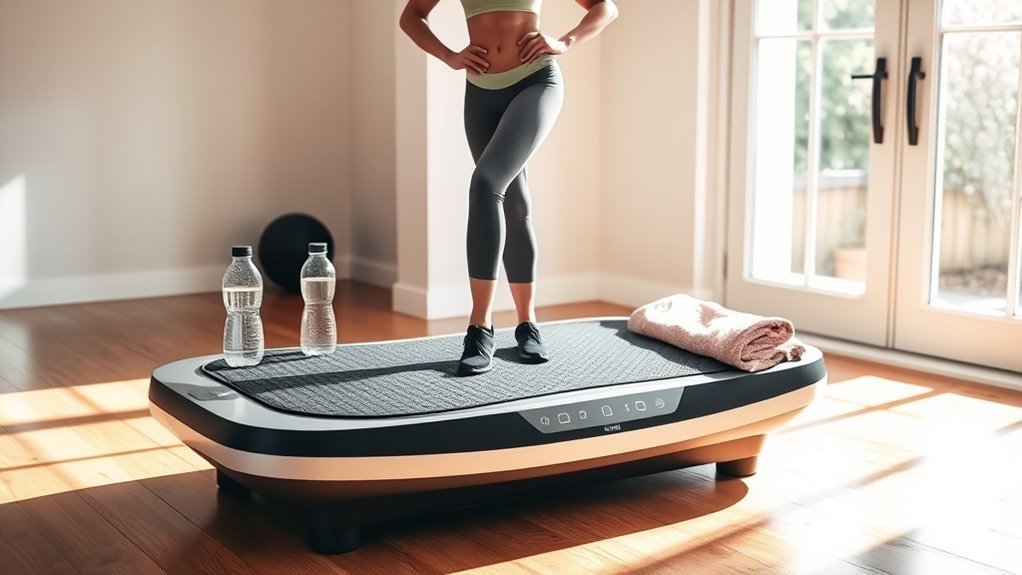
How Often Should I Use My Vibration Plate: A How-To Guide
You should use your vibration plate about 2 to 4 times a week to get the best results. If you’re new to vibration plate workouts, start with shorter sessions of 10-15 minutes. This helps your body adjust and build strength gradually.
Avoid using the vibration plate every day to prevent fatigue or soreness. It’s a good idea to mix in other exercises and prioritize recovery with rest and stretching.
Listen to your body and adjust how often you use the vibration plate based on how you feel.
Staying consistent with your routine is key. When you do, you’ll find effective ways to optimize your vibration plate workouts and keep yourself motivated.
Remember, the goal is to improve, not overtrain.
Key Takeaways
- Beginners should use the vibration plate 2-3 times weekly for 10-15 minutes. Gradually increase the duration as your strength improves.
- Intermediate users can train 3-4 times per week with 15-20 minute sessions. Make sure to do this on non-consecutive days to allow your body to recover.
- Advanced users may want to incorporate dynamic exercises and increase the vibration intensity. Just be sure to have rest days between intense sessions to avoid overtraining.
- Try to limit each session to 15-30 minutes. This helps prevent overuse and muscle fatigue. Always adjust the intensity based on how your body feels.
- Don’t forget to prioritize recovery! Take rest days, do gentle stretching, and stay properly hydrated. This will help you maintain consistent and sustainable use of your vibration plate.
Understanding the Benefits of Vibration Plate Exercise
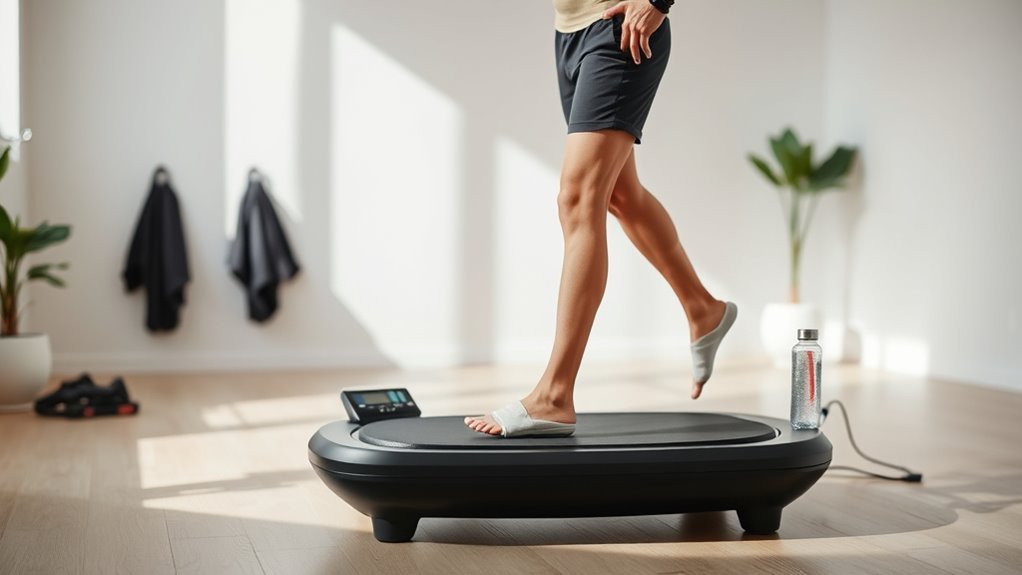
Although vibration plates may seem like just another fitness trend, they offer unique benefits that can enhance your workout routine. When you use a vibration plate, your muscles contract rapidly, improving strength and tone faster than traditional exercises.
You’ll also boost circulation, which helps with recovery and reduces muscle soreness. Plus, the vibrations stimulate your lymphatic system, aiding detoxification.
This kind of workout can improve your balance and flexibility, making everyday movements easier. You don’t need heavy weights or complicated equipment—just standing, sitting, or doing simple exercises on the plate activates your muscles effectively.
Recommended Frequency for Beginners
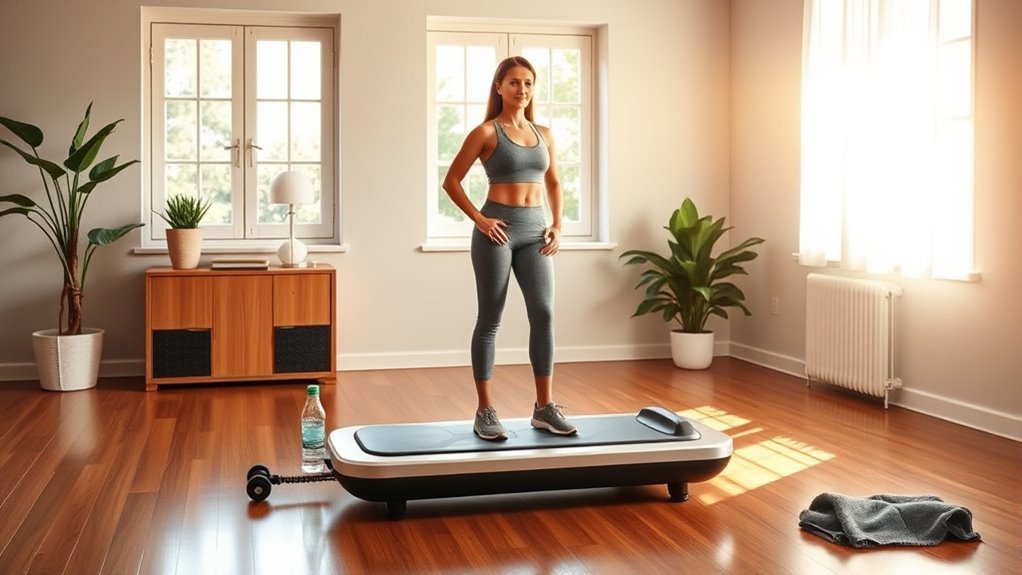
When you’re just starting with a vibration plate, it’s best to begin gradually to allow your body to adapt. Aim for two to three sessions per week, each lasting about 10 to 15 minutes.
This frequency gives your muscles time to recover while you get accustomed to the sensations and movements. Avoid daily use at this stage, as overdoing it can lead to soreness or fatigue.
Focus on proper form and controlled movements during each session. Listen to your body—if you feel discomfort beyond mild muscle fatigue, take extra rest days.
As you build confidence and strength, you can slowly increase session length or frequency. But for now, consistency with moderate use is key to safe and effective progress.
How Often Should Intermediate Users Train?
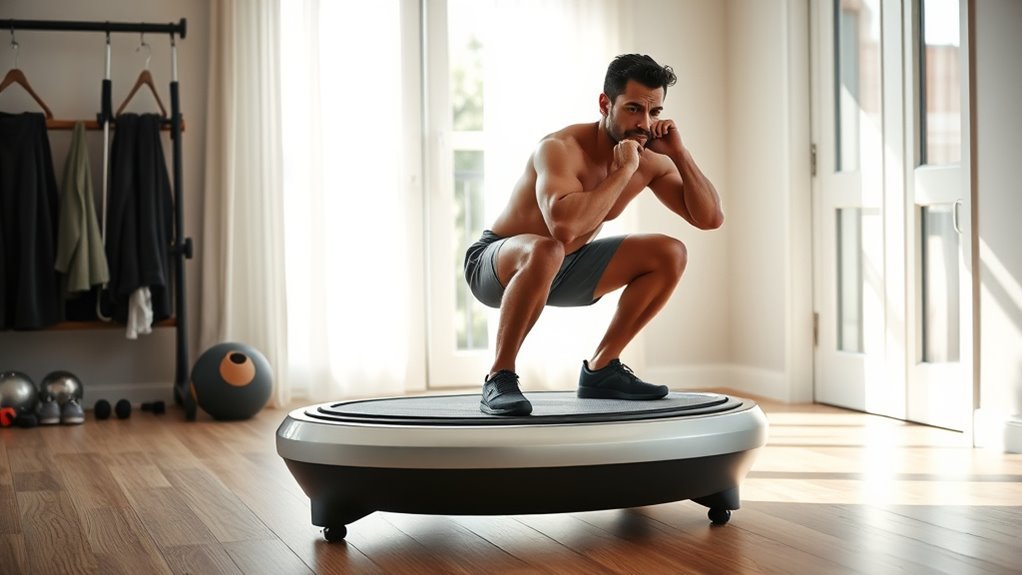
As an intermediate user, you can increase your vibration plate sessions to three or four times a week. It’s important to balance workout intensity with proper recovery to avoid overtraining.
Listening to your body will help you find the right frequency for steady progress. Just take it step by step and adjust as you go!
Recommended Session Frequency
Since you’ve already built a foundation with vibration plate training, you can increase your sessions to three or four times a week. This frequency helps you continue improving strength, balance, and flexibility without overdoing it.
Consistency is key, so spread your workouts evenly throughout the week to allow your body to adapt.
Here are some tips for your recommended session frequency:
- Schedule sessions on non-consecutive days to give muscles some rest
- Aim for 15-20 minute sessions per workout
- Combine vibration plate exercises with other workouts for overall fitness
Listen to your body; reduce frequency if you feel excessive fatigue. Tracking your progress can help you adjust frequency as needed.
This balanced approach keeps your training effective and enjoyable.
Balancing Intensity and Recovery
Although increasing your training frequency can boost progress, you need to balance workout intensity with adequate recovery to avoid overtraining.
As an intermediate user, aim to use your vibration plate about three to four times a week. Focus on varying the intensity—alternate between higher-intensity sessions and lighter, recovery-focused workouts.
This approach helps your muscles adapt without causing excessive fatigue. Pay attention to how your body feels; soreness or persistent fatigue signals you might need more rest.
Incorporate rest days or low-impact activities like stretching on off days to support recovery. By balancing intensity and recovery, you’ll maximize benefits, improve muscle tone, and reduce injury risk.
Guidelines for Advanced Vibration Plate Workouts
When you’ve built a solid foundation with basic vibration plate exercises, it’s time to challenge yourself with advanced workouts that maximize strength and endurance. To get the most from your sessions, focus on proper form and controlled movements.
Once your basics are strong, elevate your vibration plate workouts with focus on form and control for maximum strength.
Increase intensity gradually, and listen to your body to avoid overtraining. Incorporate variety to target different muscle groups and prevent plateaus.
Here are key guidelines for advanced vibration plate workouts:
- Use dynamic exercises like squats with weights or push-ups on the plate.
- Increase vibration frequency and amplitude within safe limits.
- Combine isometric holds with movement for added challenge.
- Include balance and core stability drills.
- Schedule rest days between intense sessions to promote recovery.
Stick to these tips to safely push your limits and boost your fitness. You got this!
Ideal Session Duration for Effective Results
To get effective results from your vibration plate workouts, you should aim for sessions that balance intensity with manageable duration. Typically, 15 to 30 minutes per session works best for most users.
This timeframe allows your muscles to engage fully without causing fatigue or discomfort. If you’re new, start with shorter sessions around 10 to 15 minutes and gradually increase as your body adapts.
Incorporate breaks or vary exercises to maintain effectiveness throughout your workout. Remember, consistency matters more than length; shorter, regular sessions often yield better long-term results than infrequent, prolonged ones.
Tailor your session duration to your fitness level and goals, ensuring you get the most out of every vibration plate workout without overdoing it. You’ve got this!
Signs You Might Be Overusing Your Vibration Plate
If you start feeling unusual soreness, persistent fatigue, or joint discomfort after using your vibration plate, you might be overdoing it. Overuse can lead to strained muscles and decreased performance.
Pay attention to how your body reacts and watch for these signs:
- Lingering muscle soreness beyond 48 hours
- Increased joint pain or stiffness
- Feeling unusually tired or lethargic
- Difficulty sleeping or restlessness
- Reduced motivation to exercise
If you notice any of these, it’s a clear sign to scale back your sessions. Your body needs time to recover and adapt.
Combining Vibration Plate Training With Other Exercises
You can boost your fitness results by combining vibration plate sessions with other exercises. Just make sure to balance the intensity so you don’t overwork your muscles.
Giving yourself enough recovery time will keep your workouts effective and safe. It’s all about working smart, not just hard!
Enhancing Workouts Synergistically
While vibration plates offer unique benefits on their own, combining them with other exercises can amplify your results considerably. Using the plate as part of a broader workout routine boosts muscle activation, flexibility, and balance.
You can target different muscle groups and enhance endurance by integrating vibration training with dynamic movements. It’s a smart way to get more out of your workout time.
Try these synergistic workout ideas:
- Perform squats or lunges on the plate to increase lower body strength.
- Add push-ups with hands on the plate to engage your core and upper body.
- Use the plate for planks to intensify core stabilization.
- Incorporate stretches on the vibrating surface to improve flexibility.
- Combine vibration sessions with light weight training to maximize muscle activation.
This approach keeps your workouts efficient and helps you progress faster. Give it a try and see the difference!
Balancing Intensity and Recovery
Although vibration plate training can boost your workouts, balancing intensity with adequate recovery is essential to avoid overtraining and maximize benefits. When combining vibration sessions with other exercises, listen closely to your body’s signals.
If you’re doing high-intensity cardio or weightlifting, limit vibration plate use to shorter, moderate sessions on rest or low-intensity days. This helps your muscles recover while still gaining the plate’s advantages.
On days you use the vibration plate heavily, focus on gentle stretching or light activity afterward to aid muscle relaxation. Remember, quality recovery—including sleep and nutrition—is just as important as your training.
Tips for Creating a Sustainable Vibration Plate Routine
Since consistency is key to reaping the benefits of a vibration plate, establishing a routine that fits your lifestyle will help you stay motivated and avoid burnout. Start by setting realistic goals and scheduling sessions when you have the most energy.
Keep your workouts varied to target different muscle groups and prevent boredom. Remember to listen to your body and adjust intensity accordingly.
Staying hydrated and warming up beforehand will improve your experience. Here are some tips for creating a sustainable vibration plate routine:
- Set specific, achievable goals for frequency and duration
- Schedule sessions at consistent times daily or weekly
- Mix exercises to engage various muscles
- Pay attention to how your body feels and rest when needed
- Track progress to stay motivated and adjust your plan over time
Frequently Asked Questions
Can Vibration Plates Help Improve Bone Density?
Yes, vibration plates can help improve your bone density by stimulating bone cells and enhancing circulation.
Just make sure to use them consistently and combine with weight-bearing exercises for the best results in strengthening your bones.
Is Vibration Plate Training Safe During Pregnancy?
Using a vibration plate during pregnancy isn’t generally advised because it may cause discomfort or affect your baby.
Always check with your healthcare provider before starting any new exercise to ensure it’s safe for you and your pregnancy.
Better safe than sorry, right? So, it’s best to get the green light from your doctor first.
What Maintenance Is Required for a Vibration Plate?
You should clean your vibration plate weekly and check bolts monthly—studies show 70% of users neglect maintenance, reducing lifespan.
Keep it dust-free, avoid water damage, and store it in a dry place to guarantee excellent performance.
Doing these simple things can really help your machine last longer and work better. Just a little effort goes a long way!
Can Vibration Plates Aid in Weight Loss Alone?
Vibration plates alone won’t melt fat quickly, but they’ll boost muscle activation and circulation.
You’ll get better weight loss results by combining vibration training with a balanced diet and regular cardio or strength exercises.
It’s all about mixing things up to see the best changes. So, don’t rely on vibration plates by themselves—use them as part of a bigger plan!
Are Vibration Plates Effective for Physical Therapy Recovery?
Yes, vibration plates can boost your physical therapy recovery by improving muscle strength, circulation, and flexibility.
Just make sure you follow your therapist’s guidance and avoid overusing it to prevent strain or injury.
Conclusion
By using your vibration plate regularly but not excessively, you’ll maximize benefits without risking injury. For example, Sarah, a busy professional, started with three 15-minute sessions a week and gradually increased to five, combining it with yoga for balance. She noticed improved strength and reduced stress.
Remember, listen to your body and adjust frequency as needed. Mixing vibration workouts with other exercises helps keep your routine effective and enjoyable.
To get the most out of your vibration plate, consistency is key. Use it a few times a week, starting with shorter sessions. This approach supports muscle strength, improved circulation, and stress relief. Plus, combining vibration plate exercises with activities like yoga or strength training enhances overall fitness. So, find a balance that works for you, and enjoy the benefits of a well-rounded workout routine.