How Do Adjustable Dumbbells Work Step by Step
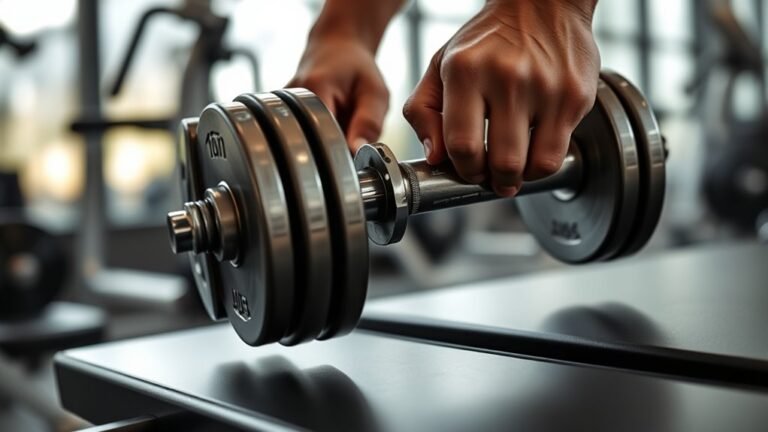
You start by turning the dial or moving the selector pin to pick your desired weight. This simple adjustment system lets you quickly switch between different weights without any hassle.
The locking mechanism then engages, securing the right plates to the handle while leaving extras on the base.
Make sure you hear the click for safety and give the plates a gentle tug to confirm they’re locked.
Once secure, lift the dumbbell off the base and begin your workout.
Want to know how to keep them safe and maintain peak performance?
Key Takeaways
- Select your desired weight by turning the dial or moving the selector pin on the adjustable dumbbell handle. The mechanism aligns and locks the corresponding plates securely to the handle, leaving unselected plates in the base.
- Make sure the locking system clicks firmly to confirm the plates are securely attached before you start lifting. You don’t want any surprises when you’re working out!
- Use the dumbbell for your exercises, then gently return it to the base. This keeps the plates organized and helps prevent any damage.
- Always reset the dumbbell to the lightest weight setting before storing it. This simple step helps maintain the equipment’s longevity and keeps everything safe for next time.
Understanding the Basic Components of Adjustable Dumbbells
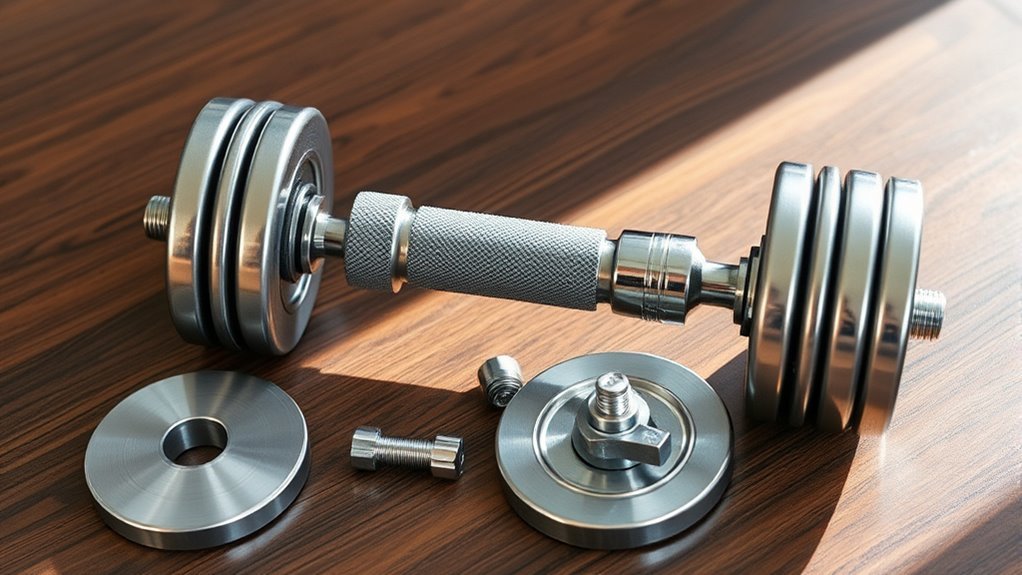
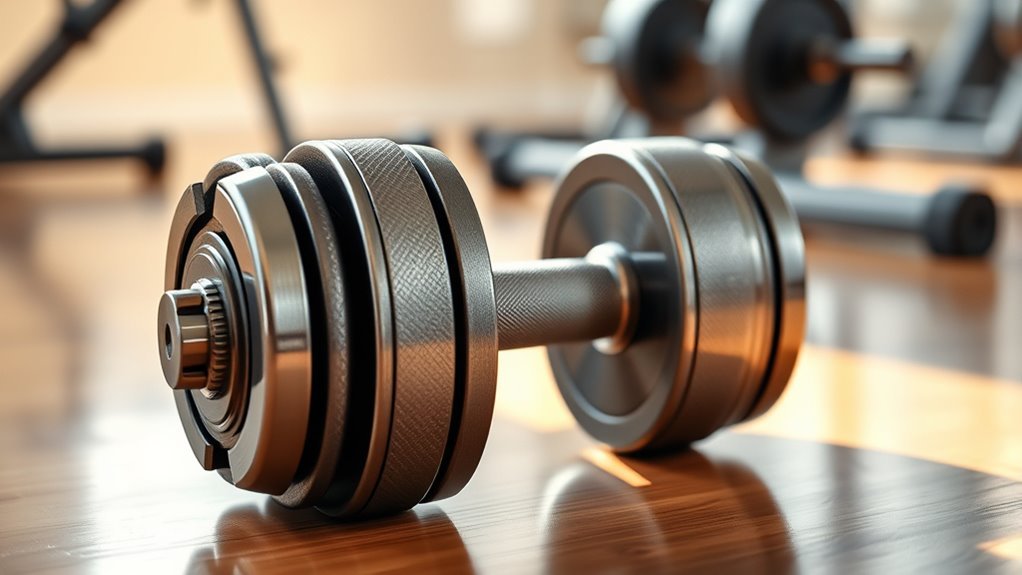
How do adjustable dumbbells manage to combine multiple weight options in a single tool? You’ll find they use a clever system of plates, a handle, and a locking mechanism.
Adjustable dumbbells cleverly combine plates, a handle, and a locking system for versatile weight options in one tool.
The plates come in various weights and stack together. The handle has grooves or slots where these plates fit securely.
When you adjust the dumbbell, the locking mechanism selects which plates stay attached to the handle and which ones remain on the base. This means you only lift the weight you want without changing dumbbells.
The base acts as a storage rack, keeping the plates organized and stable when not in use.
Understanding these components helps you appreciate how compact and efficient adjustable dumbbells are for your workouts. Pretty neat, right?
Selecting Your Desired Weight Setting
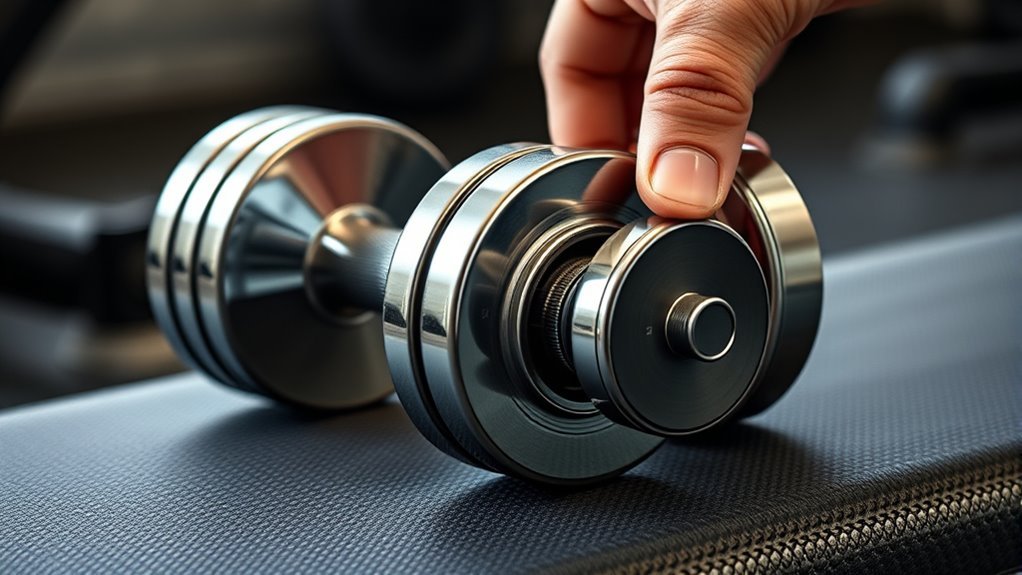
Once you decide on the weight you want, you simply adjust the dumbbell by turning a dial or moving a selector pin to lock in your chosen plates. This process lets you customize the resistance for each exercise easily.
To select your desired weight setting effectively, check the weight increments marked on the dial or selector for accuracy. Make sure the mechanism clicks or locks securely to avoid any loose plates.
If you’re unsure, start with a lighter weight. Then, as you gain confidence, you can increase it.
Adjusting the Dumbbell Handle Mechanism
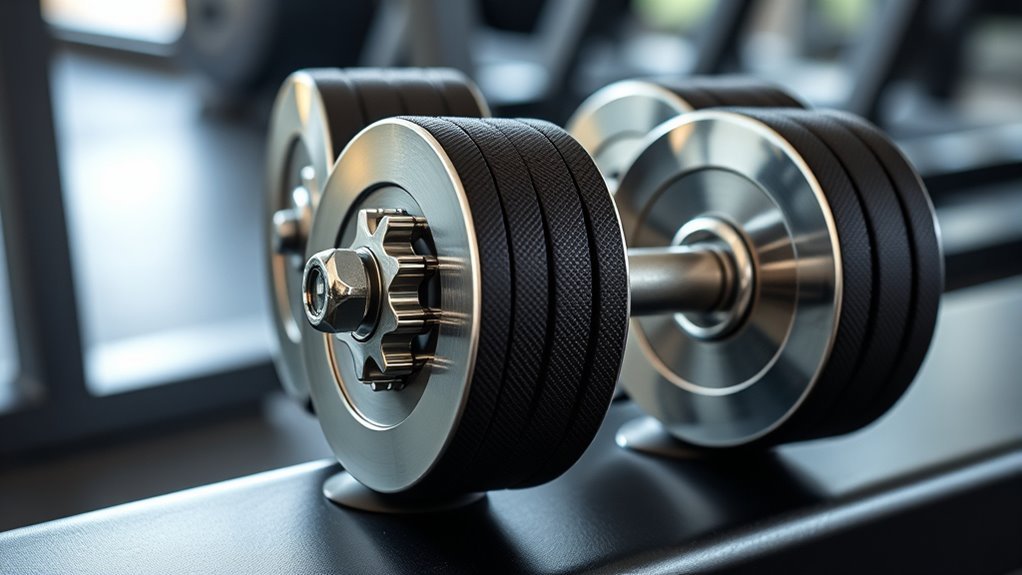
To adjust the dumbbell, you’ll use the handle dial to select your weight, which activates the locking mechanism to secure the plates in place. Make sure the weight plates align properly to avoid any wobbling during your workout.
Understanding how these parts work together helps you switch weights quickly and safely. It’s pretty straightforward once you get the hang of it!
Handle Dial Operation
Although adjusting the weight might seem complex at first, the handle dial on adjustable dumbbells makes the process straightforward. You simply turn the dial to select your desired weight, and the mechanism inside aligns to pick up only the plates you want.
This dial is precise and easy to manipulate, so you don’t need to remove or add plates manually.
Here’s how the handle dial operation helps you:
- Quickly change weights between sets without interrupting your workout flow
- Ensure the selected plates lock securely to the handle for safe lifting
- Effortlessly customize resistance for different exercises or strength levels
Locking Mechanism Function
When you adjust the dumbbell handle mechanism, the locking system plays a crucial role in keeping your selected plates securely in place. Once you turn the dial to choose your desired weight, the locking mechanism engages automatically.
It uses internal pins or latches that fit precisely into slots on the weight plates. This connection ensures only the plates you’ve selected stay attached to the handle. When you lift the dumbbell, the lock holds firm, preventing any plates from sliding off.
To change weights again, you simply place the dumbbell back on its base and turn the dial to a new setting. This adjusts the locking pins accordingly. It’s a clever system that provides both safety and convenience throughout your workout.
Weight Plate Alignment
Because proper weight plate alignment guarantees smooth adjustments, you need to carefully position each plate on the dumbbell handle mechanism. Misaligned plates can cause jamming or uneven weight distribution, affecting your workout and safety.
To guarantee correct alignment, follow these steps:
- Slide each weight plate onto the handle track, making sure the holes and grooves match precisely.
- Check that the plates sit flush against each other, without gaps or tilting.
- Confirm the locking mechanism engages fully with the aligned plates before lifting.
Securing the Weight Plates in Place
To keep the weight plates from shifting during your workout, adjustable dumbbells use secure locking mechanisms that hold the plates firmly in place. When you select your desired weight, the system engages clamps, pins, or dials that lock onto the plates, preventing any movement.
These locks fit snugly around the dumbbell handle or a central rod, ensuring stability as you lift. You’ll notice that once locked, the plates won’t rattle or slide, giving you confidence during each rep.
This mechanism lets you switch weights quickly without adjusting each plate manually. By securely fastening the plates, the dumbbell maintains balance and safety, so you can focus on your form and strength without distractions or interruptions.
Checking the Locking System for Safety
Before you start your workout, make sure to check the locking mechanism on your adjustable dumbbells. Different models use various types of locks, like dials or pins, so you need to confirm each one is securely engaged.
This step helps prevent weight plates from slipping and keeps your session safe. Always take a moment to double-check—it’s a small effort that goes a long way!
Types of Locking Mechanisms
When you use adjustable dumbbells, the locking mechanism plays a crucial role in keeping the weight plates secure during your workout. You need to understand the common types to guarantee safety and ease of use.
Here are three popular locking mechanisms:
- Dial Lock: You turn a dial to select the desired weight, locking plates in place quickly.
- Pin Lock: You insert a pin into holes aligned with weight plates, securing them firmly.
- Spin Lock: You twist a collar or nut to tighten and hold the plates together.
Each type offers a different balance of convenience and security, so choose one that fits your workout style. Knowing these mechanisms helps you avoid accidents and maximize your training efficiency.
Ensuring Secure Lock Engagement
Understanding how the locking mechanisms work is just the start; you also need to make sure they engage securely every time you adjust your dumbbells. After selecting your desired weight, always double-check that the lock clicks firmly into place.
Give the plates a gentle tug to confirm they’re tightly secured and won’t shift during your workout. If the lock feels loose or doesn’t snap in properly, don’t use the dumbbell until you fix the issue.
Regularly inspect the locking system for any wear, debris, or damage that might affect its grip. Keeping the mechanism clean and functioning smoothly prevents accidents and ensures your safety.
Removing the Dumbbell From the Base
Although adjustable dumbbells may look complex, removing them from the base is straightforward once you know the steps. First, guarantee the weight plates are securely locked to avoid any slips.
Then, follow these simple actions: grip the handle firmly with one hand. Lift the dumbbell straight up, keeping it balanced.
Make sure the weight selector dial or pin stays in place during the lift. It’s easier than it sounds once you get the hang of it!
Using the Dumbbells for Your Workout
Once you’ve adjusted the dumbbells to your desired weight, you can plunge into your workout routine with confidence. Start with controlled movements to guarantee proper form and avoid injury.
Focus on exercises like bicep curls, shoulder presses, and lunges to target different muscle groups. Adjust the weight as you progress through your sets or switch exercises.
Keep a steady pace and maintain good posture throughout.
| Exercise | Target Muscle Group |
|---|---|
| Bicep Curls | Biceps |
| Shoulder Press | Shoulders |
| Lunges | Legs & Glutes |
| Chest Press | Chest |
| Tricep Extensions | Triceps |
Using the adjustable dumbbells effectively helps maximize your workout efficiency and muscle engagement. Just keep at it, and you’ll see the gains!
Returning and Resetting the Dumbbells After Use
After you finish your workout, make sure to carefully return the adjustable dumbbells to their base or storage rack. This step is vital to keep your equipment in good condition and ready for your next session.
First, ensure you’ve fully released the weight selector to the lightest setting to avoid any jams. Then, gently place each dumbbell back onto its cradle, aligning it properly so it locks in place.
Always set the weight selector to the lightest setting before gently placing dumbbells back on their cradle.
Finally, double-check that the dumbbells are securely seated before moving away.
Remember these key points: Lower weights to the minimum setting before storage. Align dumbbells accurately on the base to prevent damage.
Confirm secure placement to maintain safety and functionality.
Following these steps helps prolong the life of your adjustable dumbbells.
Frequently Asked Questions
How Do Adjustable Dumbbells Compare to Traditional Fixed Dumbbells?
You’ll find adjustable dumbbells save space and let you quickly switch weights, unlike fixed dumbbells that require multiple sets.
However, fixed ones feel sturdier and more straightforward, while adjustable ones might take a moment to adjust.
What Materials Are Commonly Used in Adjustable Dumbbells?
You’ll find adjustable dumbbells often crafted from friendly metals like steel or iron, combined with durable plastics for grips and mechanisms.
These materials team up to keep your workout smooth and your equipment lasting longer than you might expect. It’s a smart combo that balances strength and comfort perfectly.
Are Adjustable Dumbbells Suitable for All Fitness Levels?
Yes, adjustable dumbbells suit all fitness levels because you can easily change the weight to match your strength.
You’ll progress safely by increasing resistance as you get stronger, making them perfect for beginners and advanced users alike.
It’s super convenient to just dial up or down depending on how you feel that day. So, whether you’re just starting out or have been lifting for years, adjustable dumbbells have got you covered.
How Do Adjustable Dumbbells Affect Workout Space Requirements?
You’ll save up to 80% of workout space with adjustable dumbbells since they replace multiple sets.
This means your home gym stays clutter-free, letting you exercise comfortably even in small rooms or apartments.
Pretty neat, right? It’s a smart way to keep things organized without sacrificing your workout options.
What Is the Typical Lifespan of Adjustable Dumbbells?
You can expect adjustable dumbbells to last around 5 to 10 years with regular use. Proper care, like avoiding drops and keeping them clean, helps extend their lifespan.
Conclusion
Now that you know how adjustable dumbbells work step by step, you’re ready to boost your workouts efficiently. Did you know that adjustable dumbbells can replace up to 15 pairs of traditional dumbbells? That means saving space without sacrificing variety.
Just remember to always double-check the locking system before lifting. With a bit of practice, adjusting your weights will become second nature.
This makes adjustable dumbbells an excellent choice for any fitness routine. They help you stay strong and flexible while keeping your workout area neat. Keep lifting smart and enjoy the convenience that adjustable dumbbells bring to your fitness journey!