How Can a Vibration Plate Help Lipedema?
A vibration plate can help you manage lipedema by boosting circulation and stimulating lymphatic flow. This reduces swelling and eases pain, making daily life a bit more comfortable.
It activates muscles more effectively than regular exercise, which means you can improve mobility and muscle strength faster.
Plus, using a vibration plate speeds up recovery and reduces fatigue, helping you feel more energized throughout the day. Just remember, using it safely with proper posture and session limits is key to avoiding discomfort.
If you want to explore how vibration therapy complements other treatments and supports overall relief, keep following for more insights. It’s a great tool to add to your lipedema management routine!
Key Takeaways
- Vibration plates stimulate lymphatic drainage, which helps reduce swelling and fluid buildup that often comes with lipedema.
- The rapid vibrations also boost blood circulation, delivering oxygen and nutrients to the affected tissues. This supports better healing.
- Using vibration plates activates muscles, which can improve joint mobility and ease pain and muscle fatigue in limbs affected by lipedema.
- Regular sessions help muscles recover faster, reducing discomfort and improving overall limb function.
- When you combine vibration therapy with compression and manual lymphatic drainage, it really maximizes symptom relief and helps reduce swelling even more.
- It’s a great way to support your body alongside other treatments.
Understanding Lipedema and Its Symptoms
Although lipedema primarily affects women, anyone can develop this chronic condition characterized by an abnormal buildup of fat, usually in the legs and arms. You might notice your limbs becoming disproportionately larger than the rest of your body, often accompanied by pain, tenderness, and easy bruising.
Unlike regular fat, the fat in lipedema feels nodular and doesn’t respond well to diet or exercise. You may also experience swelling that worsens throughout the day and improves with elevation.
If you’re struggling with these symptoms, it’s important to recognize that lipedema isn’t just about appearance—it can considerably impact your mobility and quality of life. Understanding these signs helps you seek proper diagnosis and management before the condition progresses.
What Is a Vibration Plate?
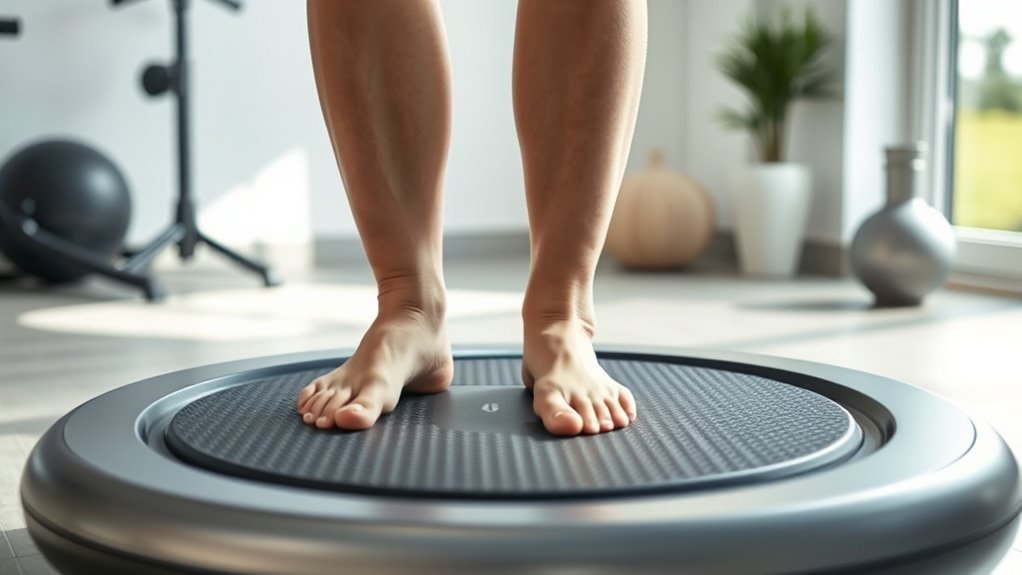
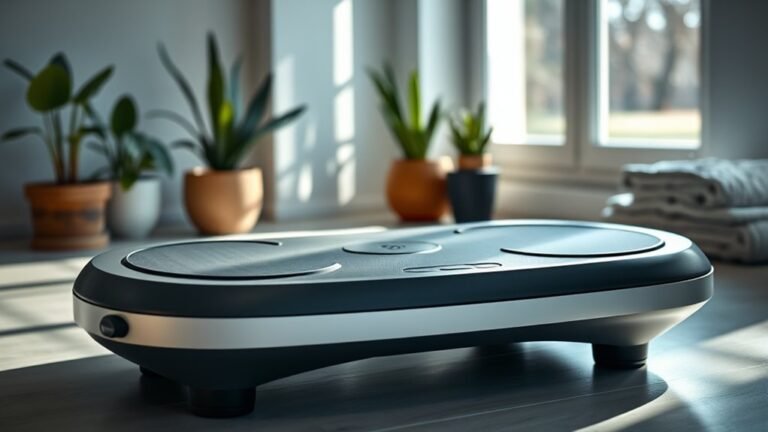
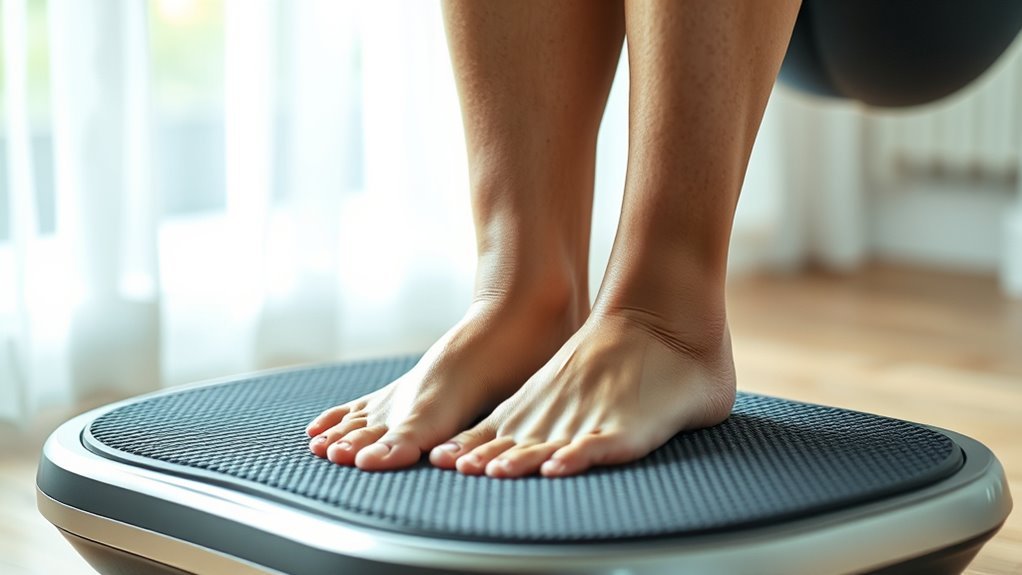
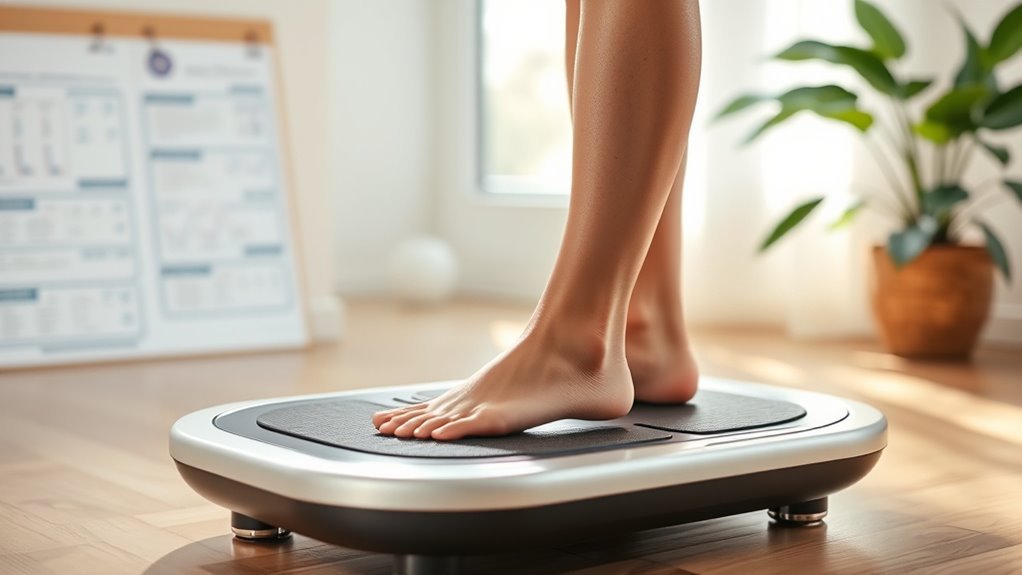
A vibration plate is a device that sends rapid vibrations through your body to stimulate muscles and improve circulation. You’ll find different types, like oscillating or whole-body vibration plates, each working in unique ways.
Understanding how these plates function helps you decide which one might benefit you most. It’s pretty interesting once you get the hang of it!
Definition and Mechanism
How does a vibration plate work, and why might it matter for someone with lipedema? A vibration plate is a device that sends rapid, mechanical vibrations through your body while you stand, sit, or perform exercises on it. These vibrations cause your muscles to contract and relax multiple times per second, boosting circulation and muscle activation without intense effort.
For someone with lipedema, this can help improve lymphatic flow and reduce fluid buildup, which are key factors in managing symptoms. The gentle, rhythmic stimulation also encourages better blood flow and may ease discomfort. By engaging your muscles and lymphatic system simultaneously, vibration plates offer a low-impact way to support your body’s natural healing processes and potentially lessen the impact of lipedema.
Types of Vibration Plates
When you step onto a vibration plate, you might notice that not all devices work the same way. There are mainly three types: oscillating, vertical, and pivotal.
Oscillating plates tilt side to side, mimicking a see-saw motion, which targets muscles differently on each leg. Vertical plates move straight up and down, providing uniform vibrations that engage your entire body simultaneously.
Pivotal plates combine movements, tilting forward and backward or side to side, offering a more dynamic workout. Choosing the right type depends on your comfort and therapy goals.
For lipedema, oscillating or pivotal plates often help improve lymphatic flow and reduce fluid buildup. Understanding these differences guarantees you pick the best vibration plate to support your condition effectively.
How Vibration Therapy Works on the Body
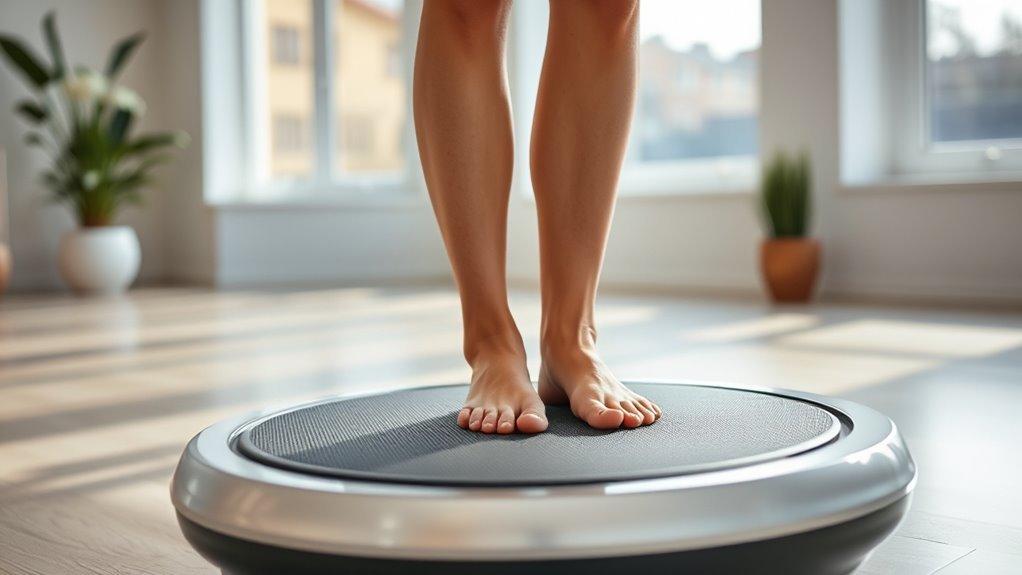
Though you might not notice it immediately, vibration therapy stimulates your muscles and nervous system in unique ways that promote circulation and reduce fluid buildup. When you stand on a vibration plate, the rapid oscillations cause your muscles to contract and relax repeatedly. This activates muscle fibers more efficiently than traditional exercises.
This increased muscle activity sends signals through your nervous system, enhancing muscle tone and coordination. Plus, the vibrations help stimulate lymphatic flow by encouraging fluid movement within your tissues. This process can prevent the stagnation of fluids commonly associated with lipedema.
Benefits of Vibration Plates for Circulation
Because improved circulation plays an essential role in managing lipedema, using a vibration plate can offer significant benefits. When you stand or perform exercises on the vibration plate, its rapid oscillations stimulate blood flow in your muscles and tissues.
This enhanced circulation helps deliver oxygen and nutrients more efficiently, supporting tissue health and metabolic processes. You’ll notice your lymphatic system also gets a gentle boost, encouraging better fluid movement and reducing the risk of stagnation.
Over time, this increased blood flow can contribute to healthier skin and may aid in preventing further complications linked to poor circulation. By regularly using a vibration plate, you actively support your body’s natural ability to maintain healthy circulation, which is essential for managing lipedema effectively.
Impact of Vibration Plates on Swelling and Pain
If you’re dealing with lipedema, you know how swelling and pain can disrupt daily life. Using a vibration plate can help reduce both by stimulating your lymphatic system, which aids in draining excess fluid and toxins.
The gentle vibrations encourage fluid movement, easing the pressure that causes swelling in your legs and other affected areas. This can lead to noticeable pain relief, as less swelling means less discomfort.
Plus, vibration therapy increases blood flow, which helps soothe inflamed tissues. While it’s not a cure, consistent use can make managing symptoms more bearable.
Just make sure to start slowly and listen to your body to avoid overdoing it. Incorporating vibration plate sessions into your routine can give you a practical way to alleviate swelling and pain.
Enhancing Mobility and Muscle Strength With Vibration Plates
You can boost your muscle activation and joint flexibility by using vibration plates regularly. They help reduce muscle fatigue, making movement easier and less tiring.
This combination supports better mobility and strengthens your muscles over time. It’s a simple way to enhance your overall physical health.
Improved Muscle Activation
When you use a vibration plate, your muscles respond by contracting more frequently and intensely than during regular exercise. This increased muscle activation helps improve your overall strength and endurance, which is especially beneficial if you have lipedema.
By engaging more muscle fibers, vibration plates can target areas that are often difficult to activate with traditional workouts. This stimulation enhances circulation and helps reduce muscle stiffness, making daily movements easier.
Consistent use can support better muscle tone and support the lymphatic system, which is vital for managing lipedema symptoms. You’ll find that your muscles become more responsive and resilient, allowing you to move with less discomfort and greater confidence in your physical abilities.
Increased Joint Flexibility
Although joint stiffness can limit your range of motion, using a vibration plate encourages gentle, consistent movement that increases joint flexibility over time. The vibrations stimulate your muscles and tendons, promoting better blood flow and reducing stiffness around your joints.
This enhanced circulation helps lubricate the joints, making it easier for you to move without discomfort. As you regularly use the vibration plate, you’ll notice improved mobility, which supports daily activities and reduces the risk of injury.
Additionally, the subtle muscle contractions triggered by the vibrations strengthen the muscles surrounding your joints, providing better support and stability. Incorporating vibration plate exercises into your routine can be a simple yet effective way to maintain and improve joint flexibility, especially if lipedema has made movement more challenging.
Reduced Muscle Fatigue
Since lipedema often leads to persistent muscle fatigue, incorporating vibration plate exercises can substantially aid in reducing this exhaustion. When you use a vibration plate, the rapid muscle contractions improve blood flow and stimulate muscle fibers, helping your muscles recover faster.
This increased circulation delivers oxygen and nutrients more efficiently, which reduces soreness and boosts endurance. Plus, the gentle vibrations activate deep muscles without overstraining them, so you can build strength without feeling drained.
Over time, you’ll notice enhanced muscle stamina and less fatigue during daily activities. By integrating vibration plate sessions into your routine, you support your muscles’ ability to perform better and recover quicker, ultimately improving your overall mobility and quality of life despite lipedema’s challenges.
How to Use a Vibration Plate Safely With Lipedema
To use a vibration plate safely with lipedema, you’ll need to start slowly and listen closely to your body’s signals. Begin with short sessions at low intensity, gradually increasing as you feel comfortable.
Avoid standing still for too long to prevent discomfort. Always maintain good posture and consult your healthcare provider before beginning.
| Safety Tip | Why It Matters |
|---|---|
| Start with low intensity | Prevents overstimulation and pain |
| Limit session duration | Reduces risk of swelling or fatigue |
| Monitor your body’s response | Ensures you don’t worsen symptoms |
Combining Vibration Therapy With Other Lipedema Treatments
When you combine vibration therapy with other lipedema treatments, you can really boost overall effectiveness and get better symptom relief. Using a vibration plate alongside manual lymphatic drainage helps increase lymph flow, which reduces swelling more efficiently.
Pairing vibration therapy with compression garments is another great combo. It can improve circulation and support tissue health throughout the day. And don’t forget about maintaining a balanced diet and doing regular low-impact exercises like swimming or walking.
These activities complement vibration therapy by promoting weight management and keeping your joints mobile. Just make sure to coordinate with your healthcare provider so you can create a personalized plan that fits your specific condition.
Combining treatments thoughtfully can help you manage pain, reduce inflammation, and improve your quality of life. It makes your lipedema care routine more thorough and effective overall.
Frequently Asked Questions
Can Vibration Plates Help Reduce Lipedema Fat Deposits?
Vibration plates can help improve circulation and lymphatic drainage, which may reduce swelling and discomfort from lipedema. While they won’t directly melt fat deposits, you’ll likely experience relief and better mobility with consistent use.
Think of it as giving your body a gentle boost to move fluids along more efficiently. Over time, this can make a noticeable difference in how you feel day-to-day. So, while it’s not a magic fix, it’s definitely worth trying as part of your routine.
Are There Specific Vibration Plate Settings for Lipedema Patients?
You should start with low frequency and amplitude settings on a vibration plate to avoid discomfort. Gradually increase intensity as tolerated, focusing on gentle, consistent sessions to help improve circulation and reduce swelling in lipedema areas.
Taking it slow helps your body adjust. It’s all about finding what feels comfortable for you while supporting your lymphatic system. Keep it gentle, and don’t rush the process.
How Often Should Lipedema Patients Use Vibration Plates Weekly?
Imagine feeling gentle waves soothing your legs—using a vibration plate 3 to 5 times weekly can help. You’ll boost circulation and ease discomfort.
But always listen to your body and adjust as needed. It’s all about finding what feels right for you.
Can Vibration Therapy Replace Manual Lymphatic Drainage?
No, vibration therapy can’t replace manual lymphatic drainage entirely. You can use it to complement your treatment, improving circulation and lymph flow.
But hands-on therapy remains essential for effectively managing lipedema symptoms. It’s really about combining both for the best results.
Are There Any Contraindications for Vibration Plate Use With Lipedema?
Think of a vibration plate like a powerful engine—it’s great, but you wouldn’t run it with a broken part.
If you have blood clots, infections, or severe heart issues, you shouldn’t use it without doctor approval.
It’s always best to check in with your healthcare provider first, especially if you have lipedema or any other medical conditions.
Conclusion
You might think a simple vibration plate is just a fancy wobbly gadget, but it can actually ease lipedema symptoms by boosting circulation, reducing swelling, and strengthening muscles. It’s almost ironic that something so gentle can offer such relief when lipedema feels anything but gentle.
Just remember to use it safely and combine it with other treatments—because while vibrating might not cure everything, it sure can shake things up for your comfort and mobility. Using a vibration plate regularly can help improve lymphatic flow and reduce the discomfort associated with lipedema. So, if you’re looking for a supportive tool to manage your symptoms, this gentle vibration therapy might just be the boost you need.