5 Ways to Estimate How Many Steps You Take on a Treadmill at Speed 3 for 30 Minutes
You can estimate your treadmill steps at speed 3 for 30 minutes by calculating your stride length and dividing the distance by it, or by using the treadmill’s distance display and multiplying by average steps per mile.
Wearing a pedometer or fitness tracker gives personalized counts, while smartphone apps offer real-time tracking.
You can also estimate steps by knowing that walking 30 minutes at speed 3 covers about 1.5 miles, roughly 3,000 steps.
Discover how each method works in detail to find what suits you best.
Key Takeaways
- Calculate steps by dividing treadmill distance by your average stride length. You can get your stride length by measuring a known walking distance and counting steps.
- Another way is to multiply the treadmill’s distance readout by the average steps per mile, which is about 2,000. This gives you a rough estimate of total steps.
- You can wear a pedometer or fitness tracker during your workout. These devices count steps with more personalized accuracy.
- Smartphone apps with accelerometers and GPS also do a good job tracking real-time steps while you walk on the treadmill. They’re handy if you don’t have a separate device.
- Finally, you can estimate steps by multiplying 1.5 miles (which is 30 minutes at 3 mph) by 2,000 steps per mile. That gets you approximately 3,000 steps for the session.
Calculate Steps Using Your Average Stride Length
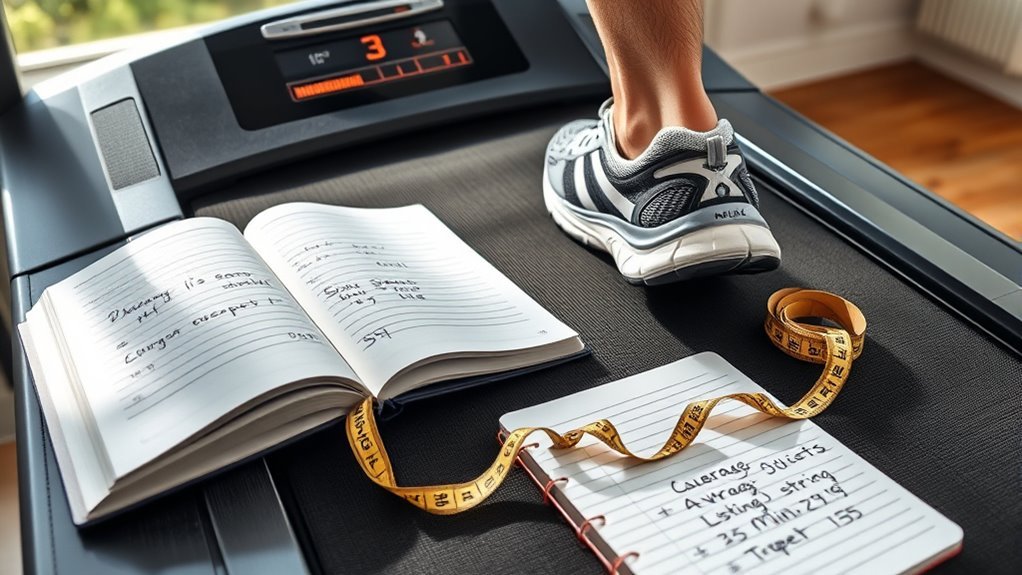
Although it might seem tricky at first, you can easily estimate your treadmill steps by using your average stride length. First, measure your stride length by walking a known distance, like 20 feet, and counting your steps.
Then, divide the distance by the number of steps to find your average stride length. Once you know this, multiply the treadmill distance you plan to cover by the number of feet or meters in a mile or kilometer.
Finally, divide that total distance by your stride length to get the approximate number of steps taken. This approach lets you track your steps without relying on extra devices, giving you a quick and reliable estimate during your treadmill workout at speed 3 for 30 minutes.
Use the Treadmill’s Distance Readout to Estimate Steps
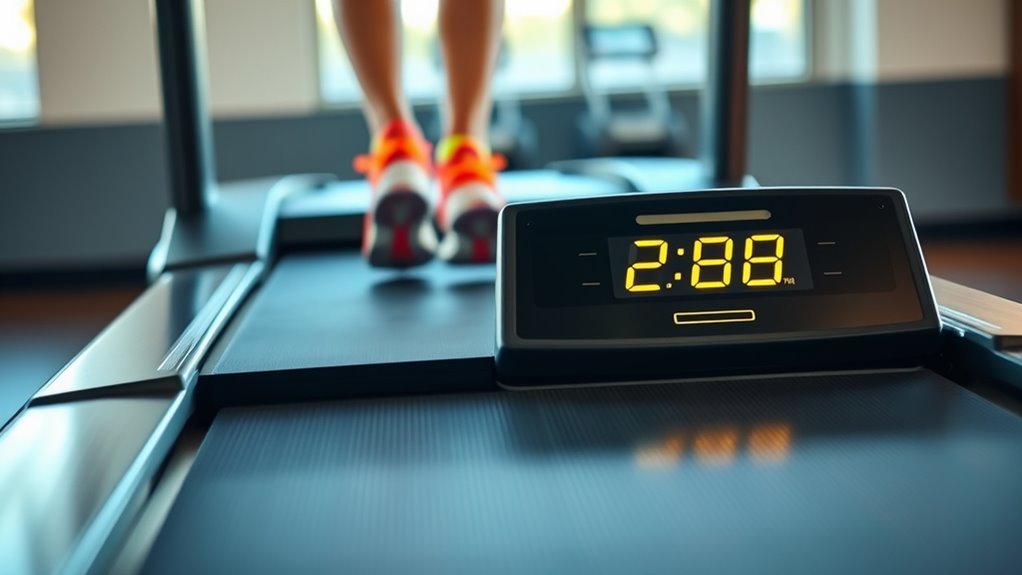
When you step onto a treadmill, you can use its built-in distance readout to estimate your steps quickly and accurately.
First, note the total distance displayed after your 30-minute session at speed 3. Then, multiply that distance by your average steps per mile or kilometer. This method gives a reliable step estimate without extra gadgets.
Picture this process:
- You glance at the digital display showing 2 miles completed. You recall your average stride covers about 2,000 steps per mile.
- You multiply 2 miles × 2,000 steps to get 4,000 steps. You jot down this number for your daily activity log.
This straightforward way helps you track your progress efficiently. Easy, right?
Track Steps With a Pedometer or Fitness Tracker
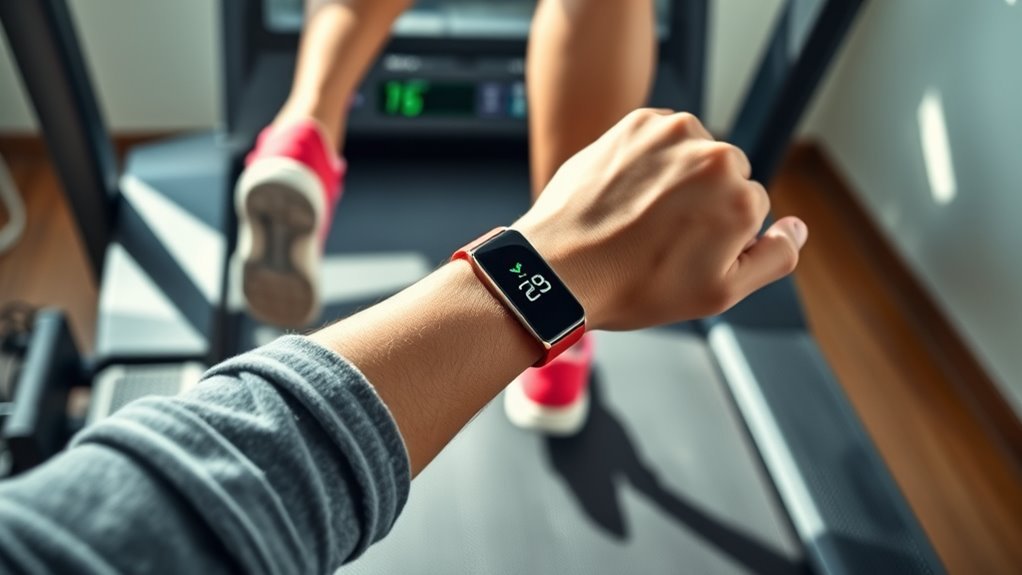
If you want a more precise step count during your treadmill workout, using a pedometer or fitness tracker can make all the difference. These devices accurately detect your movements and count steps in real time, giving you immediate feedback.
Simply wear the device on your wrist or clip it to your clothing before starting your treadmill session at speed 3. Many fitness trackers also sync with apps, allowing you to review your step data and track progress over time.
Unlike relying solely on distance or time, these gadgets adjust for your unique stride, making your step count more personalized. Just remember to calibrate your device if needed and ensure it’s secure to avoid missing steps during your workout.
Utilize Smartphone Apps to Count Your Steps
Since most people carry their smartphones everywhere, you can easily use apps to count your steps during treadmill workouts. These apps tap into your phone’s built-in accelerometer and GPS to track movement accurately.
To get started, download a trusted walking or fitness app. Then place your phone securely on your body or treadmill console for the best results.
Here’s what you can expect: real-time step count displayed right on your phone screen. You’ll also get detailed workout summaries with distance and calories burned.
Plus, you can set customizable goals to keep you motivated. Many apps also integrate with health platforms for exhaustive fitness tracking.
Using these apps not only estimates your steps but also helps you monitor progress over time. This makes your treadmill sessions way more engaging and productive.
Estimate Steps Based on Walking Speed and Time
Although you may not have a step counter handy, you can estimate your steps on a treadmill by considering your walking speed and the duration of your workout. At speed 3 mph, the average person takes about 2,000 steps per mile.
Since you’re walking for 30 minutes, you’ll cover roughly 1.5 miles. Multiply 1.5 miles by 2,000 steps per mile, and you get approximately 3,000 steps. This method gives a solid estimate without extra devices.
Keep in mind, individual stride lengths vary, so your exact step count might differ slightly. Still, using speed and time offers a quick, practical way to gauge your steps during treadmill sessions at speed 3 for half an hour.
Frequently Asked Questions
How Does Treadmill Incline Affect Step Count?
Treadmill incline increases your step count because you take shorter, quicker steps to maintain balance and effort. You’ll engage more muscles, so your stride changes, making you step more frequently compared to walking on a flat surface.
Basically, when the incline goes up, your body naturally adjusts to keep you steady. This means your steps get quicker and a bit shorter, which adds up to more steps overall. It’s like your legs are working a little harder but in a different way than just walking straight.
Can Running Shoes Impact Step Accuracy on a Treadmill?
Yes, running shoes can impact step accuracy on a treadmill. They affect your gait and foot strike pattern, which can alter sensor readings.
Wearing well-fitted shoes helps you get more consistent and accurate step counts. So, picking the right shoes really does make a difference!
What Is the Best Time to Walk for Health Benefits?
You’ll benefit most by walking at least 30 minutes daily, as studies show it reduces heart disease risk by 19%.
Try morning walks to boost energy or evening strolls to unwind and improve sleep quality.
Either way, just getting those steps in regularly can make a big difference for your health.
How Often Should Treadmill Users Replace Their Shoes?
You should replace your treadmill shoes every 300 to 500 miles or about every 6 months if you walk regularly.
It’s a good idea to keep an eye on the soles and cushioning. If they start wearing out or feel less supportive, it’s time for new shoes.
Keeping your feet comfortable helps prevent injuries, so don’t wait too long before switching them out!
Are Treadmill Steps Equivalent to Outdoor Walking Steps?
Treadmill steps aren’t exactly the same as outdoor walking steps. You’ll notice differences in stride and impact due to the moving belt.
Conclusion
Stepping onto the treadmill at speed 3 for 30 minutes is like setting sail on a steady, rhythmic journey. Whether you count your strides by stride length, trust the machine’s distance, or let a tracker dance with your every step, you hold the power to measure your progress.
With apps and estimates as your compass, you’ll navigate your way to accurate step counts, turning each session into a symphony of motion and achievement. Keep stepping strong!
Estimating how many steps you take on a treadmill at speed 3 for 30 minutes can be simple and fun. Using various methods like stride length calculations, treadmill readings, or fitness trackers helps you get a clear picture of your workout. The key is to stay consistent and use the tools that work best for you.
By combining these approaches, you’ll confidently track your steps and progress. So, lace up, step on, and enjoy the rhythm of your treadmill journey!