How to Use Vibration Plates Safely for Good Hypermobility
To use vibration plates safely with good hypermobility, start with low frequencies (15-20 Hz) and moderate amplitude.
Keep your knees slightly bent and your core engaged to protect your joints.
Limit your sessions to 5–10 minutes, two to three times weekly.
Avoid locking your joints or pushing through any pain.
Gradually increase the intensity as your stability improves.
Proper posture and controlled movements are key to strengthening your muscles without overstressing your joints.
Take it slow and listen to your body.
Explore more to build a safe, effective routine that supports your flexible joints and keeps you feeling strong and balanced.
Key Takeaways
- Maintain joint stability by engaging your muscles and avoiding overstretching during vibration plate exercises. This helps protect those hypermobile joints.
- Choose vibration plates that let you adjust the frequency, ideally between 15-25 Hz, with moderate amplitude. This way, you get effective muscle activation without putting too much strain on your joints.
- Make sure to warm up properly before starting. Wear supportive footwear and keep the right posture—think slightly bent knees and an engaged core throughout your session.
- Begin with short sessions, around 5 minutes, at low intensity. Then, gradually increase how long and how often you train based on how comfortable and stable you feel.
- Don’t lock your joints during exercises, and keep an eye out for any pain or dizziness. It’s also a great idea to combine vibration training with strength and flexibility workouts for balanced results.
Understanding Good Hypermobility and Its Impact on Joints
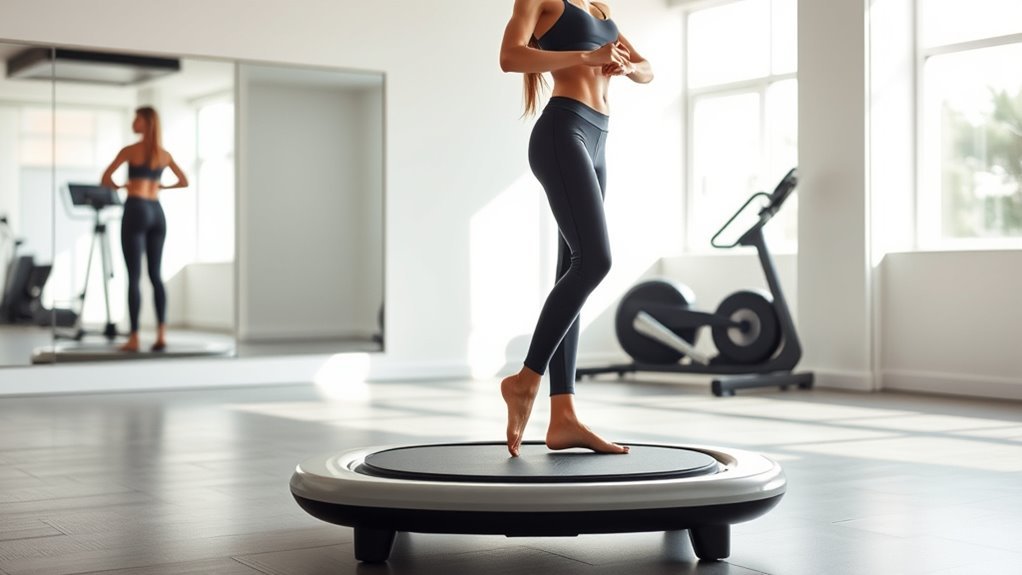
Although you might think joint flexibility is always beneficial, good hypermobility refers to a controlled range of motion that enhances your movement without causing instability or pain. When you have good hypermobility, your joints move more freely, allowing you to perform activities with ease while maintaining joint integrity.
This controlled flexibility supports your muscles and ligaments, reducing the risk of injury during exercise, including when using vibration plates. However, if your joints move beyond their safe limits, you risk strain or damage.
To protect your joints, focus on strengthening the surrounding muscles and practicing proper form. Understanding this balance helps you use vibration plates safely, ensuring you benefit from improved flexibility without compromising joint health.
Benefits of Vibration Plates for Muscle Strengthening
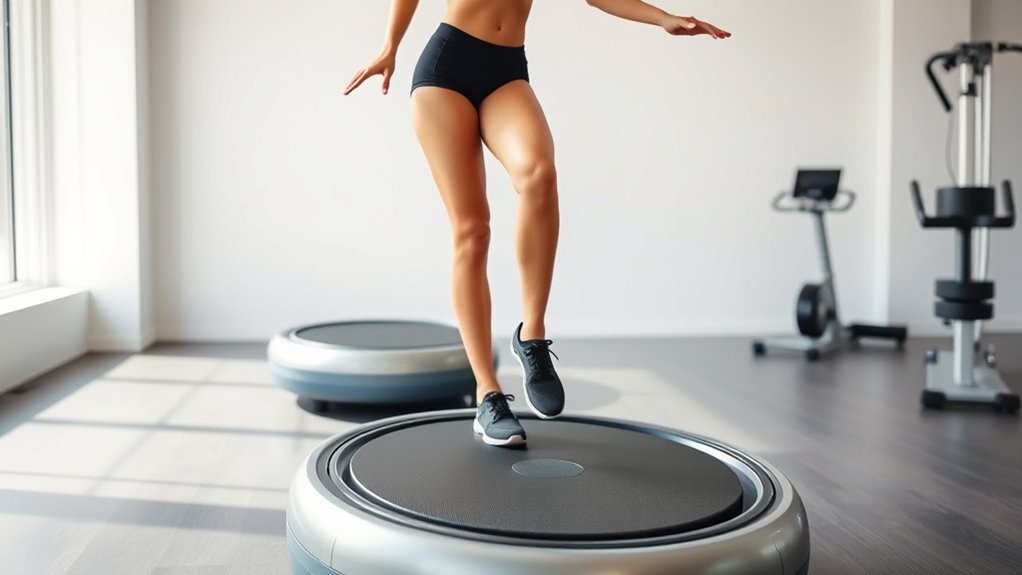
You’ll find that vibration plates boost muscle activation, making your workouts more effective. They also help improve your balance and stability, which supports better joint health.
Using them correctly can strengthen your body while protecting your joints. It’s a great way to get stronger without putting too much strain on yourself.
Enhancing Muscle Activation
When you stand or exercise on a vibration plate, the platform’s rapid oscillations force your muscles to contract and relax multiple times per second. This intense stimulation boosts muscle activation beyond what you’d achieve with traditional exercises alone.
The vibrations engage deep muscle fibers, including those harder to target, helping you build strength efficiently. By increasing muscle fiber recruitment, vibration plates can enhance muscle tone and endurance. It’s especially beneficial if you have good hypermobility and want to support joint stability.
To maximize muscle activation safely, maintain proper posture and start with shorter sessions. Then, gradually increase intensity as your muscles adapt. This approach helps you strengthen muscles effectively without overloading your joints.
Improving Balance Stability
Building muscle activation on a vibration plate also helps improve your balance stability. As the vibrations stimulate your muscles to contract reflexively, your body constantly adjusts to maintain equilibrium.
This dynamic challenge strengthens the small stabilizing muscles around your ankles, knees, and core, which are vital for balance. With regular use, you’ll notice better coordination and less wobbling during everyday activities.
You can start with simple standing exercises and gradually progress to more challenging positions, like single-leg stands. Just make sure to keep your knees slightly bent and focus on controlled movements.
Improving balance stability with vibration plates reduces your risk of falls and enhances your overall movement confidence. This is especially valuable if you have hypermobility and need extra joint support during activities.
Supporting Joint Health
A vibration plate can play a key role in supporting joint health by strengthening the muscles around your joints. When these muscles are strong, they provide better support and stability, reducing stress on your joints.
This can be especially helpful if you have hypermobility, as your joints tend to move beyond their normal range. Using a vibration plate regularly helps activate deep muscle fibers that are hard to engage with traditional exercise.
Here’s how vibration plates support joint health:
- Enhance muscle tone around joints for added protection
- Improve blood circulation, promoting faster recovery
- Increase proprioception, helping your body sense joint position more accurately
Choosing the Right Vibration Plate for Your Needs
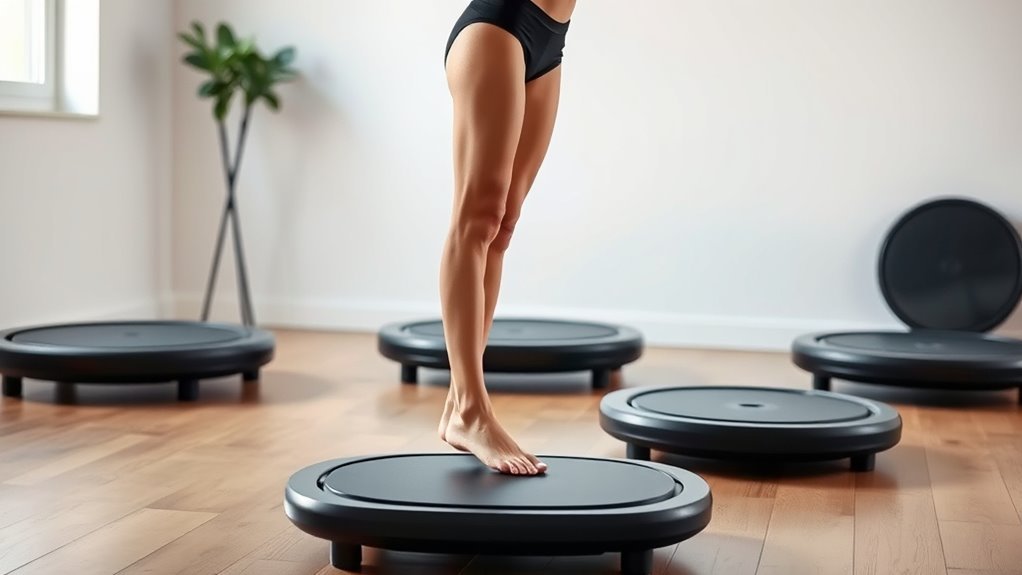
Since vibration plates come in various sizes, features, and price ranges, you’ll want to contemplate your specific fitness goals and budget before making a choice. If you’re focusing on improving joint stability and muscle strength related to hypermobility, opt for a plate with adjustable frequency and amplitude settings.
This flexibility lets you tailor the intensity to your comfort and progress safely. Consider the platform size, too—ensure it’s large enough for stable footing during exercises. Look for models with reliable safety features like non-slip surfaces and sturdy handles if balance is a concern.
Finally, check reviews and warranty terms to guarantee quality and support. Choosing the right vibration plate assures you get effective, safe sessions that align perfectly with your needs.
Preparing Your Body Before Using a Vibration Plate
Before stepping onto a vibration plate, you should prepare your body to maximize benefits and reduce injury risk. Start by warming up with gentle movements to increase blood flow and loosen your muscles. This helps your body adapt to the vibrations more effectively.
Next, focus on hydration; drinking water before your session ensures your muscles stay flexible and reduces cramping. Finally, wear comfortable, supportive shoes to protect your feet and maintain stability during the workout.
Stay hydrated before your session to keep muscles flexible and wear supportive shoes for stability and protection.
- Perform light cardio or dynamic stretches for 5-10 minutes
- Drink a glass of water 15-30 minutes before use
- Choose shoes with good cushioning and grip
Taking these steps primes your body for a safe, effective vibration plate session. Easy, right? Just a bit of prep goes a long way!
Proper Posture and Positioning on the Vibration Plate
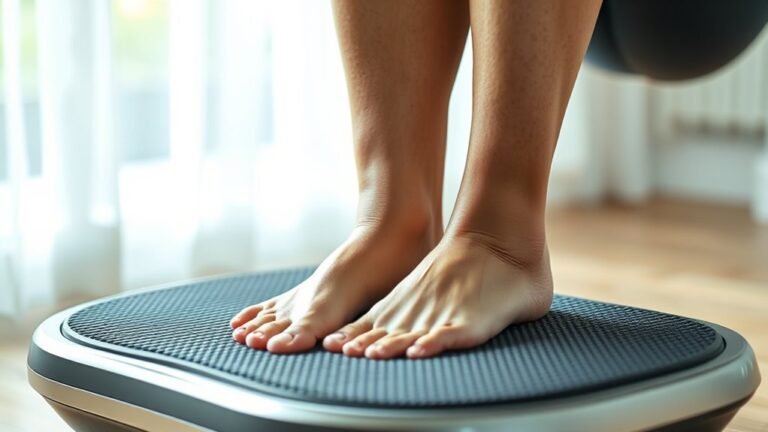
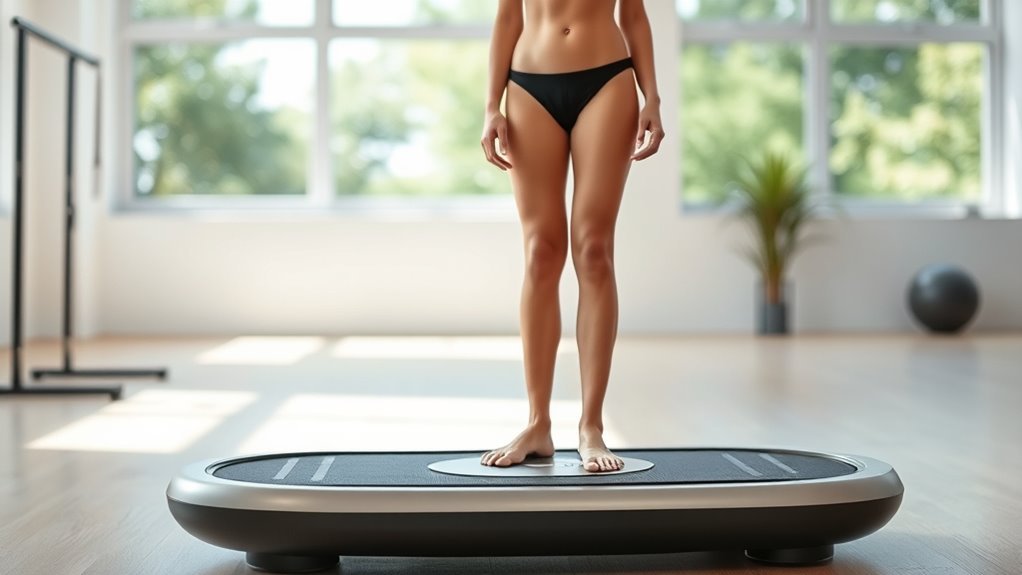
When you step onto the vibration plate, maintaining proper posture and positioning guarantees you get the most from your workout while preventing strain or injury. Stand with your feet shoulder-width apart, knees slightly bent, and engage your core to stabilize your spine.
Avoid locking your joints, especially your knees and elbows, as this can increase stress on hypermobile areas. Keep your shoulders relaxed and your head aligned with your spine to maintain balance.
If you’re doing exercises like squats or lunges on the plate, focus on controlled movements and steady positioning. Use a slight bend in your joints to absorb vibrations gently.
Always listen to your body; if a position causes discomfort, adjust to a safer stance. Proper alignment ensures effective stimulation and reduces injury risk.
Recommended Vibration Settings for Hypermobility
When using a vibration plate with hypermobility, you’ll want to focus on ideal frequency ranges that support joint stability without overstressing tissues. Keep your sessions short and controlled, following recommended duration guidelines to avoid fatigue.
Adjust intensity levels carefully to maintain safety and effectiveness throughout your workout. It’s all about finding the right balance that works for your body. Take it slow and listen to how your joints feel as you go.
Optimal Frequency Ranges
Although vibration plates offer various benefits, selecting the right frequency is essential if you have hypermobility. Too high a frequency may overstimulate your joints, while too low might not provide enough muscle activation.
You want to find a balance that strengthens without causing instability.
Aim for these frequency ranges to optimize safety and effectiveness:
- 15-25 Hz: Ideal for gentle stimulation and improving joint stability without excessive strain.
- 25-30 Hz: Suitable for moderate strengthening, enhancing muscle tone while maintaining control.
- Below 15 Hz or above 30 Hz: Generally not recommended, as it can increase risk of joint laxity or discomfort.
Sticking within these ranges helps protect your joints and supports gradual strength building.
Duration Guidelines
Because your joints require careful conditioning, you should limit vibration sessions to short durations to prevent overstimulation. Start with sessions lasting no more than 5 minutes, gradually increasing to 10 minutes as your body adapts.
Pay attention to how your joints feel during and after each session—discomfort or increased laxity means you should reduce time. Aim for 2 to 3 sessions per week, allowing rest days to support recovery.
Avoid daily prolonged exposure, which can strain hypermobile joints. Keep breaks between sets brief but sufficient, around 30 seconds to 1 minute, to maintain muscle engagement without fatigue.
Intensity Levels
Keeping your vibration sessions short is just one part of protecting your joints. Equally important is choosing the right intensity level.
For hypermobility, start with the lowest vibration settings to avoid overstressing your already flexible joints. Gradually increase intensity only if you feel comfortable and stable throughout the exercise.
Here are some recommended guidelines:
- Low frequency (15-20 Hz): Gentle stimulation that supports joint stability without causing strain.
- Short bursts (1-2 minutes): Helps your body adapt without overloading connective tissues.
- Moderate amplitude: Provides effective muscle activation without excessive joint movement.
Common Mistakes to Avoid During Vibration Plate Exercises
When you use a vibration plate, steering clear of common mistakes can make your workouts more effective and safer. Avoid locking your joints; keep them slightly bent to prevent strain.
Don’t overdo the duration—start with short sessions and gradually increase. Avoid standing with poor posture; maintain a neutral spine to protect your back.
Finally, don’t ignore your body’s signals; stop if you feel pain or dizziness.
| Mistake | Why to Avoid It |
|---|---|
| Locking joints | Causes unnecessary joint stress |
| Overextending duration | Leads to fatigue and injury risk |
| Poor posture | Strains muscles and spine |
| Ignoring pain signals | Prevents worsening of injuries |
Incorporating Vibration Plate Workouts Into Your Routine Safely
Although vibration plate workouts offer great benefits, you should integrate them gradually into your routine to avoid injury and maximize results. Start with short sessions, around 5 minutes, and increase duration as your body adapts.
Focus on proper posture and controlled movements to protect your joints and muscles. Consistency matters more than intensity at the beginning, so aim for two to three sessions per week.
Keep these tips in mind: warm up before and cool down after your vibration plate exercises. Also, combine vibration workouts with strength training and flexibility exercises.
And remember, listen to your body and stop if you feel pain or discomfort. It’s all about staying safe while getting the most out of your workouts!
Frequently Asked Questions
Can Vibration Plates Help Reduce Joint Pain in Hypermobile Individuals?
Yes, vibration plates can help reduce joint pain if you use them correctly. They improve muscle strength and circulation, supporting your hypermobile joints.
Just make sure you start slowly and consult a healthcare professional first. That way, you can make sure it’s safe and effective for your specific needs.
How Long Should Each Vibration Plate Session Last for Beginners?
You should start with sessions lasting about 5 to 10 minutes, gradually increasing as you get comfortable.
Always listen to your body, take breaks, and avoid overdoing it to prevent strain or injury.
It’s all about finding what feels right for you and progressing at your own pace.
Are There Any Contraindications for Using Vibration Plates With Hypermobility?
Think of your joints like delicate glass—if you have hypermobility, avoid vibration plates if you feel pain, have joint instability, or recent injuries.
Always check with your doctor before jumping on to keep yourself safe and strong.
Can Vibration Plates Improve Balance and Coordination in Hypermobile People?
Yes, vibration plates can improve your balance and coordination by stimulating your muscles and proprioception.
Just make sure to start slowly, focus on controlled movements, and avoid overstressing your joints to stay safe and effective.
Should I Consult a Doctor Before Starting Vibration Plate Exercises?
Yes, you should consult a doctor before starting vibration plate exercises.
They’ll help guarantee it’s safe for your specific condition, especially if you have hypermobility.
Plus, they can guide you on proper use to avoid injury.
Conclusion
Using a vibration plate safely can transform your approach to managing good hypermobility, making your joints feel stronger than ever before. By choosing the right settings and maintaining proper posture, you set yourself up for success. Avoiding common mistakes is also key to enjoying the benefits fully.
Stick to a consistent routine and really listen to your body as you go. You’ll notice your muscles becoming rock-solid support for your flexible joints. Remember, safety first—that’s how you get the most out of your vibration plate.
When used correctly, vibration plates can be a game-changer for good hypermobility. They help improve muscle strength and joint stability, reducing the risk of injury. So, take it slow, focus on form, and enjoy the journey. With patience and care, you’ll be unstoppable in managing your hypermobility safely and effectively.