How Can a Vibration Plate Be Used Safely on Carpet?
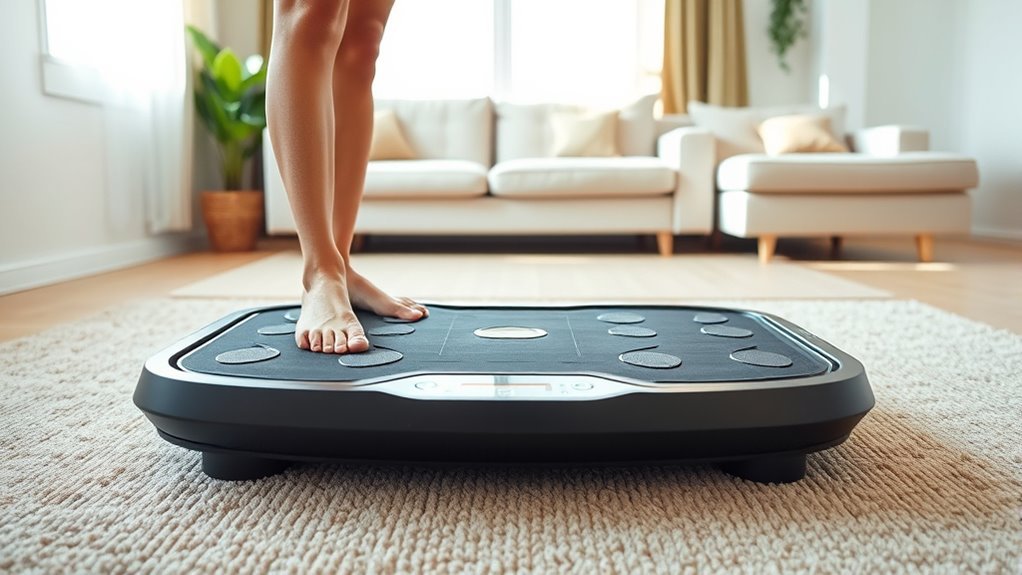
You can use your vibration plate safely on carpet by choosing a firm, low-pile type like dense synthetic fibers that provide stability. This kind of carpet helps keep the plate steady during your workout, reducing the risk of slips or wobbling. It’s important because a stable surface makes your exercise both safer and more effective.
Place a high-density anti-slip mat under the entire base to prevent shifting and absorb impact. This mat acts like a cushion and keeps the vibration plate from moving around while you’re using it. Plus, it protects your carpet from wear and tear.
Make sure to position the plate on a flat, even section of carpet, away from walls or furniture. Also, lower vibration settings to compensate for carpet absorption, so you still get a good workout.
Regularly check for wobbling or loose parts to keep everything secure. By following these steps, you’ll enhance both safety and workout effectiveness; keep going to find out more.
Key Takeaways
- Place the vibration plate on a low-pile, dense weave carpet. This helps minimize vibration absorption and improves stability.
- Use a high-density, anti-slip stability mat beneath the plate. It prevents slipping and protects both your carpet and the equipment.
- Make sure the vibration plate is fully supported by the surface. All its feet should be flat, and the plate should be aligned parallel to the room edges.
- Lower the vibration intensity levels to compensate for the carpet’s cushioning. This will help reduce excessive shaking during your workouts.
- Regularly check the placement and tighten any bolts. Maintaining your equipment this way keeps it safe and prolongs the vibration plate’s lifespan.
Understanding the Impact of Carpet on Vibration Plates
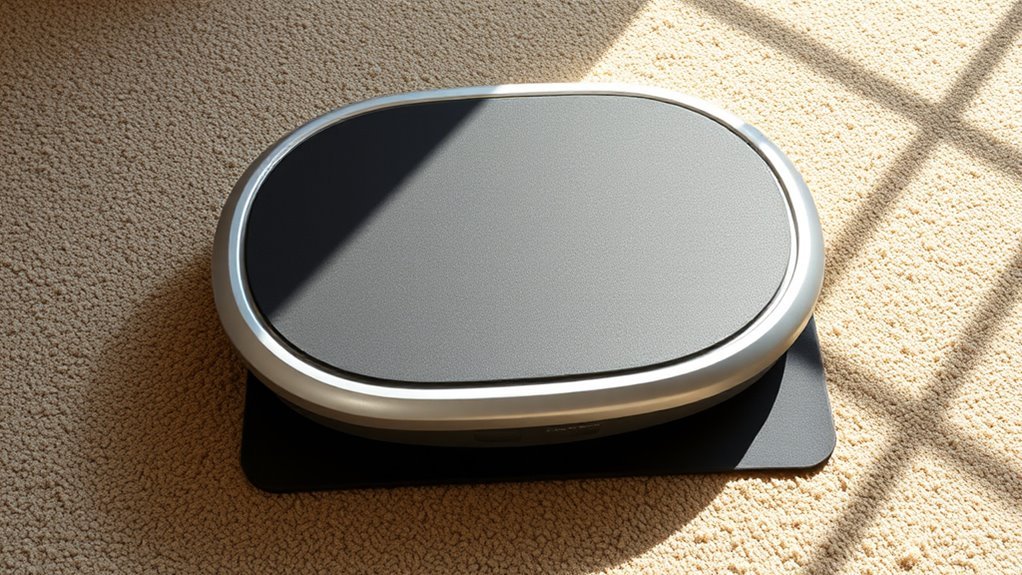
Although vibration plates are designed to work best on hard, stable surfaces, many people use them on carpet for convenience. When you place a vibration plate on carpet, its effectiveness can decrease because the carpet absorbs some of the vibrations.
Vibration plates work best on hard floors; carpet use can reduce effectiveness by absorbing vibrations.
This means you might not get the full intensity of the workout. Plus, the carpet can cause the plate to wobble or shift, which can be unsafe during use.
You’ll also want to think about the fact that the vibration plate’s motor may work harder, which could reduce its lifespan. However, using your vibration plate on carpet is still possible if you take some precautions to stabilize it.
Understanding these impacts helps you make better choices for safe and effective workouts on carpeted floors.
Choosing the Right Carpet for Your Vibration Plate
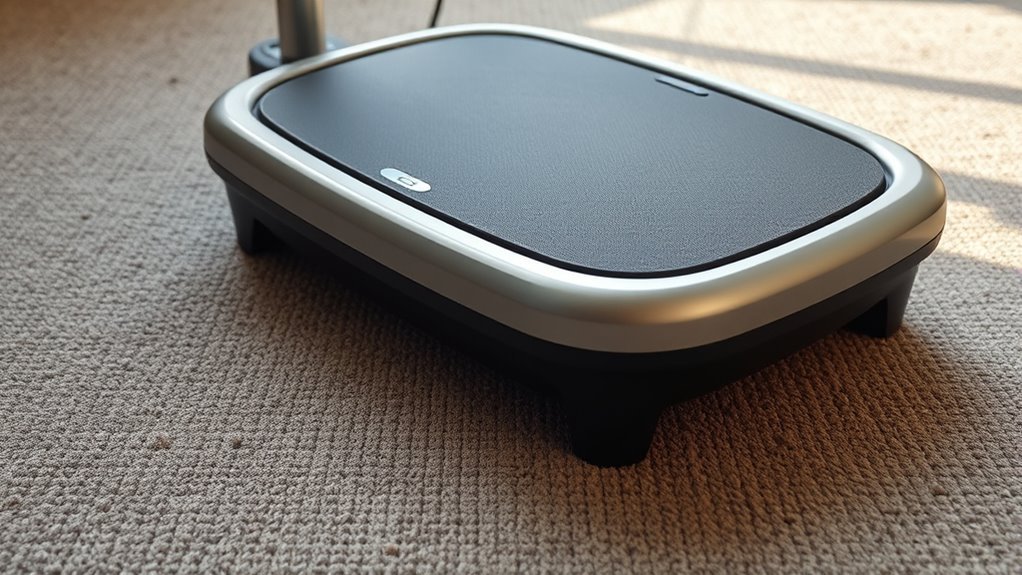
Selecting the right carpet plays a crucial role in guaranteeing your vibration plate remains stable and effective. Choose a low-pile carpet with a firm, dense weave to provide a solid base that prevents excessive sinking or shifting during use.
Avoid thick, plush carpets, as they can absorb vibrations and reduce your plate’s performance. Opt for carpets made from durable synthetic fibers like nylon or polyester, which resist compression and maintain their shape over time.
Also, ensure the carpet covers a flat, even floor surface to minimize wobbling. By selecting a carpet that offers stability and firmness, you’ll enhance safety and get the most from your vibration plate workouts without compromising its functionality or your balance.
Using a Stability Mat to Enhance Safety
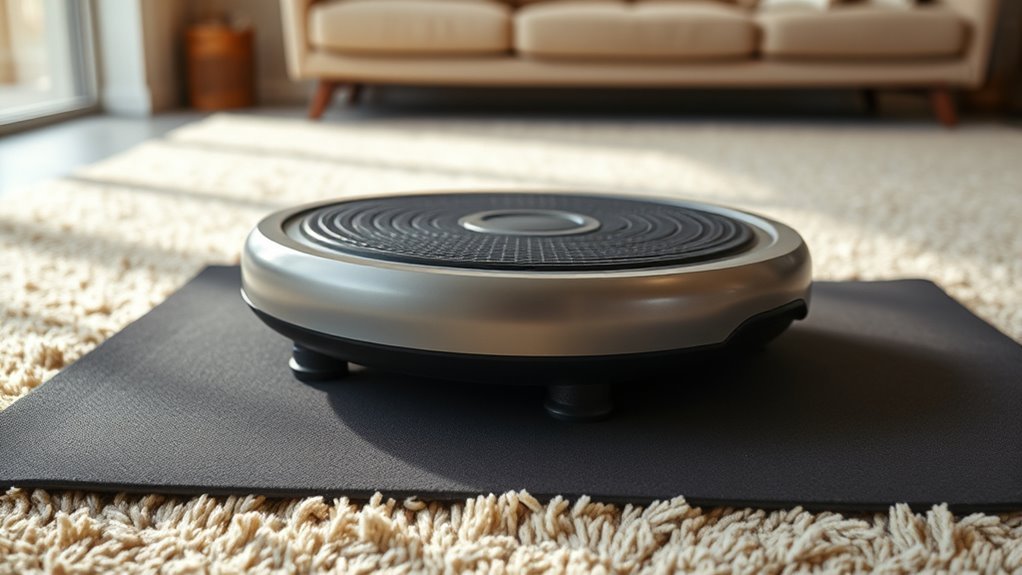
When you place a stability mat under your vibration plate, you reduce slipping and cushion the impact on both your equipment and floor. This mat creates a firm, non-slip surface that prevents your vibration plate from shifting during use, enhancing your safety.
It also absorbs some of the vibrations, protecting your carpet from damage and reducing noise. Choose a mat made from durable, high-density materials designed specifically to handle vibration and weight.
Make sure the mat covers the entire base of the plate to maximize stability. Regularly check the mat for wear and tear, replacing it if it becomes compressed or damaged.
Using a stability mat is a simple yet effective way to maintain balance and protect your investment while working out on carpet. It’s a small addition that makes a big difference!
Positioning Your Vibration Plate Correctly on Carpet
A stability mat helps keep your vibration plate steady. But placing the plate correctly on your carpet can give you even better balance and performance.
Put the plate on a flat, firm section of the carpet. This helps avoid wobbling or uneven vibrations.
Make sure the plate’s feet are fully touching the carpet. This stops it from tipping or sliding when you’re using it.
Try not to set it near furniture or walls. Those can get in the way of your movement.
When you’re positioning your vibration plate on carpet, think about these tips:
- Find a spacious spot. You want enough room to exercise comfortably.
- Choose a low-pile carpet. It helps reduce instability.
- Align the plate parallel to the room’s edges. This feels more natural and balanced.
Following these simple steps will help you feel safe and stable. Plus, you’ll be ready to get the most out of your workout.
Adjusting Machine Settings for Carpeted Surfaces
When using your vibration plate on carpet, start by lowering the intensity levels to maintain stability. You’ll also want to guarantee the base is well-supported to prevent wobbling.
Making these adjustments helps keep your workout safe and effective. It’s all about finding that balance so you can get the most out of your session without any slips or shakes.
Lowering Intensity Levels
Since carpet absorbs some of the vibration, you’ll need to lower the intensity levels on your vibration plate to maintain effective and safe workouts. Reducing the intensity prevents the machine from working harder than necessary, which can cause wear or instability.
You’ll also avoid excessive vibrations that might feel uncomfortable or even risky on a softer surface. Adjust your settings gradually, paying attention to how your body responds.
Lowering intensity helps you:
- Feel in control and confident during each session
- Protect your joints from unnecessary strain
- Ensure the machine runs smoothly without damage
Stabilizing Base Support
Lowering intensity levels helps you manage vibrations, but you’ll also need to focus on stabilizing the base of your vibration plate on carpeted surfaces.
Carpets can cause wobbling, so adjusting the machine settings and adding support ensures safety and effectiveness.
Use the table below to guide your adjustments:
| Step | Action | Result |
|---|---|---|
| 1 | Lower intensity | Reduces vibration amplitude |
| 2 | Place anti-slip mat | Prevents sliding |
| 3 | Adjust feet or base pads | Enhances balance on soft carpet |
| 4 | Use vibration dampeners | Minimizes excessive shaking |
| 5 | Test stability before use | Confirms safe operation |
Regular Maintenance and Inspection Tips
Although vibration plates are designed for durability, you should regularly inspect and maintain your equipment to guarantee safe and effective use on carpeted surfaces. Regular checks help you catch wear and tear early, preventing accidents and performance issues.
Keep your vibration plate clean, free from dust and debris that carpet fibers might trap. Tighten any loose bolts or screws, and ensure the machine sits firmly on the carpet without wobbling.
Feel confident knowing your equipment is safe and stable every session. Avoid frustrating interruptions with smooth, reliable workouts.
Protect your investment by extending the machine’s lifespan through simple care. Taking a few minutes for maintenance goes a long way!
Common Risks and How to Avoid Them
When you use a vibration plate on carpet, you face unique risks like instability, reduced effectiveness, and potential damage to both the machine and flooring. To avoid instability, make sure the plate sits evenly and doesn’t wobble; uneven surfaces can cause accidents.
Carpet fibers may absorb vibrations, lessening your workout’s impact, so check if your plate feels less responsive. Over time, carpet padding might wear down or compress, which can damage the plate’s base or motor.
Avoid placing the plate on thick or plush carpets to reduce these risks. Also, keep an eye out for overheating since the machine’s ventilation could be blocked by carpet fibers.
Alternative Flooring Options for Optimal Use
To get the most from your vibration plate, consider placing it on a hard surface like wood or tile for better stability and performance. You can also use a protective mat designed to absorb vibrations and protect your flooring.
These options help you avoid the issues that come with carpet use while keeping your space safe. It’s a simple way to make sure your workout is both effective and hassle-free.
Hard Surface Benefits
Since vibration plates work best on stable surfaces, using a hard floor like wood, tile, or laminate can improve your workout’s effectiveness and safety. These floors provide the solid foundation your plate needs to deliver consistent vibrations, helping you get the most from each session.
When you place your vibration plate on a hard surface, you reduce shaking and slipping risks, so you can focus on your balance and strength training without worry.
Choosing a hard surface can make your exercise routine feel more:
- Secure, giving you confidence during every movement
- Efficient, maximizing the machine’s vibration power
- Comfortable, as stable footing reduces strain and distractions
Switching to a hard floor might be the simple change that boosts your vibration plate experience. Give it a try!
Protective Mat Choices
Although hard floors offer the best stability for your vibration plate, you might not always have that option. In these cases, using a protective mat becomes essential.
Look for a high-density rubber or anti-vibration mat designed to absorb shock and reduce movement. These mats provide a firm, even surface that prevents your vibration plate from sinking into the carpet, enhancing safety and performance.
Avoid thin or slippery mats, as they can cause instability. Make sure the mat is large enough to fully support the vibration plate’s base.
Not only will this safeguard your carpet from damage, but it will also minimize noise and vibration transfer to the floor beneath. Choosing the right protective mat ensures you get the most from your vibration plate, even on softer surfaces.
Frequently Asked Questions
Can Vibration Plates Help With Weight Loss?
Yes, vibration plates can help with weight loss by boosting your metabolism and increasing muscle activity.
If you combine regular sessions with a healthy diet and exercise, you’ll see better results and improved overall fitness. It’s all about consistency and making it part of your routine.
How Long Should Each Vibration Plate Session Last?
Don’t bite off more than you can chew—start with 10-15 minutes per session.
As you get comfortable, you can extend to 20-30 minutes.
But always listen to your body and avoid overdoing it.
Are Vibration Plates Safe for Elderly Users?
Yes, vibration plates can be safe for elderly users if you start slowly, use proper settings, and consult a doctor first.
Always focus on balance and avoid overexertion to prevent falls or injuries during your sessions. Taking it easy at first really helps!
Can Vibration Plates Improve Bone Density?
Sure, if you want bones like steel, vibration plates might help improve bone density—just don’t expect to turn into a superhero overnight.
Use them regularly, and they can stimulate bone growth. But don’t solely rely on them!
Is It Necessary to Wear Shoes on a Vibration Plate?
You don’t have to wear shoes on a vibration plate, but it’s often safer and more comfortable if you do. Shoes provide support, improve stability, and protect your feet from direct contact with the vibrating surface.
That said, some people prefer going barefoot to feel the vibrations more directly. If you do that, just make sure the surface is clean and you’re comfortable standing without extra support.
Conclusion
Using a vibration plate on carpet can feel like walking a tightrope, but with the right steps, you’ll stay balanced and safe. Choose a low-pile carpet, add a stability mat, and position your machine carefully to keep it steady.
Don’t forget to adjust the settings for the softer surface and inspect your equipment regularly. These small changes can make a big difference in how your vibration plate performs.
By following these simple tips, you’ll get the most out of your workouts without risking damage or injury. Using a vibration plate safely on carpet means ensuring stability, protecting your equipment, and adjusting your routine to suit the softer surface. This way, you can enjoy effective and safe exercise sessions every time.