
How Long on Treadmill to Get 10K Steps
You’ll spend about 1.5 to 2.5 hours on the treadmill to hit 10,000 steps, depending on your walking speed and stride length.
Getting those 10K steps on a treadmill is a great way to stay active indoors, especially when the weather isn’t cooperating.
Walking faster—around 3 to 4 mph—cuts the time closer to 1.5 hours, while a slower pace means you’ll need more time.
Adjusting treadmill speed and incline can help you reach your goal more efficiently.
Try mixing up your pace or adding some incline to boost your step count without spending extra time.
Keep going, and you’ll discover smart ways to boost your step count and make the most of your workout.
Key Takeaways
- Walking at 3–4 mph on a treadmill typically takes 1.5 to 2 hours to reach 10,000 steps.
- If you go slower, like 2–3 mph, it usually takes about 2.5 to 3 hours to hit that 10,000-step mark.
- Speeding up your treadmill or adding some incline can help you take steps faster, so you spend less time walking.
- Also, everyone’s stride length is different, which means the total distance and time to get 10,000 steps can vary from person to person.
- Keeping a steady pace or mixing in some intervals can make getting to 10,000 steps quicker and more fun.
- So, don’t be afraid to switch things up a bit to keep it interesting!
Average Walking Speed and Step Count

Although walking speeds vary, most people average about 3 to 4 miles per hour. This translates to roughly 1,200 to 1,400 steps in 10 minutes.
When you walk at this pace, your stride length typically ranges from 2.1 to 2.5 feet. Your individual step count depends on your height, leg length, and walking style.
If you’re taller, your steps might cover more ground, meaning fewer steps per mile. Conversely, shorter strides mean more steps to cover the same distance.
On a treadmill, the speed setting directly impacts your step count per minute, so you can adjust it to suit your fitness level. Understanding your average walking speed and step count helps you monitor your progress accurately and set realistic daily goals.
Calculating Time Needed to Reach 10,000 Steps

When you want to hit 10,000 steps on a treadmill, knowing how long it will take depends on your walking speed and stride length.
To calculate the time needed, follow these steps:
- Measure your average stride length (in feet or meters).
- Multiply your stride length by 10,000 to find the total distance you’ll cover.
- Determine your walking speed (in miles or kilometers per hour).
- Divide the total distance by your walking speed to get the total hours needed.
For example, if your stride length is 2.5 feet and your speed is 3 mph, you can calculate the time by converting distance to miles and then dividing by speed.
This method helps you set realistic treadmill sessions to reach your step goal efficiently. Pretty handy, right?
How Walking Pace Affects Total Time
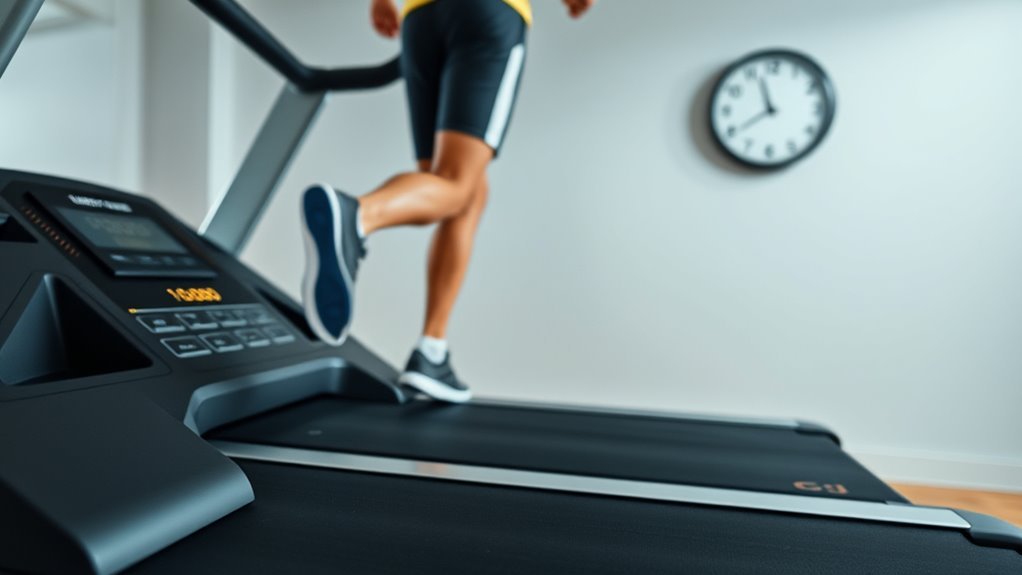
Your walking pace plays a big role in how long it takes to hit 10,000 steps on the treadmill. If you walk slower, it’ll take more time but burn fewer calories.
On the other hand, a faster pace cuts down your total time and boosts calorie burn. Understanding this balance helps you choose the best speed for your goals.
Slow vs. Fast Pace
Since walking pace directly impacts the time you spend on the treadmill, choosing between a slow or fast pace can considerably change how long it takes to reach 10,000 steps.
When you pick a slower pace, it naturally takes longer to hit your step goal, but it feels less intense. A faster pace gets you there quicker but requires more energy and focus.
Here’s how pace affects your treadmill session:
- Slow pace (2-3 mph) may take about 2.5 to 3 hours.
- Moderate pace (3-4 mph) shortens time to around 1.5 to 2 hours.
- Fast pace (4-5 mph) cuts time to roughly 1 to 1.25 hours.
- Sprinting or jogging speeds reduce time even more but aren’t typical walking.
Choose a pace that fits your fitness and schedule.
Impact on Calorie Burn
Although walking at a faster pace helps you reach 10,000 steps quicker, it also increases the number of calories you burn during your treadmill session. You’ll notice that the faster you walk, the more energy your body uses, boosting calorie burn even in less time.
Adjusting your pace lets you balance between duration and intensity based on your fitness goals.
| Walking Pace (mph) | Approximate Calories Burned |
|---|---|
| 2.0 | 200 |
| 3.0 | 300 |
| 4.0 | 400 |
| 5.0 | 500 |
Choose a pace that fits your stamina. And remember, higher speeds mean fewer minutes but more calories burned overall.
Impact of Treadmill Settings on Step Count
When you adjust the treadmill’s speed and incline, you directly influence how quickly you rack up steps. Faster speeds naturally increase your step count per minute, while incline changes affect your stride and effort.
Adjusting treadmill speed and incline changes your step rate and effort, influencing how fast you reach your step goals.
Here’s how settings impact your steps:
- Speed: Increasing speed raises your step rate, helping you reach 10K faster.
- Incline: A higher incline slows your pace but can increase step intensity.
- Stride length: Incline may shorten your stride, affecting total steps.
- Consistency: Maintaining steady settings ensures a predictable step count.
Tips to Increase Step Count Efficiently
To boost your step count efficiently, try adjusting your walking speed to a pace that challenges you without causing fatigue. You can also mix in interval training by alternating between faster and slower speeds to keep your body engaged.
These simple tweaks help you reach 10K steps faster and improve your overall fitness. Give them a shot and see how your steps add up!
Optimize Walking Speed
Since your goal is to reach 10,000 steps efficiently, optimizing your walking speed on the treadmill plays a crucial role. Walking too slowly means you’ll spend more time on the treadmill, while walking too fast can cause fatigue.
Here’s how to find the sweet spot:
- Start at a Comfortable Pace: Begin with a speed that feels natural to warm up your muscles.
- Increase Gradually: Boost your speed by 0.1 to 0.3 mph every few minutes to challenge yourself without overexertion.
- Maintain Consistency: Aim for a steady pace that you can sustain for at least 30 minutes to maximize step count.
- Listen to Your Body: Adjust speed based on how you feel to avoid injury and keep energy levels up.
This approach helps you hit 10K steps faster and more comfortably. Give it a try and see how it feels!
Incorporate Interval Training
Although steady walking is effective, incorporating interval training can boost your step count and keep your treadmill sessions engaging. Try alternating between brisk walking or light jogging for one to two minutes and then slowing down to a comfortable pace for a minute.
This variation pushes your body to move faster during the high-intensity intervals, increasing your steps per minute. It also helps break the monotony, making it easier to stay motivated and walk longer.
Start with short intervals and gradually increase their duration as your fitness improves. By mixing speeds, you not only increase your total steps but also enhance cardiovascular benefits.
Interval training is a smart way to efficiently reach your 10K step goal while keeping workouts dynamic and enjoyable. Give it a shot—you might find your treadmill time flies by!
Benefits of Reaching 10,000 Steps Daily
When you aim to reach 10,000 steps daily, your body and mind experience a range of positive effects that boost overall health. Taking consistent steps improves your cardiovascular fitness, helping your heart work more efficiently.
Consistently walking 10,000 steps daily enhances cardiovascular fitness and supports a healthier, more efficient heart.
You’ll also notice increased energy levels as regular movement enhances blood flow and oxygen delivery. Walking that much supports weight management by burning calories steadily throughout the day.
Finally, hitting this goal can uplift your mood, thanks to the release of endorphins, which reduce stress and anxiety. It’s pretty amazing how something as simple as walking can make such a difference.
Here are four key benefits:
- Enhances heart health and stamina
- Boosts daily energy and reduces fatigue
- Supports weight control and metabolism
- Improves mental well-being and lowers stress
Reaching 10,000 steps daily is a simple yet powerful way to improve your overall wellness. Give it a try—you might be surprised at how good you feel!
Combining Walking With Other Exercises
To maximize your fitness results, you can combine walking with other exercises that target different muscle groups and boost overall strength. For example, after your treadmill session, add bodyweight exercises like squats, lunges, or push-ups to engage muscles walking doesn’t fully work.
Incorporating strength training two to three times a week helps improve muscle tone and supports joint health. You might also include stretching or yoga to enhance flexibility and prevent injury.
If you prefer variety, alternate walking intervals with short bursts of high-intensity exercises such as jumping jacks or mountain climbers. This mix not only keeps your routine interesting but also increases calorie burn.
Tracking Progress and Staying Motivated
Tracking your progress plays a big role in keeping you motivated throughout your fitness journey. When you see your improvements, you’re more likely to stick with your treadmill routine and reach those 10K steps daily.
To stay on track and boost motivation, try these strategies:
- Use a fitness tracker or app to monitor steps and time on the treadmill.
- Set small, achievable goals weekly to celebrate consistent progress.
- Log your workouts in a journal or digital tool to spot patterns and improvements.
- Share your progress with friends or join online communities for support and accountability.
Frequently Asked Questions
Can Treadmill Walking Help With Weight Loss?
Yes, treadmill walking can help you lose weight by burning calories and boosting your metabolism.
If you stay consistent and combine it with a healthy diet, you’ll see results and improve your overall fitness.
It’s a simple and effective way to get moving, even when the weather isn’t great outside.
Plus, you can adjust the speed and incline to keep challenging yourself as you get stronger.
Is It Better to Walk Indoors or Outdoors for Health?
You’ll benefit more from outdoor walking since fresh air and natural scenery boost your mood and vitamin D levels.
However, indoor walking on a treadmill is great when the weather’s bad or if you want a controlled workout. It’s all about what works best for you and your routine.
How Does Age Affect the Number of Steps I Should Take?
As you age, your step goals might change; you don’t need to hit 10K daily if it feels too tough.
Listen to your body, adjust intensity, and focus on consistency to maintain good health and mobility.
It’s really about what works best for you, not just following a set number.
Keep moving in a way that feels right, and you’ll do great!
What Shoes Are Best for Treadmill Walking?
You’ll want shoes with good cushioning, support, and breathability for treadmill walking. Look for lightweight sneakers designed for walking or running.
Make sure they fit well and have a flexible sole to keep you comfortable and injury-free. This way, you can enjoy your workout without any hassle.
Can Walking on a Treadmill Improve Cardiovascular Health?
Yes, walking on a treadmill can improve your cardiovascular health. It strengthens your heart, boosts circulation, and helps lower blood pressure.
Just keep a consistent pace and duration to maximize these benefits. It’s a simple way to take care of your heart while staying active.
Conclusion
Reaching 10,000 steps on a treadmill is like turning your daily walk into a personal victory lap. By adjusting your pace and settings, you’ll find the rhythm that fits your lifestyle, making each step count toward better health.
Keep tracking your progress and mixing in other exercises to keep the journey exciting. Lace up, stay motivated, and watch how those steps transform into a stronger, healthier you—one stride at a time.
Getting 10K steps on a treadmill doesn’t have to be daunting. Whether you walk briskly or take a steady pace, finding the right treadmill routine helps you hit your step goals efficiently. Remember, consistency and a bit of variety can make reaching those 10,000 steps enjoyable and sustainable. So hop on your treadmill, stay committed, and enjoy the benefits of hitting 10K steps daily for a healthier lifestyle!