How Much Does a Dumbbell Weigh on Average?
A dumbbell’s weight varies a lot, but most commonly ranges from 1 to 50 pounds. When you’re thinking about how much a dumbbell weighs on average, it’s helpful to know that everyday workouts usually use dumbbells between 5 and 25 pounds.
If you’re new to lifting, starting lighter—around 3 to 8 pounds for women and 8 to 15 pounds for men—helps you master form safely.
As you build strength, you can gradually move on to heavier weights.
Remember, choosing the right dumbbell weight depends on your goals and the exercises you’re doing.
There’s plenty more to explore when it comes to picking the best dumbbell weight for your fitness routine!
Key Takeaways
- Average dumbbell weights range from 5 to 25 lbs, catering to beginners and intermediate users.
- Light dumbbells typically weigh 1-5 lbs, ideal for toning and rehabilitation exercises.
- Intermediate dumbbells usually weigh 15-30 lbs, suitable for moderate strength training.
- Advanced dumbbells weigh 40 lbs or more, designed for heavy strength and bodybuilding workouts.
- Adjustable dumbbells allow weight variation, often ranging from 5 to 50+ lbs for versatile training.
Understanding Dumbbell Weight Measurements

Although dumbbells come in various sizes and materials, their weight is always clearly marked to help you choose the right one for your workout. You’ll notice the weight is usually displayed in pounds (lbs) or kilograms (kg), depending on where you live or the equipment’s origin.
When picking a dumbbell, understanding these measurements guarantees you’re lifting an appropriate load. This helps prevent injury and promotes progress.
Some dumbbells use round plates with visible numbers, while others have the weight molded directly onto the handle or side. If you’re unsure about the conversion between pounds and kilograms, remember that 1 kg equals about 2.2 lbs.
Knowing this helps you switch between units easily when tracking your training or comparing equipment from different sources. It’s a handy trick to have in your fitness toolkit!
Common Weight Ranges for Dumbbells

When you start shopping for dumbbells, you’ll find they come in a wide range of weights to suit different fitness levels and goals. Whether you want to tone muscles or build strength, there’s a weight that fits your needs.
Dumbbells come in various weights, perfect for any fitness goal from toning to building strength.
Common dumbbell weights typically range from very light to quite heavy. This allows you to progress as you get stronger.
Here are some common weight ranges you’ll encounter:
- 1 to 5 pounds: ideal for light toning and rehabilitation
- 5 to 15 pounds: great for endurance training and beginners
- 15 to 30 pounds: good for moderate strength development
- 30 to 50 pounds: suited for experienced lifters
- 50+ pounds: used for advanced strength training and bodybuilding
Choosing the right weight depends on your current strength and workout goals. So, think about what feels right for you and start from there!
Dumbbells for Beginners: Starting Weight Recommendations
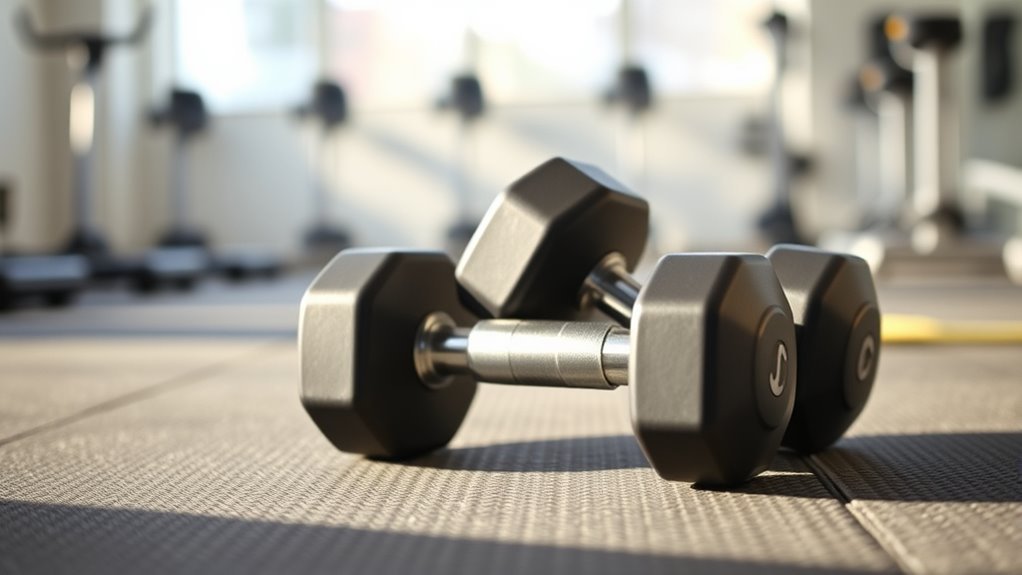
Picking the right starting weight for your dumbbells can make a big difference in your workout progress and safety. If you’re new to strength training, start with lighter weights—usually between 3 to 8 pounds for women and 8 to 15 pounds for men.
Choose a weight that allows you to complete 10 to 15 reps with proper form but still feels challenging by the last few reps. Avoid weights that feel too heavy, which can lead to poor technique or injury.
Focus on mastering the movements first; you can gradually increase the weight as you build strength and confidence. Remember, consistency matters more than lifting heavy at the start, so pick weights that encourage steady progress without risking strain.
Intermediate and Advanced Dumbbell Weights
Once you’ve built a solid foundation, you’ll want to explore intermediate and advanced dumbbell weights. These typically range from 20 to 50 pounds or more.
Your training goals will guide how much weight you should use. Whether it’s building strength, endurance, or muscle size, it all depends on what you want to achieve.
To keep progressing, you’ll need to apply progressive overload. This means gradually increasing weight, reps, or intensity over time.
Common Weight Ranges
How much weight should you use as you progress in your strength training? As you get stronger, you’ll want to challenge yourself with heavier dumbbells to keep building muscle and endurance.
Here are common weight ranges you’ll encounter for intermediate and advanced levels:
- Intermediate dumbbells typically range from 15 to 35 pounds (7 to 16 kg).
- Advanced dumbbells often start at 40 pounds (18 kg) and can go up to 100+ pounds (45+ kg).
Adjustable dumbbells let you easily switch weights within these ranges. They’re super handy if you want to mix things up without buying a bunch of different sets.
Women often progress to 10-25 pounds, while men might start around 20-40 pounds. Of course, this varies based on individual strength and goals.
For compound exercises, heavier weights are common, while isolation moves usually use lighter ones. It’s all about matching the weight to the exercise and what your body can handle.
Choosing the right weight really depends on your strength level and the exercises you perform. So listen to your body and adjust as you go!
Training Goals Considerations
Since your training goals shape your progress, selecting the right dumbbell weight becomes crucial for intermediate and advanced lifters. If you aim to build muscle mass, you’ll want to choose heavier dumbbells that challenge you within 6 to 12 reps per set.
For strength gains, focus on weights that push you closer to 1 to 6 reps, emphasizing controlled, powerful movements. If endurance or toning is your goal, lighter weights with higher reps—15 or more—help improve muscular stamina without overloading.
Progressive Overload Techniques
Although selecting the right dumbbell weight is essential, implementing progressive overload techniques guarantees you continue making gains as an intermediate or advanced lifter. You can’t just stick with the same weight and expect improvements; your muscles need increasing challenges.
Here’s how to effectively apply progressive overload with dumbbells:
- Gradually increase the dumbbell weight as you get stronger.
- Add more repetitions or sets to your routine.
- Decrease rest time between sets to boost intensity.
You can also slow down your lifting tempo to increase time under tension. And don’t forget to mix things up by incorporating advanced variations like supersets or drop sets.
Adjustable Vs Fixed-Weight Dumbbells
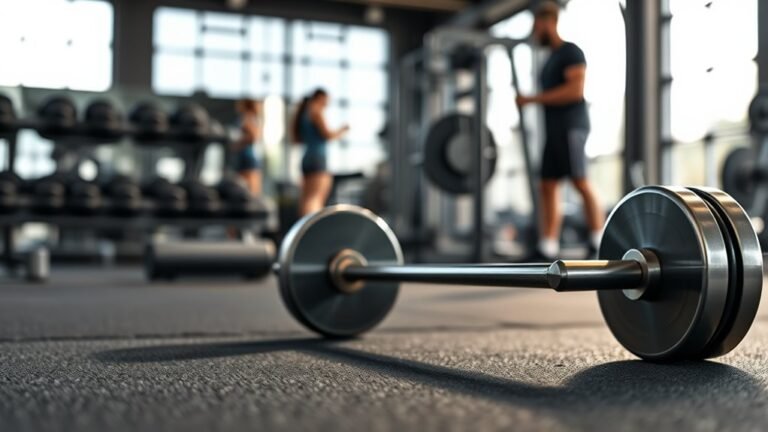
When choosing dumbbells, you’ll find two main types: adjustable and fixed-weight. Adjustable dumbbells let you change the weight by adding or removing plates, giving you flexibility without needing a whole rack.
Dumbbells come in two types: adjustable for weight flexibility, and fixed-weight for ready-to-use simplicity.
They’re great if you want to save space and gradually increase resistance. Fixed-weight dumbbells have a set weight and are ready to use immediately. They’re durable, often more balanced, and perfect if you stick to specific weights.
If you’re just starting or working out at home, adjustable dumbbells might suit you best. However, if you prefer simplicity and speed during your workouts, fixed-weight dumbbells could be the better choice.
Either way, knowing the differences helps you pick what matches your fitness goals and workout style.
How Dumbbell Weight Affects Different Exercises
Choosing the right dumbbell weight directly impacts how effective your exercises will be and how safely you can perform them. Using too heavy dumbbells might strain your muscles and compromise form, while weights too light won’t challenge you enough to build strength.
Different exercises demand different weights to target the correct muscle groups efficiently.
Consider these effects of dumbbell weight on exercises:
- Lighter weights improve control and endurance in high-rep movements like shoulder raises.
- Moderate weights enhance hypertrophy during curls and presses.
- Heavier dumbbells boost strength gains in compound lifts like goblet squats.
Choosing the wrong weight can increase injury risk or reduce the benefits of your workout. So, it’s important to get it right.
Also, gradually increasing weight helps you progress steadily without hitting plateaus.
Picking the right weight ensures you maximize results safely across all your workouts. It’s all about finding that sweet spot for your body and goals.
Factors to Consider When Choosing Dumbbell Weight
Since your goals and fitness level vary, selecting the right dumbbell weight requires careful thought. You want a weight that challenges your muscles without risking injury or compromising form.
Consider the exercise type—compound movements often need heavier weights, while isolation exercises require lighter ones. Think about your current strength and experience; beginners should start lighter to master technique.
Also, factor in your workout frequency and recovery ability to avoid overtraining. Your specific goals—muscle gain, endurance, or toning—will influence the ideal weight choice.
Tips for Progressing With Dumbbell Training
Once you’ve selected the right dumbbell weight, the next step is to focus on progressing your training effectively. Gradual progression helps you build strength safely and avoid plateaus.
Here are some tips to keep your workouts challenging and rewarding:
- Increase weight incrementally as you get stronger.
- Add more repetitions or sets to boost endurance.
- Vary exercises to target different muscle groups.
- Focus on proper form to maximize results and prevent injury.
- Incorporate tempo changes, like slower lifts, to increase time under tension.
Frequently Asked Questions
How Do Dumbbell Weights Vary by Brand?
You’ll find dumbbell weights vary by brand due to design choices, materials, and target users. Some brands offer adjustable weights, while others stick to fixed sizes.
What Materials Are Dumbbells Typically Made From?
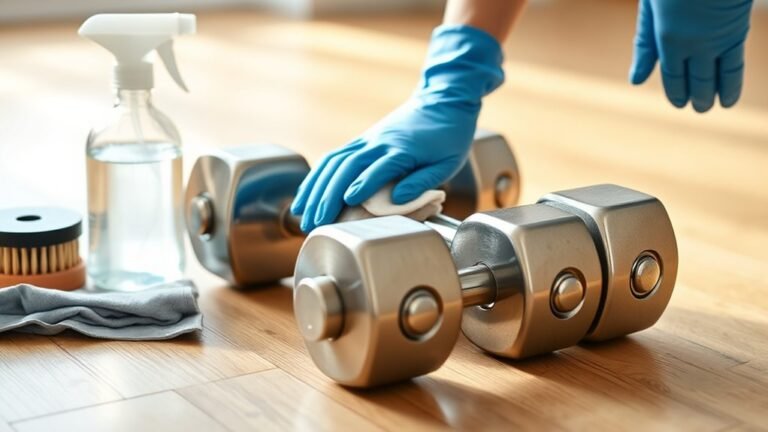
You’ll find dumbbells made from cast iron, steel, rubber-coated metal, and sometimes neoprene or vinyl. These materials offer durability, grip comfort, and protection for floors.
It really lets you choose based on your workout needs. So, whether you want something tough or something that feels good in your hands, there’s an option out there for you.
How Should Dumbbells Be Stored Safely at Home?
You should store dumbbells on a sturdy rack or designated shelf to keep them organized and prevent tripping hazards.
Make sure the area is dry to avoid rust, and keep them out of reach of children for safety.
It’s a simple way to keep your workout space safe and tidy. Plus, having them organized makes it easier to grab what you need when you want to exercise.
Can Dumbbell Weight Affect Joint Health?
Yes, dumbbell weight can affect your joint health. Using weights that are too heavy may strain your joints.
On the other hand, lighter, controlled weights help strengthen muscles safely. Always listen to your body and adjust accordingly.
Are There Eco-Friendly Dumbbell Options Available?
Yes, you can find eco-friendly dumbbells made from recycled materials or sustainable wood. They’re designed to reduce environmental impact while still providing effective workouts.
Conclusion
Choosing the right dumbbell weight is like finding the perfect dance partner—it needs to match your rhythm and strength. Whether you’re just starting out or pushing into advanced territory, picking weights that challenge you without risking injury is key.
Remember, progress comes step by step, so listen to your body and adjust as you grow stronger. With the right approach, dumbbell training can become your favorite workout companion on the road to fitness.
On average, dumbbells weigh anywhere from 5 to 50 pounds, but beginners often start with lighter weights around 5 to 15 pounds. As you build muscle and confidence, increasing the weight gradually will help you avoid plateaus and keep your workouts effective.
So, if you’re wondering how much does a dumbbell weigh on average, it really depends on your fitness level and goals. Find that sweet spot, and you’ll be well on your way to strength and success with your dumbbell workouts.