
How Much Does a Gym Sled Weigh?
A gym sled usually weighs between 30 and 70 pounds when unloaded, depending on its type and materials.
Push sleds tend to be heavier, around 40-70 pounds, while pull sleds are lighter.
Adding weight plates or accessories increases the total load based on your training goals.
Choosing the right sled weight boosts your workout’s effectiveness and safety.
Keep going to discover how sled weight impacts your fitness progress and handling tips.
Understanding these details can really help you get the most out of your sled training.
Key Takeaways
- Typical unloaded gym sleds weigh between 30 and 80 pounds, depending on design and material composition.
- Push sleds generally weigh 30-70 pounds, while pull sleds are lighter at 20-50 pounds.
- Steel sleds are heavier and more durable, whereas aluminum models are lighter and more portable.
- Adding weight plates or accessories can significantly increase the sled’s total weight during training.
- Choose sled weight based on workout goals: lighter sleds for speed, heavier sleds for strength and endurance.
Types of Gym Sleds and Their Weight Ranges

Although gym sleds come in various designs, understanding their common types and weight ranges helps you pick the right one for your training needs. You’ll typically find three main types: push sleds, pull sleds, and combo sleds.
Push sleds usually weigh between 30 to 70 pounds, offering enough resistance for sprint and strength training. Pull sleds tend to be lighter, often around 20 to 50 pounds, designed for towing exercises.
Push sleds weigh 30-70 pounds for resistance; pull sleds are lighter at 20-50 pounds for towing exercises.
Combo sleds, which allow both pushing and pulling, generally fall within 40 to 80 pounds, giving you versatile workout options. Knowing these weight ranges lets you choose a sled that matches your fitness level and goals without guessing.
This way, you maximize your training effectiveness right from the start. It’s all about picking the right tool for your workout!
Factors Affecting the Weight of Gym Sleds
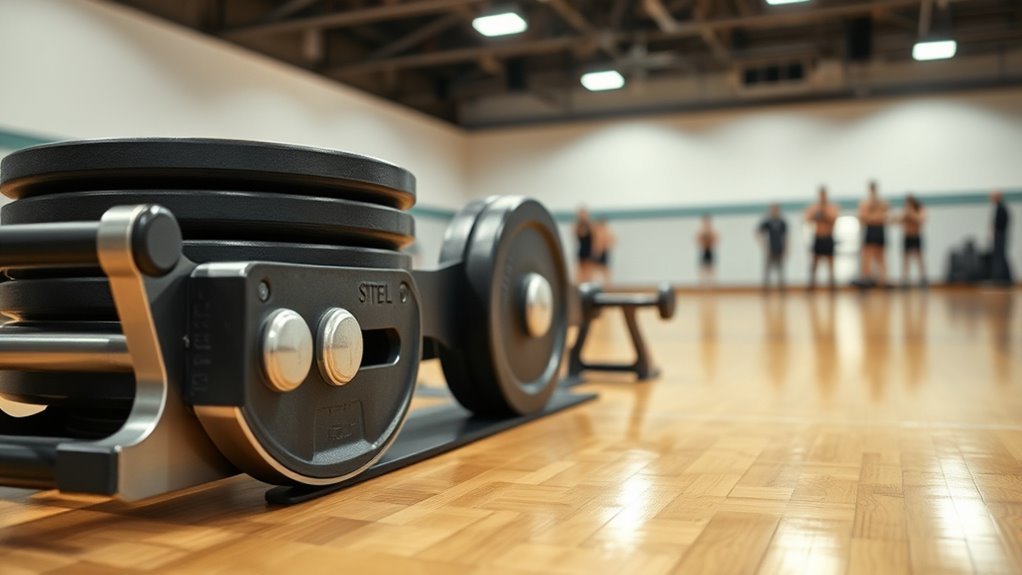
You’ll notice that the material a gym sled is made from plays a big role in its overall weight. The design and size also vary, which can change how heavy it feels during use.
Understanding these factors helps you pick the right sled for your training needs. It’s all about finding the one that feels just right for you.
Material Composition Impact
Because gym sleds come in various materials, their weight can vary considerably based on what they’re made of. If you choose a sled crafted from steel, expect it to be heavier and more durable, perfect for intense training.
Aluminum sleds, on the other hand, are lighter and easier to move but might not withstand as much wear and tear. Some sleds use composite materials or a mix of metals, balancing weight and strength.
You’ll also find sleds with plastic components, which reduce overall weight but could sacrifice stability. When selecting a sled, consider how its material affects not just weight but also longevity and performance to match your workout needs precisely.
Understanding this helps you pick the right sled that fits your training style and space.
Design and Size Variations
How much a gym sled weighs often depends on its design and size. When you choose a sled, consider whether it’s compact or large—bigger sleds usually weigh more due to added material and capacity for heavier loads.
Some sleds feature a simple frame, while others include extra components like push bars or multiple weight horns, which add to the overall mass. The sled’s shape also matters; a streamlined design might be lighter and easier to maneuver, whereas a bulky, reinforced sled offers durability but increases weight.
You’ll find that sleds designed for specific training purposes, like sprinting or pushing, vary in size and weight accordingly. Understanding these variations helps you select a sled that fits your training needs and strength level.
Standard Weight of Unloaded Gym Sleds

You’ll find that most unloaded gym sleds weigh between 30 to 60 pounds, depending on the design. Different models come with slight weight variations to suit various training needs.
Knowing the standard weight helps you choose the right sled for your workout. It makes a difference whether you’re just starting out or aiming for a more intense session. So, keep this in mind when picking your sled!
Typical Sled Weight
Although gym sleds come in various designs, most unloaded sleds typically weigh between 40 and 80 pounds. This weight provides a sturdy base for your workouts without being too heavy to maneuver.
If you’re new to sled training, an unloaded sled in this range lets you focus on form and technique before adding resistance. The material used—usually steel—affects the sled’s durability and weight, but you’ll find that most standard sleds fall within this range.
This typical weight balances stability and ease of use, allowing you to push, pull, or drag effectively. Knowing this helps you prepare your training space and choose appropriate resistance plates to match your fitness level and workout goals.
Weight Variations by Model
When selecting a gym sled, you’ll notice the unloaded weight varies considerably depending on the model. Basic sleds typically weigh between 40 to 70 pounds, making them easier to push or pull without added plates.
Heavier-duty sleds designed for intense workouts or commercial use often start around 80 pounds and can go up to 150 pounds or more. Some models feature additional components like thicker steel or reinforced frames, increasing their base weight.
If you’re looking for portability, lighter sleds work best, but if you want stability and durability, a heavier sled is a smarter choice. Always check the manufacturer’s specifications to understand exactly what you’re getting before making your purchase.
This helps ensure your training matches your sled’s capabilities. It’s all about finding the right fit for your workout needs!
Weight Added by Plates and Accessories
Adding plates and accessories can considerably increase the total weight of a gym sled. When you load your sled, the weight depends on the type and amount of plates or additional gear you use.
Here’s what you might add to boost the challenge:
- Standard 45-pound weight plates stacked on the sled
- Smaller 10 or 25-pound plates for gradual weight increases
- Resistance bands hooked to the sled for added tension
- Weighted sandbags or kettlebells placed on top
- Sled attachments like push handles or harnesses that add a few extra pounds
Each of these can transform a lightweight sled into a heavy-duty training tool. By adjusting plates and accessories, you control your workout intensity and tailor the sled’s weight to your goals.
Comparing Lightweight Vs Heavy-Duty Gym Sleds
If you want to choose the right gym sled, understanding the differences between lightweight and heavy-duty models is key. Lightweight sleds typically weigh between 40 to 70 pounds, making them easier to push or pull, especially if you’re new to sled training or prefer speed and agility drills.
They’re great for explosive workouts without heavy loading. On the other hand, heavy-duty sleds can weigh upwards of 100 pounds or more, designed to handle larger weight plates and tougher training demands.
If you aim for strength building and endurance, these sleds offer more resistance and durability. Consider your fitness goals and workout environment—lightweight sleds provide portability and quick movements, while heavy-duty sleds deliver the robustness needed for intense, heavy-load sessions.
Choose what matches your training style best.
How Sled Weight Impacts Workout Intensity
Since the weight of your gym sled directly affects the resistance you face, it plays a crucial role in determining how intense your workout will be. When you add more weight, your muscles work harder, increasing strength and endurance.
Lighter sleds let you focus on speed and agility, while heavier loads boost power and muscle growth. You can feel the difference in:
- The burn in your legs pushing a heavy sled uphill
- The quick, explosive bursts when sprinting with a lighter sled
- Your heart rate climbing as resistance increases
- The controlled, steady pace needed for heavier weights
- The challenge of maintaining form under added load
Adjusting sled weight lets you tailor intensity to your goals. That way, you maximize your workout efficiency.
Choosing the Right Gym Sled Weight for Your Fitness Level
Understanding how sled weight influences workout intensity helps you pick the right load for your fitness level. If you’re new to sled training, start with a lighter weight to focus on form and build endurance.
As you gain strength and confidence, gradually increase the weight to challenge your muscles and improve power. Avoid jumping to heavy loads too quickly; doing so can lead to injury or poor technique.
Consider your workout goals too—lighter weights work great for speed and conditioning, while heavier sleds boost strength and muscle growth. Pay attention to how your body responds during each session, and adjust the weight accordingly.
Tips for Safely Handling and Transporting Gym Sleds
When you handle and transport gym sleds properly, you reduce the risk of injury and keep your equipment in good shape. Always use proper lifting techniques—bend your knees, keep your back straight, and lift with your legs.
If the sled is heavy, ask for help or use a dolly. It’s also a smart idea to clear the path before moving the sled to avoid tripping hazards.
Make sure to secure any loose weights so they don’t fall off during transport. Safety first!
Here are some quick tips to keep in mind:
- Wear gloves for a better grip and hand protection
- Use smooth, flat surfaces when moving the sled
- Avoid twisting your body while carrying the sled
Also, store the sled in a dry, clean area to prevent rust. Don’t forget to regularly inspect the wheels and handles for any damage.
Follow these steps, and you’ll keep yourself safe while making your gym sled last longer. Easy, right?
Frequently Asked Questions
What Materials Are Gym Sleds Typically Made From?
Gym sleds are typically made from heavy-duty steel frames for durability and strength. You’ll find them with powder-coated finishes to resist rust.
Some have rubber or nylon runners to protect floors and improve sliding performance during your workouts. These materials help keep your training smooth and safe.
Can Gym Sleds Be Used on All Types of Flooring?
Using a gym sled on all flooring types isn’t like sliding on ice—it can damage hardwood or carpet. You’ll want rubber mats or turf beneath to protect floors and guarantee smooth, safe sled workouts every time.
Think of it like this: without that protective layer, your floors might end up with scratches or dents. So, setting up a proper base isn’t just smart, it’s necessary for keeping your space in great shape while you train.
How Do Gym Sleds Benefit Athletic Training?
Gym sleds boost your strength, power, and endurance by adding resistance during pushes or pulls. They improve your sprinting, agility, and overall athletic performance, making your training more effective and functional for real-world movements.
Using a gym sled is like giving your muscles a serious workout with every push. Plus, it helps you move better in sports and daily activities. So, it’s not just about lifting weights; it’s about training smarter and getting stronger in ways that really count.
Are There Gym Sleds Designed for Children or Beginners?
You might think gym sleds are too heavy, but many are designed for children or beginners with lighter weights and adjustable resistance.
You’ll find models that help build strength safely and gradually without overwhelming you.
They’re perfect if you’re just starting out or want something that grows with your abilities.
What Maintenance Is Required for Gym Sleds?
You’ll need to regularly check for loose bolts, clean the sled to prevent rust, and lubricate moving parts if applicable.
Also, inspect the runners for wear and store it in a dry place to keep it in top shape.
Doing these little things can really extend the life of your gym sled and keep it working smoothly. It’s worth the effort!
Conclusion
Choosing the right gym sled weight is like finding the perfect gear for your fitness journey—it can either push you forward or hold you back.
By understanding the different sled types, weights, and how added plates affect resistance, you’ll tailor your workouts to match your strength and goals.
Remember, start smart, progress safely, and handle your sled with care. That way, you’ll power through every session and keep moving toward success with your gym sled workouts.
Knowing how much a gym sled weighs and adjusting it properly ensures your training is effective and injury-free.
So, whether you’re using a light sled for speed or a heavier one for strength, choosing the right sled weight is key to maximizing your fitness gains.