
How Much Does a Gym Barbell Weigh?
A standard gym barbell usually weighs 20 kilograms (44 pounds), but it can vary depending on the type. Knowing how much a gym barbell weighs is essential if you want to choose the right equipment for your workout.
Whether you’re lifting for strength or toning, the barbell weight can make a big difference in your training.
Women’s Olympic barbells are lighter, around 15 kilograms (33 pounds), while curl bars weigh between 7 to 11 kilograms (15 to 25 pounds) for arm workouts.
Specialty bars like trap bars or safety squat bars are heavier, often 45 to 60 pounds.
If you want to understand these differences better and pick the right barbell, keep exploring what each option offers. It’s all about matching the barbell to your fitness goals and comfort level.
Key Takeaways
- A standard Olympic barbell typically weighs 20 kg (44 lbs) and measures about 7 feet in length.
- Women’s Olympic barbells usually weigh 15 kg (33 lbs) and are slightly shorter and thinner than men’s bars.
- Curl bars, designed for arm workouts, generally weigh between 7 to 11 kg (15 to 25 lbs).
- Specialty bars like trap bars and safety squat bars weigh between 45 to 60 lbs depending on design.
- Barbell weight varies with length, material, and purpose, influencing selection for different lifts and training goals.
So, when picking a barbell, it really depends on what you’re aiming to do and your personal preferences.
Standard Olympic Barbell Weight

Wondering how much a standard Olympic barbell weighs? It typically weighs 20 kilograms, or about 44 pounds. This is the official weight used in most competitions and gyms worldwide.
The bar measures roughly 7 feet long and has a diameter of 28 millimeters. It’s designed to handle heavy loads, often supporting hundreds of pounds of weight plates.
You’ll notice it features rotating sleeves, which help reduce the stress on your wrists during lifts. The bar’s construction is usually high-quality steel, ensuring durability and ideal performance.
Whether you’re deadlifting, squatting, or bench pressing, knowing the bar’s weight helps you track your progress accurately and load plates appropriately. This consistency is vital for effective training and competition preparation.
Women’s Olympic Barbell Specifications
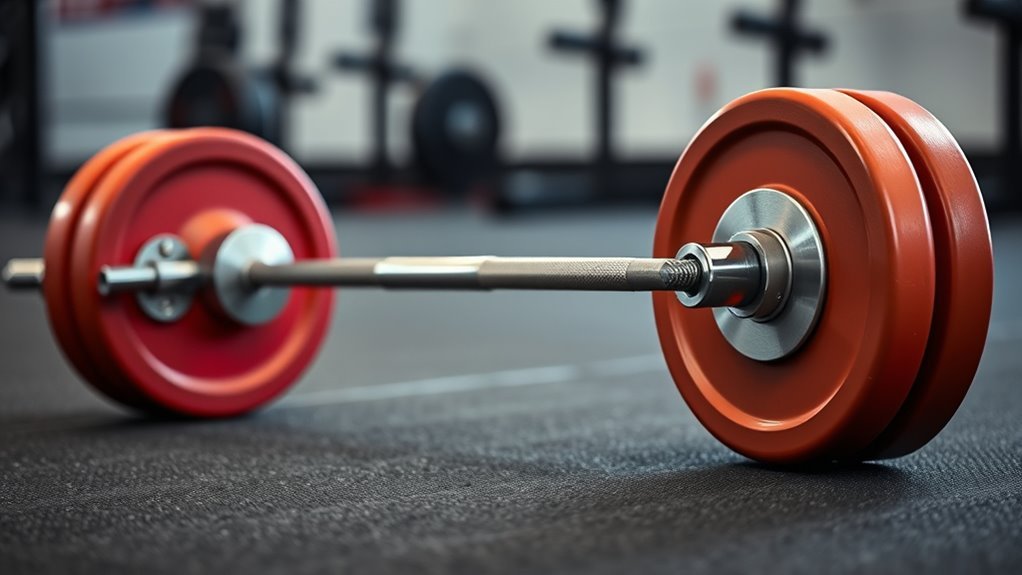
While similar to the standard Olympic barbell, the women’s Olympic barbell is specifically designed to accommodate different strength levels and body mechanics. It typically weighs 15 kilograms (33 pounds), which is lighter than the men’s 20-kilogram version.
The bar measures about 6.5 feet (2 meters) in length, making it slightly shorter and easier to handle if you have a smaller frame. Its diameter is also smaller, usually around 25 millimeters compared to 28 millimeters for men’s bars, which helps improve grip comfort.
Despite these differences, the women’s Olympic barbell maintains the same sleeve diameter to fit standard Olympic weight plates. This design ensures you can train effectively, whether you’re a beginner or advanced, while reducing strain and improving control during lifts.
Curl Bars and Their Typical Weight

If you’re looking to target your arms specifically, curl bars offer a unique advantage. These bars feature a curved design that reduces strain on your wrists during exercises like bicep curls and tricep extensions.
Typically, a standard curl bar weighs between 15 to 25 pounds (7 to 11 kilograms). This lighter weight compared to standard barbells makes them ideal for focused arm workouts without excessive load.
Curl bars usually measure around 4 feet in length, shorter than regular barbells, which adds to their maneuverability. When you use a curl bar, you can comfortably perform isolation exercises with better grip positioning.
Specialty Bars: Trap Bars and Safety Squat Bars
When you want to diversify your workouts, specialty bars like trap bars and safety squat bars offer unique benefits that standard barbells don’t provide.
The trap bar lets you perform deadlifts with a neutral grip, which reduces stress on your lower back. It’s great if you want to lift safely without compromising form.
The safety squat bar comes with padded handles and a cambered design. This eases shoulder strain and helps improve your squat form.
| Bar Type | Weight (lbs) | Key Benefit |
|---|---|---|
| Trap Bar | 45-55 | Neutral grip deadlifts |
| Safety Squat Bar | 45-60 | Shoulder-friendly squats |
| Standard Barbell | 45 | Versatile, basic barbell |
Choosing these bars can help you target muscles differently. They also enhance your overall lifting experience.
Weight Variations in Powerlifting Bars
Even though most powerlifting bars weigh around 45 pounds, you’ll find variations designed to meet specific competition standards and training needs. For example, women’s powerlifting bars typically weigh 33 pounds and have a smaller diameter to accommodate different grip sizes.
Some bars might be slightly heavier or lighter depending on the manufacturer or regional regulations. Additionally, specialty bars for equipped lifting, like deadlift bars, can be longer and thinner, affecting their weight and flexibility.
When choosing a powerlifting bar, you should consider the exact weight requirements of your competition and your personal training goals. Knowing these variations helps you train effectively and guarantees your lifts meet official rules without surprises during meets or practice sessions.
Understanding Training and Technique Bars
Powerlifting bars come in various weights and designs to suit different needs, but training and technique bars offer a unique approach for lifters focusing on form and skill development. When you use these bars, you’re handling lighter weights—often ranging from 5 to 15 kilograms—which helps you concentrate on perfecting your lifting mechanics without the strain of heavy loads.
They’re typically shorter and thinner than standard bars, making them easier to grip and control. This is especially valuable if you’re new to lifting or rehabbing an injury.
Factors Affecting Barbell Weight
Although barbells may look similar at first glance, several factors influence their weight, and understanding these can help you choose the right bar for your training needs. The most common factor is the bar’s length; standard bars usually measure 7 feet and weigh around 45 pounds, while shorter bars weigh less.
The thickness and material also play a role—bars made from denser steel or with added coatings can be heavier. Additionally, the bar’s design matters: powerlifting bars tend to be thicker and sturdier, adding weight, while Olympic bars are designed for flexibility and may weigh slightly less.
Even the type of sleeves and collars can affect the overall weight. So, keep these factors in mind when evaluating barbells to match your workout goals. It really helps to pick the right one for what you want to achieve!
Choosing the Right Barbell for Your Workout
When selecting a barbell for your workout, you need to regard the type of training you’ll be doing and your personal goals. Different barbells suit different exercises, so choose wisely.
For strength training, a standard 45-pound Olympic barbell works well. If you focus on powerlifting, a bar designed for heavy loads and durability is best.
For CrossFit or functional fitness, a lighter, more flexible bar might suit you. Consider the bar’s length, weight, and sleeve design to match your workout style.
| Workout Type | Barbell Weight | Key Feature |
|---|---|---|
| Strength | 45 lbs | Standard, durable |
| Powerlifting | 45 lbs+ | Heavy-duty, stiff |
| CrossFit/Metcon | 15-35 lbs | Lightweight, flexible |
Frequently Asked Questions
How Do I Maintain and Clean My Gym Barbell?
You should clean your barbell regularly with a dry brush to remove chalk and debris. Then, wipe it down with a lightly oiled cloth to prevent rust.
Make sure to store it in a dry area to keep it in good condition. This way, your barbell will last longer and perform better every time you use it.
Can I Use a Barbell Without Weight Plates for Workouts?
You can use a barbell without weight plates; it typically weighs about 20 kg (44 lbs). This lets you practice form and control before adding heavier loads.
Doing this helps reduce injury risk and improve your technique effectively. It’s a great way to get comfortable with the movements before going heavier.
What Are the Common Barbell Injuries and Prevention Tips?
Common barbell injuries include strains, sprains, and joint pain. To prevent them, warm up properly and use correct form.
Start with lighter weights and avoid sudden movements. It really helps to listen to your body and rest when needed.
How Do Barbell Collars Affect Lifting Safety?
Barbell collars reduce the risk of plate slippage by up to 90%, keeping weights secure during lifts. You’ll stay safer, avoid accidents, and maintain proper form when you fasten collars before every set.
It’s a simple step that makes a big difference. So, always clip on those collars before you start lifting!
Are Barbell Weights Standardized Across Different Brands?
Barbell weights aren’t fully standardized across brands; you’ll find slight variations in weight and dimensions.
However, most follow general guidelines to guarantee compatibility and safety, so your plates should fit and perform similarly regardless of brand.
That means you can usually mix and match without worry, but it’s always good to double-check if you’re picky about exact specs.
Conclusion
Now that you know how much a gym barbell weighs, you can choose the perfect one for your workout—whether it’s a standard Olympic bar, a curl bar, or a specialty trap bar. Just like a knight selecting the right sword before battle, picking the right barbell helps you train smarter and lift stronger.
Remember, the right bar isn’t just about weight; it’s about matching your goals and technique. So grab your bar and conquer your fitness quest! Selecting the proper gym barbell weight ensures you get the most out of every lift while avoiding injury. Whether you’re aiming for strength, muscle growth, or endurance, the correct barbell is key to reaching your fitness goals efficiently. So, choose wisely and lift confidently!