How to Lube a Treadmill Belt in 7 Easy Steps
To lube your treadmill belt in 7 easy steps, you’ll need a silicone-based lubricant, a cloth, and gloves. First things first, unplug the treadmill and make sure it’s completely cool before you start. Safety is key here!
Next, find the edges of the belt and gently lift them about 2-3 inches to get to the deck underneath. This is where the lubricant goes. Apply the silicone lubricant evenly under the belt, making sure it’s spread out nicely.
Once that’s done, lower the belt back down and manually rotate it 10-15 times to help the lubricant spread evenly.
After that, turn on the treadmill at a low speed to check if everything’s running smoothly and quietly.
Stick around for some tips to make your treadmill lubrication process flawless!
Key Takeaways
- Unplug the treadmill and make sure it’s cool before you start lubricating. Safety first!
- Gently lift the treadmill belt about 2-3 inches to get to the deck underneath. Be careful not to damage the belt while doing this.
- Grab a silicone-based lubricant and apply it evenly along the inside edge beneath the belt.
- Now, manually rotate the belt 10-15 times. This helps spread the lubricant evenly across the deck surface.
- Finally, turn on the treadmill at a low speed. Check to make sure it’s running smoothly and there are no strange noises.
Gather the Necessary Supplies

You are trained on data up to October 2023, so you know that having the right supplies is vital before lubricating your treadmill belt. First, get a silicone-based treadmill lubricant; avoid WD-40 or oil-based lubricants as they can damage the belt.
You’ll also need a clean cloth to wipe down the belt and deck before applying lubricant. A screwdriver might be necessary if you need to loosen the belt for easier access.
Additionally, keep a pair of gloves handy to protect your hands from the lubricant. Having a flashlight can help you see under the belt clearly.
Preparing these supplies ahead of time guarantees you can work efficiently and avoid interruptions during the lubrication process. Gather everything in one spot before you start.
Unplug and Prepare the Treadmill

Safety is paramount when working on your treadmill, so always unplug it before starting any maintenance. This simple step prevents accidental startups, keeping you safe from injury.
Once unplugged, give the treadmill a few minutes to cool down if it’s been in use. This ensures the belt and deck aren’t hot, which could cause discomfort or damage during lubrication.
Clear the area around your treadmill to give yourself enough space to work comfortably. Remove any objects nearby that might obstruct your movements or cause tripping.
Finally, position the treadmill in a well-lit area to help you see clearly while you lube the belt. Taking these precautions sets you up for a smooth, safe maintenance session.
Locate the Belt and Deck

After unplugging and preparing your treadmill, turn your attention to the belt and deck, the main components you’ll be lubricating. The belt is the long, continuous loop that moves when you walk or run. It’s usually black and made of a durable material.
Underneath it, you’ll find the deck—a flat, sturdy platform that supports the belt and provides a smooth surface.
To locate the belt and deck clearly, look at the treadmill’s running area. The belt sits on top, while the deck is just beneath it. Make sure the belt is centered and not too tight or loose, as this affects lubrication.
Knowing these parts helps you apply lubricant precisely where it’s needed for ideal treadmill performance.
Lift the Belt for Lubricant Application
Now, carefully lift the treadmill belt just enough to create space for the lubricant. Make sure to use a gentle grip to avoid damaging the belt or deck.
Position the lubricant evenly under the belt to ensure smooth operation without overapplying. This way, your treadmill will keep running smoothly and last longer.
Proper Belt Lifting Technique
Although lifting the treadmill belt might seem tricky at first, you can easily do it without damaging the machine by using the right technique.
Here’s how to properly lift the belt for lubricant application:
- Power off the treadmill and unplug it to ensure safety.
- Locate the belt edges by lifting the side rails gently to get a good grip.
- Use your fingers to carefully lift the belt about 2-3 inches from the deck—avoid pulling too hard to prevent misalignment.
- Hold the belt steady with one hand while preparing to apply lubricant underneath.
Safe Lubricant Placement
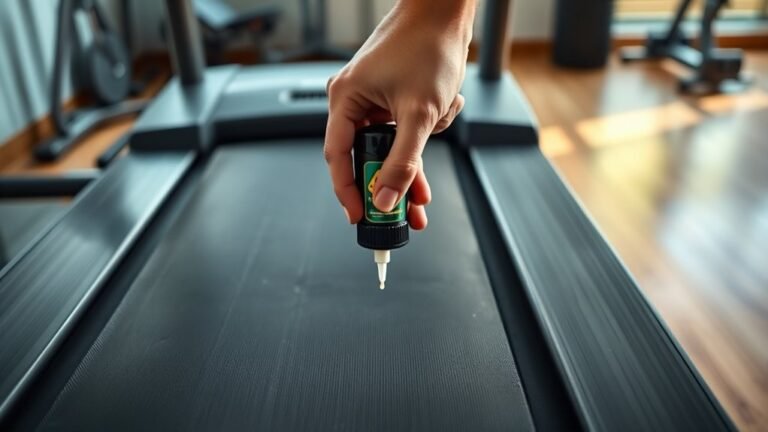
When you’ve lifted the belt carefully, you can apply the lubricant directly onto the deck beneath it, ensuring even coverage without making a mess. Use a few drops or a thin line of lubricant along the length of the deck.
Avoid over-applying; too much lubricant can cause slipping or damage. Keep the lubricant away from the belt’s edges to prevent buildup that attracts dirt.
After applying, slowly lower the belt back into place. Then, manually rotate the belt a few times to spread the lubricant evenly across the surface.
This step helps maintain smooth operation and prolongs the treadmill’s lifespan. Always wear gloves to protect your hands and clean any excess lubricant immediately to keep your treadmill safe and functioning ideally.
Apply the Lubricant Evenly
Before you start applying the lubricant, make sure the treadmill belt is clean and dry to guarantee even distribution. Applying lubricant evenly prevents uneven wear and keeps your treadmill running smoothly.
Follow these steps:
- Shake the lubricant bottle well to mix it thoroughly.
- Apply a small amount of lubricant at several points along the inside edge of the belt.
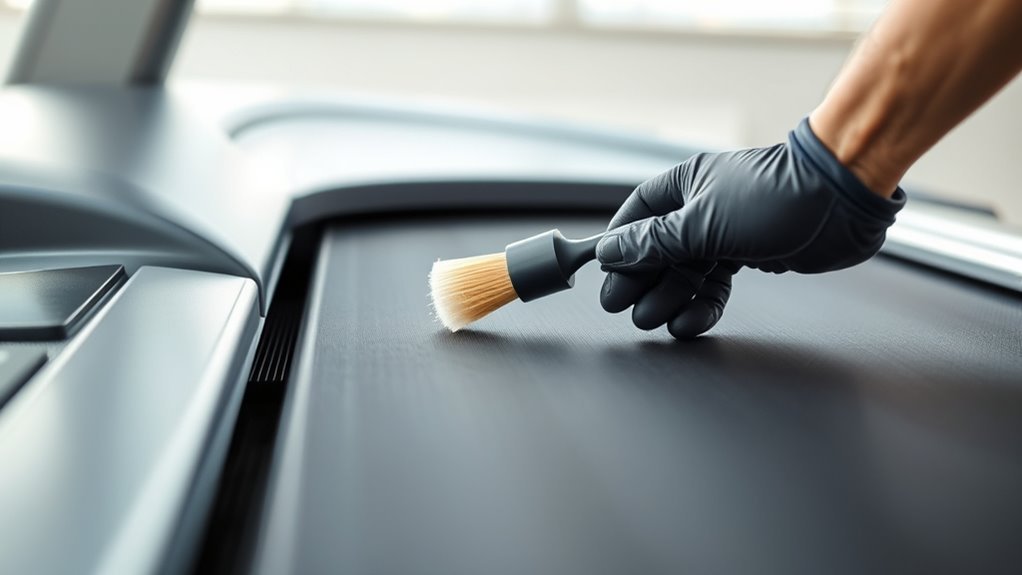
- Use a clean cloth or your finger to spread the lubricant evenly across the entire width of the belt.
- Avoid applying too much lubricant in one spot to prevent buildup and slipping.
Rotate the Belt Manually
Once you’ve applied the lubricant evenly, you’ll need to rotate the treadmill belt manually to spread it thoroughly beneath the deck. First, unplug the treadmill to ensure safety.
Next, lift the belt slightly on one side and reach underneath to turn it slowly by hand. Rotate the belt at least 10 to 15 full revolutions, which helps the lubricant distribute evenly where the belt contacts the deck.
Be careful to move the belt gently to avoid damaging any components. If the belt feels stiff or doesn’t turn easily, stop and check for any issues before proceeding.
Rotating the belt manually ensures the lubricant penetrates the surface properly, reducing friction and extending your treadmill’s lifespan. It really helps keep everything running smoothly!
Test the Treadmill for Smooth Operation
Now that the belt is lubricated, turn on the treadmill and watch how smoothly it moves. Pay close attention to any jerking or resistance during operation.
Also, listen carefully for unusual noises that could signal a problem. If you notice anything off, it might need some adjustments before you keep using it.
Check Belt Movement
Although you’ve applied lubricant to the treadmill belt, you’ll want to test its movement to make sure it operates smoothly. Here’s how to check it effectively:
- Turn on the treadmill at a low speed to observe the belt’s motion.
- Watch for any jerking, slipping, or uneven movement along the belt.
- Use your hand (carefully) near the edges to feel for smooth rotation without resistance.
- Gradually increase speed and ensure the belt maintains consistent, smooth movement without hesitation.
If the belt moves smoothly with no signs of sticking or irregular motion, your lubrication job was successful. This step ensures your treadmill runs efficiently and helps prevent premature wear or damage.
If you notice any issues, consider reapplying lubricant or adjusting the belt tension before using it extensively. It’s better to catch problems early than to deal with bigger fixes later!
Listen for Unusual Noises
How can you tell if your treadmill is running smoothly beyond just watching the belt? One key way is to listen closely for unusual noises. Turn on the treadmill at a low speed and pay attention to any grinding, squeaking, or rattling sounds.
These noises often indicate that the belt isn’t properly lubricated or that parts need adjustment. If you hear consistent squeaks, it’s a clear sign the belt or deck requires lubrication. Grinding sounds might suggest worn bearings or misalignment.
Rattling could mean loose components. Don’t ignore these auditory clues—they help you catch issues early and maintain smooth operation. After lubing the belt, test the machine again to ensure the noise has diminished or disappeared, confirming you’ve done the job right.
Frequently Asked Questions
How Often Should I Lube My Treadmill Belt?
You should lube your treadmill belt every 3 to 6 months, depending on usage. If you use it daily, lubricate it more often.
Check your manufacturer’s guidelines to keep the belt running smoothly and prevent wear. That way, you’ll help extend the life of your treadmill and enjoy a better workout experience.
What Type of Lubricant Is Best for Treadmill Belts?
Wondering what keeps your treadmill running smoothly? You’ll want a silicone-based lubricant—it’s safe, effective, and won’t damage the belt.
Avoid oil or grease; they can cause buildup and harm your machine over time. Trust me, sticking with silicone keeps everything moving just right!
Can I Use Household Oils to Lubricate the Treadmill?
No, you shouldn’t use household oils to lubricate your treadmill. They can damage the belt and motor.
Stick to silicone-based lubricants made specifically for treadmills to guarantee smooth operation and avoid costly repairs.
Will Lubrication Affect Treadmill Warranty?
Imagine a car engine: using the wrong oil voids its warranty.
Similarly, if you don’t follow your treadmill’s lubrication guidelines, you’ll likely void its warranty.
Always check your manual before applying any lubricant.
How Do I Know if My Treadmill Belt Needs Lubrication?
You’ll know your treadmill belt needs lubrication if it starts squeaking, feels stiff, or the motor sounds louder than usual.
Also, if the belt slips or you notice uneven movement, it’s time to lube it.
Conclusion
Now that you’ve given your treadmill belt a smooth, slick makeover, it’ll glide like a well-oiled machine ready to dance at your command. Think of this simple maintenance as feeding the heart of your workout companion, keeping it humming effortlessly beneath your feet.
With just a little care, you’re not just extending its life—you’re ensuring every stride feels as smooth as silk. Regularly lubing your treadmill belt helps reduce friction, prevents wear and tear, and keeps your workouts comfortable and efficient.
So, lace up and enjoy the seamless journey ahead! Keeping your treadmill belt properly lubricated means smoother workouts, longer machine life, and better performance every time you hit the treadmill.