
How to Prevent Your Chair From Rolling While Using an Elliptical
To stop your chair from rolling while using an elliptical, start by choosing one with lockable wheels. Make sure to engage the locks before you begin your workout. This simple step adds a lot of stability and keeps you safe.
You can also use wheel stoppers or swap out rolling casters for rubber glides. These options provide extra grip and prevent the chair from sliding around.
Placing a non-slip mat beneath the chair is another great trick. It helps the chair grip the floor better and stops unwanted movement.
If possible, consider switching to a stationary chair altogether for even safer support. Don’t forget to adjust the chair’s height and position to keep yourself balanced and comfortable.
Keep exploring for more tips on improving safety and stability while you work out!
Key Takeaways
- Choose a chair with lockable wheels and engage the locks before starting to prevent any rolling during elliptical use. This way, you won’t have to worry about the chair moving unexpectedly.
- Apply wheel stoppers or caster brakes around each wheel to securely stop the chair from moving. It’s a simple fix that can make a big difference.
- Opt for a stationary chair without wheels for maximum stability and to eliminate rolling risk completely. Sometimes, the simplest option is the best.
- Adjust the chair height and position so feet rest flat and the chair sits firmly on an even surface. This helps keep everything steady while you’re working out.
- Place a non-slip mat under the chair to improve floor grip and further prevent unwanted sliding or rolling. It adds an extra layer of security and peace of mind.
Choose a Chair With Lockable Wheels

How can you stop your chair from rolling away when you don’t want it to? Start by choosing a chair with lockable wheels. These wheels let you engage a locking mechanism, which keeps your chair firmly in place.
When you’re using an elliptical, you don’t want any unexpected movement, so locking the wheels gives you stability and peace of mind. Look for chairs where the locks are easy to access and operate, so you can quickly secure your chair before starting your workout.
This option is simple and effective, reducing the risk of slipping or sliding. By selecting a chair designed with lockable casters, you take a proactive step to prevent unwanted rolling without relying on additional accessories or modifications.
Use Wheel Stoppers or Casters Brakes
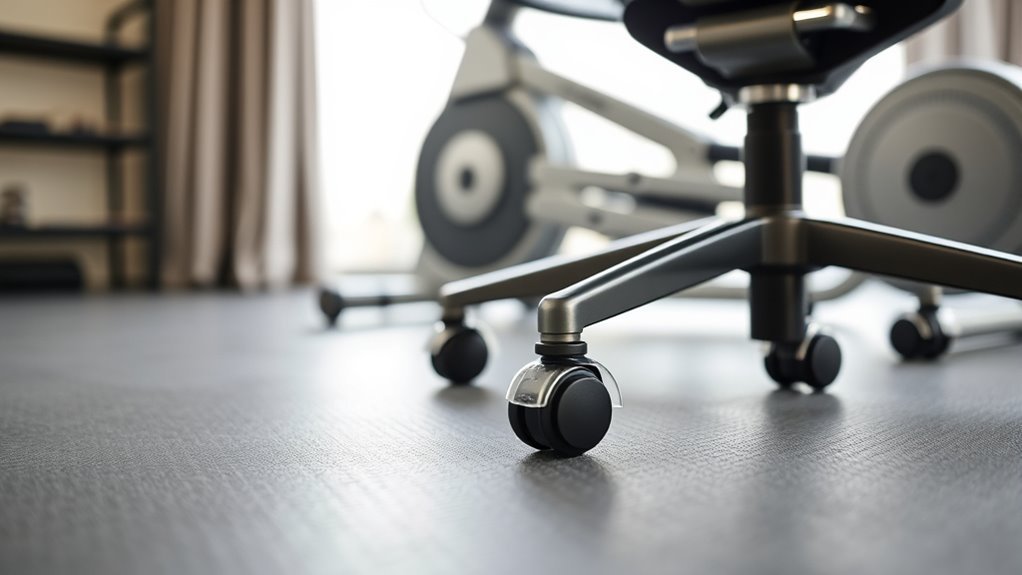
Even if your chair doesn’t come with lockable wheels, you can still prevent it from rolling by using wheel stoppers or caster brakes. These accessories clamp onto your chair’s casters, locking the wheels in place to keep your chair steady while you use the elliptical.
You’ll find universal wheel stoppers that fit most caster sizes and types, making them a versatile solution. Installing them is straightforward—just secure the stoppers around each wheel, and they’ll hold your chair firmly.
This prevents unwanted movement without sacrificing mobility when you want to move the chair again. Using wheel stoppers or caster brakes is an effective way to maintain safety and stability, especially during workouts when balance is vital.
Place a Non-Slip Mat Under the Chair

Why risk your chair sliding when you can place a non-slip mat underneath it? A non-slip mat creates a stable surface that grips both the floor and your chair’s legs or wheels, preventing unwanted movement while you’re focused on your elliptical workout.
Simply lay the mat where you position your chair, ensuring it covers the area fully. Choose mats made from rubber or materials designed specifically to resist slipping. This method requires minimal effort but markedly boosts safety and stability.
Plus, non-slip mats protect your floor from scratches caused by chair movement. You’ll find they’re affordable and easy to clean, making them a practical addition to your workout space.
With this simple step, you can maintain your chair’s position effortlessly during exercise. It’s a small change that makes a big difference!
Opt for a Stationary Chair Instead of a Rolling One
While non-slip mats help keep your chair steady, choosing a stationary chair altogether eliminates the risk of unwanted rolling.
When you use a chair without wheels, you remove any chance of it moving unexpectedly during your elliptical workout.
Stationary chairs provide a stable base, allowing you to focus on your exercise without worrying about balance or slipping.
Plus, they often have wider legs or a heavier frame, which adds to their stability.
If you want a simple, effective solution, swapping your rolling chair for a stationary one is a smart move.
This change minimizes distractions and keeps your exercise space safer.
Adjust the Chair’s Height and Position for Stability
If you want to keep your chair stable, start by adjusting its height and position to suit your body and workspace. Make certain your feet rest flat on the floor or on a stable footrest. This helps distribute your weight evenly and reduces the risk of tipping.
Set the chair’s height so your knees are at a right angle and your hips are level with or slightly higher than your knees. Position the chair close enough to your elliptical or desk to avoid leaning forward. Leaning forward can shift your center of gravity and cause movement.
Lastly, confirm the chair’s base sits firmly on a flat surface. Uneven ground can lead to wobbling, so check and adjust accordingly. This will help you maintain stability throughout your workout or work session.
Secure the Chair to a Fixed Object
To keep your chair from rolling, secure it to a fixed object like a heavy desk leg or a sturdy table. Use a strong strap, bungee cord, or heavy-duty Velcro to attach the chair’s base or legs firmly to the object.
Make sure the connection is tight enough to prevent any movement but doesn’t damage the chair or furniture. This method creates a stable anchor point that stops your chair from sliding while you’re on the elliptical.
Ensure a secure, damage-free connection to create a stable anchor that prevents chair sliding during workouts.
Check the attachment regularly to confirm it remains secure, especially if you shift or reposition the chair often. By anchoring your chair this way, you can focus on your workout without worrying about unwanted rolling or slipping.
It’s a simple, effective solution for added safety and stability.
Replace Rolling Casters With Rubber Glides
You can stop your chair from rolling by swapping out the rolling casters for rubber glides. Rubber glides offer better grip and protect your floor.
But you’ll want to pick the right material and install them properly. Let’s explore how to choose and fit these glides for the best results.
Benefits of Rubber Glides
Why settle for rolling casters when rubber glides offer a simple way to keep your chair stationary? When you swap out casters for rubber glides, you instantly eliminate unwanted movement, providing a stable base as you use your elliptical.
Rubber glides grip the floor firmly without scratching or damaging surfaces, so you can protect your flooring while maintaining control. They also reduce noise, making your workout environment quieter and more comfortable.
Unlike casters, rubber glides don’t accumulate dirt or debris, meaning less maintenance for you. Plus, they’re durable and long-lasting, so you won’t have to replace them frequently.
Installation Tips
Although replacing rolling casters with rubber glides may seem straightforward, following a few key installation tips guarantees a secure fit and ideal performance. You want your chair to stay stable without any wobbling or slipping.
- Remove Casters Completely: Pull out the existing casters carefully to avoid damaging the chair legs.
- Clean the Socket Area: Wipe away dirt and debris where the glide will be inserted to ensure a tight fit.
- Firmly Insert Rubber Glides: Push the glides straight into the sockets, applying steady pressure until they’re fully seated to prevent loosening.
Choosing Glide Materials
When selecting glide materials to replace rolling casters, consider factors like floor type and chair weight to guarantee ideal stability. Rubber glides work well on hard surfaces such as wood, tile, or laminate because they provide grip without damaging floors.
If your chair is heavy, choose thicker, more durable rubber glides to support the weight and prevent slipping. On carpeted floors, softer glides can help keep the chair stationary without sinking into the fibers.
Make sure the glide size matches the chair legs for a secure fit. You can find rubber glides in hardware stores or online, often sold as replacements for furniture legs.
Swapping casters for rubber glides is a simple but effective way to stop your chair from rolling while using an elliptical. It’s an easy fix that makes a big difference!
Regularly Inspect and Maintain Chair Components
Since your chair’s ability to stay put depends on its parts, you should regularly inspect and maintain its components to prevent unwanted rolling.
By staying proactive, you can catch issues early and keep your chair stable.
Focus on these key areas:
- Check the wheels or glides: Look for wear, dirt, or damage that might cause slipping or rolling. Clean or replace as needed.
- Tighten screws and bolts: Loose hardware can cause instability. Use a screwdriver or wrench to secure everything firmly.
- Inspect the base and frame: Ensure there are no cracks or bends that could affect balance. Address any damage promptly.
Routine care helps your chair stay safe and steady, especially when you’re focused on your elliptical workout.
Frequently Asked Questions
Can Chair Rolling Damage My Elliptical Machine’s Floor Surface?
Yes, your chair rolling can damage the floor beneath your elliptical by causing scratches or indentations.
To protect it, you should use a mat or stop the chair from moving while you work out.
Are There Specific Chair Materials Better Suited for Elliptical Use?
You shouldn’t pick chairs with metal or hard plastic wheels for elliptical use. Instead, go for rubber or polyurethane casters—they grip better and won’t damage your floor.
It’s kind of like avoiding a medieval wooden chair on cobblestones, right? Those hard wheels can be rough on your floors and don’t roll as smoothly. So, sticking with softer materials is definitely the way to go!
How Does Chair Weight Affect Its Stability on an Elliptical?
Heavier chairs offer more stability on an elliptical because they resist movement better. You’ll find lighter chairs tend to roll or shift easily, so choosing a sturdy, weighted chair helps keep you steady during your workout.
It’s all about staying balanced and secure while you move. So, if you want to avoid any slips or wobbles, go for a chair that has a bit of weight to it. It really makes a difference!
Can Using a Chair on an Elliptical Impact My Workout Effectiveness?
Yes, using a chair on an elliptical can reduce your workout effectiveness because it limits your range of motion and engagement.
You won’t burn as many calories or strengthen muscles as efficiently compared to standing.
So, if you want to get the most out of your elliptical workout, it’s better to stay on your feet.
That way, you can keep moving naturally and really work those muscles.
Is It Safe to Use Armrests on a Chair While on an Elliptical?
You shouldn’t use armrests on a chair while on an elliptical; they can restrict your movement and throw off your balance.
Instead, keep your arms free to maintain proper form and prevent accidents during your workout.
It’s all about staying safe and getting the most out of your exercise. So, let your arms move naturally as you go!
Conclusion
You might think preventing your chair from rolling while using an elliptical is complicated, but it’s really not. By choosing lockable wheels or placing a non-slip mat underneath, you’ll keep your chair steady without extra hassle.
Even if you prefer a rolling chair for other tasks, swapping out casters for rubber glides or securing the chair can make a big difference. These simple changes help avoid unwanted movement and keep you focused on your workout.
With just a few simple steps, you’ll stay safe and comfortable during your workouts. Preventing your chair from rolling while using an elliptical is all about creating stability. Whether it’s lockable wheels, a sturdy mat, or switching to rubber glides, these easy tips ensure your chair stays put so you can exercise with confidence and ease.