How Do Dumbbell Curls Work to Strengthen Your Forearms
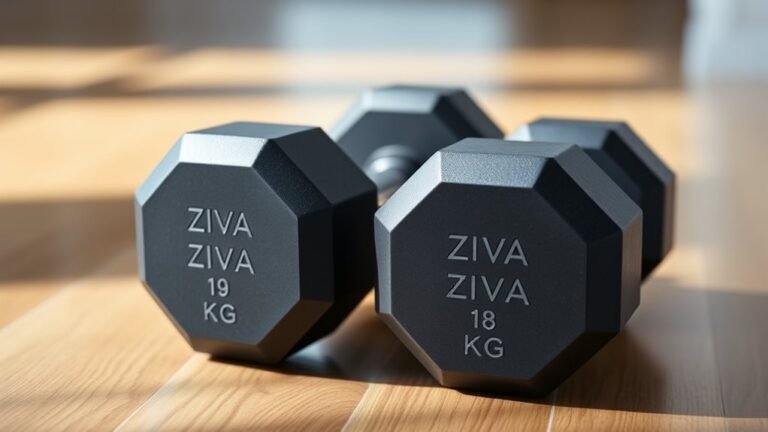
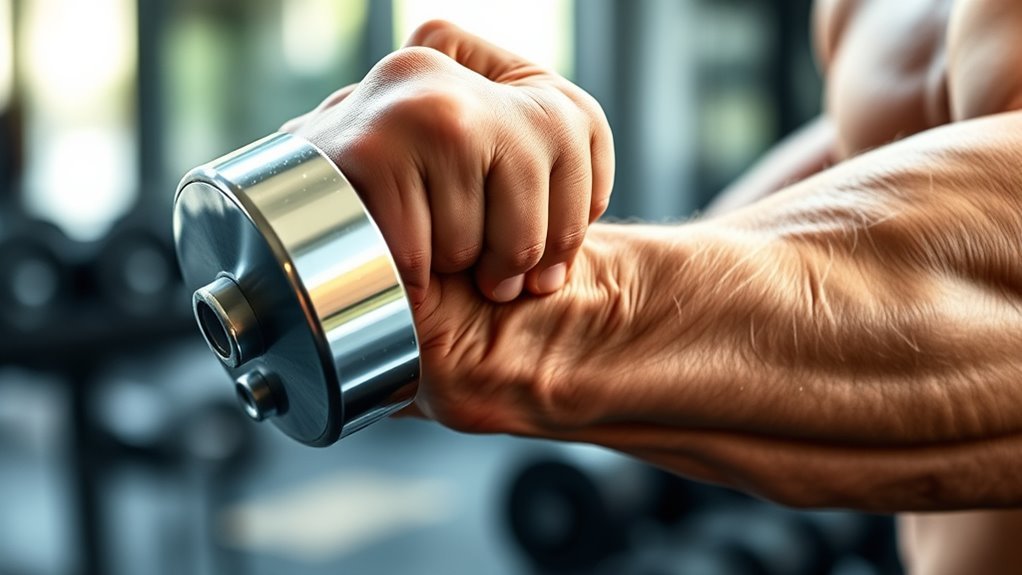
When you do dumbbell curls, you actively engage your forearm muscles like the brachioradialis and wrist flexors, which play a big role in elbow movement and grip strength. Holding and controlling the dumbbells not only works your muscles but also improves your grip endurance and wrist stability.
Adjusting your wrist position or trying different curl variations can target various parts of your forearms. This helps make your arms stronger and more balanced overall.
Curious about how to get the most out of these exercises? There’s plenty more to explore, including tips on maximizing benefits and avoiding common mistakes.
Key Takeaways
- Dumbbell curls engage the brachioradialis and wrist flexors/extensors, directly strengthening forearm muscles involved in grip and wrist control. This makes your forearms tougher and more capable in everyday tasks.
- The biceps brachii helps with forearm supination and elbow flexion, boosting overall forearm strength during curling motions. So, it’s not just about your biceps, but your forearms get a good workout too.
- Different wrist positions during curls—like supination, pronation, and neutral—target different forearm muscles. This helps you develop balanced forearm strength and avoid muscle imbalances.
- Keeping a firm grip and proper wrist alignment during curls improves your grip endurance. Plus, it prevents strain, so you can work out longer without discomfort.
- When you combine curls with slow, controlled movements, you maximize forearm muscle activation. This also reduces your reliance on momentum, making each rep more effective.
Anatomy of the Forearm Muscles Engaged by Dumbbell Curls
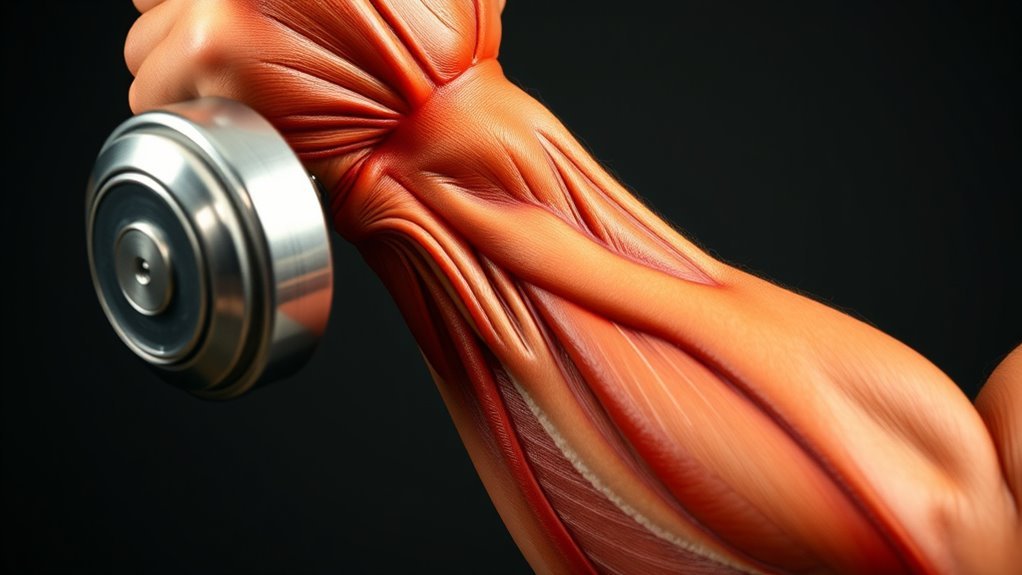
Although dumbbell curls primarily target the biceps, they also engage several forearm muscles that contribute to grip strength and wrist stability.
When you perform curls, your brachioradialis muscle, located on the thumb side of your forearm, activates to help flex your elbow. You’ll also recruit the pronator teres, which assists in turning your palm downward, stabilizing your wrist during the movement.
The wrist flexors and extensors, running along the inside and outside of your forearm, contract to maintain proper wrist alignment and prevent unwanted movement. These muscles work together to ensure your grip on the dumbbell stays firm, allowing you to control the weight effectively.
Strengthening these forearm muscles through curls improves overall arm function and reduces injury risk. So, it’s not just about the biceps—your forearms are working hard too!
The Role of the Biceps Brachii in Forearm Strength
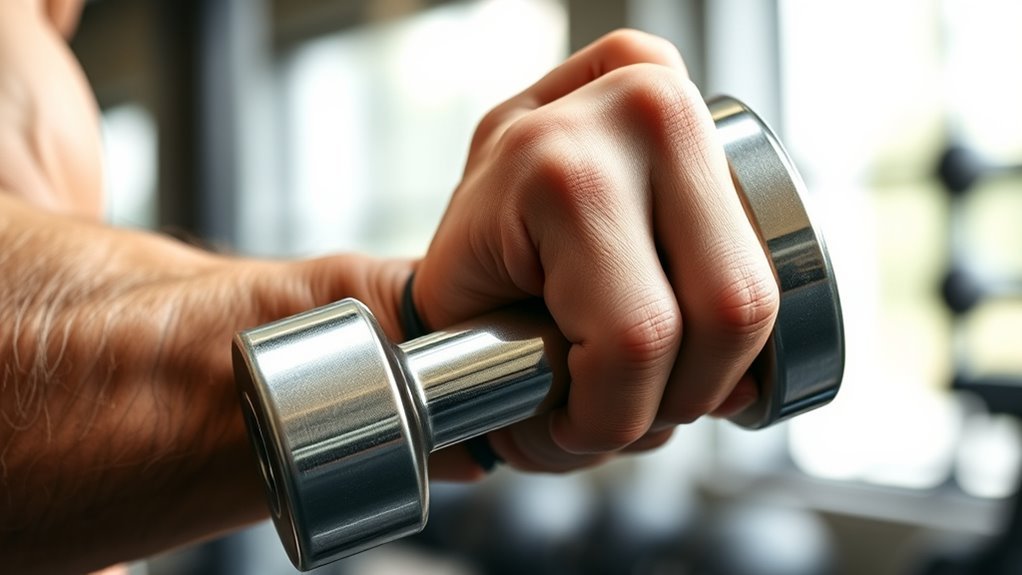
Since the biceps brachii crosses both the shoulder and elbow joints, it plays an essential role in forearm strength by enabling powerful elbow flexion and forearm supination. When you perform dumbbell curls, your biceps brachii contracts to bend your elbow, lifting the weight.
This action directly targets the forearm muscles, improving your grip and overall arm strength. Additionally, the biceps brachii helps rotate your forearm, turning your palm upward, which engages the supinator muscles.
Strengthening this muscle enhances your ability to perform everyday tasks requiring lifting and twisting motions. So, when you focus on dumbbell curls, you’re not only building bigger biceps but also reinforcing the muscles that support and move your forearm efficiently.
How Wrist Position Affects Forearm Activation
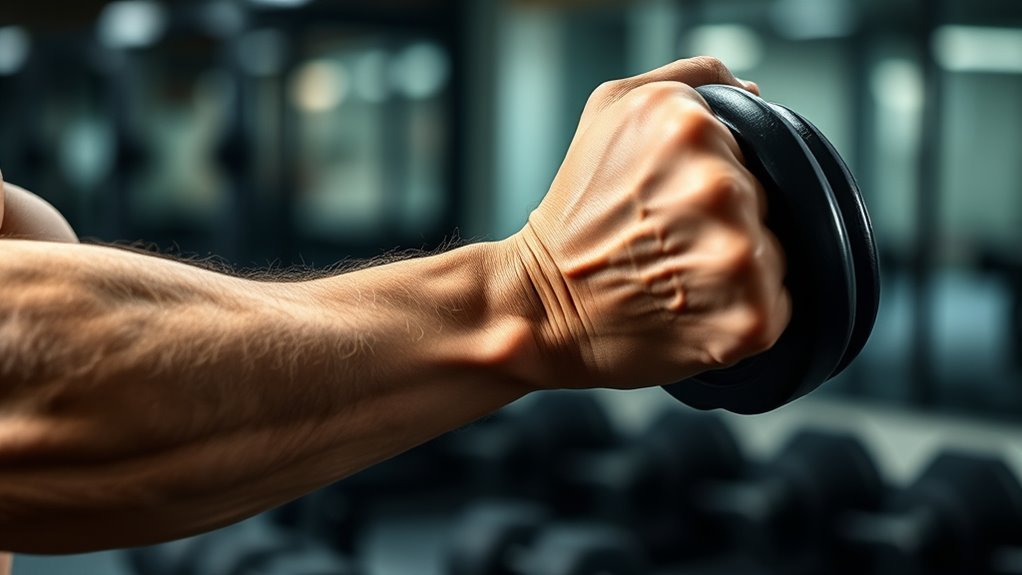
When you adjust your wrist position during dumbbell curls, you directly influence which forearm muscles engage the most. Turning your wrists so your palms face up (supination) emphasizes the biceps brachii and the brachioradialis, activating the forearm’s outer muscles.
If you keep your palms facing down (pronation), the brachialis and the wrist extensors work harder, targeting the forearm’s top side. Holding your wrists neutral, with thumbs facing up, balances activation between these muscle groups and reduces wrist strain.
Variations of Dumbbell Curls for Targeting Forearm Muscles
To really target your forearms, you’ll want to try variations like hammer curls and reverse curls. Hammer curls keep your wrists neutral, hitting the brachioradialis muscle hard.
Reverse curls flip your grip, focusing more on the extensors along your forearm’s top side. These little tweaks can make a big difference in which muscles get worked. Give them a shot and see how your forearms respond!
Hammer Curl Benefits
Although many dumbbell curl variations exist, hammer curls stand out for their unique ability to target both the biceps and forearm muscles effectively. When you perform hammer curls, you hold the dumbbells with a neutral grip—palms facing each other.
This grip shifts the emphasis to your brachioradialis, a key forearm muscle responsible for elbow flexion and wrist stability. Incorporating hammer curls into your routine not only builds stronger forearms but also enhances grip strength, which benefits various daily activities and other lifts.
Plus, hammer curls reduce strain on your wrists compared to traditional curls, making them a safer option if you experience wrist discomfort. By regularly including hammer curls, you create balanced arm development and improve overall upper body strength efficiently.
Reverse Curl Technique
Hammer curls do a great job of strengthening your forearms, but incorporating reverse curls can further enhance muscle activation in this area. To perform reverse curls, hold a dumbbell in each hand with your palms facing down (pronated grip).
Keep your elbows close to your sides as you curl the weights upward, focusing on using your forearm muscles rather than your biceps. Lower the dumbbells slowly to maximize tension.
This variation targets the brachioradialis and wrist extensors, muscles often neglected in standard curls. Adding reverse curls to your routine balances forearm strength and improves grip, benefiting other lifts and daily activities.
Start with lighter weights to master the form, then gradually increase resistance to build endurance and muscle definition efficiently. Give it a try, and you’ll notice the difference in your forearm strength!
Grip Strength Improvement Through Dumbbell Curls
When you perform dumbbell curls, your grip works hard to hold the weight steady, directly boosting your forearm strength. Each time you squeeze the dumbbell, the muscles in your hands and wrists engage intensely.
Dumbbell curls intensify hand and wrist muscle engagement, strengthening your grip and forearms with every rep.
This constant activation improves your grip endurance and power over time. Stronger grip strength not only enhances your curling performance but also benefits other exercises and daily activities requiring hand strength.
By regularly challenging your grip through dumbbell curls, you develop firmer control and reduce fatigue during lifting. To maximize this effect, focus on maintaining a tight grip throughout each rep.
This simple adjustment guarantees your forearm muscles are fully engaged, helping you build a stronger, more resilient grip with consistent practice.
The Importance of Controlled Movement and Form
To get the most from dumbbell curls, you need to keep your wrist properly aligned throughout each rep. Focus on slow, steady movements rather than rushing through the exercise.
This controlled approach helps protect your joints and maximizes forearm engagement. Trust me, taking it slow really pays off in the long run!
Proper Wrist Alignment
Although it might seem minor, maintaining proper wrist alignment during dumbbell curls is essential for maximizing forearm strength and preventing injury. When you keep your wrists straight and aligned with your forearms, you ensure that the muscles in your forearms engage effectively.
Bending or twisting your wrists can shift the load away from these muscles, reducing the exercise’s benefits and increasing strain on tendons and joints. So, it’s really important to focus on gripping the dumbbell firmly while keeping your wrist in a neutral position throughout each curl.
This controlled positioning helps you target the forearm muscles more precisely and supports joint stability. By paying close attention to wrist alignment, you not only improve your workout’s efficiency but also protect yourself from common injuries like tendonitis or wrist sprains.
Slow, Steady Repetitions
Since controlled movement enhances muscle engagement, performing dumbbell curls with slow, steady repetitions is key to building forearm strength effectively. When you lift and lower the dumbbell deliberately, you increase the time your muscles spend under tension, which promotes better strength gains.
Avoid rushing through your reps—instead, focus on smooth, controlled motions that keep your form intact. This approach reduces the risk of injury and ensures your forearms do most of the work, rather than relying on momentum.
Keep your wrists stable and your elbows close to your body throughout each curl. By prioritizing quality over speed, you’ll get more out of each repetition, making your forearms stronger and more defined over time.
Slow, steady reps truly make a difference in your training results.
Integrating Dumbbell Curls Into a Forearm Strengthening Routine
When you include dumbbell curls in your forearm routine, you target both the biceps and the muscles that support wrist strength. To maximize benefits, combine curls with exercises like wrist curls, reverse curls, and farmer’s carries for balanced development.
Focus on controlled movements and proper grip to engage forearm muscles effectively. Aim for 3-4 sets of 8-12 reps, adjusting weight to challenge yourself without sacrificing form.
Incorporate dumbbell curls 2-3 times a week, allowing rest days for recovery. Pairing these with compound lifts like pull-ups or deadlifts enhances overall arm strength.
Common Mistakes That Limit Forearm Engagement During Curls
Adding dumbbell curls to your routine can boost forearm strength, but only if you perform them correctly. One common mistake is relying too much on your upper arms, which reduces forearm activation.
Keep your elbows close to your sides and focus on controlling the movement with your forearms.
Maintain elbows tight to your body and engage your forearms to control every curl movement.
Another error is using momentum to lift the weights, which shifts the effort away from your forearms. Slow, deliberate curls engage the forearm muscles better.
Also, gripping the dumbbell loosely limits forearm work; squeeze the handle firmly to maximize muscle activation.
Finally, neglecting wrist position can hinder results—avoid curling with bent wrists to prevent strain and ensure the forearms do the work. Correcting these mistakes will help you build stronger forearms effectively.
Frequently Asked Questions
Can Dumbbell Curls Help Prevent Forearm Injuries?
Yes, dumbbell curls can help prevent forearm injuries by strengthening the muscles and tendons. They also improve grip strength and enhance joint stability.
When you train consistently with proper form, it reduces strain on your forearms. This support goes a long way in preventing injuries during daily activities. So, it’s definitely a good exercise to include in your routine.
How Often Should I Do Dumbbell Curls for Best Results?
Want noticeable gains? Do dumbbell curls 2-3 times weekly, giving your muscles time to recover.
Consistency matters more than daily workouts, so stick to a routine and watch your strength improve steadily.
Ready to start?
Do Dumbbell Curls Improve Forearm Endurance or Just Strength?
Dumbbell curls improve both forearm endurance and strength. By consistently challenging your muscles with higher reps and moderate weights, you build endurance.
On the other hand, using heavier weights with fewer reps focuses more on strength development. So, depending on your goal, you can adjust your routine accordingly. It’s pretty flexible!
Are Dumbbell Curls Safe for People With Wrist Pain?
If you have wrist pain, you shouldn’t do dumbbell curls without consulting a doctor.
It’s important to get a professional opinion first. That way, you can be sure you’re not making the pain worse.
You might want to try lighter weights or wrist supports. These can help reduce strain on your wrists.
Or, consider alternative exercises that don’t put as much pressure on your wrists. This way, you can still build strength safely.
Can Dumbbell Curls Help With Grip Issues in Sports?
Yes, dumbbell curls can help improve your grip strength for sports by targeting the forearm muscles involved in gripping.
Consistent training boosts endurance and control, making it easier for you to hold and manipulate equipment during play.
Conclusion
Think of your forearms as the roots of a mighty tree—dumbbell curls help them grow strong and stable. By focusing on proper form, wrist position, and grip, you’ll engage the muscles that support both strength and control.
Mixing up curl variations and avoiding common mistakes will keep your forearms firing on all cylinders. Keep curling with intention, and you’ll build a solid foundation that carries power through every lift and everyday move.
Consistent dumbbell curls not only strengthen your forearms but also improve your grip, wrist stability, and overall arm endurance. So, if you want strong forearms that support all kinds of physical activity, make dumbbell curls a regular part of your workout. This simple exercise is key to building forearm strength, enhancing your lifting power, and boosting everyday functional movements.