Do Treadmills Use a Lot of Electricity?
You don’t have to worry too much about your treadmill eating up electricity. Most home treadmills use between 600 and 1,200 watts while you work out, which is moderate compared to other appliances.
Your power use depends on speed, incline, and model features.
Keeping settings moderate and your treadmill well-maintained can help reduce energy use.
If you want to understand how to estimate costs and save electricity, there’s more useful info ahead to explore.
Key Takeaways
- Treadmills typically use 600-1,200 watts during operation, with higher-end models reaching up to 2,000 watts.
- The actual electricity consumption depends on how intense your workout is, the speed, incline, and extra features like fans or displays.
- For example, running a 750-watt treadmill for one hour uses about 0.75 kWh of electricity.
- So, the monthly electricity cost tends to be pretty low, usually around $2 to $5, depending on how often you use it and local energy rates.
- You can improve energy efficiency by keeping your treadmill well-maintained.
- Also, sticking to moderate settings and using any energy-saving modes helps keep electricity use down.
How Treadmills Consume Electricity

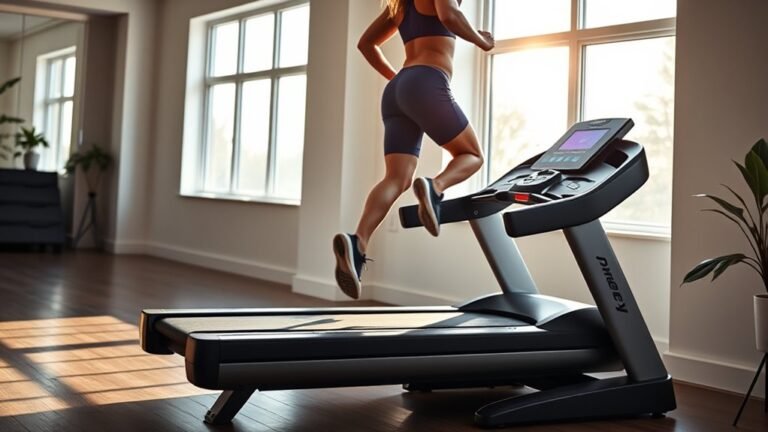
How exactly do treadmills use electricity when you’re working out? When you step on, the treadmill’s motor kicks in to power the belt’s movement. This motor is the main electricity consumer, converting electrical energy into mechanical energy that keeps the belt rolling at your chosen speed.
Besides the motor, the treadmill also uses electricity to run its console, which displays your workout stats and lets you control settings. Some models include extra features like fans, speakers, or incline adjustments, all of which draw additional power. Even the LED or LCD screens consume electricity, though minimally.
Average Power Usage of Home Treadmills
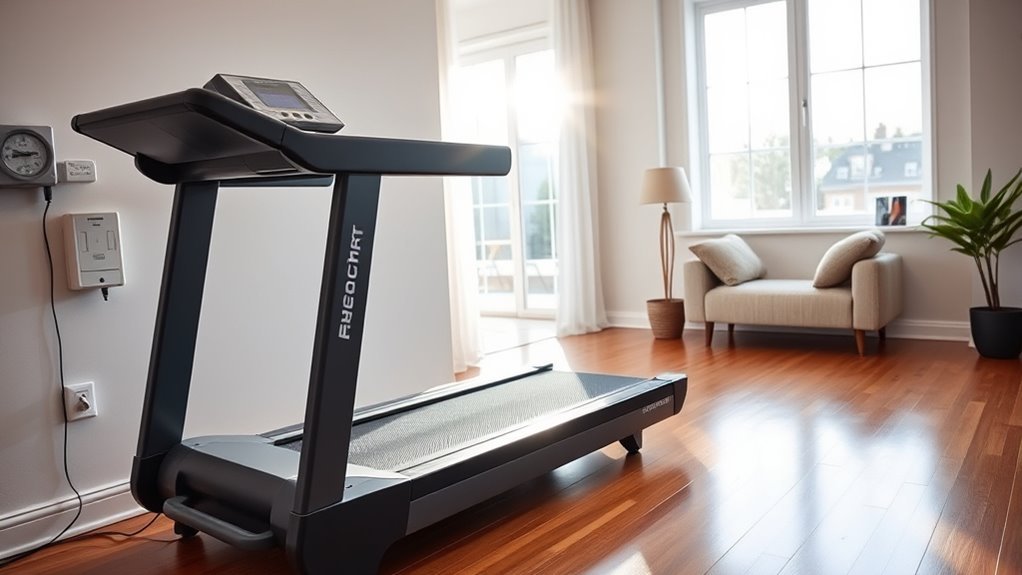
You’ll find that most home treadmills use between 600 and 700 watts while running, but this can vary based on speed and incline. Different models also have varying efficiency levels, which directly affect their power consumption.
Understanding these factors will help you choose a treadmill that fits your energy use preferences. It’s pretty handy to know this before making a purchase, right?
Typical Wattage Range
Wondering how much electricity your treadmill actually uses? Most home treadmills typically operate within a certain wattage range that gives you a good idea of their energy demands.
Generally, you’ll find:
- Entry-level models use around 600 to 800 watts.
- Mid-range treadmills often consume 800 to 1,200 watts.
- High-end or commercial-grade machines can draw 1,200 to 2,000 watts.
- Most machines hover near 1,000 watts during typical use.
Knowing these numbers helps you estimate your treadmill’s power draw and plan your electricity usage accordingly.
Keep in mind, this range reflects the treadmill in operation, not just when it’s idle or warming up. This typical wattage range is a helpful baseline before diving into what specifically influences consumption.
Factors Affecting Consumption
The wattage range gives a general idea of your treadmill’s energy needs, but actual power consumption can vary based on several factors. Your workout intensity plays a big role—running at higher speeds or inclines draws more power than walking slowly.
The treadmill’s motor size and efficiency also affect usage; larger motors typically consume more electricity. Additionally, the duration of your workout directly impacts total energy used. Features like built-in fans, screens, or speakers add to consumption, too.
Maintenance matters as well; a well-lubricated belt reduces motor strain and saves energy. Finally, your treadmill’s age influences power use—older models often run less efficiently, using more electricity.
Understanding these factors helps you manage your treadmill’s electric bill more effectively.
Comparing Models’ Efficiency
Although treadmill wattage varies widely, comparing average power usage across popular home models helps you choose one that fits your energy goals.
Most home treadmills use between 600 to 700 watts during active use, but some efficient models consume as little as 300 watts. When picking your treadmill, consider these points:
- Motor Size – Larger motors use more power but handle intense workouts better.
- Speed Settings – Higher speeds increase electricity consumption.
- Incline Feature – Treadmills with motorized inclines draw extra power.
- Energy-Saving Modes – Some models include standby modes that reduce usage when idle.
Keep these factors in mind, and you’ll find a treadmill that works great without surprising you with a big energy bill!
Factors That Affect Treadmill Energy Consumption
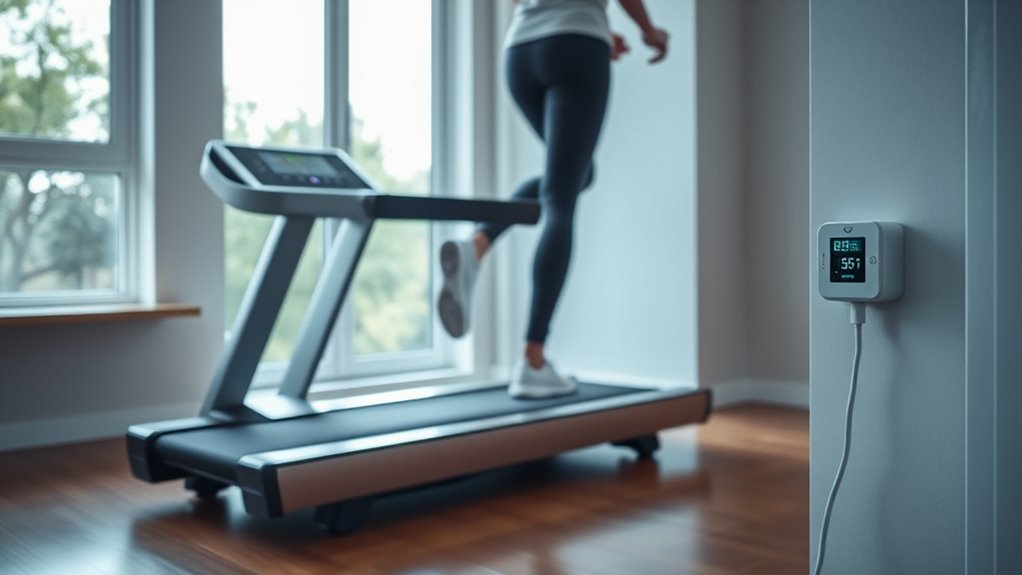
You’ll notice that a treadmill’s motor power rating plays a big role in how much electricity it uses. The higher the rating, the more energy it typically consumes during your workout.
Also, the longer you run, the more your total energy use adds up. So, if you’re planning a longer session, keep that in mind!
Motor Power Ratings
When you choose a treadmill, understanding motor power ratings can help you gauge its energy consumption. The motor’s horsepower (HP) rating directly relates to how much electricity the treadmill uses.
Higher HP means more power but also higher energy use. Here are key points to factor in:
- Continuous Horsepower (CHP) – Represents the motor’s consistent output, influencing steady energy use.
- Peak Horsepower – The max power during intense use, affecting short bursts of higher consumption.
- Motor Efficiency – More efficient motors consume less electricity for the same performance.
- Treadmill Size and Features – Larger models with advanced features often require more powerful motors, increasing electricity use.
Usage Duration Impact
Understanding motor power ratings gives you a clear picture of how much energy a treadmill might use at any moment, but how long you run the machine also plays a big role in overall electricity consumption. The longer you keep your treadmill running, the more electricity it draws, directly increasing your energy bill.
Even if your treadmill uses moderate power, extended workout sessions add up. For example, running for 30 minutes daily consumes less energy than an hour-long session.
Additionally, frequent use without breaks means your treadmill’s motor stays active longer, raising consumption. To manage electricity use, monitor your workout duration and consider shorter, more efficient sessions.
Balancing exercise time with energy awareness helps you stay fit while controlling your electric costs effectively. It’s all about finding that sweet spot between getting your workout done and keeping your energy bills in check.
Comparing Electric Treadmills to Manual Models
Although both electric and manual treadmills serve the same basic purpose, they offer very different experiences and features that can affect your workout intensity, control, and overall convenience.
When choosing between the two, consider these factors:
- Power Source: Electric treadmills need electricity, while manual ones rely solely on your effort.
- Workout Intensity: Manual treadmills often demand more effort, engaging more muscles.
- Speed Control: Electric models let you set exact speeds; manual ones adjust based on your pace.
- Maintenance: Manual treadmills typically have fewer mechanical parts, making them easier to maintain.
Understanding these differences helps you pick the treadmill that fits your lifestyle, workout goals, and concerns about electricity use. So, think about what matters most to you before making a choice.
Impact of Treadmill Settings on Electricity Use
Choosing between electric and manual treadmills sets the stage for how much electricity your workouts will consume, especially if you opt for an electric model. Beyond the type, the settings you choose profoundly impact energy use.
Higher speeds and steeper inclines make the motor work harder, increasing electricity consumption. If you crank up the incline to simulate hill training, expect a noticeable rise in power draw.
Conversely, maintaining a moderate pace and a flat surface helps conserve energy. Features like built-in fans, touchscreen displays, or additional programs can also add to the electricity demand.
Estimating the Cost of Running a Treadmill
How much does it actually cost to run your treadmill each month? To estimate this, you’ll need a few key pieces of information:
- Wattage of your treadmill – Check the label or manual for power consumption, typically between 600-900 watts.
- Average daily usage – Note how many hours you use it each day.
- Electricity rate – Find your local cost per kilowatt-hour (kWh) on your utility bill.
- Calculation – Multiply wattage by daily hours, then convert to kWh (divide by 1000). Multiply by your electricity rate, then by days used in a month.
For example, running a 750-watt treadmill for 1 hour daily at $0.12/kWh costs about $2.70 monthly.
Pretty simple, right? This method helps you budget your treadmill use effectively without any guesswork.
Energy-Saving Tips for Treadmill Workouts
Now that you know how to estimate your treadmill’s monthly electricity cost, you can take simple steps to lower it without sacrificing your workout. First, consider adjusting your treadmill’s speed and incline to moderate levels; higher settings consume more power.
Next, turn off the machine immediately after use instead of leaving it on standby. You can also limit your workout to efficient sessions—shorter, intense intervals burn calories without requiring long run times.
Regular maintenance, like lubricating the belt, ensures your treadmill runs smoothly and consumes less energy. Finally, if your treadmill has an energy-saving mode, use it to reduce power draw.
These small changes help you save electricity while keeping your fitness routine effective and enjoyable. Give them a try and see how much you can save!
Alternative Home Exercise Equipment and Their Energy Use
While treadmills are popular for home workouts, you might want to explore other exercise equipment that uses less electricity or none at all. Choosing alternatives can save energy and reduce your electricity bill.
Here are four options to contemplate:
- Stationary Bike (Manual or Electric Assist) – Manual bikes use no electricity, while electric assist models consume minimal power.
- Rowing Machine – Most rowers operate without electricity, relying on your effort alone.
- Elliptical Trainer (Magnetic Resistance) – Many models don’t require power, using magnetic resistance instead.
- Jump Rope – It’s a simple, effective, and zero-electricity cardio option.
Frequently Asked Questions
Are Treadmill Motors Noisy During Operation?
Treadmill motors aren’t usually noisy during operation, but you might hear a steady hum or slight whir.
If it’s loud or grinding, you should check for maintenance issues or loose parts to keep it running smoothly.
It’s pretty normal for a treadmill motor to make some noise, but anything too loud could mean something’s off. So, keep an ear out and don’t ignore unusual sounds!
Can Treadmill Use Improve Cardiovascular Health?
Using a treadmill can transform you into a heart-pumping superhero, boosting your cardiovascular health like crazy. Just hop on, keep moving, and you’ll strengthen your heart, improve endurance, and feel unstoppable in no time!
It’s a simple way to get your blood flowing and your heart working harder. Plus, you can adjust the speed and incline to challenge yourself as you get fitter. So, why not give it a try and see how awesome you can feel?
How Often Should Treadmill Belts Be Replaced?
You should replace your treadmill belt every 3-5 years, depending on usage and wear.
If you notice slipping, fraying, or reduced performance, it’s time to swap it out.
This helps keep your workouts safe and smooth.
Do Treadmills Require Professional Maintenance?
Yes, you should get professional maintenance—treadmills with regular service last 30% longer. Experts guarantee belts and motors stay in top shape, preventing costly repairs and keeping your workouts smooth and safe.
Don’t skip it! Taking care of your treadmill now means fewer headaches later. It’s definitely worth the effort.
Are There Warranties for Home Treadmills?
Yes, most home treadmills come with warranties covering parts and labor for at least one year.
You should check the specific terms, as some brands offer extended warranties or coverage for motor and frame components.
Conclusion
You might think running on a treadmill drains your electricity bill like a high-powered appliance, but in reality, it uses surprisingly little energy—especially compared to heating or cooling your home. While electric treadmills do consume power, manual models need none at all, though they demand more effort from you.
By adjusting settings and choosing wisely, you can get an effective workout without shocking your wallet or the environment. It’s all about balance between fitness and energy use.
When you consider how much electricity a treadmill uses, it’s often less than you expect. So, if you’re worried about electricity costs, rest assured that using a treadmill won’t cause a big spike in your bill. Plus, opting for manual treadmills or using lower settings can further reduce energy consumption.
In conclusion, treadmills do use electricity, but the amount is relatively low compared to many household appliances. Whether you choose an electric or manual treadmill, you can enjoy a great workout while keeping electricity use in check. This balance helps you stay fit without stressing your electricity bill or the environment.