Does Standing on a Vibration Plate Burn Calories?
You do burn some calories standing on a vibration plate, but the increase is quite small and won’t replace traditional exercise. The vibrations cause your muscles to contract involuntarily, boosting muscle activation and circulation, which slightly raises calorie burn.
However, the effect is minimal if you just stand still.
For better results, combining vibration plates with active movements and a full workout routine works best. There’s more to learn about maximizing their benefits and how they fit into fitness.
So, while vibration plates can be a helpful addition, don’t rely on them alone to burn calories or stay in shape.
Key Takeaways
- Standing on a vibration plate causes minor muscle activation, which slightly increases calorie burn compared to just standing still.
- But honestly, the calorie expenditure from passive standing on vibration plates is pretty minimal and not really significant for weight loss.
- Vibration plates alone don’t do much to elevate your heart rate or metabolism enough to burn a lot of calories.
- However, if you combine vibration plates with active exercises, you’ll engage your muscles more and boost calorie burning effectiveness.
- Research shows that just standing passively on vibration plates offers limited calorie burn, so it’s best to think of them as a workout supplement rather than a primary calorie burner.
How Vibration Plates Work
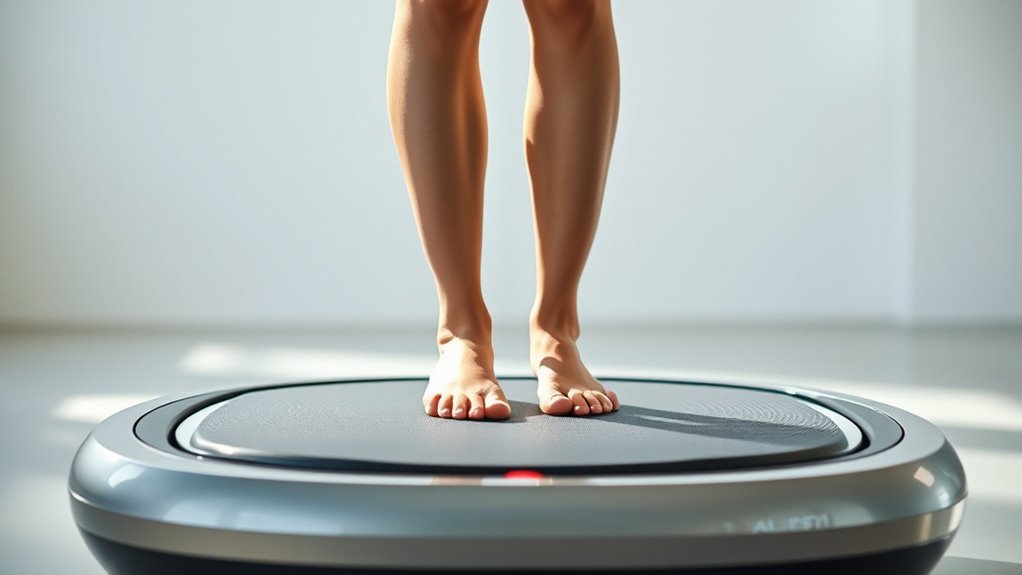
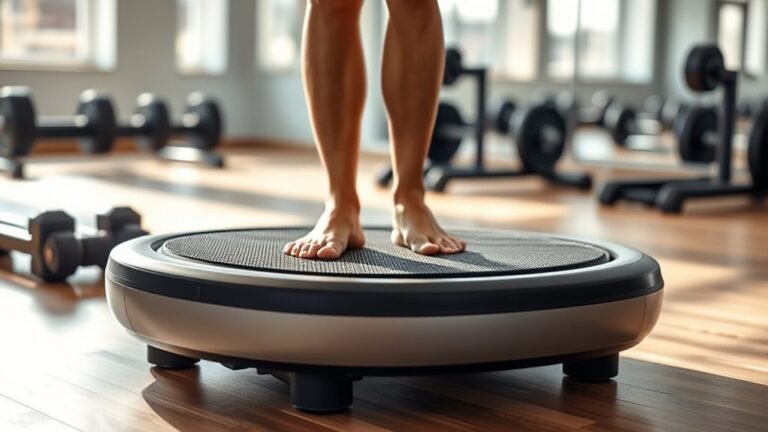
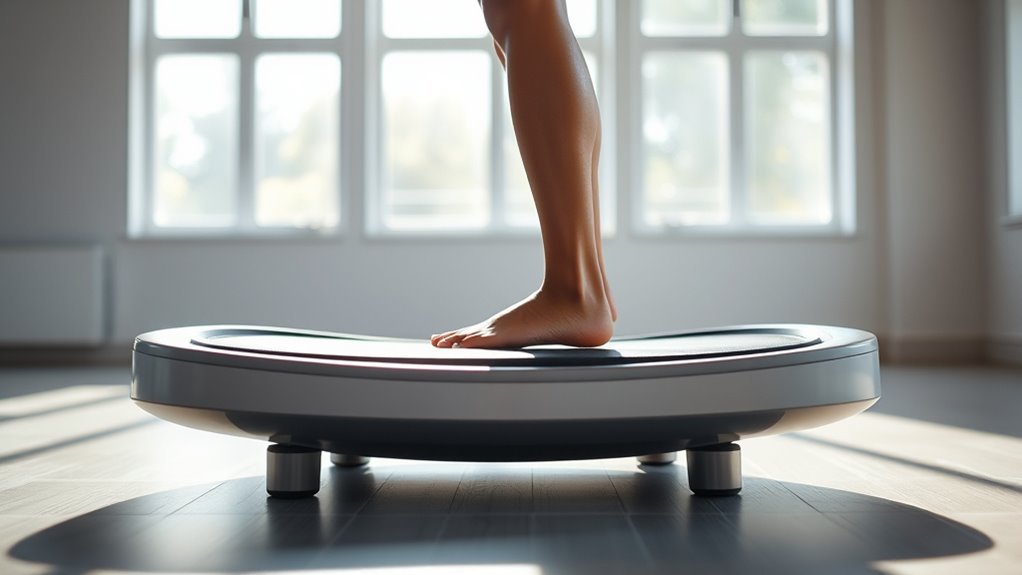
Although vibration plates may seem simple, they use rapid oscillations to stimulate your muscles. When you stand on the plate, it vibrates at specific frequencies, causing your muscles to contract and relax multiple times per second.
These quick movements activate muscle fibers that you might not engage during regular standing or light activity. You don’t need to perform complicated moves; just standing or performing basic exercises on the plate triggers these muscle responses.
The vibrations also create small shifts in your balance, forcing your body to adjust continuously, which further engages your muscles. This process can enhance muscle tone and improve circulation.
The Science Behind Calorie Burning
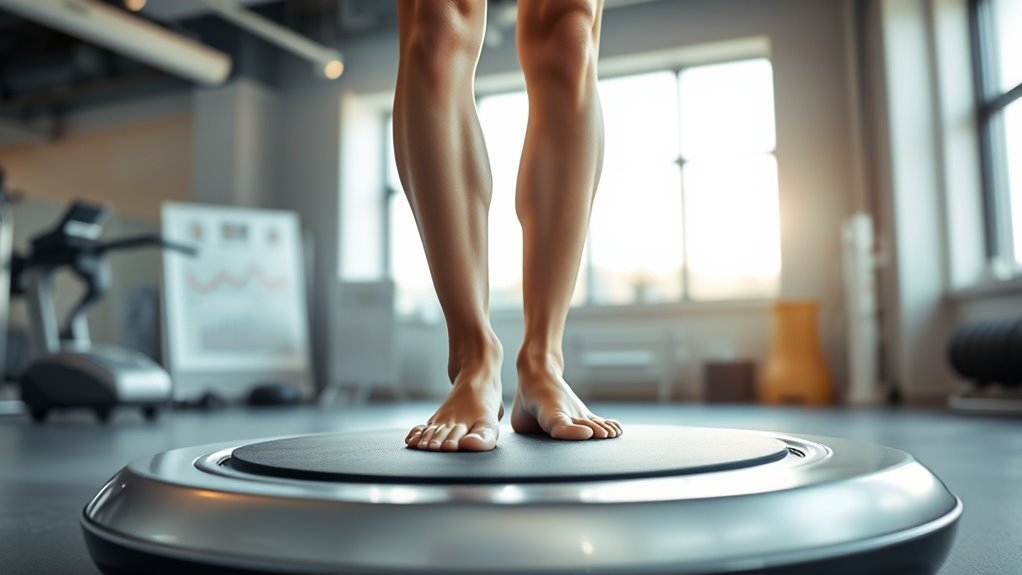
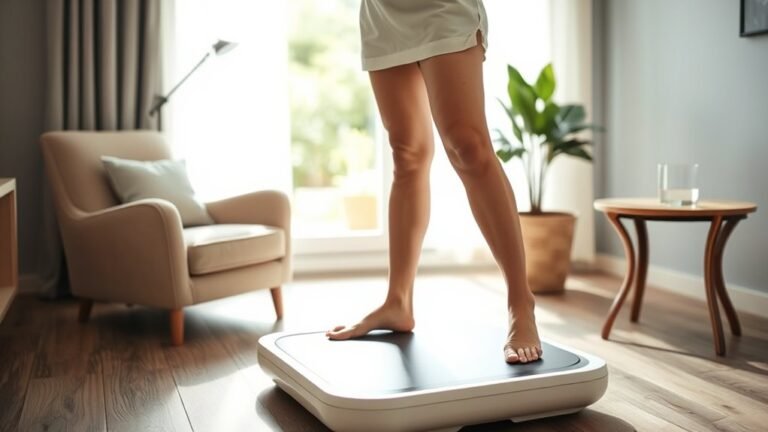
When you stand on a vibration plate, your body works harder to maintain balance and stability, which increases energy expenditure. This extra effort means your metabolism gets a slight boost, leading to more calories burned even while standing still.
The science behind this calorie burn involves several key factors:
- Increased Muscle Engagement – Your muscles contract to keep you steady.
- Elevated Heart Rate – Balancing raises your heart rate slightly.
- Enhanced Circulation – Vibration stimulates blood flow, supporting metabolism.
- Neuromuscular Activation – Your nervous system recruits more muscle fibers.
Together, these elements create a mild calorie-burning effect. But keep in mind, the total calories burned standing on a vibration plate are generally lower compared to more vigorous activities.
Muscle Activation During Vibration
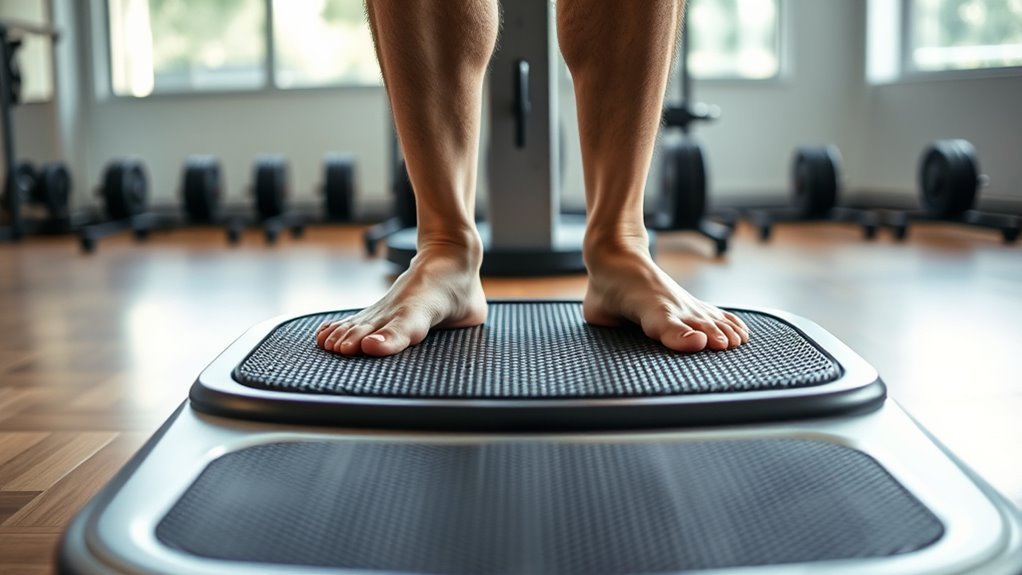
Because vibration plates send rapid pulses through your muscles, they activate more muscle fibers than standing still on solid ground. When you stand on a vibrating platform, those pulses cause your muscles to contract and relax repeatedly in quick succession.
This involuntary muscle activation recruits both slow-twitch and fast-twitch fibers, enhancing muscle engagement. As a result, your muscles work harder to stabilize your body against the vibrations.
This increased activity can contribute to improved muscle tone and strength over time. However, the intensity of muscle activation depends on the vibration frequency, amplitude, and your body position.
Still, simply standing on the plate triggers more muscle activity than you’d expect. It’s a unique way to stimulate muscles without traditional exercise.
Comparing Standing vs. Active Use
The muscle activation you experience from simply standing on a vibration plate is impressive, but it’s just one part of the picture. When you actively engage with the vibration plate—like doing squats or lunges—the calorie burn increases markedly.
Here’s how standing compares to active use:
- Standing still activates muscles to maintain balance, burning fewer calories.
- Active exercises on the plate increase heart rate and muscle engagement, boosting calorie expenditure.
- Duration matters: Longer active sessions burn more calories than passive standing.
- Intensity varies: Adjusting vibration frequency and exercise complexity enhances calorie burn during active use.
Potential Health Benefits Beyond Calories
Although standing on a vibration plate may not burn a huge number of calories, it can still offer several health benefits that go beyond just calorie expenditure. You might notice improved muscle strength and tone because the vibrations stimulate muscle contractions, enhancing your workout without intense effort.
Additionally, using the vibration plate can boost your circulation, which helps with better oxygen and nutrient delivery throughout your body. It may also aid in increasing your flexibility and balance, reducing the risk of falls or injuries.
Some users report reduced muscle soreness and faster recovery after exercise. So, even if you don’t burn many calories standing still, the vibration plate still supports your overall health in meaningful ways.
Limitations of Standing on a Vibration Plate
Even if standing on a vibration plate offers some health perks, you shouldn’t expect it to replace more active forms of exercise. It has clear limitations you need to contemplate.
- Calorie Burn Is Minimal – Standing alone doesn’t significantly increase your metabolic rate. So, don’t count on it to torch calories like a good cardio session.
- Limited Cardiovascular Benefits – It doesn’t raise your heart rate like aerobic exercises. That means your heart isn’t getting much of a workout here.
- Muscle Engagement Is Passive – Your muscles aren’t working as hard compared to dynamic workouts. It’s more of a gentle activation than a full-on challenge.
- Not a Weight Loss Solution Alone – Without combining with diet or other exercise, results will be modest. You really need a plan that includes more than just standing on a vibration plate.
Bottom line: you can’t rely solely on vibration plates for fitness. They’re best seen as a supplement, not a substitute, to more comprehensive and active exercise routines.
Integrating Vibration Plates Into Your Fitness Routine
You can boost your workouts by adding vibration plates as a complementary tool, not a replacement. Aim for short, focused sessions to get the most benefit without overdoing it.
Pairing vibration plate exercises with strength training can enhance muscle activation and calorie burn. It’s a great way to mix things up and keep your routine interesting.
Complementary Exercise Benefits
When you combine vibration plate sessions with traditional workouts, you boost your overall fitness results. These plates aren’t just for standing; they complement your exercise routine by enhancing muscle activation and flexibility.
Here’s how you can benefit:
- Increase muscle engagement during strength training for better toning.
- Improve balance and coordination when added to yoga or Pilates.
- Speed up recovery through gentle vibration after intense cardio sessions.
- Elevate your warm-up routine, prepping muscles more effectively.
Optimal Session Duration
How long should you stand on a vibration plate to maximize benefits without overdoing it? Generally, sessions lasting 10 to 15 minutes are ideal for most people. This duration allows your muscles to engage effectively without causing fatigue or strain.
If you’re new, start with shorter intervals—around 5 minutes—and gradually increase as your body adapts. Keep in mind, longer sessions don’t necessarily mean better results; overuse can lead to muscle soreness or joint discomfort.
It’s best to listen to your body and take breaks when needed. Consistency matters more than duration, so aim for regular sessions a few times a week. This approach helps you safely integrate vibration plate workouts into your routine while optimizing calorie burn and muscle activation.
Combining With Strength Training
Although vibration plates offer unique benefits on their own, combining them with strength training can markedly enhance your fitness results. When you pair vibration plates with exercises like squats, lunges, or push-ups, you engage more muscles and boost calorie burn.
Here’s how to integrate them effectively:
- Perform bodyweight exercises on the plate to increase muscle activation.
- Use the vibration plate for balance training during strength moves.
- Incorporate short vibration sessions between sets for active recovery.
- Gradually increase intensity to avoid overtraining and maximize benefits.
Expert Opinions on Vibration Plate Effectiveness
Since vibration plates have gained popularity as a fitness tool, experts have weighed in on their effectiveness for calorie burning. Many agree that simply standing on a vibration plate won’t burn significant calories.
You need to engage muscles actively or combine it with exercises to see real benefits. Trainers often recommend using vibration plates as a supplement rather than a primary workout.
Research suggests these machines can slightly increase calorie expenditure, but the impact is minimal compared to traditional cardio or strength training. If you want to burn calories efficiently, relying solely on standing on a vibration plate won’t cut it.
Instead, incorporate it into a broader fitness routine where it can enhance muscle activation and improve circulation. It’s a nice addition, but not a magic solution on its own.
Frequently Asked Questions
Are Vibration Plates Safe for Pregnant Women?
You shouldn’t use vibration plates if you’re pregnant, as they can pose risks like increased blood pressure or premature labor.
Always check with your doctor before trying any new exercise during pregnancy to stay safe.
Can Vibration Plates Help Improve Bone Density?
Think of vibration plates as gentle hammers tapping your bones—they can help improve bone density by stimulating bone growth.
You’ll want to use them regularly, but combine with weight-bearing exercises for the best results.
It’s kind of like giving your bones a little nudge to get stronger.
How Often Should Beginners Use Vibration Plates?
You should start using vibration plates 2-3 times a week for about 10-15 minutes per session. This allows your body to adapt safely, preventing overuse while maximizing benefits as you build strength and balance.
It’s a good idea to give yourself rest days in between. That way, your muscles get time to recover. Plus, it helps you avoid feeling overwhelmed or sore. Stick with this routine, and you’ll likely see improvements in your balance and muscle tone over time.
Do Vibration Plates Affect Posture Over Time?
Yes, vibration plates can improve your posture over time by strengthening core and stabilizing muscles. Regular use helps you engage these muscles more effectively.
But here’s the thing: combining vibration plates with proper exercises really maximizes the benefits. It also helps reduce the risk of poor alignment. So, don’t just rely on the plates alone—mix in some good workouts for the best results!
Can Vibration Plates Be Used for Physical Therapy?
Yes, you can use vibration plates for physical therapy. They help improve muscle strength, balance, and circulation.
Just make sure you follow your therapist’s guidance to avoid injury and get the most benefit from your sessions. It’s important to take it slow and listen to your body as you go.
Conclusion
So, you want to burn calories just by standing still on a vibration plate? Brilliant! Just stand there, let the machine do all the work, and watch your snack intake magically disappear—well, not really.
While the vibrations do activate muscles, they’re no substitute for actual movement. If you’re hoping to melt fat by becoming a human statue, you might want to rethink your strategy.
Remember, fitness still requires a bit of effort—shocking, right? Standing on a vibration plate alone burns some calories, but it’s not enough for significant fat loss or weight management.
To truly benefit, combine vibration plate exercises with active movements and a balanced diet. In short, while standing on a vibration plate can help burn calories, it’s best used as a supplement to regular exercise rather than a replacement.