3 Tips to Bench Press More Weight Quickly
To bench press more weight quickly, start by refining your technique. Keep your forearms vertical at the bottom of the lift, squeeze your shoulder blades together, and maintain full-body tension with a firm foot plant. These small adjustments can make a big difference in your strength and stability.
Next, focus on strengthening key accessory muscles like your triceps and upper back. Exercises such as dips, rows, and overhead presses are great for building the support muscles that help you push heavier weights.
Finally, don’t overlook recovery. Getting enough sleep, eating proper nutrition, and staying hydrated are crucial to fueling your gains and preventing injury.
Stick to these steps consistently, and you’ll unlock even more ways to boost your bench press. Keep at it, and watch those numbers climb!
Key Takeaways
- Use a grip width that keeps your forearms vertical at the bottom of the lift for optimal leverage and power output.
- Squeeze your shoulder blades together and maintain full-body tension by planting feet firmly on the ground.
- Control the bar’s descent steadily, then drive explosively upward to maximize strength gains.
- Incorporate accessory exercises like close-grip bench presses and tricep dips to build pressing power.
- Prioritize 7-9 hours of sleep and balanced post-workout nutrition to support recovery and faster strength improvements.
Optimize Your Bench Press Technique
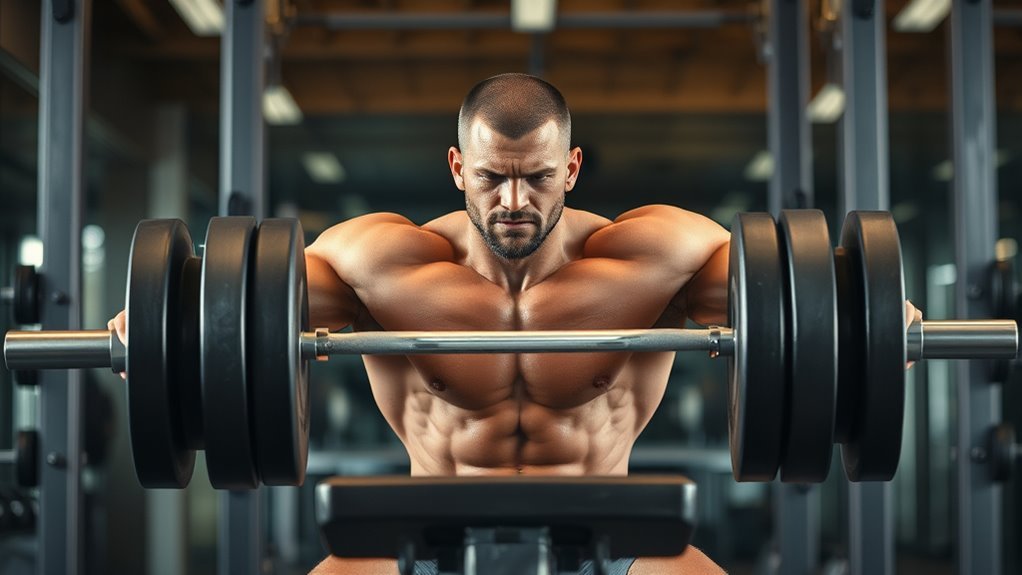
Although increasing your bench press weight often focuses on strength gains, optimizing your technique can deliver faster results. First, ensure your grip width allows your forearms to be vertical at the bottom of the lift, maximizing power and reducing injury risk.
Next, keep your shoulder blades squeezed together and down, creating a stable base and protecting your shoulders. Don’t forget to plant your feet firmly on the ground to maintain full-body tension throughout the lift.
Also, maintain a slight arch in your upper back, which shortens the bar path and improves leverage. Finally, control the bar’s descent, lowering it steadily to your chest before driving it upward explosively.
Incorporate Targeted Accessory Exercises

Mastering your bench press technique sets a strong foundation, but to push your limits further, you need to strengthen the muscles that support the lift. Incorporate targeted accessory exercises like tricep dips, close-grip bench presses, and overhead presses to build pressing power.
Don’t neglect your shoulders—lateral raises and face pulls can improve stability and prevent injury. Strengthen your upper back with rows and pull-ups to maintain proper form and control during the lift.
These exercises complement your main bench press routine by addressing weaker points and improving muscle balance. Focus on quality over quantity, performing accessory work with controlled movements and proper form.
Prioritize Recovery and Nutrition

Since your muscles need time to repair and grow stronger, prioritizing recovery and nutrition is essential for increasing your bench press quickly. Make sure you get enough sleep—aim for 7 to 9 hours each night—to support muscle recovery and hormone regulation.
Prioritize recovery and nutrition, including 7 to 9 hours of sleep, to boost your bench press strength.
After your workouts, fuel your body with a balanced meal containing protein and carbohydrates to replenish energy and build muscle tissue. Stay hydrated throughout the day to maintain performance and reduce fatigue.
Additionally, avoid overtraining by scheduling rest days and listening to your body’s signals. By focusing on recovery and nourishment, you’ll maximize your strength gains and reduce injury risk.
This way, you’ll be able to push heavier weights more consistently in the gym. Prioritize these aspects, and your bench press progress will accelerate.
Frequently Asked Questions
How Often Should I Increase the Weight on My Bench Press?
You should increase the weight on your bench press every 1-2 weeks when you can complete all reps with good form.
Don’t rush it. Gradual progress helps avoid injury and builds strength effectively over time.
Can Bench Pressing Help Improve Overall Athletic Performance?
Yes, bench pressing can boost your overall athletic performance by building upper body strength, improving power, and enhancing muscular endurance.
Incorporate it regularly, and you’ll notice better stability and force in many sports activities. It really helps with those explosive movements you need during games or training.
Is It Safe to Bench Press Every Day?
You shouldn’t bench press every day because your muscles need time to recover.
Instead, focus on training 2-3 times weekly. This way, you allow rest days to prevent injury and promote strength gains efficiently.
Should I Use a Spotter When Bench Pressing?
No, you don’t need a spotter—unless you enjoy living dangerously or want an audience for your heroic struggle.
Seriously, use a spotter to stay safe, push heavier, and avoid turning your bench press into a horror show.
What Equipment Is Best for Bench Pressing at Home?
You’ll want a sturdy bench, adjustable barbell rack, quality barbell, and weight plates. Consider resistance bands or dumbbells for variety.
Don’t forget safety collars and a spotter arm system if you’re lifting heavy alone. It’s all about keeping things safe and effective when you train at home.
Conclusion
If you want to bench press more weight quickly, why settle for slow progress? By optimizing your technique, incorporating targeted accessory exercises, and prioritizing recovery and nutrition, you’ll build strength efficiently and safely.
Remember, consistent effort combined with smart training choices will push your limits faster than you think. So, are you ready to transform your bench press and see real gains?
Keep focused and stay committed—you’ve got this! With the right approach, increasing your bench press weight doesn’t have to be a long, frustrating journey. Prioritize good form, add exercises that support your pressing muscles, and don’t overlook the power of rest and proper nutrition. These simple tips will help you bench press more weight quickly and effectively. Stay dedicated, and watch your strength grow!