How Many Amps Does a Treadmill Use?
You’ll typically need between 5 to 15 amps to power a treadmill. This depends on factors like the motor size and workout settings such as speed or incline.
Smaller models draw less current, while high-performance or commercial treadmills pull more. Sometimes, they can even peak near 20 amps at startup.
It’s important to check your home circuit capacity to avoid overloads for safety.
Want to understand how motor size and workout intensity affect power use? Keep exploring these details!
Key Takeaways
- Treadmills typically draw between 5 and 15 amps depending on model and motor size. Larger motors (e.g., 3.0 HP) and higher speeds increase amperage usage significantly.
- Plus, incline settings and workout intensity raise the treadmill’s power consumption and amps drawn. So, the more you push, the more power it needs.
- Most home circuits support 15–20 amps; dedicated circuits prevent overload and ensure safety. It’s a good idea to have a circuit just for your treadmill.
- Also, avoid extension cords and use proper outlets to handle treadmill amps and prevent electrical hazards. This keeps things safe and running smoothly.
Understanding Electrical Amps and Watts
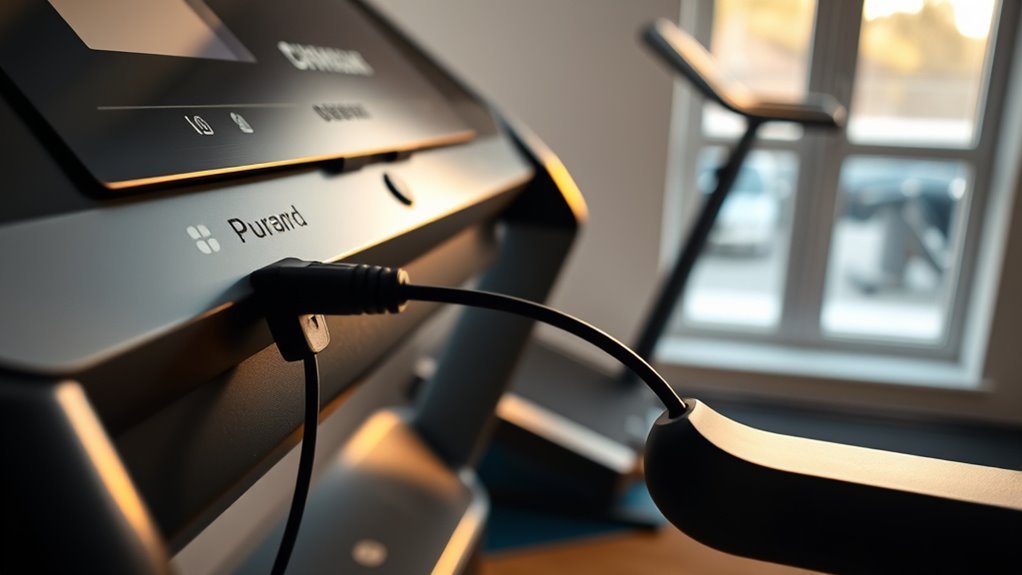
Before you can determine how many amps a treadmill uses, you need to understand the basics of electrical amps and watts. Amps measure the flow of electric current, or how much electricity is moving through a device.
Watts, on the other hand, represent the power consumption—the actual energy the device uses to operate. You can calculate amps by dividing watts by volts since amps equal watts divided by volts (Amps = Watts ÷ Volts).
For example, if a treadmill uses 1200 watts and your home voltage is 120 volts, the treadmill would draw about 10 amps. Knowing this relationship helps you grasp how much electrical current your treadmill requires and guarantees you don’t overload your circuit when using it.
Average Amperage Range for Home Treadmills
Now that you understand how amps relate to watts and volts, you can get a clearer picture of the typical electrical demand a home treadmill places on your circuit.
Most home treadmills draw between 5 to 15 amps during use. This range depends on the treadmill’s motor size and features, but knowing these averages helps you plan your electrical setup safely.
| Treadmill Type | Average Amperage Draw |
|---|---|
| Basic models | 5 – 8 amps |
| Mid-range models | 8 – 12 amps |
| High-performance | 12 – 15 amps |
| Peak startup draws | Up to 20 amps |
Keep these numbers in mind to avoid overloading your home circuit. That way, you also protect your treadmill’s performance.
Factors That Affect Treadmill Power Consumption
You’ll notice your treadmill’s power consumption changes based on its motor size, with bigger motors drawing more amps. Running at higher speeds or steeper inclines also increases energy use.
Plus, the longer you use it, the more electricity it consumes overall. So, it’s good to keep these factors in mind if you want to manage your energy bills better.
Motor Size Impact
Because the motor drives the treadmill belt and supports your workouts, its size directly affects how much power the machine consumes. Larger motors, typically measured in horsepower (HP), require more electrical current to operate.
So, if your treadmill has a 3.0 HP motor, it will draw more amps compared to a 2.0 HP motor, especially during intense use. You’ll notice that bigger motors handle heavier users and longer sessions better, but this comes with increased power consumption.
On the other hand, smaller motors use less electricity but might struggle under high loads or frequent use. When choosing a treadmill, consider the motor size carefully—it impacts both performance and your electricity bill.
Picking the right motor helps balance workout needs with energy efficiency. So, it’s worth thinking about what kind of workouts you plan to do and how often before making a choice.
Speed and Incline
Along with motor size, the speed and incline settings you choose play a big role in how much power your treadmill uses. When you increase the speed, the motor works harder to move the belt faster, drawing more amps.
Similarly, raising the incline forces the motor to push against gravity, boosting power consumption. If you’re jogging at a moderate pace on a flat surface, your treadmill will use less current than sprinting uphill.
So, if you want to manage electricity use, consider adjusting speed and incline thoughtfully. Keep in mind that small increases can noticeably impact your treadmill’s amp draw, especially on models with less powerful motors.
Usage Duration Effects
Although the treadmill’s power draw depends heavily on speed and incline, how long you use it also affects overall electricity consumption. The longer you run or walk, the more amps the treadmill will draw cumulatively.
Even if the current stays steady during use, extended sessions multiply total energy use. Short bursts might consume less power overall, but frequent long workouts add up.
Additionally, longer usage can cause the motor to heat up, occasionally increasing amperage slightly as it works harder to maintain performance. To manage electricity costs, consider limiting session length or splitting workouts into shorter intervals.
Monitoring your treadmill’s typical amperage and adjusting usage duration helps you control power consumption without sacrificing your fitness goals.
How Treadmill Motor Size Influences Amps Drawn
When you choose a treadmill, the motor size directly affects how many amps it will draw during use. Larger motors, measured in horsepower (HP), require more electrical current to operate. So, a 3.0 HP motor will generally pull more amps than a 1.5 HP motor.
This happens because bigger motors generate more power to handle intense workouts or heavier users, resulting in higher energy consumption. But here’s the good part—a bigger motor also runs more efficiently under heavy loads, which helps prevent strain and potential damage.
If you want to keep your electricity use low, picking a treadmill with a motor size that matches your workout needs is key. Oversized motors might draw unnecessary amps during lighter use, while undersized ones may struggle and overheat. So, it’s all about finding that sweet spot!
Impact of Speed and Incline Settings on Electricity Use
Motor size sets the baseline for how much electricity your treadmill uses, but your speed and incline settings can also make a noticeable difference. When you increase speed, the motor works harder, drawing more amps.
Similarly, raising the incline forces the motor to maintain power against gravity, increasing electricity use. Understanding this helps you manage energy consumption during workouts.
| Speed (mph) | Incline (%) | Approximate Amps Drawn |
|---|---|---|
| 2 | 0 | 6 |
| 4 | 0 | 8 |
| 4 | 5 | 9 |
| 6 | 0 | 10 |
| 6 | 10 | 12 |
Checking Your Home Circuit Capacity for Treadmill Use
Before plugging in your treadmill, you need to verify that your home’s electrical circuit can handle its power demands. Start by checking the circuit breaker for the room where you plan to use the treadmill. Most home circuits are rated for 15 or 20 amps.
Look for the amperage rating on the breaker switch. Next, find your treadmill’s power requirements, usually listed in the manual or on a label near the power cord. Compare the treadmill’s amp draw with your circuit’s capacity.
Avoid plugging the treadmill into a shared circuit with other high-power devices, as this can overload the circuit and trip the breaker. If you’re unsure, it’s a good idea to consult an electrician. They can assess your wiring and recommend any necessary upgrades before you start using your treadmill regularly.
Tips to Reduce Electricity Usage While Running a Treadmill
Once you confirm your circuit can handle the treadmill’s power needs, you can focus on lowering its electricity use. Start by adjusting the speed and incline—running at moderate speeds and lower inclines uses less power.
Ensure your circuit supports your treadmill, then reduce electricity by running at moderate speeds and lower inclines.
Turn off the treadmill completely when not in use instead of leaving it on standby; this prevents unnecessary energy drain. Regularly maintain your treadmill by lubricating the belt and tightening parts to reduce motor strain.
Use energy-efficient models if possible, as they consume less electricity. Also, consider shorter workout sessions or breaking them into intervals to cut power consumption.
Finally, plug your treadmill into a dedicated outlet to avoid overloads, ensuring it runs efficiently without wasting energy. These steps help you save electricity while keeping your workouts effective.
Safety Precautions When Using High-Amperage Treadmills
Because high-amperage treadmills draw significant power, you need to take extra safety measures to prevent electrical hazards. Ignoring these precautions can lead to risks like electrical shocks or circuit overloads.
To stay safe, follow these guidelines:
- Make sure your treadmill is plugged into a dedicated circuit to avoid tripping breakers.
- Regularly inspect the power cord for damage or wear and replace it immediately if you spot issues.
- Avoid using extension cords or power strips, as they may not handle the current safely.
- Keep the treadmill and power outlet dry, preventing moisture-related electrical problems.
Frequently Asked Questions
Can Treadmill Amperage Affect My Home’s Electrical Bill?
Yes, treadmill amperage can affect your electrical bill since higher amps mean more power consumption.
If you use it frequently or for long periods, your home’s energy cost will increase accordingly.
Do Different Treadmill Brands Use Varying Amounts of Amps?
Just like cars sip fuel differently, treadmill brands draw varying amps based on motor size and features.
You’ll notice some use more power during intense workouts, so checking specs helps you pick one that fits your electrical setup.
How Does Treadmill Age Impact Its Amperage Draw?
As your treadmill ages, it usually draws more amps because parts wear out and motors become less efficient. You’ll notice increased energy consumption and potential performance drops.
Are Amps Drawn Different When Using Treadmill Programs?
Like a rollercoaster, amps drawn on treadmill programs can rise and fall. You’ll notice higher draw during intense settings and lower during gentle ones.
This variation helps the motor adjust to your workout’s demands smoothly. So, it’s pretty normal for the amps to change as you switch up your pace or incline.
Can Low Amperage Treadmills Provide Effective Workouts?
Yes, low amperage treadmills can provide effective workouts. You’ll get quality exercise by adjusting speed and incline, focusing on consistency and intensity rather than power alone.
They’re efficient for home use without sacrificing workout benefits. So, even if the motor isn’t super powerful, you can still have a solid workout!
Conclusion
Now that you know how many amps a treadmill uses, you can run your workouts like a pro—without blowing a fuse like it’s the dawn of the electric age.
Remember, your treadmill’s power draw depends on motor size, speed, and incline, so keep an eye on those settings. By managing your circuit capacity and using energy-saving tips, you’ll keep your electricity bill in check while staying fit.
Monitoring the amps your treadmill uses helps you avoid overloading your home electrical system. Plus, it ensures you get the best performance without unexpected interruptions. So, stay safe, be mindful of your treadmill’s power needs, and enjoy happy, efficient running every time!