
How Much Does a Treadmill Stress Test Cost Step by Step
You’ll usually pay between $200 and $1,200 for a treadmill stress test. The cost depends on where you go and whether you have insurance. It’s a good idea to start with a doctor’s consultation.
Then, you’ll pay for the test itself, and sometimes there are additional lab fees. Insurance can help lower your out-of-pocket costs, but make sure to check your plan first.
If money is tight, don’t hesitate to ask about payment plans or discounts. These options can make the expense easier to manage.
Keep reading to discover helpful tips on saving money and what to expect during your treadmill stress test. It’s all about being prepared and informed!
Key Takeaways
- The treadmill stress test cost ranges from $200 to $1,200 depending on location, facility type, and test complexity. Outpatient clinics typically charge $200-$400, while hospital-based tests can cost $500-$1,200.
- Insurance coverage may reduce out-of-pocket expenses through copayments or coinsurance. Often, you’ll need pre-authorization before the test.
- Additional fees may include physician consultations, lab tests, and use of specialized monitoring equipment. So, keep in mind these extras might add up.
- It’s a good idea to verify your insurance benefits ahead of time. Also, explore payment plans and compare prices at different facilities to manage costs effectively.
What Is a Treadmill Stress Test?

What exactly is a treadmill stress test? It’s a diagnostic tool that helps your doctor assess how well your heart functions during physical activity. You’ll walk on a treadmill while your heart rate, blood pressure, and electrical activity are continuously monitored.
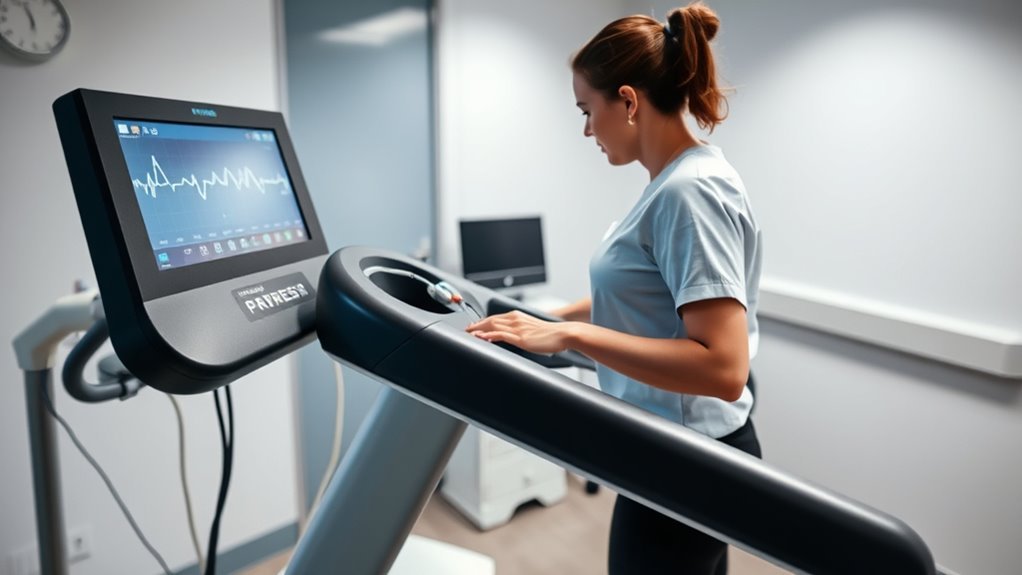
The test gradually increases in intensity, simulating exercise to reveal potential heart problems that might not be obvious when you’re at rest. During the test, you’ll wear electrodes connected to an electrocardiogram (ECG) machine, which records your heart’s rhythm.
Intensity ramps up while electrodes monitor your heart’s rhythm to uncover hidden issues during exercise simulation
This helps your healthcare provider detect issues like coronary artery disease or irregular heartbeats. The treadmill stress test is safe, non-invasive, and usually takes about 10 to 15 minutes once you start walking.
It provides valuable insights into your cardiovascular health. So, it’s a pretty straightforward way to see how your heart handles stress.
Factors Influencing the Cost of a Treadmill Stress Test
Because several factors come into play, the cost of a treadmill stress test can vary widely depending on your location, the facility you choose, and whether you have insurance coverage.
If you live in a metropolitan area, prices tend to be higher than in rural regions due to increased operational costs. The type of facility—whether a hospital, outpatient clinic, or specialized cardiac center—also impacts pricing, as hospitals often charge more.
Your insurance plan plays a pivotal role; some cover most of the expense, while others require higher out-of-pocket payments. Additionally, any additional tests or consultations done alongside the treadmill stress test can increase the overall cost.
Understanding these factors helps you anticipate expenses and plan accordingly before scheduling your test. It’s always a good idea to check with your provider and insurance company ahead of time to avoid surprises.
Average Price Range for a Treadmill Stress Test in the United States

Knowing the factors that influence the cost of a treadmill stress test can help you better understand the average price range you might encounter.
Typically, in the United States, you can expect to pay between $200 and $1,200 for the test. This range depends on where and how the test is performed.
In the U.S., treadmill stress test costs typically range from $200 to $1,200 based on location and procedure.
Here’s what you might see:
- Basic treadmill stress tests at outpatient clinics costing around $200-$400
- Hospital-based tests ranging from $500 to $1,200
- Additional fees for monitoring or specialist consultation
Geographic location also plays a role, with urban areas often having higher prices. Plus, equipment quality and test complexity can affect the final cost.
Knowing this, you can better prepare financially and ask the right questions when scheduling your treadmill stress test.
How Insurance Affects the Cost of the Test
Although the sticker price of a treadmill stress test can seem high, your out-of-pocket cost often depends on your insurance coverage. If your insurance plan covers diagnostic tests, you’ll likely pay only a portion of the total cost, such as a copayment or coinsurance.
However, coverage varies widely—some plans require pre-authorization, while others may not cover the test if it’s considered routine or preventive. You should check with your insurer beforehand to understand your benefits and any requirements.
Also, in-network facilities usually cost less than out-of-network ones, so choosing providers within your network can save you money. Knowing these details helps you avoid unexpected bills and ensures you’re prepared financially for your treadmill stress test.
Additional Fees That May Be Included
You might encounter extra charges beyond the basic treadmill stress test fee. Lab tests, physician consultation, and equipment or facility use can all add to your total cost.
It’s important to ask your provider about these potential fees upfront. That way, you won’t be caught off guard later on.
Possible Lab Charges
Additional lab charges can add to the overall cost of your treadmill stress test. These fees often cover specialized analyses and materials required to complete the evaluation.
Knowing what could be included helps you anticipate the total expense. Common possible lab charges are:
- Blood sample analysis to check enzyme levels
- Electrolyte panel for heart function assessment
- Oxygen saturation tests during exercise
- Additional ECG lead placements or recordings
- Contrast dye for imaging, if needed
These items reflect the extra steps labs might take to ensure accurate results. Each can increase your bill, depending on your specific health needs and the facility’s protocols.
It’s always a good idea to ask your provider for a detailed breakdown to avoid surprises. That way, you know exactly what to expect.
Physician Consultation Fees
When you undergo a treadmill stress test, the physician’s consultation often comes with its own fees. Before and after the test, your doctor will review your medical history, explain the procedure, and interpret the results.
These consultations are essential for ensuring the test is appropriate for you and for making informed decisions based on the findings. The cost for these services varies depending on the physician’s expertise, location, and the complexity of your case.
Sometimes, this fee is bundled with the test, but often it’s billed separately. Knowing this helps you anticipate the total expense.
Make sure to ask your healthcare provider or insurance company about consultation fees upfront to avoid surprises when the bill arrives.
Equipment and Facility Costs
Although the treadmill stress test itself is a key component, you’ll often face extra charges for the equipment used and the facility where the test takes place.
These costs cover the maintenance and use of specialized machines, as well as the space and resources needed for accurate monitoring.
When budgeting, keep in mind these possible additional fees:
- Advanced ECG monitors that track your heart’s activity
- Blood pressure cuffs and pulse oximeters
- Computer systems for data analysis and storage
- Use of a specialized testing room with emergency equipment
- Sterilization and upkeep of medical devices
Understanding these charges helps you anticipate the full cost beyond just the test, making sure you’re prepared financially.
Steps to Prepare Financially for Your Treadmill Stress Test
You’ll want to start by budgeting for the test and understanding what your insurance covers. Check with your provider to see if the treadmill stress test is included and what out-of-pocket costs you might face.
If needed, ask the medical facility about payment plans to make the expense more manageable. It can really help to spread out the cost instead of paying it all at once.
Budgeting for Medical Tests
Since medical expenses can add up quickly, planning your budget ahead of time is essential for managing the cost of a treadmill stress test. You can take practical steps to prepare financially and avoid surprises.
Start by estimating the full cost, including consultation fees and follow-up visits. Set aside funds specifically for this test to keep your finances organized.
Consider these actions: review your monthly budget for available medical funds, and research payment plans or discounts offered by providers.
Also, allocate emergency savings for unexpected additional tests. Using a dedicated savings account or envelope for medical expenses can really help.
Finally, track all related expenses for accurate budgeting and future planning. It’s a smart way to stay on top of your finances without stress.
Insurance Coverage Insights
Before scheduling your treadmill stress test, check your insurance policy to understand what costs it covers. Some plans fully cover the test if your doctor orders it for a medical reason, while others might require copayments or coinsurance.
Make sure to verify if your plan needs prior authorization; failing to get this could mean higher out-of-pocket expenses. Also, confirm which providers are in-network to avoid surprise charges.
Don’t forget to ask whether related services, like ECG monitoring or lab fees, are included. If you’re unsure, call your insurer’s customer service for a clear breakdown.
Taking these steps helps you avoid unexpected bills and eases your financial planning. That way, you can focus on your health without added stress.
Payment Plan Options
Although treadmill stress tests are vital for diagnosing heart conditions, their costs can add up quickly. So, exploring payment plan options can really ease your financial burden.
Many healthcare providers offer flexible plans tailored to your budget. This means you can pay in manageable installments rather than a big lump sum, which is often easier to handle.
Before your test, make sure to ask about things like interest-free payment periods and deferred payment options. Also, check on monthly installment amounts, online payment portals, and eligibility criteria for plans.
These options help you avoid financial stress and make sure you don’t delay essential testing. Don’t hesitate to discuss your situation openly with the billing department—they usually want to help you get the care you need without overwhelming costs.
Preparing ahead means you can focus on your health, not your wallet. It’s always better to have a plan in place so you can stay worry-free.
Ways to Lower the Cost of a Treadmill Stress Test
If you want to reduce your out-of-pocket expenses for a treadmill stress test, there are several strategies you can consider. First, check if your insurance covers the test and confirm any copays or deductibles.
You can also shop around by comparing prices at different facilities, as costs vary widely. Asking for a cash-pay discount or negotiating the fee upfront might help if you’re uninsured.
Scheduling the test at an outpatient center instead of a hospital often lowers the price. Additionally, some clinics offer financial assistance programs based on income, so don’t hesitate to inquire.
Finally, getting a referral from your primary care doctor can sometimes ensure the test is medically necessary. This can increase the chance insurance will cover it and reduce your overall cost.
What to Expect During the Test and Its Impact on Billing
While you undergo a treadmill stress test, medical staff will monitor your heart rate, blood pressure, and breathing as you walk or jog on a treadmill that gradually increases in intensity.
You’ll experience electrodes attached to your chest to track your heart’s electrical activity, and a blood pressure cuff tightening periodically for readings. The treadmill speed and incline will increase in a controlled way.
Staff will be ready to stop the test if you feel discomfort. After the exercise, there’s a cool-down phase to monitor your recovery.
These steps ensure accurate results but also influence billing. The complexity, duration, and any extra monitoring can increase costs.
Knowing what to expect helps you anticipate charges and communicate better with your healthcare provider and insurance company.
Frequently Asked Questions
How Long Does a Treadmill Stress Test Usually Take?
A treadmill stress test usually takes about 10 to 15 minutes. But with preparation and recovery, you’ll spend around 30 to 45 minutes total.
You’ll be monitored closely throughout to keep everything safe. It’s a good way to check how your heart handles exercise.
Are There Any Risks Associated With a Treadmill Stress Test?
Yes, you might experience mild risks like chest pain, dizziness, or irregular heartbeat during a treadmill stress test.
However, medical staff closely monitor you to manage any complications quickly and keep you safe throughout the procedure. So, while there are some risks, they’re well managed by the team watching over you.
Can Children or Elderly Patients Undergo a Treadmill Stress Test?
Like a tailor fitting a suit, doctors adjust treadmill stress tests for children and elderly patients. You can undergo the test if your health allows, but doctors often modify intensity to match your age and condition safely.
They make sure it’s comfortable and safe for you. So, whether you’re young or older, the test is designed to fit your needs just right.
What Types of Medical Conditions Require a Treadmill Stress Test?
You’ll need a treadmill stress test if you have chest pain, suspected heart disease, arrhythmias, or unexplained shortness of breath.
It helps doctors assess your heart’s response to exercise and detect potential issues early.
Basically, it’s a way to see how your heart handles stress in real time.
This test can give important clues that other exams might miss.
How Soon Will I Get the Results After the Test?
You’ll usually get preliminary results right after the test, as the doctor reviews your heart’s response.
Detailed analysis and final results typically take a day or two, depending on your healthcare provider’s process.
Conclusion
Understanding the nuances of a treadmill stress test’s cost can seem complex, but with careful consideration and clear communication, you can confidently control your financial commitment. By understanding factors, fees, and insurance impacts, you’ll be equipped to ease expenses effectively.
Preparing proactively prevents payment pitfalls, paving the path to peace of mind. So, stay savvy, seek savings, and step smartly into your stress test with steady steps and strong strategy.
When it comes to the cost of a treadmill stress test, knowing what to expect helps you avoid surprises. Check with your insurance provider about coverage and out-of-pocket expenses. Also, ask your healthcare provider about any additional fees.
By staying informed and planning ahead, you can manage the treadmill stress test cost step by step without stress. This approach ensures a smoother experience and better control over your healthcare spending.