How Much Does a Gym Bar Weigh?
You’ll find most standard Olympic barbells weigh about 45 pounds (20 kg), while women’s bars are lighter at around 35 pounds (15 kg). Curl bars typically range from 15 to 25 pounds, and trap or hex bars sit between 45 and 55 pounds.
Smith machine bars and specialty bars vary more depending on design and materials used.
Knowing these differences helps you pick the right bar for your workouts, and understanding the details behind each type can improve your lifting experience.
Key Takeaways
– Standard Olympic barbells typically weigh 20 kg (44 lbs) and measure about 7 feet in length.
These are the most common bars you’ll see in gyms.
– Women’s Olympic bars usually weigh around 15 kg (33 lbs) with a slightly smaller diameter.
They’re designed to be a bit lighter and easier to handle.
– Curl bars generally weigh between 15-25 lbs, depending on style and material.
So, you might notice some variation depending on the bar you pick up.
– Trap and hex bars typically weigh between 45-55 lbs, influenced by shape and design.
These bars are built for specific exercises and can feel a bit heavier.
– Bar weight varies by material, length, diameter, and added features like handles or pads.
It’s always good to check the weight before you start lifting!
Standard Olympic Barbell Weight
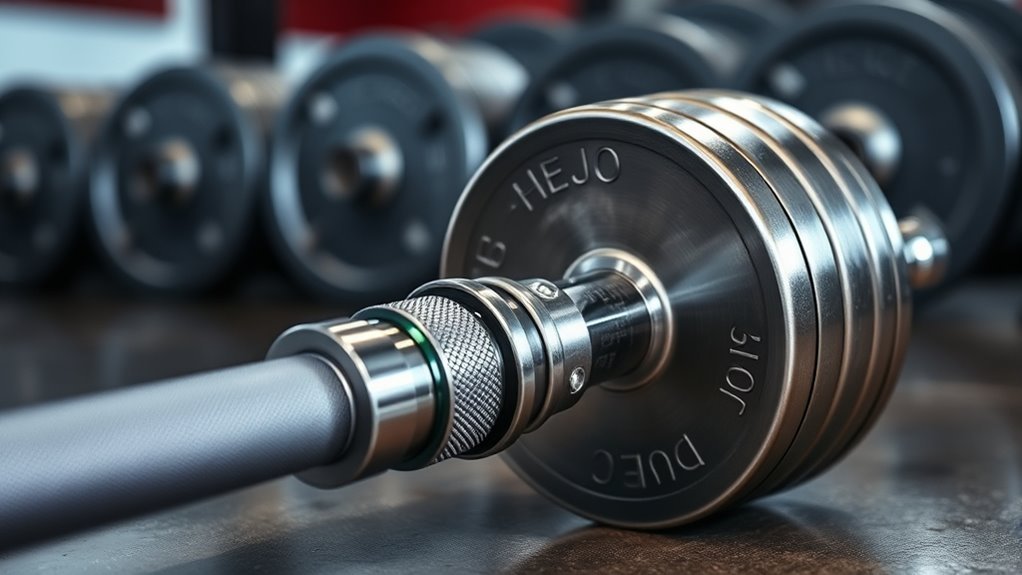
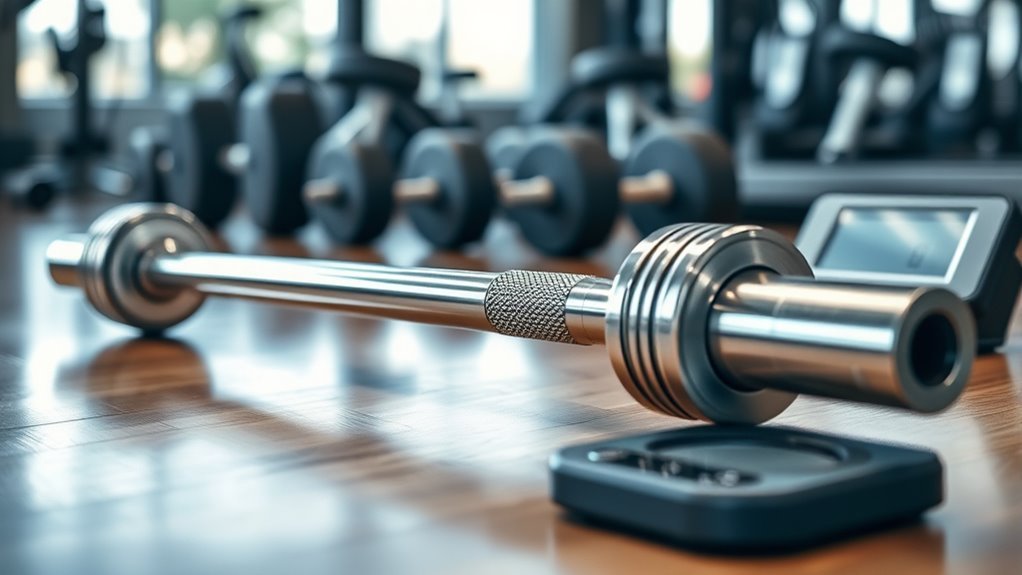
How much does a standard Olympic barbell weigh? You’ll find that the classic men’s Olympic barbell typically weighs 20 kilograms, which is about 44 pounds. This weight is standardized for competitions worldwide and guarantees consistency in training and events.
The bar itself measures around 7 feet long and has a diameter of 28 millimeters, giving you a solid grip. When you pick it up, you’ll notice it’s made from high-quality steel, designed to handle heavy loads without bending.
The sleeves where you add plates rotate smoothly, which helps reduce strain on your wrists during lifts. Knowing this weight helps you plan your workouts better, especially when you’re adding weight plates for squats, deadlifts, or presses.
Women’s Olympic Barbell Weight
You’ll find that a women’s Olympic barbell typically weighs 15 kilograms, which is lighter than the men’s standard 20-kilogram bar. This difference helps accommodate strength variations while maintaining competition fairness.
Understanding these specifications can guide you in choosing the right bar for your workouts. It’s pretty helpful to know what you’re working with, right?
Standard Weight Specifications
Although women’s Olympic barbells are designed to meet specific standards, their weight differs from the men’s bars to accommodate different strength levels and competition requirements. Typically, a women’s Olympic barbell weighs exactly 15 kilograms (33 pounds). This standard guarantees consistency across competitions and training sessions.
The bar’s length is generally 2.01 meters (about 6.6 feet), which is slightly shorter than the men’s version to suit different grip widths. The bar’s diameter is also narrower, usually around 25 millimeters, making it easier for you to grip securely.
These specifications help you perform lifts safely and effectively, whether you’re training or competing. Meeting these standards is vital to maintaining fairness and uniformity in women’s weightlifting events worldwide.
Comparison With Men’s Bar
When comparing women’s Olympic barbells to men’s, you’ll notice distinct differences in weight and size tailored to each group’s needs. Women’s bars typically weigh 15 kilograms (33 pounds), while men’s bars weigh 20 kilograms (44 pounds).
The women’s bar is shorter, around 6.5 feet long compared to the men’s 7.2 feet, making it easier to handle during lifts. The diameter of the women’s bar is also smaller, usually 25 millimeters versus 28 millimeters for men’s bars, providing a better grip for smaller hands.
Despite these differences, both bars meet Olympic standards for quality and performance. Understanding these distinctions helps you choose the right bar for your strength level and comfort. This ensures safer and more effective training sessions.
Curl Bar Weight
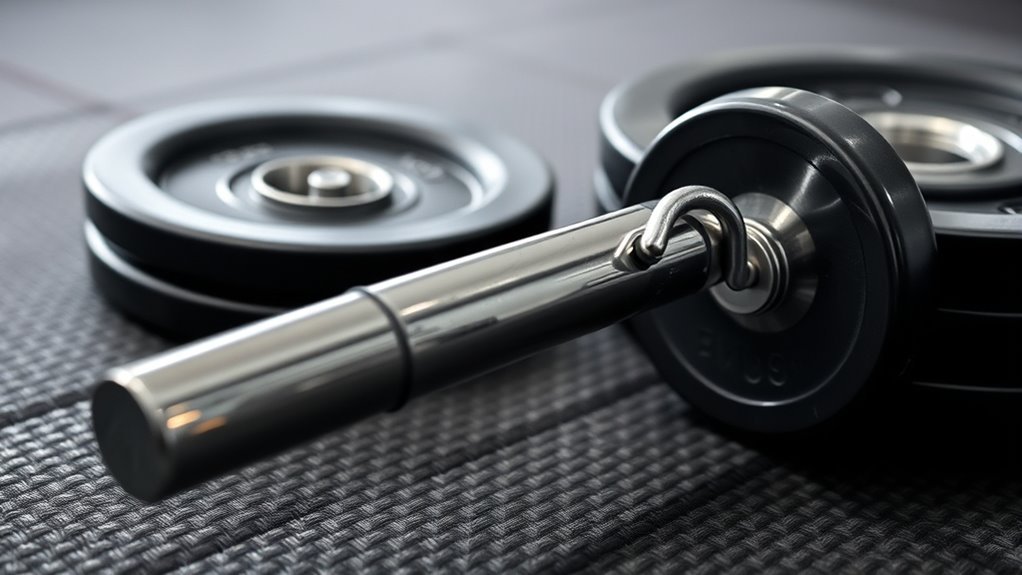
Several types of curl bars exist, each varying slightly in weight. Most standard curl bars weigh between 15 to 25 pounds, making them lighter than a typical men’s straight barbell.
You’ll find that EZ curl bars, designed with angled grips for wrist comfort, usually weigh around 20 pounds. Olympic curl bars, built for heavier loads and durability, can weigh closer to 25 pounds.
If you’re choosing a curl bar, consider the weight as it impacts your workout setup and the total load you can lift. Keep in mind that lighter bars allow more room for added plates, while heavier bars reduce the amount of weight you need to load.
Knowing this helps you tailor your training to your strength and goals. So, pick the right bar that fits how you want to train!
Trap Bar Weight
How much does a trap bar weigh, and why does it matter for your workout? Typically, a standard trap bar weighs around 45 to 55 pounds. Knowing this helps you accurately track your lifting progress and adjust your weights accordingly.
Unlike straight bars, trap bars have a unique shape that changes your lifting mechanics. It’s pretty cool how that works!
Here’s why the trap bar’s weight matters:
- It influences your total load, so you don’t overestimate your lift.
- It affects your grip and body positioning during exercises like deadlifts.
- It helps maintain safety by ensuring balanced weight distribution.
All these things combined make a big difference in how effective and safe your workout is!
Hex Bar Weight
If you’re using a hex bar, you’ll want to know it typically weighs around 45 to 55 pounds. However, weights can vary depending on the brand and design.
Understanding these differences helps you track your progress more accurately. It’s always a good idea to check the specific weight of your bar before you start lifting.
Standard Hex Bar Weight
A standard hex bar typically weighs around 45 pounds, making it a popular choice for lifters who want to add variety to their workout without drastically changing the load. This weight allows you to comfortably perform exercises like deadlifts, shrugs, and farmer’s carries with a balanced feel.
Knowing the exact weight helps you track your progress more accurately.
Here’s why the standard 45-pound hex bar benefits you:
- Consistent Load: Matches the weight of a standard Olympic barbell, so you don’t have to adjust your plate selection.
- Balanced Design: The hexagonal shape centers the weight around you, improving form and reducing injury risk.
- Versatility: Suitable for various lifting styles, making it a staple in many gyms.
Variations in Hex Bars
Although many hex bars weigh around 45 pounds, you’ll find variations designed to suit different training needs and preferences. Some hex bars are lighter, around 35 pounds, ideal if you want to focus on speed or technique without heavy resistance.
Others can weigh up to 55 pounds or more, built with thicker steel for durability and added challenge. You might also encounter specialty hex bars tailored for specific exercises or body types, featuring adjustable handles or different dimensions.
When choosing a hex bar, consider your strength level, workout goals, and the bar’s weight to guarantee it complements your routine. By selecting the right variation, you can maximize your performance and reduce injury risk while lifting.
Smith Machine Bar Weight
When you step up to a Smith machine, you’ll notice its bar feels different from a standard Olympic barbell. Unlike free weights, the Smith machine bar is often counterbalanced, which means it may not weigh what you expect.
Typically, Smith machine bars weigh between 15 to 25 pounds, lighter than the Olympic bar’s 45 pounds. This difference impacts how you plan your workout and add weight plates.
Consider these key points about Smith machine bars:
- They are usually fixed on rails, limiting movement to a vertical plane.
- Counterbalance systems reduce the bar’s effective weight.
- Weight can vary markedly between brands and models.
Always check your gym’s specific Smith machine bar weight before starting your lifts. It’s a small step that can make a big difference in your training.
Specialty Bars and Their Weights
If you’ve ever tried different types of bars beyond the standard Olympic barbell, you know specialty bars come in many shapes and weights tailored for specific lifts. For example, a trap bar usually weighs around 45 to 55 pounds, letting you perform deadlifts with a neutral grip.
A curl bar, designed for arm exercises, often weighs between 15 to 25 pounds, making it lighter and easier to handle. You’ll find safety squat bars weighing about 55 pounds, offering padding and handles to ease shoulder strain during squats.
Meanwhile, a Swiss bar typically weighs 25 to 35 pounds, allowing a close or neutral grip for pressing movements. Each specialty bar’s weight complements its unique design, helping you target muscles effectively without sacrificing form.
Factors Affecting Gym Bar Weight
Because gym bars serve different purposes, their weight varies based on several key factors. When you’re choosing a bar, it helps to understand what influences its weight so you can pick the right one for your workouts.
Gym bars come in various weights tailored to different workout needs and purposes.
Here are the main factors that affect gym bar weight:
- Material: Bars made from steel or aluminum differ in weight, with steel bars generally being heavier.
- Length and Diameter: Longer and thicker bars weigh more, impacting balance and load capacity.
- Design and Purpose: Specialty bars, like safety squat bars or trap bars, have unique shapes and added components, increasing their weight compared to standard bars.
Knowing these factors lets you select a bar that matches your training needs without surprises. It makes your workout more effective and safe.
Frequently Asked Questions
How Do I Clean and Maintain My Gym Bar?
You clean your gym bar by wiping it with a dry cloth after each use and using a mild detergent for deeper cleaning. This helps keep the bar free from sweat and grime.
You should regularly oil the sleeves to prevent rust and inspect for any damage. Doing this keeps your bar in great shape and safe to use.
Can I Use a Gym Bar for Home Workouts?
You absolutely can use a gym bar for home workouts—it’s versatile and effective.
Studies show 70% of home exercisers see strength gains using bars. Just make certain you have enough space and proper flooring for safety.
What Is the Lifespan of a Typical Gym Bar?
You can expect a typical gym bar to last 5-10 years with proper care.
Just make sure to clean it regularly and avoid rust. Doing that will keep it strong and reliable for countless workouts in your home gym.
Are There Bars Designed Specifically for Beginners?
Yes, there are bars designed specifically for beginners. You’ll find lighter, shorter bars with reduced weight and grip size, making them easier to handle.
This helps you build strength and technique safely before moving to standard bars. It’s a great way to get comfortable with the movements without feeling overwhelmed.
How Do I Choose the Right Gym Bar for My Goals?
Choosing your gym bar is like finding the perfect dance partner; match it to your goals—lighter bars for beginners or Olympic bars for strength.
Check grip, weight, and durability to guarantee it moves with you, not against you.
You want something that feels right in your hands and helps you progress smoothly.
Think about what you’re aiming for, and pick a bar that supports that journey.
Conclusion
Just like the steady beat of a drum guides a dancer, knowing the weight of each gym bar sets the rhythm for your workout. Whether you lift the classic Olympic bar or the sleek curl bar, each carries its own story and challenge.
Embrace these weights as your trusted partners, helping you build strength and confidence with every lift. Remember, understanding your bar’s weight is the first step to mastering your fitness journey.
When you know how much a gym bar weighs, you can plan your workouts better and avoid injury. It lets you track progress and adjust your training to meet your goals. So, whether you’re using a standard barbell or a specialty bar, knowing its weight helps you lift smarter and safer. This knowledge truly sets the foundation for effective strength training and consistent improvement.