How Do You Oil a Treadmill in 10 Simple Steps
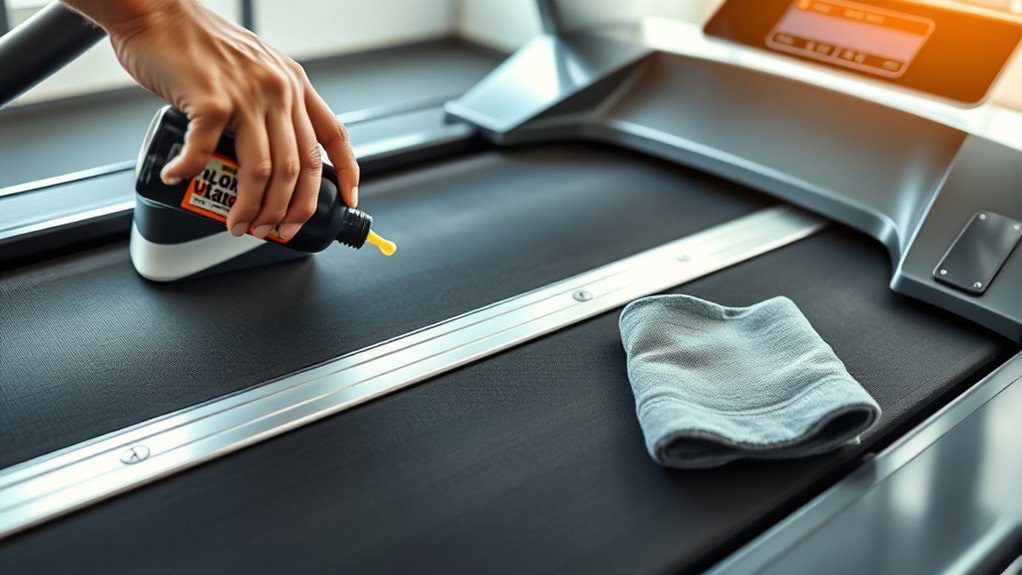
To oil your treadmill properly, start by gathering a silicone-based lubricant and unplugging the machine safely. This is crucial for your safety and to prevent any electrical issues during the process.
Next, locate the treadmill belt and gently lift it. Take a moment to clean the underside of the belt with a damp cloth to remove any dust or debris that could affect performance.
Now, apply the lubricant evenly along the deck contact area. Be careful not to use too much, as excess oil can cause buildup and damage.
Once done, carefully lower the belt back into place, making sure it’s properly aligned.
After that, plug the treadmill back in and turn it on. Run it at a low speed to help spread the lubricant evenly across the deck.
Finally, wipe off any leftover oil to prevent slippery spots or residue buildup.
Keep following along for a detailed, step-by-step guide to perfect treadmill maintenance.
Key Takeaways
- Unplug the treadmill and make sure the area around it is dry and safe before you start any maintenance.
- Next, lift the treadmill belt gently. This will expose the deck where you’ll apply the lubricant.
- Use the recommended silicone-based lubricant and apply it evenly under the belt along the deck surface.
- Spread the lubricant thoroughly. Be sure to wipe away any excess to avoid buildup later on.
- Finally, reposition the belt properly. Then, plug the treadmill back in and run it at a low speed to help distribute the lubricant evenly.
Gather the Necessary Materials
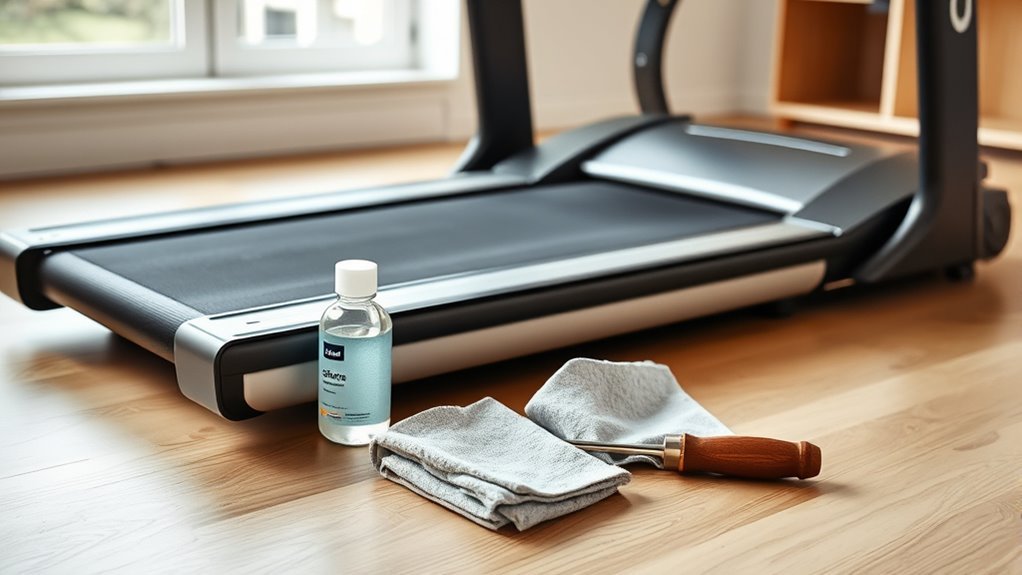
To oil your treadmill properly, you’ll need a few essential materials. First, grab a silicone-based treadmill lubricant—this type is safe and effective for most belts. Avoid using WD-40 or cooking oils, as they can damage your machine.
Next, have a clean cloth or paper towels handy to wipe away any dust or excess oil. You might also want a small flathead screwdriver to lift the belt gently if necessary.
Finally, check your treadmill’s manual to confirm the recommended lubricant type and the amount to use. Having everything ready before you start will make the process smooth and efficient, preventing any interruptions or mistakes while you oil your treadmill.
Unplug Your Treadmill
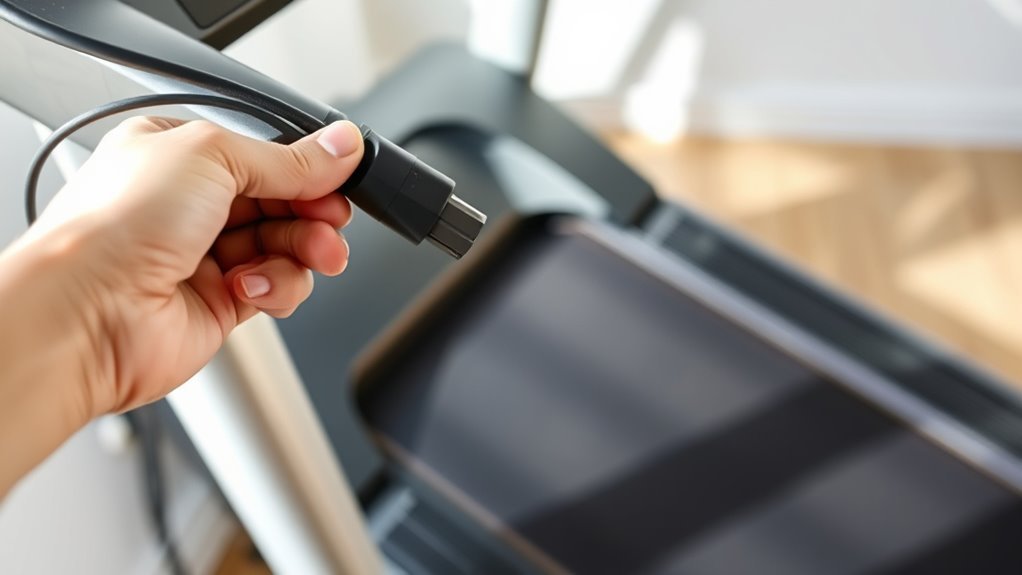
Once you’ve gathered all your materials, the next step is to unplug your treadmill. This is essential for your safety and to prevent any electrical damage while you perform maintenance.
Before you begin, make sure the treadmill is completely turned off. Then, carefully pull the plug from the outlet without yanking the cord. Keep the area around the power source clear to avoid tripping hazards.
Here’s a quick checklist for unplugging your treadmill safely:
- Turn off the treadmill using the power switch.
- Firmly grasp the plug, not the cord, to disconnect.
- Ensure the power cord is away from water or damp areas.
Unplugging your treadmill properly sets the stage for safe and effective oiling. So, take your time and do it right!
Locate the Belt and Deck
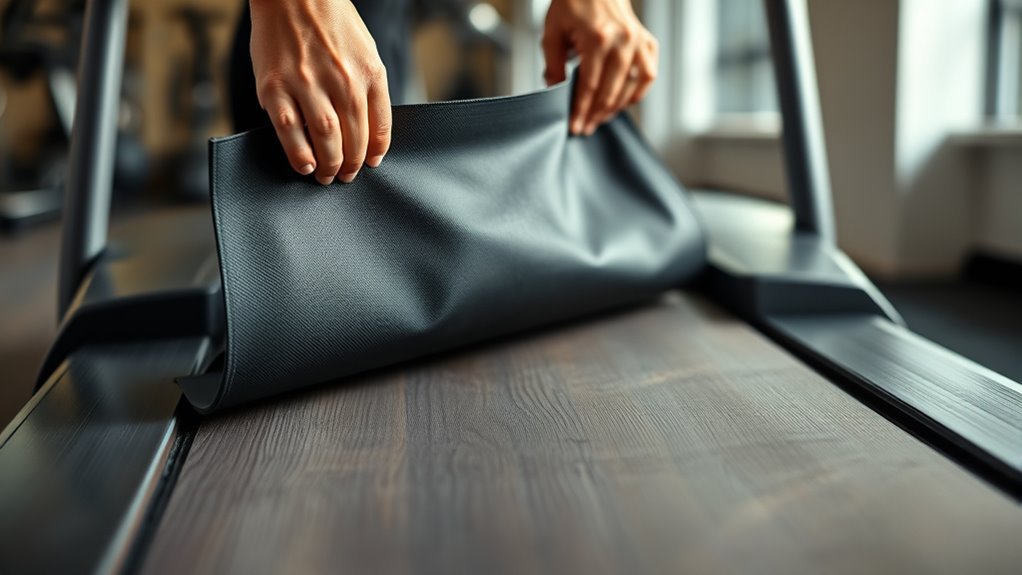
Where exactly do you find the belt and deck on your treadmill? The belt is the moving surface you walk or run on, typically a long, continuous loop stretched tightly around rollers.
Underneath this belt lies the deck, a flat, sturdy platform that supports the belt and helps reduce friction. To locate these parts, look at the treadmill’s walking area: the belt is the top layer you see, while the deck is directly beneath it, usually hidden from immediate view.
You might need to gently lift or slide the belt to expose the deck, but only after unplugging the machine. Knowing where the belt and deck sit is essential for applying lubricant correctly and ensuring your treadmill runs smoothly and lasts longer.
Clean the Treadmill Belt
Before applying any lubricant, you should clean the treadmill belt thoroughly to remove dust, dirt, and sweat buildup. This guarantees the lubricant adheres properly and the belt runs smoothly.
Start by unplugging your treadmill for safety. Then, grab a soft cloth and some mild soap mixed with water. Avoid harsh chemicals that can damage the belt.
Here’s a quick checklist to clean your treadmill belt effectively:
- Wipe down the belt surface with a damp cloth to remove loose debris.
- Use a mild soap solution to clean any sticky spots or sweat stains.
- Dry the belt completely with a clean, dry cloth to prevent moisture buildup.
Taking these steps keeps your treadmill in top shape and ready for lubrication. It’s really worth the effort!
Lift the Belt Carefully
When you lift the treadmill belt, make sure to handle it gently to avoid damaging it. Be careful not to pinch your fingers between the belt and the deck.
Taking your time and lifting slowly will keep both you and the equipment safe. It’s worth going slow to avoid any accidents or damage.
Proper Belt Handling
Although it might seem simple, lifting the treadmill belt carefully is essential to avoid damage. You want to handle the belt gently to prevent tears, misalignment, or wear that could shorten its lifespan.
When lifting, use a steady, controlled motion and avoid jerking or pulling too hard.
Keep these tips in mind for proper belt handling:
- Always lift the belt from the center to distribute pressure evenly.
- Use clean hands or wear gloves to avoid transferring dirt or oils onto the belt.
- Support the belt fully as you lift to prevent creases or bends.
Avoid Pinching Fingers
Since lifting the treadmill belt requires careful attention, you’ll want to keep your fingers clear to avoid painful pinches. When you grip the belt’s edges, make sure your fingers are positioned away from the moving parts underneath.
Pinching can happen easily if you’re not paying close attention or if you rush. Use your fingertips to gently lift the belt just enough to apply the lubricant, never forcing it upward.
If the belt is tight, adjust your hand placement to avoid squeezing the edges too hard. Always stay mindful of where your hands are during the process, especially if the treadmill belt shifts unexpectedly.
Taking these precautions will protect your fingers and make your treadmill maintenance safer and more comfortable. Just go slow and keep an eye on your fingers the whole time.
Use Gentle Lifting
To protect both your treadmill and yourself, you’ll want to lift the belt gently and with control. This prevents damage to the belt and avoids sudden jerks that could cause injury.
When you lift the belt, use your fingers to carefully separate it from the deck without forcing it. Here are some tips to keep in mind:
- Lift slowly and steadily to avoid snapping the belt.
- Use your palms and fingers to support the belt evenly.
- Avoid sharp or sudden movements that could pinch your skin.
Being gentle also helps you spot any wear or debris underneath. Taking your time during this step ensures a smooth oiling process and extends the life of your treadmill.
Apply the Lubricant Evenly
Make sure you pick the right lubricant designed for your treadmill to keep it running smoothly.
Apply it evenly under the belt to avoid any uneven wear or slipping.
Don’t use too much—over-lubricating can cause problems instead of fixing them.
Choose Proper Lubricant Type
When you choose the right lubricant for your treadmill, you’ll guarantee smooth operation and extend its lifespan. Not all lubricants are created equal, so picking the proper type is essential.
Most treadmills require a silicone-based lubricant because it reduces friction without damaging the belt or deck. Avoid using WD-40 or motor oil, as these can harm the machine.
Consider these points when selecting your lubricant:
- Use a treadmill-specific silicone lubricant for the best results.
- Check your treadmill’s manual for recommended brands or types.
- Avoid petroleum-based or oil-based lubricants to prevent damage.
Choosing the right lubricant ensures your treadmill runs quietly and efficiently. Plus, it saves you from costly repairs down the line.
Spread Lubricant Uniformly
Although applying lubricant might seem simple, you’ll need to spread it evenly to guarantee every part of the treadmill belt receives proper coverage.
Start by lifting the belt slightly and applying a thin line of lubricant along the center. Then, manually rotate the belt to distribute the lubricant across its entire width.
This ensures smooth operation and prevents friction hotspots that could wear down the belt prematurely. It’s a small step that makes a big difference!
| Feeling | Action | Result |
|---|---|---|
| Relief | Even application | Smooth running |
| Confidence | Proper coverage | Longer treadmill life |
| Satisfaction | Balanced spread | Reduced noise |
Avoid Excessive Application
Spreading lubricant evenly helps your treadmill run smoothly, but applying too much can cause problems. Excess lubricant can attract dust and debris, making your belt slippery and causing premature wear.
It might also drip into the motor area, leading to damage or electrical issues. To avoid these problems, apply just the right amount and distribute it carefully.
Keep these tips in mind when applying lubricant:
- Use the manufacturer’s recommended quantity—not more, not less.
- Apply small dots or a thin line along the belt’s underside for even coverage.
- Wipe away any excess lubricant promptly with a clean cloth.
Spread the Lubricant on the Deck
Before you start, make sure the treadmill is unplugged to prevent any accidents. Once you’ve applied the recommended amount of lubricant, use your fingers or a clean cloth to gently spread it evenly across the deck.
Focus on the area directly under the belt, covering the entire length and width where the belt contacts the deck. Don’t rush this step—an even layer ensures smooth operation and reduces wear.
Apply lubricant evenly across the full belt contact area for smooth, wear-free treadmill operation.
Avoid pushing too hard, as you don’t want to damage the deck’s surface. If you notice any excess lubricant pooling, wipe it away to prevent slipping or buildup.
Spreading the lubricant properly helps maintain your treadmill’s performance and prolongs its life by minimizing friction between the belt and the deck. So, take your time and do it right!
Lower the Belt Back Into Place
How do you guarantee the treadmill belt sits correctly after lubrication? Simply lower it back onto the deck carefully to avoid shifting or bunching.
When doing this, make sure to align the belt evenly on both sides to prevent any misalignment during use. Gently press down along the length of the belt to help it settle smoothly onto the lubricated deck.
Also, check that the belt runs freely without any tension or resistance before proceeding. That way, you know everything is set just right!
Plug in and Run the Treadmill
Now that the belt is back in place, plug in your treadmill carefully to avoid any electrical issues.
Turn it on and start with a slow, gentle run to warm up the machine. This initial run helps distribute the oil evenly under the belt for smooth performance.
Power Up Safely
Although you’ve finished oiling your treadmill, you shouldn’t plug it in or start it without double-checking that everything is dry and properly reassembled. Moisture can cause electrical issues or damage internal components.
Take a moment to inspect the belt, deck, and motor cover to ensure they’re securely in place and free from excess oil.
Before powering up, make sure to:
- Confirm the power cord is undamaged and firmly connected.
- Clear the area around the treadmill to prevent accidents.
- Verify the safety key is inserted properly.
Following these steps ensures your treadmill powers up safely, protecting both you and the machine.
Once you’re confident everything is set, you can plug it in and get ready for your next workout.
Initial Warm-Up Run
Before you start your treadmill, plug it in and set it to a low speed for a brief warm-up run; this helps distribute the oil evenly beneath the belt and guarantees smooth operation.
Turn the treadmill on and let it run at about 1 to 2 miles per hour for 3 to 5 minutes. This gentle pace allows the lubricant to spread uniformly across the deck and belt, preventing any dry spots that could cause wear or noise.
Avoid increasing speed too soon, as the oil needs time to settle properly. After the warm-up, turn off the treadmill and check for any unusual sounds or resistance.
If everything feels smooth, your treadmill is ready for regular use. This ensures a longer lifespan and a quieter workout experience.
Wipe Off Excess Lubricant
How much lubricant should you leave on your treadmill belt? Just enough to create a thin, even layer that reduces friction without causing buildup.
After applying the lubricant and running the treadmill briefly, you might notice some excess on the sides or surface. It’s important to wipe off this extra lubricant to prevent dust and dirt from sticking, which can damage the belt over time.
Here’s how you can handle excess lubricant:
- Use a clean, dry cloth to gently wipe the belt edges and surface.
- Avoid using water or cleaning solutions that might interfere with the lubricant.
- Wipe immediately after the warm-up run to catch excess before it attracts debris.
Frequently Asked Questions
How Often Should I Oil My Treadmill?
You should oil your treadmill every three to six months, depending on usage.
If you run daily or for long sessions, oil it more often. Check the manufacturer’s guidelines to keep your treadmill running smoothly and quietly.
What Type of Lubricant Is Best for Treadmills?
Think of your treadmill as a dancing partner—silicone-based lubricants keep the moves smooth without sticky residue.
You’ll want a clear, non-petroleum silicone spray designed specifically for treadmills to maintain peak performance effortlessly.
Can I Use Household Oils Instead of Treadmill Lubricant?
You shouldn’t use household oils on your treadmill because they can damage the belt and motor. Stick to a silicone-based treadmill lubricant for smooth performance.
Plus, using the wrong oil might void your warranty or lead to costly repairs down the line. So, it’s really best to keep it simple and use the recommended lubricant.
Will Oiling My Treadmill Improve Its Performance?
Yes, oiling your treadmill will improve its performance by reducing friction between the belt and deck. You’ll notice smoother operation, less noise, and extended lifespan.
Just make sure you use the right lubricant for best results. It’s a simple step that can make a big difference in how your treadmill runs.
How Do I Know if My Treadmill Needs Oiling?
You’ll know your treadmill needs oiling if it sounds louder, feels sticky, or the belt doesn’t move smoothly.
Check your manual’s recommended schedule, too—regular maintenance keeps it running quietly and efficiently.
Conclusion
Now that you’ve carefully cleaned, lifted, and lubricated your treadmill, you’ll enjoy smoother, safer strides and a quieter, longer-lasting machine. By regularly rejuvenating the belt and deck with a light layer of lubricant, you’re preventing pesky problems and promoting peak performance.
So, stay steady, stay safe, and keep your cardio companion cared for—because a well-oiled workout wonder works wonders every time you step on it! Regular treadmill maintenance like oiling not only extends the life of your equipment but also ensures a better running experience. Keep up with these simple steps, and your treadmill will reward you with consistent, reliable workouts for years to come.