7 Tips to Choose a Power Rack for Your Home Gym
When choosing a power rack for your home gym, start by measuring your space carefully. This ensures the rack fits comfortably and safely without overcrowding your workout area. It’s a key step you don’t want to skip!
Next, think about your weight capacity needs. Consider both your current lifting goals and any future progress. Picking a rack that can handle heavier weights means it won’t wobble or wear out as you get stronger.
Look for a power rack made from strong steel construction.
Adjustable safety features are a must for protecting yourself during lifts. Also, check if the rack is compatible with the accessories you want to use.
Ease of assembly and portability are important, too. You want something you can set up without a hassle and move if needed.
Finally, set a budget that balances quality and features, so you get the best value for your money.
Keep reading to uncover more tips on making the best choice for your home gym setup!
Key Takeaways
- Measure your available space and ceiling height to ensure the power rack fits comfortably with room for movement.
- Choose a power rack with a weight capacity that supports your current and future lifting goals safely.
- Prioritize racks made from high-quality steel with sturdy base support for optimal stability and durability.
- Select adjustable safety features like pins or straps that match your height and lifting style for secure workouts.
- Verify compatibility with desired accessories such as pull-up bars or dip attachments to enhance workout versatility.
Assess Your Available Space
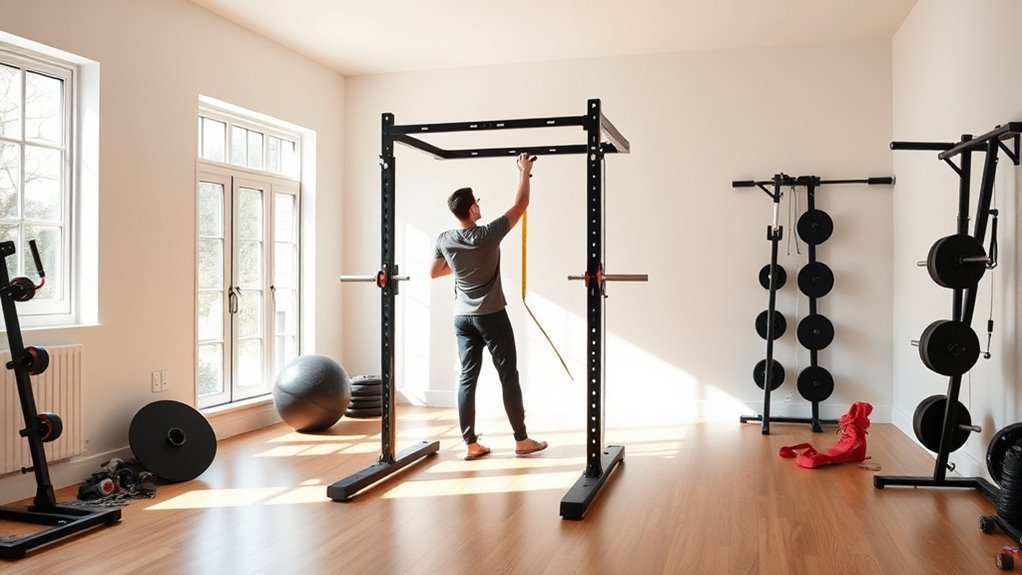
Where will you put your power rack? Before buying, measure the space carefully to guarantee your rack fits comfortably. Consider both the floor area and ceiling height; most racks need at least 7 feet of vertical clearance.
Measure your space carefully, including height, to ensure your power rack fits comfortably and safely.
Don’t forget to leave extra room around it for safe movement and exercise. Think about the flooring type, too—hard surfaces may require mats to protect both the floor and your equipment.
Also, check for nearby obstacles like doors, windows, or furniture that could limit your workout range. If your space is tight, look for compact or adjustable racks.
Taking these steps helps you avoid surprises and ensures your power rack fits perfectly in your home gym.
Determine Your Weight Capacity Needs
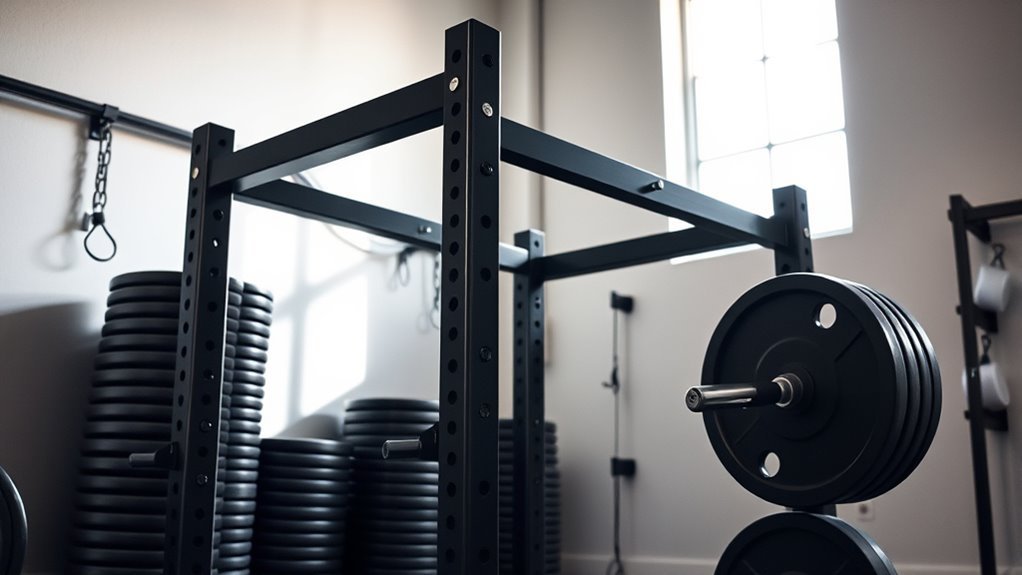
Before choosing a power rack, you should figure out the maximum weight it needs to handle. Think about the heaviest lifts you plan to do, including the barbell and added plates.
If you’re just starting out, consider your projected progress over time rather than your current max. This guarantees your rack can support future gains without needing an upgrade.
Most racks list their weight capacity—often between 500 and 1,000 pounds—but don’t just pick the highest number. Match the capacity to your lifting style and goals for safety and durability.
Consider the Rack’s Stability and Build Quality
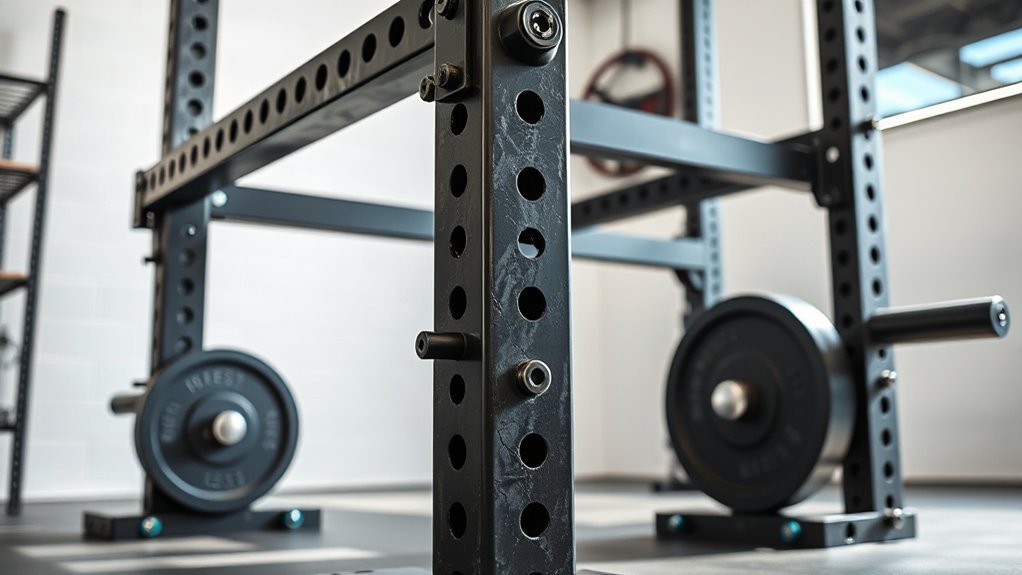
You’ll want to check the material strength to make certain the rack can handle heavy loads without bending or wobbling. Look for a sturdy base support design that keeps the rack stable during intense workouts.
This way, you’ll stay safe and confident while lifting. It’s all about having that peace of mind when you’re pushing yourself hard.
Material Strength
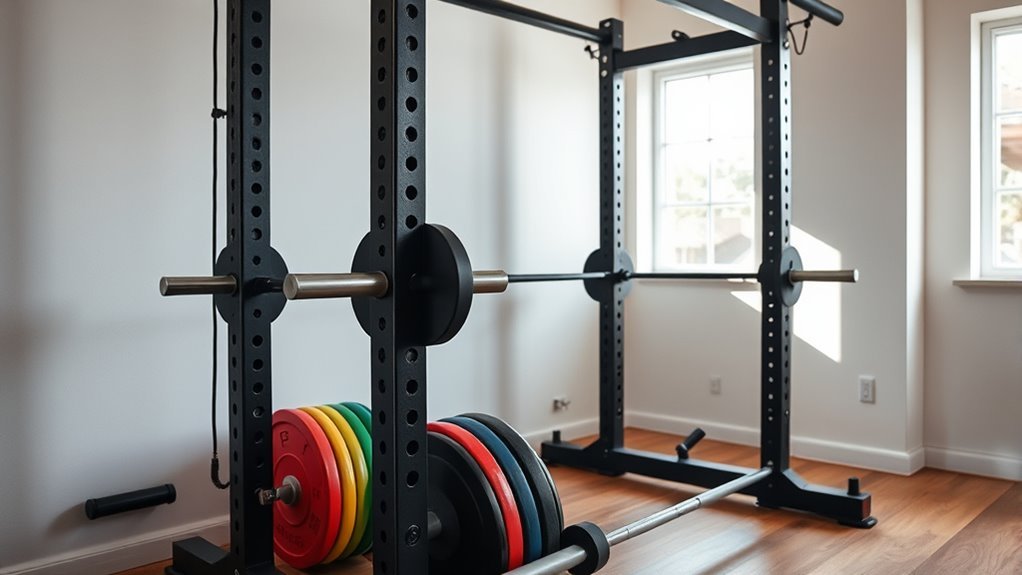
Although power racks come in various designs, their material strength plays an essential role in guaranteeing stability and safety during workouts. When choosing your power rack, look for high-quality steel with a thick gauge, typically 11 to 14 gauge, to withstand heavy lifting without bending or wobbling.
Avoid racks made from thinner materials, as they can compromise your safety and durability over time. Pay attention to the welds and joints; clean, solid welds indicate better craftsmanship and longevity.
Powder-coated finishes add corrosion resistance, keeping the rack sturdy and looking new. Remember, a strong material foundation reduces vibrations and enhances your confidence while lifting, so don’t settle for less.
Prioritize material strength to ensure your power rack supports your fitness goals safely and effectively.
Base Support Design
When choosing a power rack, the base support design plays a crucial role in ensuring stability and overall build quality. You want a rack with a wide, sturdy base that prevents wobbling during heavy lifts.
Look for racks with reinforced steel plates or crossbars at the base, which enhance durability and keep the structure grounded. Avoid models with thin or flimsy bases, as they can compromise your safety and affect your lifting performance.
Additionally, check if the rack includes floor mounting options or adjustable feet to keep it stable on uneven surfaces. Remember, a solid base support design not only protects you but also extends the lifespan of your power rack.
Look for Adjustable Safety Features
Because safety is a top priority during heavy lifts, choosing a power rack with adjustable safety features can protect you from injury. These features let you customize the rack’s safety bars or spotter arms to match your height and lifting style, reducing the risk of accidents.
Adjustable safety pins or straps catch the barbell if you fail a lift, giving you peace of mind.
Here’s a quick look at common adjustable safety features:
| Safety Feature | Benefit |
|---|---|
| Safety Pins | Secure barbell at set heights |
| Spotter Arms | Extend protection range |
| Safety Straps | Absorb impact, quieter catch |
| Adjustable J-Hooks | Customize rack height for lifts |
Make sure the adjustments are easy to use and sturdy for maximum protection. It’s always better when you can tweak things quickly and know they’ll hold up under pressure.
Check Compatibility With Accessories
To get the most out of your power rack, you’ll want to guarantee it works well with the accessories you plan to use. Check if your rack supports attachments like dip bars, pull-up bars, band pegs, or landmine attachments.
Compatibility ensures you can customize your workouts without hassle. Measure the dimensions and mounting points of both the rack and the accessories to avoid fitting issues.
Also, verify weight limits on accessory attachments to maintain safety. If you’re considering adding a cable pulley system or safety spotter arms, confirm your chosen rack accommodates these upgrades.
Evaluate Ease of Assembly and Portability
You’ll want to contemplate how long it takes to put the power rack together and if it comes with clear instructions.
Also, check if the rack has wheels or other features that make moving it easier. These factors can save you time and effort when setting up or relocating your equipment.
Assembly Time Required
When choosing a power rack, consider how much time and effort it takes to assemble. A complicated setup can delay your workout plans and cause unnecessary frustration.
Look for racks with clear instructions and minimal parts to speed up assembly. Some models come partially assembled, which can save you hours.
Also, check if you’ll need special tools or just basic ones you already have.
Keep these points in mind:
- Number of components: fewer parts usually mean faster assembly.
- Instruction clarity: well-illustrated guides reduce mistakes.
- Pre-assembled sections: can considerably cut down setup time.
Portability Features
Although power racks are typically bulky, some models offer portability features that make moving and storing them easier. When choosing your rack, check if it has wheels or casters. These allow you to roll it around instead of lifting, saving your back and effort.
Also, look for racks that can be disassembled quickly without special tools, so you can store them flat or transport them when needed. Consider the weight of the rack too—a lighter frame usually means easier portability.
If you plan to move your rack between rooms or store it after workouts, prioritize these features. Remember, a portable power rack doesn’t mean sacrificing stability; many models balance sturdiness with convenience, giving you flexibility in your home gym setup.
Set a Realistic Budget and Compare Options
Before making a purchase, understand how much you’re willing to invest in a power rack and identify the features that matter most to you. Setting a realistic budget keeps your options focused and prevents overspending on unnecessary extras.
Once you know your budget, compare power racks by balancing cost with essential features like durability, size, and accessories. Don’t forget to check customer reviews for insights on long-term value. Remember, the most expensive rack isn’t always the best fit for your needs.
Consider these when comparing options: material quality and weight capacity, space requirements, and ease of assembly. Also, think about included or optional attachments like pull-up bars or safety catches.
This approach guarantees you get a power rack that fits both your workout goals and your wallet. It’s all about finding the right balance for you!
Frequently Asked Questions
Can a Power Rack Be Used for Cardio Workouts?
You can use a power rack for cardio by incorporating bodyweight exercises like jumping jacks or step-ups. It’s not traditional cardio equipment, but with creativity, you’ll get your heart rate up effectively during workouts.
Think of it as mixing things up a bit. By adding some dynamic moves around the rack, you keep your routine fresh and your body moving. It’s a smart way to make the most out of your space and equipment!
How Often Should Power Rack Bolts Be Tightened?
You should tighten your power rack bolts every few months or after heavy use to keep it secure. Check them regularly, especially if you notice any wobbling or unusual noises during workouts.
Don’t skip this step! It’s a simple way to make sure your rack stays safe and stable while you’re lifting.
Are Power Racks Safe for Beginners Without Supervision?
Yes, power racks can be safe for beginners without supervision if you learn proper form and use safety bars correctly. Starting with lighter weights and progressing gradually is key.
Always prioritize safety and consider getting guidance when possible. It really helps to build confidence and ensure you’re doing things right.
What Maintenance Is Required for Powder-Coated Racks?
You’ll want to regularly wipe down your powder-coated rack to prevent dust and sweat buildup.
Check for chips or scratches, then touch them up to avoid rust.
Lubricate moving parts occasionally to keep everything working smoothly.
Can Power Racks Be Customized With Paint or Decals?
Yes, you can customize power racks with paint or decals. Just make sure to use paint suitable for metal and avoid covering safety labels.
Decals offer a non-permanent way to personalize your rack without damaging it. So, if you want to switch up the look later, decals are a great option!
Conclusion
Choosing the right power rack can transform your home gym experience. Did you know that 70% of home gym owners say stability is their top priority? So, focus on a sturdy, adjustable rack that fits your space and weight needs.
Don’t forget to check compatibility with accessories and ease of assembly. These details can make a big difference when setting up and using your rack regularly.
With the right budget and a bit of research, you’ll find a power rack that keeps you safe and motivated for every workout. Remember, investing in a quality power rack means better stability, durability, and a more enjoyable training experience at home. This way, your home gym not only meets your fitness goals but also stays versatile and reliable for years to come.