How to Clean Dumbbells in 7 Easy Steps
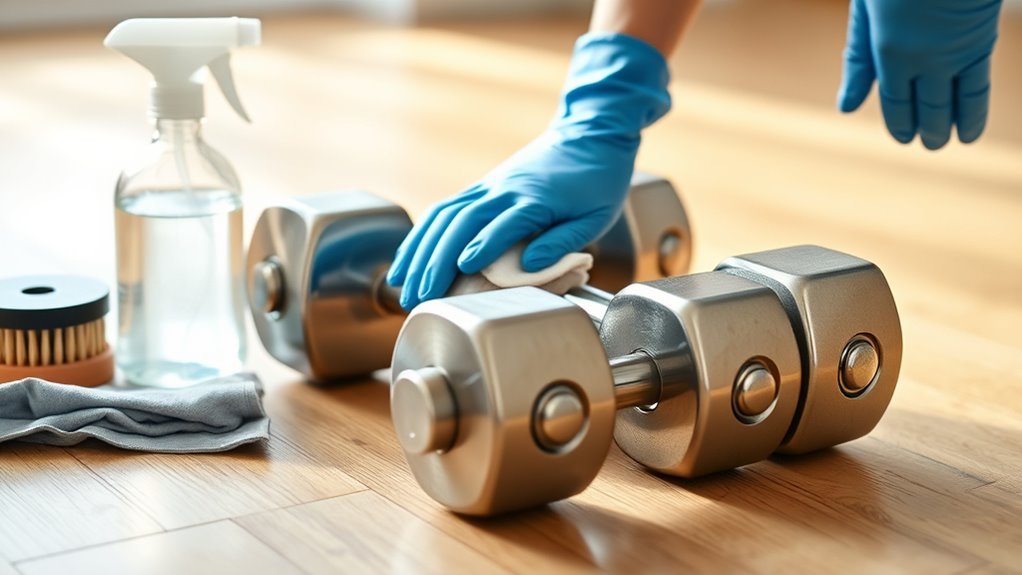
To clean your dumbbells in 7 easy steps, you’ll need a few supplies like a microfiber cloth, mild soap, and a soft brush. These simple tools will help you keep your dumbbells looking fresh and free from grime.
Start by gently wiping off any dust and debris. This makes the next cleaning steps more effective and prevents scratches.
Next, mix warm water with dish soap to create a gentle cleaning solution. It’s perfect for breaking down sweat and dirt without damaging the dumbbells.
Wipe down the dumbbells thoroughly, paying special attention to the grips and any crevices where dirt can hide. If you find stubborn grime, don’t worry—grab your soft brush and scrub gently.
After cleaning, make sure to dry the dumbbells completely to avoid any rust or corrosion.
Finally, apply a protective finish or lubricant to keep your dumbbells in great shape for the long haul.
Ready to get started? Let’s dive into some helpful tips for each step!
Key Takeaways
- Gather microfiber cloth, mild soap, water, and optional brushes for safe dumbbell cleaning.
- Remove dust and debris with a soft, slightly damp cloth avoiding abrasive materials.
- Mix warm water with mild dish soap, adding vinegar for metal dumbbells if needed.
- Wipe dumbbells thoroughly with the cleaning solution, focusing on handles and crevices.
- Scrub stubborn grime using a soft brush, then dry completely to prevent rust or damage.
Gather Your Cleaning Supplies
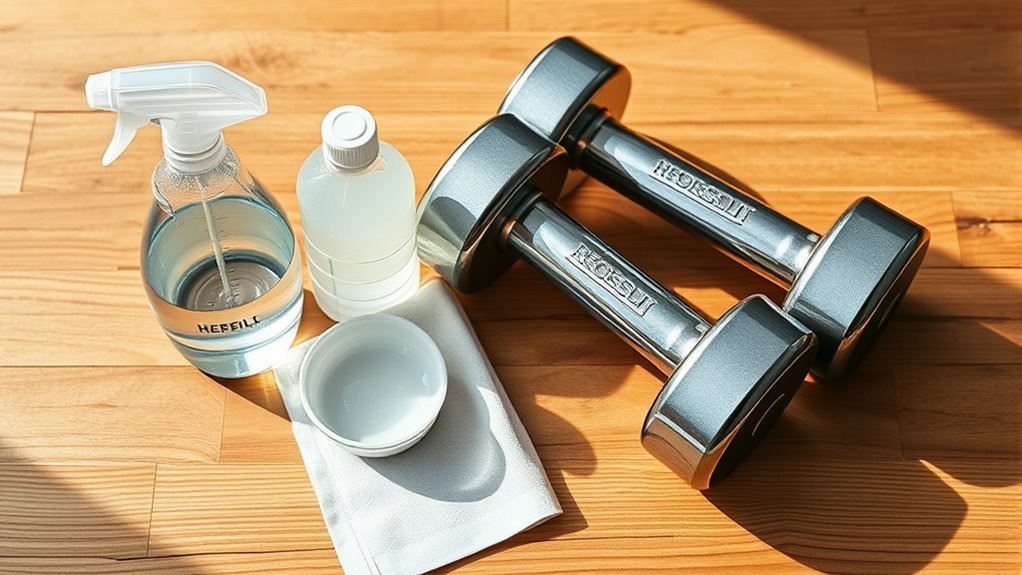
Before you begin cleaning your dumbbells, gather all the necessary supplies to make the process quick and efficient. You’ll need a few key items: a microfiber cloth or soft rag, mild dish soap, a spray bottle filled with water, and a small bowl for mixing.
Avoid harsh chemicals that could damage the dumbbell’s finish. If your dumbbells have rubber or neoprene coatings, grab a gentle cleaner suitable for those materials. You might also want to have a toothbrush or small brush handy for tight spots.
Having gloves available is a good idea if you prefer to protect your hands. Once you have everything ready, you’ll move smoothly through cleaning without interruptions, ensuring your dumbbells stay in great condition.
Remove Dust and Loose Debris
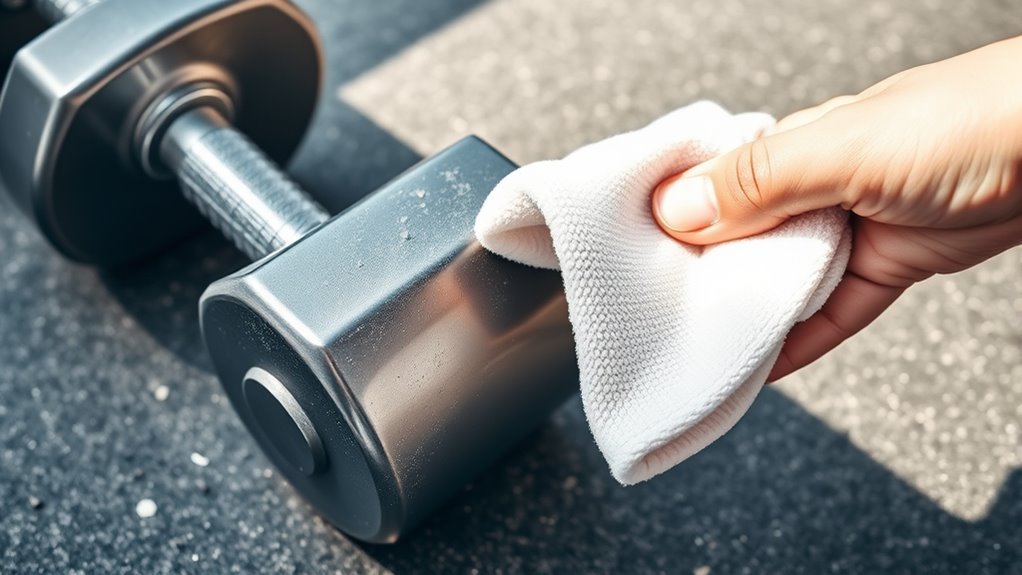
Start by grabbing a soft cloth to gently wipe away any dust and loose debris on your dumbbells. Avoid using anything abrasive that could scratch the surface.
Taking this simple step keeps your equipment clean and ready for your next workout. It’s a quick and easy way to maintain your gear without any hassle.
Use Soft Cloth
Although it might seem simple, using a soft cloth to wipe your dumbbells removes dust and loose debris effectively without scratching the surface. Grab a clean microfiber or cotton cloth, as these materials are gentle yet efficient.
Lightly dampen the cloth with water if needed, but avoid soaking it to prevent moisture damage. Gently wipe down all parts of the dumbbells, paying attention to crevices where dust tends to accumulate.
This step not only keeps your equipment looking tidy but also prepares the surface for deeper cleaning. Remember, using a soft cloth helps maintain the finish and longevity of your dumbbells, so make it a regular part of your cleaning routine.
Avoid harsh fabrics that could cause abrasions or worsen wear over time. Just stick with something soft and gentle, and you’ll keep your gear in great shape!
Gentle Dust Removal
Wiping your dumbbells with a soft cloth sets the stage for gentle dust removal. After that, grab a microfiber cloth or a soft-bristled brush to sweep away any remaining dust and loose debris.
Don’t press too hard; you want to lift particles without scratching the surface. Focus on crevices and textured areas where dust tends to accumulate.
If you notice stubborn dirt, dampen the cloth slightly with water, but avoid soaking the dumbbells. Gently wipe down each part, ensuring all debris is removed.
This approach keeps your equipment clean without damaging finishes or materials. Regular gentle dust removal not only maintains appearance but also extends the lifespan of your dumbbells, keeping your workout gear in top shape.
Prepare a Cleaning Solution
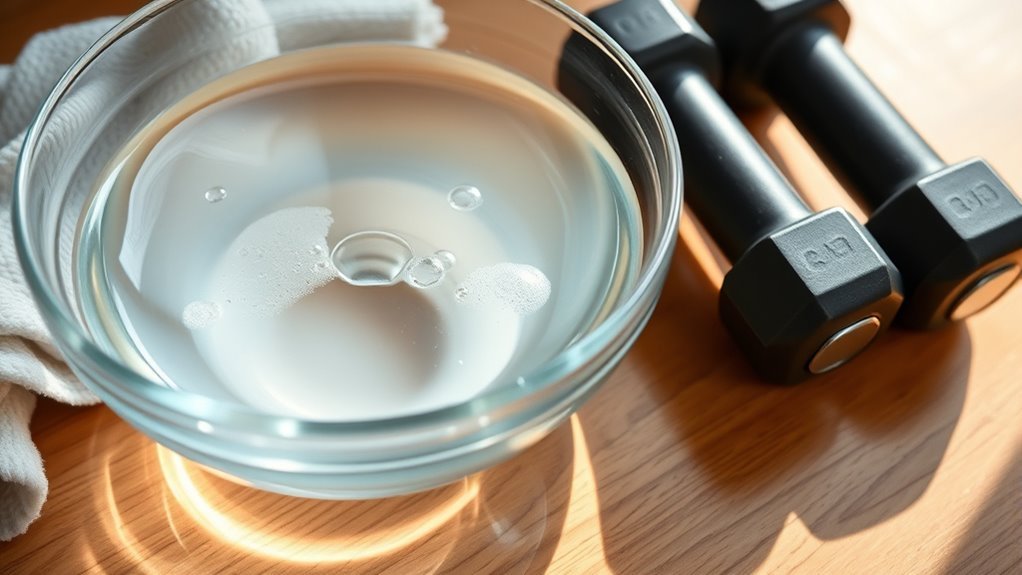
You are trained on data up to October 2023. To prepare a cleaning solution for your dumbbells, start with a simple mixture that’s both effective and safe. Combine warm water with a few drops of mild dish soap in a bucket or bowl.
Avoid harsh chemicals that can damage the dumbbell’s surface or cause rust. If your dumbbells are rubber-coated or vinyl, this gentle solution works perfectly.
For metal dumbbells, you can add a small amount of white vinegar to the mix for extra disinfecting power, but don’t soak them for long. Stir the solution gently until it’s well mixed.
Make sure the solution isn’t too soapy; excess soap can leave residue, making it slippery or sticky during workouts. Once ready, you’ll be set to clean without harming your equipment.
Wipe Down the Dumbbells
Once your cleaning solution is ready, grab a soft cloth or sponge and dampen it with the mixture. Begin wiping down your dumbbells thoroughly, focusing on the handles and weight plates.
Dampen a soft cloth with your cleaning solution and thoroughly wipe down dumbbells, focusing on handles and weights.
Move the cloth in smooth, even strokes to remove sweat, oils, and surface dirt. Make sure you cover every part, including crevices and any textured grip areas.
Avoid soaking the dumbbells, as excess moisture can cause rust or damage, especially on metal parts. Change or rinse the cloth as needed to keep it clean and effective.
This step helps maintain the dumbbells’ appearance and hygiene, preparing them for any deeper cleaning if necessary. After wiping, allow the dumbbells to air dry completely before storing or using them again.
Scrub Stubborn Dirt and Grime
If dirt and grime cling stubbornly to your dumbbells, grab a soft-bristled brush or an old toothbrush to tackle those tough spots. Dip the brush in a mild soap and water solution, then gently scrub the areas where buildup is most noticeable.
Focus on crevices and textured parts that a cloth can’t reach. Here’s how you can effectively scrub stubborn grime:
- Use circular motions to loosen dirt without damaging the surface
- Pay extra attention to seams and handles
- Rinse the brush often to avoid spreading grime
- Avoid harsh chemicals that may degrade the dumbbell material
- For metal dumbbells, consider a small amount of vinegar for persistent rust spots
This method guarantees your dumbbells get a deep clean without harming their finish.
Dry the Dumbbells Thoroughly
Although cleaning removes dirt and grime, drying your dumbbells thoroughly prevents rust and damage caused by moisture. After rinsing or wiping them down, grab a clean, dry cloth and carefully wipe every surface.
Pay close attention to any crevices or textured grips where water tends to linger. If possible, leave the dumbbells in a well-ventilated area for a few minutes to air dry completely.
Avoid storing them while damp, as trapped moisture can corrode metal parts and degrade rubber coatings. By ensuring your dumbbells are fully dry, you maintain their condition and extend their lifespan.
Taking this simple step after each cleaning keeps your equipment safe and ready for your next workout session. It’s a quick habit that really pays off!
Apply Protective Finish or Lubricant
To keep your dumbbells in top shape, you’ll want to apply a protective finish or lubricant after cleaning and drying them. This step helps prevent rust, reduces wear, and keeps the grip smooth.
Depending on the dumbbell material, choose an appropriate product for best results. Here’s what to do:
- Use a light machine oil or silicone spray for metal handles.
- Apply a thin layer of wax or furniture polish on coated or wooden dumbbells.
- Avoid petroleum-based products on rubber grips to prevent damage.
- Wipe off any excess lubricant to avoid slippery surfaces.
- Reapply every few months or after heavy use to maintain protection.
Taking these simple actions will extend your dumbbells’ lifespan and keep your workouts safe and effective. Easy, right? Just a little extra care goes a long way!
Frequently Asked Questions
How Often Should I Clean My Dumbbells?
You should clean your dumbbells after every workout to remove sweat and bacteria. This helps keep them hygienic and safe to use.
If you use them less frequently, aim to clean them at least once a week. That way, they stay in good condition and ready for your next session.
Can I Use Bleach to Disinfect Dumbbells?
You shouldn’t use bleach on dumbbells—it can damage their finish and cause rust.
Instead, grab a mild disinfectant or diluted vinegar. You’ll keep your equipment safe and shiny without risking costly damage.
Are There Specific Cleaners Safe for Rubber-Coated Dumbbells?
Yes, you should use mild soap and water or cleaners labeled safe for rubber surfaces. Avoid harsh chemicals like bleach or alcohol, as they can damage the coating.
Always wipe dry to keep your dumbbells in good shape. This helps maintain their look and extends their lifespan.
How Do I Prevent Rust on Metal Dumbbells?
Before smartphones, folks kept metal dumbbells dry and rust-free by wiping them after use and applying a light oil coat.
You should do the same—keep them dry, clean, and occasionally oil to prevent rust buildup.
Can Cleaning Dumbbells Improve Workout Hygiene?
Yes, cleaning dumbbells improves your workout hygiene by removing sweat, dirt, and germs. You’ll prevent bacteria buildup, reduce odor, and create a healthier environment for yourself and anyone else using the equipment.
It’s a simple step that makes a big difference. Plus, keeping your gear clean helps it last longer, too. So, don’t skip it!
Conclusion
Now that you’ve navigated these nifty steps, keeping your dumbbells dazzling is doable and delightful. With a little love and consistent cleaning, you’ll conquer grime, guard against gunk, and guarantee great grip every time.
Remember, regular rinsing and rubbing revitalize your routine and reinforce your equipment’s endurance. Clean dumbbells not only look good but also help prevent rust and wear, extending their lifespan.
So, stay sharp, stay strong, and keep those dumbbells shining splendidly for your next sweat session! By following these easy steps to clean dumbbells, you ensure your workout gear stays safe and effective. A clean set of dumbbells means better hygiene and better performance every time you lift.