What Makes Dumbbell Squats Effective?
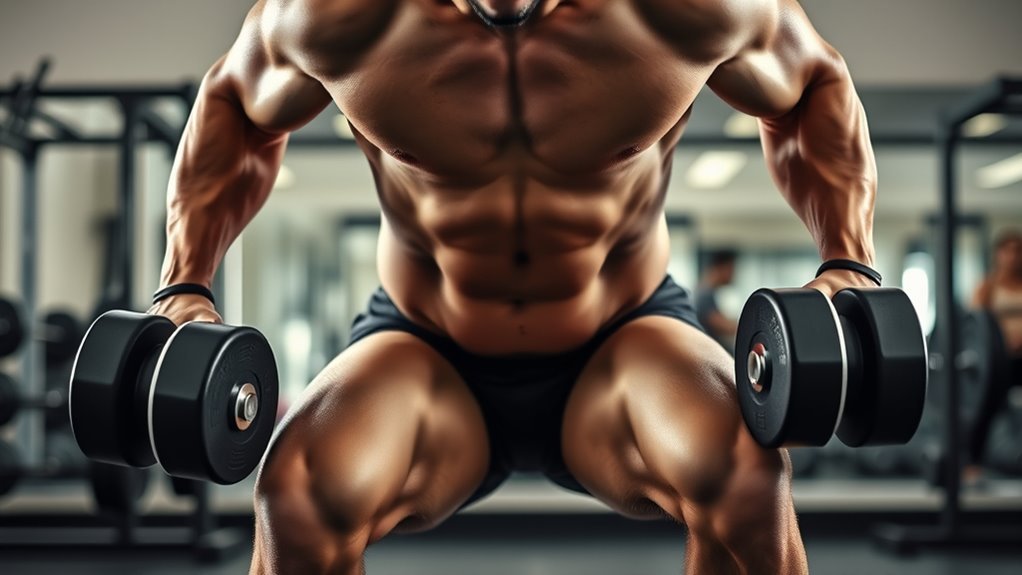
Dumbbell squats are super effective because they target multiple lower body muscles like your quads, glutes, and hamstrings. At the same time, they challenge your core to stay stable, which is great for overall strength and balance.
You get a full range of motion with dumbbell squats, boosting flexibility and joint health.
Plus, they let you safely add weight over time, helping build muscle and strength steadily.
The best part? You only need dumbbells, so you can do them almost anywhere. This makes dumbbell squats really accessible and versatile for any workout routine.
Keep exploring different techniques and tips, and you’ll find even more benefits to this simple but powerful exercise!
Key Takeaways
- Engages multiple lower body muscles like quads, glutes, and hamstrings for balanced strength and functional power. This means you’re working several key muscle groups at once, which is pretty efficient.
- Supports full range of motion, enhancing joint flexibility and mobility in hips, knees, and ankles. So, not only are you building strength, but you’re also keeping your joints happy and healthy.
- Allows progressive overload by increasing dumbbell weight, promoting strength gains and muscle growth. You can easily challenge yourself as you get stronger, which is important for making progress.
- Requires minimal equipment and offers adjustable difficulty, making it accessible and safe for various fitness levels. Whether you’re a beginner or more advanced, you can tailor it to your needs.
- Improves posture, functional movement patterns, and lower body aesthetics by toning muscles and boosting core stability. Plus, it helps you look and move better in everyday life.
Engages Multiple Lower Body Muscles
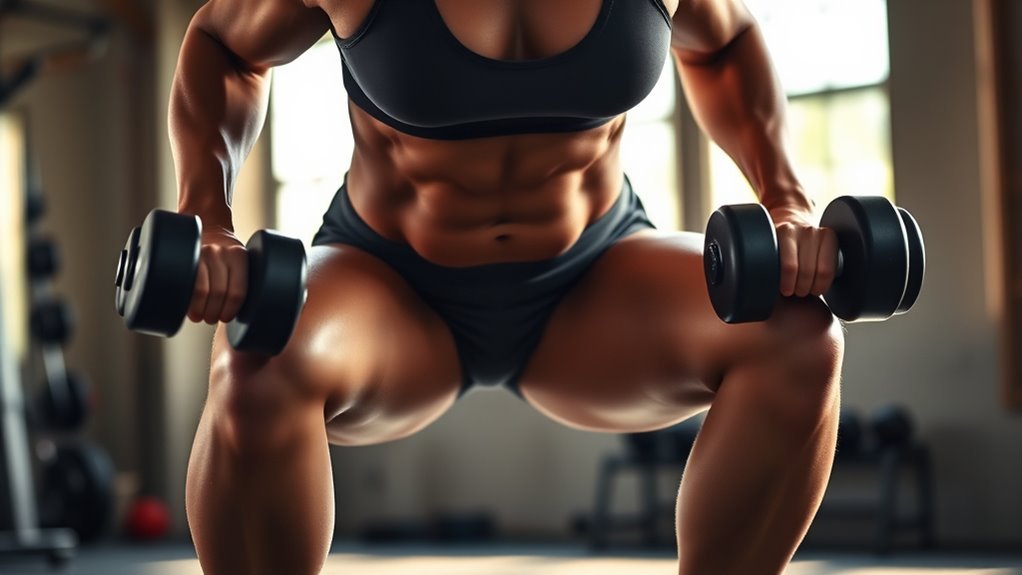
Although dumbbell squats might seem simple, they engage multiple lower body muscles simultaneously. When you perform this exercise, your quads take the lead, powering the upward movement.
Your hamstrings assist by controlling the descent and providing balance. Meanwhile, your glutes activate to extend your hips and stabilize your pelvis.
Don’t forget your calves; they work to maintain ankle stability throughout the squat. By holding dumbbells, you add resistance that forces these muscles to work harder, promoting strength and endurance.
This compound movement recruits several muscles at once, making your workout efficient and effective. So, when you incorporate dumbbell squats into your routine, you target a range of muscles essential for lower body strength and mobility.
Enhances Core Stability and Balance
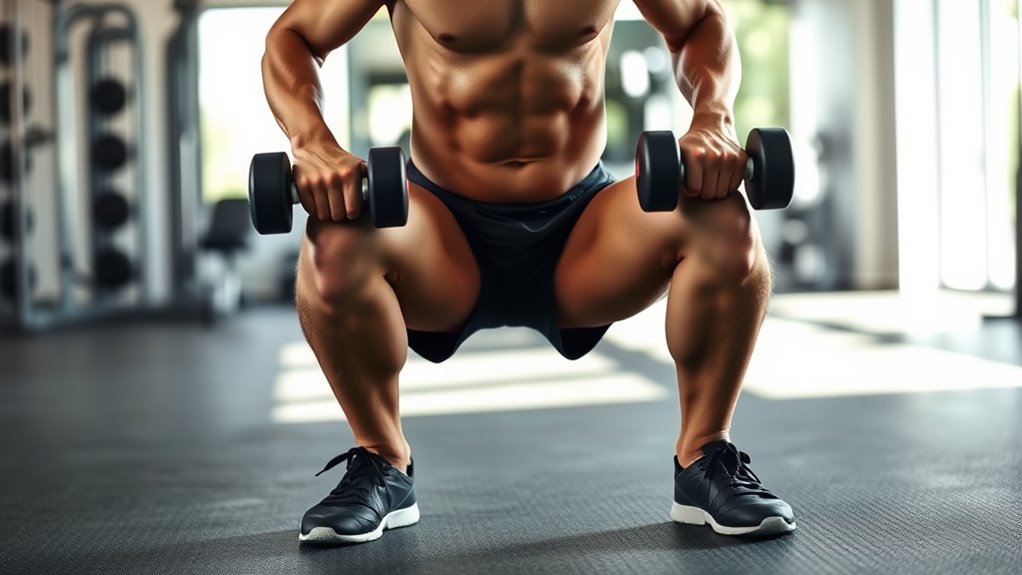
Because dumbbell squats require you to maintain proper form while balancing added weight, they actively engage your core muscles. This engagement strengthens your core, which is vital for overall stability and balance.
When you perform dumbbell squats, you activate your abdominal and lower back muscles to keep your torso steady. This helps improve your body’s ability to control movement, which can reduce the risk of injury.
Plus, dumbbell squats enhance proprioception, helping you stay balanced during dynamic motions. So, not only are you building strength, but you’re also improving your balance and coordination.
Improves Functional Strength
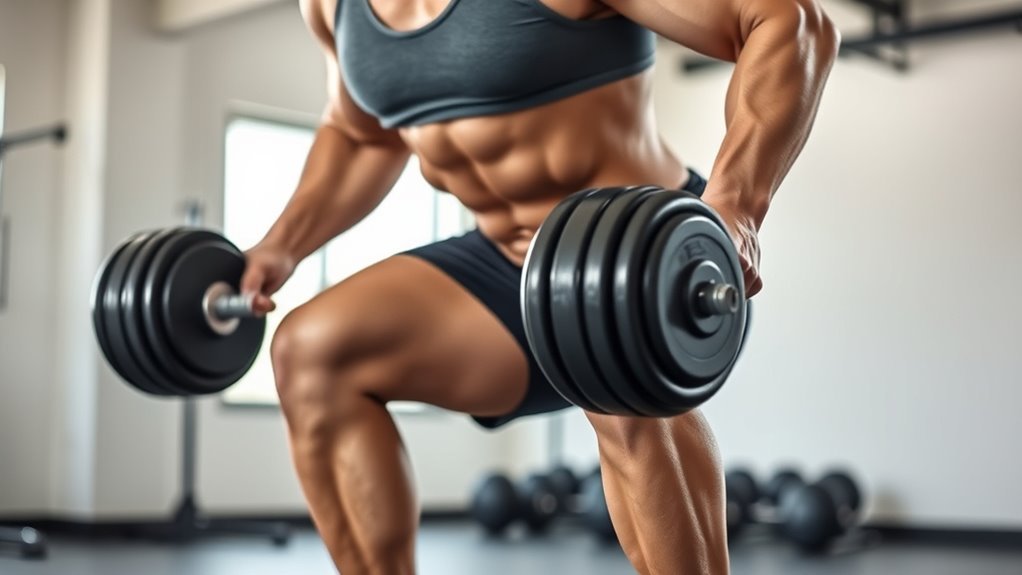
Building core stability through dumbbell squats sets the stage for improving your functional strength. This exercise mimics everyday movements like picking up objects, helping you perform daily tasks with ease.
By engaging multiple muscle groups simultaneously, dumbbell squats enhance your ability to generate force and maintain control in real-life situations.
| Functional Strength Benefits | How Dumbbell Squats Help |
|---|---|
| Enhances muscle coordination | Activates legs, glutes, and core |
| Boosts power output | Builds strength for lifting tasks |
| Improves joint stability | Strengthens knees and hips |
| Increases endurance | Trains muscles for sustained effort |
| Supports injury prevention | Promotes balanced muscle development |
Incorporating dumbbell squats into your routine helps you move stronger and safer every day. It’s a simple way to keep your body ready for whatever life throws at you.
Allows for Greater Range of Motion
When you perform dumbbell squats, you engage a wider range of motion compared to bodyweight squats alone. This increased movement helps you deepen the squat safely while maintaining control.
Here’s why that matters:
- Enhanced Flexibility: Holding dumbbells encourages you to lower your hips further, improving hip and ankle flexibility over time.
- Better Muscle Activation: Deeper squats activate more muscle fibers in your glutes, quads, and hamstrings. This leads to greater strength gains.
- Improved Joint Health: Moving through a fuller range enhances joint lubrication and mobility. That means a lower risk of injury.
Provides Versatility and Accessibility
Although dumbbell squats might seem simple, they offer remarkable versatility and accessibility that make them suitable for almost anyone. You can easily adjust the weight to match your fitness level, whether you’re a beginner or an advanced lifter.
Plus, dumbbells are typically more affordable and take up less space than bulky gym machines, so you can perform squats at home or in the gym. You’re not limited by equipment availability, and you can modify your stance or dumbbell positioning to target different muscles.
This adaptability means you can seamlessly incorporate dumbbell squats into various workout routines, helping you stay consistent and progress over time without needing specialized gear or extensive space.
Challenges Grip and Upper Body Strength
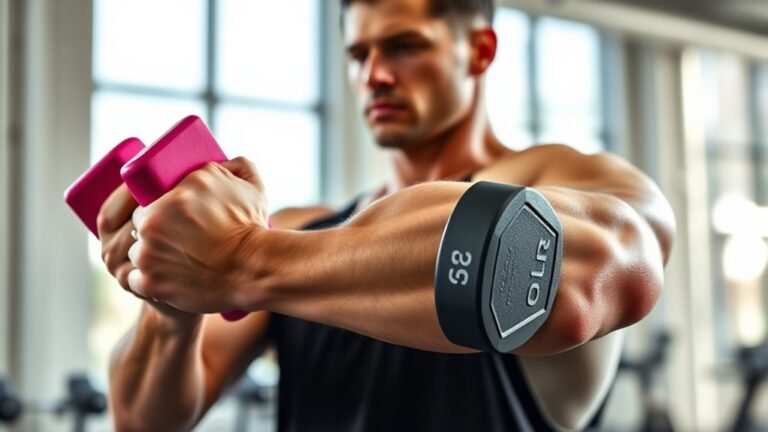
When you hold dumbbells during squats, your forearms get a solid workout that builds grip strength. This also forces your core to stay engaged, helping improve your posture and stability.
You’ll notice your upper body working harder to support the movement throughout the exercise. It’s a great way to challenge both your grip and upper body strength at the same time!
Forearm Engagement Benefits
Since dumbbell squats require you to hold weights firmly throughout the movement, they actively engage your forearms. This challenges your grip strength more than barbell squats do.
This forearm engagement offers key benefits that enhance your overall performance and functional strength.
- Improved Grip Endurance: Holding dumbbells forces your forearms to work continuously. This increases your ability to maintain a strong grip during other exercises or daily tasks.
- Enhanced Forearm Muscle Development: The constant tension promotes muscle growth and definition in your forearms. This contributes to a balanced upper body.
- Better Coordination and Stability: By gripping dumbbells, you improve neuromuscular coordination. This helps stabilize your upper body during squats and other compound movements.
Core and Posture Support
While holding dumbbells during squats, your core works hard to keep your body stable and upright. This engagement not only supports proper posture but also challenges your grip and upper body strength as you maintain control over the weights.
Strengthening your core improves balance, reduces injury risk, and enhances overall squat performance. It’s a win-win situation for your whole body!
| Aspect | Benefit |
|---|---|
| Core Activation | Stabilizes spine and pelvis |
| Posture Alignment | Maintains upright torso |
| Grip Strength | Holds dumbbells securely |
| Upper Body Control | Prevents leaning forward |
| Balance Improvement | Enhances squat efficiency |
Supports Joint Health and Mobility
Because dumbbell squats engage multiple muscle groups and joints simultaneously, they enhance your joint health and mobility effectively. When you perform these squats, you actively strengthen the muscles around key joints, providing better support and reducing injury risk.
Dumbbell squats boost joint health by strengthening muscles around key joints and enhancing overall mobility.
Plus, the controlled movement improves your range of motion, making everyday activities easier. It’s a win-win for your body!
Here’s how dumbbell squats support your joints and mobility:
- Strengthen stabilizing muscles around hips, knees, and ankles to improve joint stability.
- Encourage proper alignment during movement, reducing strain on joint surfaces.
- Promote synovial fluid circulation, which lubricates joints and enhances flexibility.
Facilitates Progressive Overload and Muscle Growth
When you consistently increase the weight or reps in dumbbell squats, you challenge your muscles to adapt and grow stronger. This principle, known as progressive overload, is key to building muscle and improving strength.
By gradually making the exercise more difficult, you compel your muscle fibers to repair and grow bigger. Dumbbell squats let you easily adjust the load, making it simple to track your progress and push your limits safely.
Plus, they engage multiple muscle groups simultaneously, amplifying muscle growth and overall conditioning. Sticking to a progressive routine with dumbbell squats ensures you avoid plateaus and keep advancing.
In short, this exercise gives you the perfect balance of challenge and control to maximize muscle development over time.
Frequently Asked Questions
What Is the Best Dumbbell Weight for Beginners?
You should start with dumbbells weighing between 5 to 15 pounds. Choose a weight that challenges you but lets you maintain proper form through all reps.
As you get stronger, gradually increase the weight. It’ll help you build strength safely and effectively. Just listen to your body and take it step by step.
How Often Should I Do Dumbbell Squats Weekly?
You should do dumbbell squats 2-3 times a week, allowing at least one rest day between sessions. This helps your muscles recover and grow stronger while preventing overtraining and injury.
Listen to your body’s signals! If you feel overly sore or tired, it’s okay to take an extra rest day. Keeping a good balance is key to making progress safely.
Can Dumbbell Squats Help With Weight Loss?
Yes, dumbbell squats can help with weight loss by boosting your metabolism and burning calories.
When you combine them with a healthy diet and regular cardio, you’ll see better fat loss results and improved muscle tone.
It’s a great way to work multiple muscle groups at once, which means more calories burned overall. Plus, adding weights like dumbbells makes the exercise more challenging and effective.
Should I Warm up Before Doing Dumbbell Squats?
Yes, you should warm up before doing dumbbell squats. Warming up increases blood flow, loosens your muscles, and reduces injury risk.
Spend 5-10 minutes on light cardio and dynamic stretches to prepare your body effectively. This way, you’ll get the most out of your workout and stay safe!
Are Dumbbell Squats Safe for People With Back Pain?
Think of your back as a fragile bridge—dumbbell squats can be safe if you keep your form tight and avoid heavy weights.
Always consult your doctor first, and focus on controlled, pain-free movements to protect yourself.
Taking it slow and listening to your body really makes a difference. Just remember, safety first!
Conclusion
Dumbbell squats might look simple, but they pack a powerful punch for your body. While they challenge your legs and core, they also test your grip and upper body strength—showing it’s not just about lower body power.
You’ll build muscle and boost mobility, all while improving balance and joint health. So, don’t underestimate these straightforward moves; they’re small in setup but huge in impact.
In fact, dumbbell squats are incredibly effective because they engage multiple muscle groups simultaneously. They enhance your overall strength, improve functional fitness, and promote better posture. Whether you’re a beginner or looking to add variety to your workout, incorporating dumbbell squats can elevate your training routine. So next time you grab those weights, remember: dumbbell squats offer a full-body workout that’s simple yet powerful, helping you build muscle, increase mobility, and support joint health.