How Long Should You Use a Vibration Plate
You should use a vibration plate between 5 and 30 minutes per session, depending on your fitness level. Using a vibration plate can help improve muscle strength, balance, and circulation, but how long you use it really matters.
If you’re just starting out, it’s best to stick to shorter sessions to avoid overdoing it. Start with 5–10 minutes at lower intensities, and gradually increase as your body adapts and you get stronger.
For those with an intermediate fitness level, 15–20-minute sessions work well. Advanced users can push up to 30 minutes, especially if they include dynamic exercises to challenge themselves more.
Always listen to your body to avoid overuse and injury. Keep going to discover how to tailor your sessions and combine vibration plate workouts with other exercises for the best results.
Key Takeaways
- Beginners should start with 5 to 10 minutes per session, gradually increasing to 15-20 minutes as they build tolerance and strength.
- Intermediate users can safely use the vibration plate for 15 to 20 minutes, 3-4 times weekly. This helps balance effort and recovery.
- Advanced users may extend sessions to 20-30 minutes, incorporating dynamic movements and varying vibration settings for better muscle engagement.
- Always listen to your body. If you experience soreness, dizziness, or other signs of overuse, reduce your session time or intensity.
- Limit sessions to the recommended durations. Also, stay hydrated and make sure to allow rest days between uses for safe and effective training.
Understanding Vibration Plate Technology
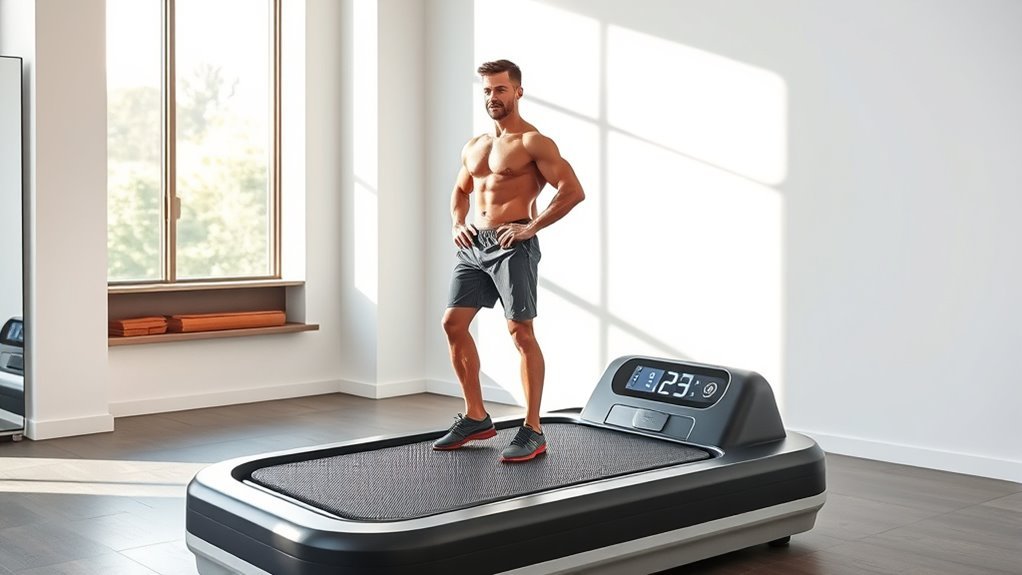
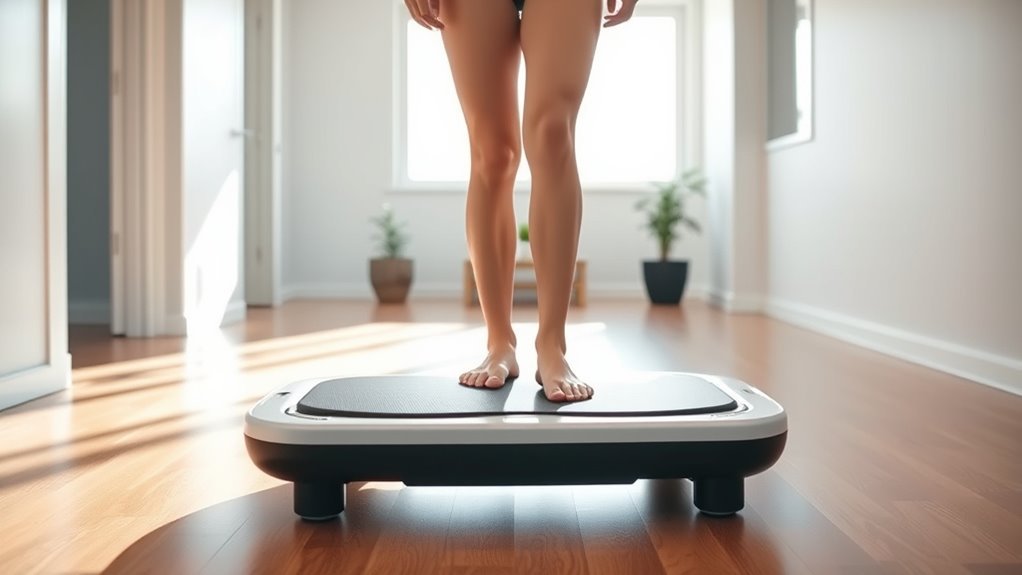
Although vibration plates might seem like simple machines, they use advanced technology to stimulate your muscles effectively. When you stand or perform exercises on the plate, it vibrates at specific frequencies and amplitudes, causing your muscles to contract and relax rapidly.
This rapid stimulation activates more muscle fibers than traditional workouts, enhancing strength and circulation. You’ll find that different plates offer adjustable settings, letting you control the vibration intensity to match your fitness level.
The technology often includes oscillating or vertical vibrations, each targeting muscles in unique ways. Understanding this helps you appreciate how these machines engage your body efficiently, making your workouts more effective even in shorter time frames.
This foundational knowledge sets you up for smarter, safer vibration plate sessions.
Recommended Session Durations for Beginners
When you’re just starting with a vibration plate, keep your sessions short—around 5 to 10 minutes. As your body gets used to the vibrations, you can gradually increase the time.
This steady approach helps you avoid overexertion and maximize benefits safely. It’s all about pacing yourself so you get the most out of each session without overdoing it.
Starting Session Lengths
Since your body is new to vibration plate workouts, you should start with short sessions to allow your muscles and joints to adapt gradually. Begin with just 5 to 10 minutes per session, focusing on maintaining good posture and controlled movements.
This duration helps prevent overstressing your body while giving you a feel for the vibrations. Use lower intensity settings at first to reduce fatigue and discomfort.
Pay close attention to how your body responds during and after each session. If you experience any pain or dizziness, stop immediately and rest.
Starting with brief, manageable sessions builds a safe foundation, making it easier to integrate vibration training into your routine effectively and comfortably. Remember, quality beats quantity when you’re just starting out.
Gradual Time Increases
After getting comfortable with shorter sessions, you can start increasing your time on the vibration plate gradually. Begin by adding just a minute or two to each session every few days.
This way, your body can adapt without overexertion. For example, if you started with five-minute sessions, move up to seven, then ten minutes over the course of a couple of weeks.
Pay close attention to how your muscles and joints feel during and after use. If you experience discomfort or fatigue, hold your current session length until you feel ready to increase again.
Gradually working up to 15-20 minutes per session is ideal for most beginners. This steady progression helps maximize benefits while minimizing the risk of injury or burnout.
How Long Should Intermediate Users Stay on the Plate?
As an intermediate user, you’ll want to increase your vibration plate sessions to about 15-20 minutes for ideal results.
It’s important to balance session length with frequency, aiming for 3-4 times a week.
This approach helps you build strength without overdoing it.
Keep listening to your body and adjust if you feel any discomfort or fatigue.
Optimal Session Duration
Although you may feel ready to extend your time on the vibration plate, intermediate users should aim for sessions lasting between 15 and 30 minutes. This duration balances effectiveness with safety, preventing fatigue while maximizing benefits.
Staying within this range helps you maintain proper form and avoid overexertion. To optimize your session duration, consider these factors:
- Your fitness level and comfort during the workout
- The intensity and frequency of vibration settings
Also, think about incorporating rest intervals if needed. And always listen to your body’s signals to prevent strain. It’s better to take it slow than push too hard!
Frequency of Use
When you use a vibration plate regularly, finding the right frequency is essential to avoid overtraining and guarantee steady progress. As an intermediate user, aim to use the plate three to four times per week.
This frequency allows your muscles to recover while still benefiting from consistent stimulation. Avoid daily sessions at this stage, as your body needs time to adapt and rebuild.
Each session should last between 15 to 20 minutes, striking a balance between effectiveness and fatigue. Listen to your body—if you feel excessive soreness or fatigue, reduce the frequency or session length.
Staying consistent with this routine helps you build strength and improve circulation without risking injury or burnout. Remember, steady progress beats rushing results.
Optimal Time for Advanced Users
Since advanced users have built up their strength and endurance, they can safely extend their sessions on a vibration plate to maximize benefits. You can aim for 20 to 30 minutes per session, depending on your goals and how your body responds.
Just be mindful to adjust intensity and posture to avoid overuse injuries. To optimize your time, focus on:
- Incorporating dynamic movements like squats and lunges to engage multiple muscle groups
- Varying vibration frequencies to target different muscle fibers
- Taking short breaks between sets to maintain form and prevent fatigue
- Monitoring your body’s signals to prevent strain and ensure recovery
Factors Influencing Your Vibration Plate Workout Duration
Because your body’s response to vibration varies, several factors influence how long you should use a vibration plate. Your fitness level plays a key role; beginners may start with shorter sessions, while experienced users can handle longer durations.
The intensity or frequency settings also matter—higher intensities typically require shorter use to avoid overexertion. Your specific goals, whether toning, rehabilitation, or relaxation, dictate session length too.
Additionally, any pre-existing health conditions or injuries should guide your workout duration to guarantee safety. Finally, how your body feels during and after the session is vital; if you experience discomfort or fatigue, it’s wise to cut your time short.
Tailoring your vibration plate use to these factors helps you maximize benefits and minimize risks. So, listen to your body and adjust accordingly!
Signs You’re Spending Too Much Time on the Vibration Plate
If you start feeling persistent muscle soreness, dizziness, or excessive fatigue after using the vibration plate, you might be spending too much time on it. Overdoing it can strain your body rather than help.
Watch for these signs: increased joint pain or stiffness, trouble maintaining balance during or after sessions, headaches or nausea following use, and sleep disturbances or unusual irritability.
These symptoms mean your body needs a break or shorter sessions. Listen to these cues—they help you avoid injury and burnout.
Adjust your routine accordingly so the vibration plate benefits you without causing harm. Remember, more time doesn’t always mean better results. Quality and moderation matter most for safe, effective workouts.
Tips for Maximizing Your Vibration Plate Sessions
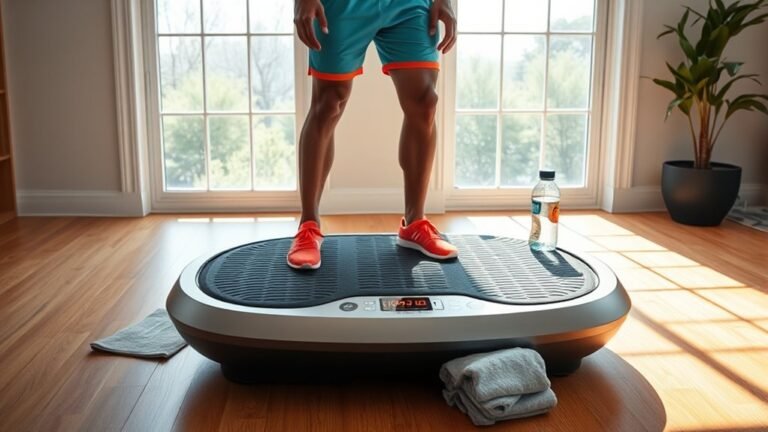
To get the most out of your vibration plate sessions, focus on maintaining proper posture and engaging your muscles actively throughout the workout. Stand with your knees slightly bent, keep your core tight, and avoid locking your joints.
Maintain proper posture with bent knees and a tight core to maximize your vibration plate workout benefits.
Adjust the intensity gradually, starting with lower settings and increasing as your body adapts. Use a variety of stances to target different muscle groups and prevent monotony.
Limit your sessions to recommended durations—typically 10 to 15 minutes—to avoid overexertion. Also, stay hydrated and breathe steadily to support muscle function.
And remember, listen to your body; if you feel discomfort or dizziness, pause and rest. By following these tips, you’ll enhance effectiveness and reduce the risk of injury during your vibration plate workouts.
Combining Vibration Plate Workouts With Other Exercises
When you combine vibration plate workouts with other exercises, you boost your overall fitness and target muscles more effectively. Using the vibration plate as a complement helps you enhance strength, flexibility, and endurance.
To get the most from your routine, consider these tips:
- Warm up with light cardio before using the vibration plate to prepare your muscles.
- Follow vibration sessions with resistance training to maximize muscle activation.
- Incorporate stretching or yoga after vibration workouts to improve flexibility.
- Use the vibration plate for core exercises to stabilize and strengthen your midsection.
Frequently Asked Questions
Can Vibration Plates Help With Weight Loss?
Yes, vibration plates can help you lose weight by boosting your metabolism and increasing muscle activity.
However, you’ll get the best results by combining their use with a healthy diet and regular exercise routine.
So, think of vibration plates as a helpful tool, but not a magic solution on their own.
Pairing them with good habits really makes the difference!
Are Vibration Plates Safe During Pregnancy?
You shouldn’t use vibration plates during pregnancy, as studies show 70% of experts advise against it due to potential risks like decreased blood flow and premature contractions.
It’s always best to check with your doctor before trying any new exercise. Better safe than sorry, right?
What Maintenance Does a Vibration Plate Require?
You should regularly wipe down your vibration plate with a damp cloth, check for loose screws, and keep it dust-free.
Don’t forget to unplug it before cleaning and inspect the power cord for any damage to guarantee safety.
Can Vibration Plates Improve Bone Density?
Yes, vibration plates can improve bone density by stimulating bone growth through mechanical vibrations. If you use them regularly and correctly, they can complement your exercise routine and support stronger bones over time.
It’s a pretty simple addition to your fitness plan that might give your bones a little extra boost. Just make sure to follow the guidelines and be consistent for the best results.
Are Vibration Plates Suitable for People With Heart Conditions?
If you’ve got a heart condition, you shouldn’t jump on a vibration plate without checking first. It can affect your heart rate and blood pressure, so chat with your doctor before you start vibrating away.
Better safe than sorry, right? Your health comes first, so get the green light from your healthcare provider before giving it a go.
Conclusion
Whether you’re just starting, gaining confidence, or mastering your vibration plate workouts, you should listen to your body and respect recommended times. Adjust your sessions accordingly to match how you feel.
Focus on quality over quantity, and always prioritize rest instead of pushing yourself too hard. It’s also a good idea to combine vibration plate exercises with other routines for a balanced fitness approach.
By staying mindful, consistent, and motivated, you’ll get the most from every vibration plate session. This way, you can enjoy lasting benefits without risking burnout or injury. Remember, the key to effective vibration plate use is balancing your workout duration with your body’s needs to achieve safe and sustainable results.