
How Long to Use a Vibration Plate a Day
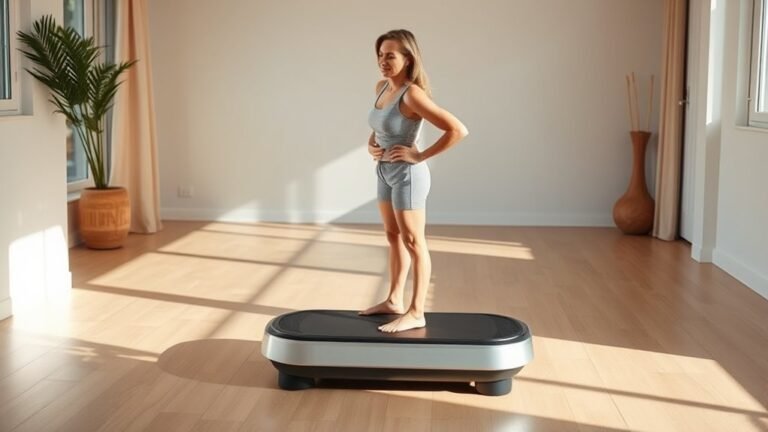
You should use a vibration plate between 5 and 20 minutes a day, depending on your fitness level and goals. Vibration plate workouts can help improve muscle strength, circulation, and flexibility when used correctly.
If you’re just starting, stick to 5-10 minutes at low intensity.
Gradually increase time and intensity as you build endurance. Intermediate and advanced users can go up to 20 minutes with varied exercises and higher intensity.
Just make sure to keep an eye on your body to avoid soreness or joint pain.
Exploring proper usage helps you maximize benefits safely and effectively. So, listen to your body and adjust your sessions accordingly to get the best results without overdoing it.
Key Takeaways
- Beginners should start with 5-10 minutes per session, 3 times weekly. Gradually increase the duration to build endurance safely.
- Intermediate users can use the vibration plate for 15-20 minutes, 3-4 times a week. Adjust the intensity and exercises as you go.
- Advanced users should limit sessions to 15-20 minutes with high-intensity exercises. Use varied vibration settings for strength gains.
- Avoid sessions longer than 20 minutes. This helps reduce risks of fatigue, overuse, joint pain, and possible injury.
- Keep an eye on how your body responds. If you notice soreness, joint discomfort, or overall fatigue, adjust your daily usage to prevent overtraining.
Understanding Vibration Plate Technology

Although vibration plates might seem like simple exercise tools, they actually use advanced technology to stimulate your muscles through rapid oscillations. When you stand, sit, or perform exercises on the plate, these vibrations cause your muscles to contract and relax multiple times per second.
Vibration plates use rapid oscillations to stimulate muscles, causing quick contractions and relaxations for effective exercise.
This reflexive muscle activity boosts circulation, enhances strength, and improves flexibility without requiring intense effort. The plates vary in frequency and amplitude, which determine how fast and how much the platform moves.
You can control these settings to match your fitness level and goals. By activating more muscle fibers than traditional exercises, vibration plates offer an efficient way to engage your body.
Understanding this technology helps you appreciate why usage duration and intensity should be tailored carefully for *ideal* results. It’s pretty neat once you get how it all works!
Factors Influencing Daily Usage Duration
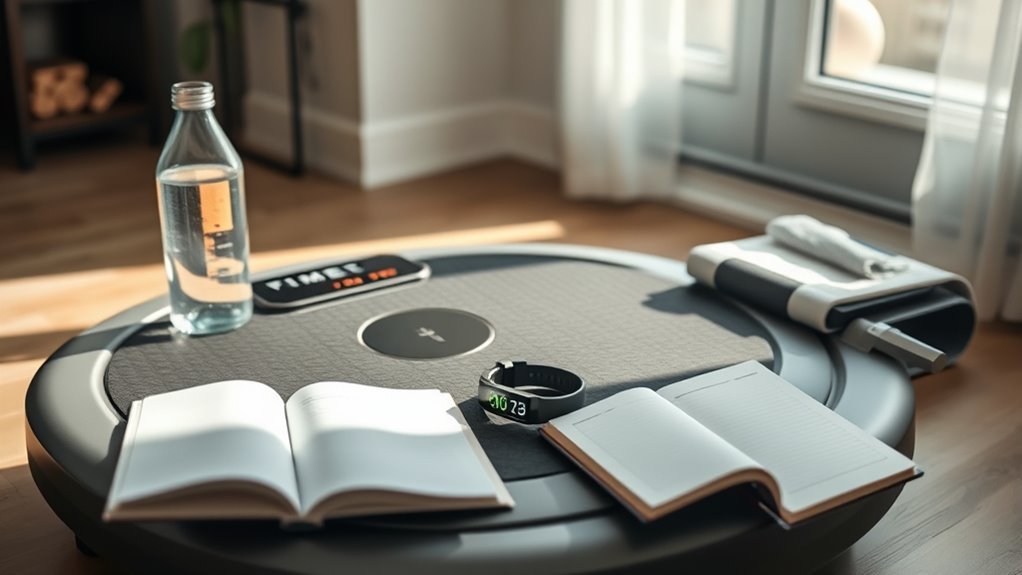
Your fitness level plays a big role in how long you should use a vibration plate each day. You’ll also need to contemplate any health conditions you have before deciding on your session length.
Plus, the intensity of the vibrations can affect how much time is safe and effective for you. So, it’s important to listen to your body and adjust accordingly.
Fitness Level Impact
Because your fitness level directly affects how long you should use a vibration plate each day, it’s important to tailor your sessions accordingly.
If you’re new to vibration training, start with shorter sessions to avoid overexertion. As you become more experienced, you can gradually increase your time to maximize benefits without risking injury.
Consider these guidelines:
- Beginners: 5-10 minutes per session to allow your body to adapt.
- Intermediate users: 10-15 minutes, focusing on maintaining good form.
- Advanced users: 15-20 minutes, incorporating varied exercises for muscle challenge.
Adjusting duration based on your fitness level guarantees effective workouts and helps prevent fatigue.
Listen to your body and increase time steadily as your strength and endurance improve.
Health Conditions Consideration
Besides fitness level, existing health conditions play a significant role in determining how long you should use a vibration plate each day. If you have cardiovascular issues, joint problems, or osteoporosis, you need to be cautious with duration.
Start with shorter sessions—around 5 to 10 minutes—to see how your body reacts. People with chronic conditions should always consult their healthcare provider before increasing usage time.
If you feel any pain, dizziness, or discomfort, stop immediately and reduce your session length in the future. Your body’s response will guide you; gradual increases are safer than pushing too hard.
Vibration Intensity Effects
Although vibration plates offer varying intensity settings, the level you choose directly impacts how long you should use the device daily. Higher intensities demand shorter sessions to prevent muscle fatigue or injury, while lower intensities allow for longer use, especially if you’re new to vibration training.
To determine your ideal daily duration, consider these factors:
- Your fitness level – Beginners should start with low intensity for 5–10 minutes; advanced users can handle higher intensities for up to 15 minutes.
- Goal of use – For muscle toning, moderate intensity for 10–15 minutes works; for relaxation, lower intensity for longer might suit you better.
- Body response – Pay attention to soreness or discomfort; if you feel any, reduce intensity or time.
Adjust your routine based on these to get the most benefits safely. It’s all about finding what feels right for your body!
Recommended Time for Beginners

When you’re just starting with a vibration plate, it’s best to keep your sessions short to let your body adjust. Begin with 5 to 10 minutes per session, focusing on low intensity to avoid overexertion.
As your muscles get used to the vibrations, you can gradually increase the time. Aim for 3 sessions per week initially, allowing rest days in between for recovery. Always listen to your body and stop if you feel discomfort.
| Session Number | Recommended Duration |
|---|---|
| 1-3 | 5 minutes |
| 4-6 | 7 minutes |
| 7+ | 10 minutes |
Following this approach helps you build endurance safely without risking injury or fatigue. It’s a simple way to get comfortable with your new workout routine.
Optimal Usage for Intermediate Users
Once you’ve built a solid foundation with shorter sessions, you can start increasing both the duration and intensity of your vibration plate workouts. At this stage, your body adapts better, allowing you to push a bit further while still avoiding overuse.
After mastering shorter sessions, extend duration and intensity for enhanced benefits without risking overuse.
Aim to use the vibration plate for about 15 to 20 minutes per session, 3 to 4 times a week.
Here’s how you can optimize your routine:
- Gradually increase session length by 2-3 minutes each week.
- Incorporate varied exercises like squats, lunges, and planks to engage different muscle groups.
- Adjust vibration frequency to moderate levels for enhanced muscle stimulation without strain.
This balanced approach guarantees continued progress and prevents plateaus. Give it a try and see how much more you can achieve!
Guidelines for Advanced Users
As you reach an advanced level, you’ll want to fine-tune your vibration plate routine to maximize strength and endurance gains without risking injury. Limit sessions to 15-20 minutes, focusing on high-intensity, targeted exercises.
Incorporate varied stances and dynamic movements to challenge different muscle groups effectively. Use intervals—short bursts of vibration followed by rest—to boost muscle activation and prevent fatigue.
Adjust frequency and amplitude settings to suit your increasing strength, but avoid pushing to uncomfortable levels. Pair your vibration plate workouts with strength training and flexibility exercises for balanced progress.
Always listen to your body, and allow adequate recovery between sessions. This approach helps you safely enhance performance while minimizing the risk of overtraining or strain.
Signs You’re Overusing the Vibration Plate
If you’re feeling unusual muscle soreness or joint pain after using the vibration plate, you might be overdoing it.
Pay attention if your performance starts to slip or you’re not seeing progress anymore.
These signs mean it’s time to cut back and give your body a break.
Muscle Soreness and Fatigue
Although vibration plates can enhance your workouts, using them too long or too often can lead to muscle soreness and fatigue. You might notice your muscles feeling unusually tight or achy after sessions, which signals overuse.
Ignoring these signs can reduce your performance and increase recovery time.
Watch for these key indicators:
- Persistent muscle stiffness lasting more than 24 hours
- Decreased strength or endurance during subsequent workouts
- General fatigue that doesn’t improve with rest
If you experience these, it’s a clear sign to cut back on your vibration plate use. Give your muscles some time to recover.
And don’t forget to adjust your routine to prevent overtraining. Balancing usage helps you gain benefits without unnecessary strain.
Joint Discomfort and Pain
Muscle soreness isn’t the only sign you’re pushing your vibration plate sessions too far—joint discomfort and pain can also signal overuse.
If you start feeling stiffness, aching, or sharp pain in your knees, hips, or ankles after using the plate, it’s a red flag. These symptoms often come from too much vibration stressing your joints, especially if your body isn’t used to it.
Ignoring this discomfort can lead to inflammation or even injury. So, it’s really important to pay close attention to how your joints feel during and after each session.
If the pain sticks around, try cutting back on your vibration time or take breaks between sessions. Listening to your body is the best way to enjoy the benefits of the vibration plate without risking joint health.
Decreased Performance or Progress
When you consistently overuse your vibration plate, you might notice your progress starts to stall or even decline. Instead of feeling stronger or more toned, your body could hit a plateau or even regress.
This happens because your muscles and nervous system need time to recover and adapt. Signs you’re overdoing it include:
- Reduced strength gains – You’re not lifting heavier or feeling stronger despite frequent sessions.
- Decreased endurance – Your stamina during workouts or daily activities drops noticeably.
- Lack of muscle definition improvement – Your physique remains unchanged or worsens.
If you see these signs, it’s a clear signal to cut back. Give your body proper rest to maximize the benefits of your vibration plate workouts.
Benefits of Short vs. Long Sessions
Since your schedule and fitness goals vary, choosing between short and long vibration plate sessions can make a big difference in results.
Short sessions (5-10 minutes) are perfect for quick muscle activation, improved circulation, and fitting into busy days.
Longer sessions (15-20 minutes) help with deeper muscle relaxation and endurance but may cause fatigue if overdone.
| Session Length | Benefits | Ideal For |
|---|---|---|
| 5 minutes | Quick muscle warm-up | Busy schedules |
| 10 minutes | Improved circulation | General fitness |
| 15 minutes | Enhanced muscle endurance | Strength training days |
| 20 minutes | Muscle relaxation | Recovery and flexibility |
| Over 20 min | Risk of fatigue or overuse | Not recommended |
Choose what fits your needs best!
Incorporating Vibration Plate Into a Balanced Workout Routine
Although vibration plates offer unique benefits, you shouldn’t rely on them exclusively. To get the most from your fitness routine, blend vibration plate sessions with other exercises.
Vibration plates provide unique benefits but work best when combined with a variety of other exercises.
Here’s how to incorporate it effectively:
- Warm-Up or Cool-Down: Use the vibration plate for 5-10 minutes before or after your main workout. This helps enhance muscle activation or aids in recovery.
- Strength Training Supplement: Combine vibration plate sessions with weightlifting or bodyweight exercises. This combo can improve muscle engagement.
- Flexibility and Balance: Add vibration plate exercises focused on stretching or stability. These complement your cardio or endurance training nicely.
This balanced approach prevents overuse and ensures you target strength, endurance, and flexibility. It makes your workouts more thorough and effective.
Frequently Asked Questions
Can Vibration Plates Help Improve Bone Density?
Yes, vibration plates can help improve bone density by stimulating bone growth through mechanical vibrations.
If you use them regularly, you may strengthen your bones and reduce osteoporosis risk. But, it’s best to combine their use with a proper diet and regular exercise for the best results.
Are Vibration Plates Safe During Pregnancy?
Using a vibration plate during pregnancy is like walking a tightrope—it’s best to avoid it.
You shouldn’t use it without your doctor’s okay, as the vibrations might pose risks to you and your baby.
It’s always better to play it safe and check in with your healthcare provider before trying any new exercise equipment while pregnant.
How Do Vibration Plates Compare to Traditional Cardio?
Vibration plates offer low-impact muscle stimulation but don’t burn as many calories as traditional cardio. You’ll get less cardiovascular conditioning, so use them as a supplement, not a replacement, for your cardio workouts.
They’re great for adding variety or for days when you want something a bit gentler. But if your goal is to boost heart health or burn serious calories, sticking with traditional cardio is the way to go.
Can Vibration Plates Help With Cellulite Reduction?
Oh sure, just stand on a vibration plate, and poof—cellulite vanishes!
In reality, while it might improve circulation and muscle tone slightly, you shouldn’t expect it to magically erase cellulite without proper diet and exercise.
Is It Necessary to Wear Special Shoes on a Vibration Plate?
No, you don’t need special shoes on a vibration plate. You can use it barefoot or with regular athletic shoes.
Just make sure your feet feel secure and comfortable to maintain balance and get the best workout.
It’s all about what feels right for you while you’re using the machine.
Conclusion
You might think using a vibration plate for hours will turn you into a fitness god overnight, but trust me, less is more. Stick to recommended times based on your level—too long, and you’ll feel like you’ve been run over by a truck.
Balance your sessions wisely, listen to your body, and you’ll harness the plate’s power without overdoing it. Master this, and you’ll be vibrating your way to peak fitness in no time!
When it comes to how long to use a vibration plate a day, it’s best to start with short sessions—around 10 to 15 minutes. As you get comfortable, you can gradually increase the time, but avoid exceeding 30 minutes daily to prevent strain.
Remember, consistency beats duration. Regular, controlled use of the vibration plate will deliver better results than marathon sessions. So, keep your workouts balanced, listen to your body’s signals, and enjoy the journey to improved strength and flexibility.