

How to Hit Lats With Dumbbells Step by Step
To hit your lats effectively with dumbbells, start by picking weights that you can handle without losing form. Controlling the weight is key to really working those muscles and avoiding injury. Before you dive in, warm up with some arm circles and band pull-aparts to get your muscles ready and reduce the risk of strain.
Next, try bent-over rows by bending at the hips and pulling the dumbbells toward your hips. Make sure to squeeze your shoulder blades together to really engage the lats.
For some variety, you can switch to single-arm rows using a bench, which helps isolate each side.
Don’t forget about dumbbell pullovers—they’re great for stretching and fully engaging your lats. Focus on slow, controlled reps and remember to breathe properly throughout.
Stick with these steps, and you’ll be on your way to building a solid lat routine that works!
Key Takeaways
- Use dumbbell bent-over rows with a flat back and pull weights toward your hips to engage the mid and upper lats effectively. This really helps target those muscles.
- Perform single-arm dumbbell rows on a bench, pulling the weight close to your hip while keeping a neutral spine to target the lower lats. It’s a great way to focus on one side at a time.
- Incorporate dumbbell pullovers by lowering the weight behind your head with a slight elbow bend for a full lat stretch and activation. You’ll feel a good stretch here.
- Warm up with arm circles, scapular pull-ups, and resistance band pull-aparts to prepare the lats and shoulders before lifting. Warming up is key to avoid injuries.
- Maintain controlled movements, retract shoulder blades, keep elbows close, and synchronize breathing to maximize lat engagement and safety. Taking your time with form really pays off.
Understanding the Lat Muscles and Their Function

Before you start training your lats with dumbbells, it’s important to understand what these muscles do. Your latissimus dorsi, or lats, are large muscles on the sides of your back that help you pull your arms down and back.
They play a vital role in movements like pulling yourself up, rowing, or even throwing. When you work your lats, you improve your upper body strength, posture, and overall back definition.
Knowing their function helps you focus on exercises that effectively target them. Since the lats connect your upper arm to your lower back, activating them properly during workouts ensures balanced muscle development and reduces the risk of injury.
Understanding this foundation sets you up for success before grabbing those dumbbells. So, take a moment to get familiar with your lats—it’s totally worth it!
Choosing the Right Dumbbells for Lat Workouts
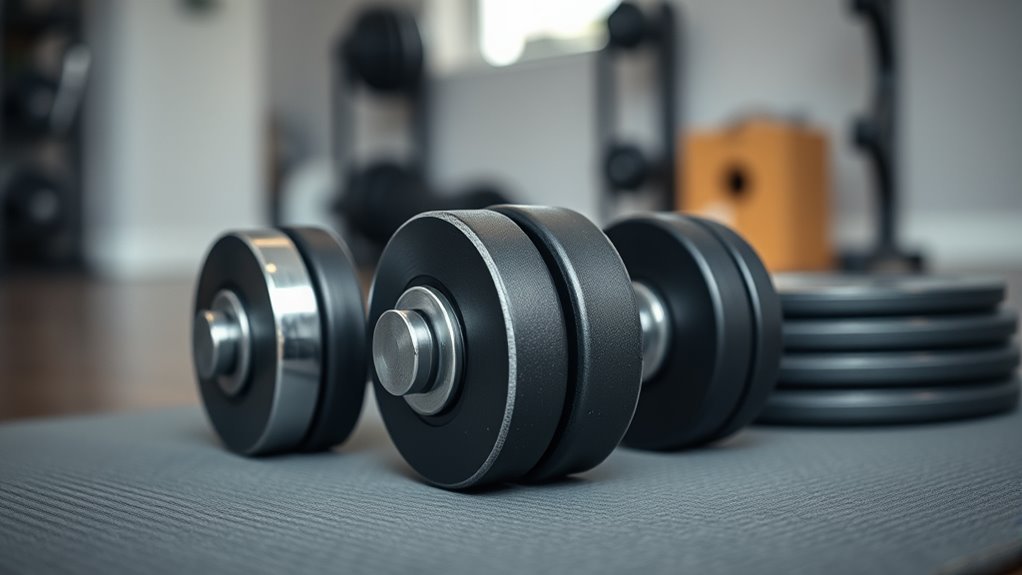
To get the most from your lat workouts, picking the right dumbbells is vital. You’ll want to consider the weight that challenges you without compromising form, the type of dumbbell that fits your space and goals, and the grip comfort that lets you maintain control.
Let’s break down how to choose dumbbells that work best for your lats. It’s all about finding the balance between what pushes you and what feels good to hold. Ready to dive in?
Weight Selection Tips
When selecting dumbbells for lat workouts, you’ll want to pick a weight that challenges your muscles without compromising your form. Start with a moderate weight to guarantee you can perform each rep with control and proper technique.
If you can easily complete more than 12 reps, increase the weight gradually. Conversely, if you struggle to finish 8 reps, drop down to a lighter dumbbell.
Keep in mind that your lats respond best to slow, controlled movements, so avoid swinging or using momentum. Don’t be afraid to adjust the weight between sets or exercises to maintain ideal intensity.
Dumbbell Types Overview
Choosing the right dumbbells can make a big difference in your lat workouts, as each type offers unique benefits and challenges. When picking dumbbells, consider your workout space, budget, and training goals.
Here’s a quick overview to help you decide:
- Fixed-weight dumbbells: Simple, durable, and quick to use, but require more storage space.
- Adjustable dumbbells: Space-saving and versatile, allowing you to change weights easily.
- Hex dumbbells: Stable on the floor, preventing rolling, ideal for floor exercises.
- Selectorized dumbbells: High-tech option with quick weight adjustments, though pricier.
Choosing prudently ensures you focus on your lat exercises without unnecessary distractions or interruptions. Just pick what fits your needs best, and you’ll be all set!
Grip and Handle Options
Although dumbbell weight matters, the grip and handle design can greatly impact how effectively you target your lats. When selecting dumbbells, look for handles that offer a comfortable, non-slip grip to prevent your hands from slipping during exercises like rows or pullover variations.
Knurled steel handles provide excellent grip, especially if your hands get sweaty, while rubber-coated handles may feel softer but can reduce slipping. Also, consider the thickness of the handle—thicker grips can engage your forearms more, improving overall grip strength but may fatigue you faster.
Adjustable dumbbells with ergonomic handles let you customize the weight and grip feel, enhancing your workout versatility. Choosing the right grip ensures you maintain control and focus on activating your lats efficiently throughout each movement.
Warm-Up Exercises to Prepare Your Lats

To maximize your dumbbell lat workout, you should start by warming up your lats properly. This helps prevent injury and improves muscle activation, setting you up for a more effective session.
Focus on dynamic movements that gently stretch and engage your lat muscles without overexertion. It’s all about getting them ready, not tiring them out before you even begin.
Try these warm-up exercises:
- Arm circles: Perform small to large circles to increase shoulder mobility.
- Cat-cow stretch: Mobilize your spine while gently stretching your lats.
- Scapular pull-ups: Hang from a bar and engage your shoulder blades to activate your lats.
- Resistance band pull-aparts: Use a band to open your chest and activate your upper back muscles.
Incorporate these moves for 5–10 minutes before your main dumbbell exercises. This way, you get your lats primed and ready to work hard.
Dumbbell Bent-Over Rows for Lat Activation
Once your lats are warmed up and ready to engage, dumbbell bent-over rows offer a powerful way to target and strengthen them. Start by holding a dumbbell in each hand with a neutral grip.
Bend at your hips, keeping your back flat and core tight, until your torso is nearly parallel to the floor. Let the dumbbells hang straight down.
Pull the weights toward your hips, squeezing your shoulder blades together and focusing on engaging your lats. Avoid shrugging your shoulders or using momentum.
Lower the dumbbells slowly to maintain tension. Keep your neck neutral and breathe steadily throughout.
This exercise effectively activates your lats by combining a strong pulling motion with proper posture, helping you build strength and improve muscle definition.
Single-Arm Dumbbell Rows Technique
When you want to isolate each lat muscle more effectively, single-arm dumbbell rows provide a focused approach. Begin by placing one knee and the same-side hand on a bench, keeping your back flat.
Grip the dumbbell with your free hand, letting it hang straight down. Pull the dumbbell towards your hip, squeezing your lat at the top of the movement, then slowly lower it back down.
Keep these tips in mind: maintain a neutral spine throughout the exercise to avoid strain. Lead with your elbow, not your hand, to engage the lats properly.
Also, avoid twisting your torso; keep your hips square to the bench. Control the tempo, focusing on a slow, deliberate pull and release.
This technique maximizes lat activation and balances strength between sides. It’s a great way to make sure both sides are working equally hard.
Dumbbell Pullover for Lat Expansion
To get the most from dumbbell pullovers, start with proper form and setup to target your lats effectively. Focus on controlled breathing and smooth movement to maximize muscle engagement.
Let’s break down how you can nail these details for better lat expansion. It’s all about being deliberate with each step and keeping your muscles engaged throughout the exercise.
Proper Form and Setup
Although the dumbbell pullover looks simple, mastering the proper form and setup is essential for effectively targeting your lats and avoiding strain. Start by lying flat on a bench or stability ball, ensuring your shoulders are supported.
Grip the dumbbell firmly with both hands, holding it directly above your chest. Keep a slight bend in your elbows to protect your joints during the movement.
Focus on these key points: Maintain a neutral spine and keep your core engaged. Position your feet flat on the floor for stability.
Lower the dumbbell slowly behind your head without overextending. And make sure to avoid shrugging your shoulders or arching your back excessively.
This setup primes your lats for a full stretch while keeping your body safe and controlled. It’s all about control and feeling the right muscles working.
Breathing and Movement Technique
As you perform the dumbbell pullover, coordinating your breathing with each movement helps maximize lat engagement and control. Start by taking a deep breath as you lower the dumbbell slowly behind your head, feeling a stretch in your lats. This controlled inhale prepares your muscles for the movement.
As you pull the dumbbell back over your chest, exhale steadily, focusing on contracting your lats to drive the motion. Keep your core tight and avoid using momentum; the movement should be smooth and deliberate.
Breathing rhythmically not only stabilizes your torso but also enhances oxygen flow to the working muscles. By syncing breath with movement, you maintain tension in your lats throughout the exercise, ensuring effective muscle activation and safer execution.
Tips for Maintaining Proper Form
When you maintain proper form while working your lats with dumbbells, you maximize muscle engagement and reduce injury risk. Focus on controlled movements and avoid swinging the weights.
Keep your back straight and your core tight to support your spine throughout the exercise. Make sure your shoulder blades retract as you lift to fully activate the lats.
Here are some tips to help you maintain proper form:
- Use a weight that challenges you without compromising control.
- Perform slow, deliberate reps to target the lats effectively.
- Keep your elbows close to your body during the movement.
- Avoid shrugging your shoulders to prevent neck strain.
Creating a Dumbbell Lat Workout Routine
To build a balanced dumbbell lat workout routine, you need to combine exercises that target different parts of your lats while allowing enough recovery time. Focus on variety by including vertical pulls, horizontal rows, and isolation moves.
Schedule workouts 2-3 times a week, giving your muscles 48 hours to recover. Start with moderate weight and increase gradually. Here’s a simple layout to guide you:
| Exercise | Target Area |
|---|---|
| Dumbbell Bent-Over Row | Mid and upper lats |
| Single-Arm Dumbbell Row | Lower lats |
| Dumbbell Pullover | Overall lat stretch |
Rotate these exercises, perform 3 sets of 8-12 reps each, and maintain good form. This routine ensures balanced lat development and steady progress. Give it a try and see how your lats respond!
Frequently Asked Questions
Can Dumbbell Lat Exercises Help Improve Posture?
Yes, dumbbell lat exercises can improve your posture by strengthening your upper back muscles. This helps you stand taller and reduces slouching.
When you consistently work your lats, it supports spinal alignment and promotes better overall posture. It’s a simple way to keep your back strong and healthy.
How Often Should I Train Lats With Dumbbells Weekly?
Picture your lats growing stronger with each pull. You should train them 2-3 times a week, giving muscles time to recover.
Consistency and rest together sculpt that powerful V-shaped back you’re aiming for.
Are Dumbbell Lat Workouts Suitable for Beginners?
Yes, dumbbell lat workouts are perfect for beginners. You can start with lighter weights, focus on proper form, and gradually increase resistance.
This helps you build strength safely and effectively while targeting your lats. It’s a great way to get comfortable with the movements before moving on to heavier weights.
Can I Build Muscle Mass With Only Dumbbell Lat Exercises?
You can definitely build muscle mass with dumbbell lat exercises alone. Focus on progressive overload and perfect your form. Challenge your muscles consistently.
With dedication and smart training, watch your lats grow stronger and wider. It’s all about sticking with it and pushing yourself a little more each time.
What Are Common Mistakes to Avoid During Lat Workouts?
You’ll want to avoid using too much momentum, neglecting proper form, and not engaging your lats fully.
Don’t rush reps or overtrain—focus on controlled movements and mind-muscle connection for the best results. It really makes a difference when you slow down and pay attention to how your muscles feel.
Conclusion
Now that you know how to target your lats with dumbbells, remember this: consistent form beats heavy weight every time. It’s a common myth that lifting heavier dumbbells always builds bigger lats faster.
In reality, controlled movements and proper technique activate your muscles more effectively. So, focus on mastering each step, and you’ll see better results.
Stick with it, and your lats will grow stronger and more defined over time. Using dumbbells to hit your lats is all about quality over quantity.
Keep your form tight, move with control, and be patient. That’s the real secret to building impressive lats with dumbbells.