
How to Pump Up a Gym Ball in 3 Easy Steps
To pump up your gym ball in three easy steps, first gather an air pump and an inflation needle that fits your ball’s valve. Having the right tools makes the whole process smoother and helps avoid any damage.
Next, carefully insert the needle into the valve and start pumping air steadily. You want the ball to feel firm but still have a little bit of give when you press it. Don’t rush this part—taking your time ensures the ball inflates evenly.
Finally, remove the needle and give your ball a quick check. It’s a good idea to check the pressure regularly to keep the ball safe and stable while you use it.
If you’re interested, I’ve got some helpful tips coming up to help you master proper care and avoid overinflation.
Key Takeaways
- Gather a compatible pump and inflation needle before starting to ensure a smooth process.
- Insert the inflation needle carefully and securely into the gym ball’s valve to prevent air leaks.
- Pump air steadily until the ball reaches a firm, rounded shape without overinflating or causing tightness.
- Remove the needle carefully and seal the valve immediately to keep the air inside.
- Check the ball’s firmness regularly and adjust air pressure as needed to maintain safety and durability.
Gather the Necessary Equipment
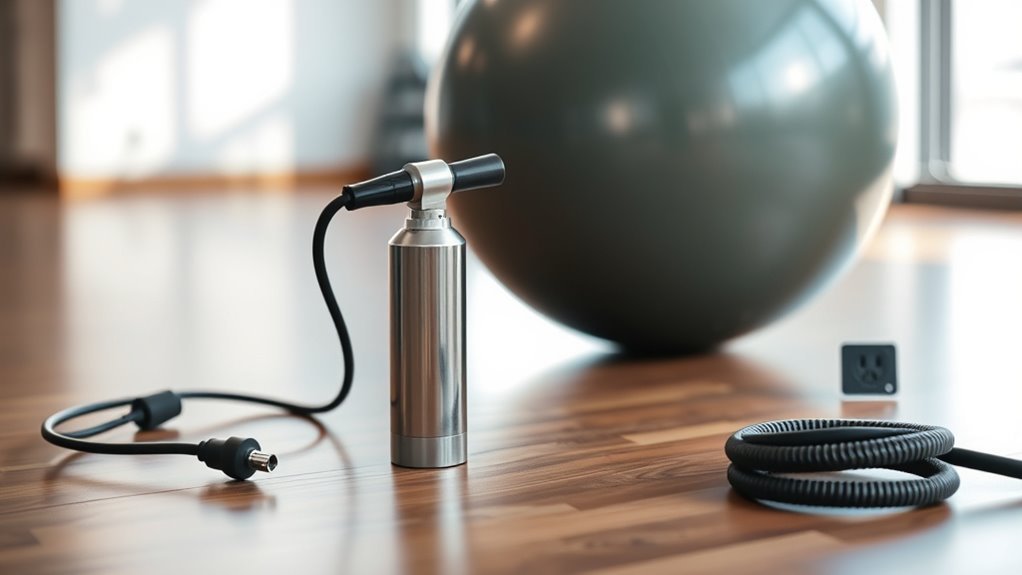
Before you start pumping up your gym ball, make sure you have all the necessary equipment on hand. First, you’ll need a reliable air pump. Many gym balls come with a small hand pump, but if yours doesn’t, you can use a standard bicycle pump or an electric air pump with the right nozzle attachment.
Next, grab the ball’s inflation needle, which fits into the valve to help you inflate it smoothly without damaging the ball. It’s also smart to have a pressure gauge handy, so you can check the ball’s firmness later.
Finally, keep a clean cloth nearby to wipe the valve area before inflating. Having these tools ready will make inflating your gym ball quick and hassle-free. Easy, right?
Inflate the Gym Ball Properly
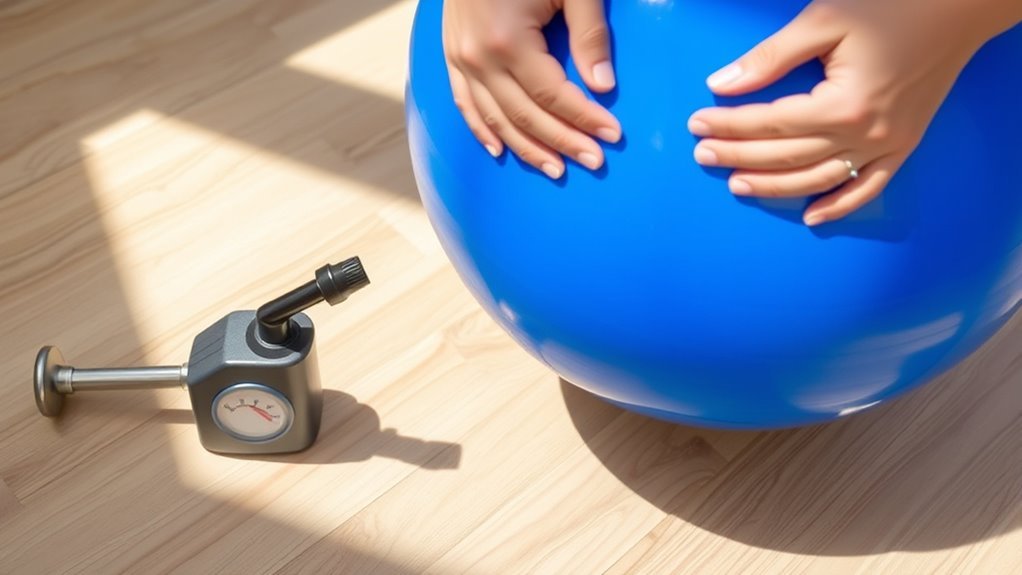
Once you have all your equipment ready, start by inserting the inflation needle carefully into the ball’s valve to avoid damaging it. Make sure the needle is fully inserted to prevent air leaks during inflation.
Begin by gently inserting the inflation needle fully into the ball’s valve to ensure no air escapes.
Connect the pump to the needle and begin pumping air steadily. Avoid rushing; a slow, consistent pace helps the ball inflate evenly and reduces stress on the material.
Keep an eye on the ball’s shape as it inflates—aim for a firm, round form without overexpanding. If you feel resistance or the ball starts to feel too tight, stop pumping immediately to prevent bursting.
Once it reaches the recommended size and firmness, carefully remove the needle and quickly seal the valve to keep the air inside. Your gym ball is now properly inflated and ready for use.
Check and Maintain the Ball’s Pressure

How often should you check your gym ball’s pressure to keep it in ideal condition? It’s best to inspect it before each use or at least once a week if you use it regularly.
Over time, the ball naturally loses air, which affects its performance and safety. Use a pressure gauge or simply press down on the ball; it should feel firm yet slightly give under pressure.
If it feels too soft or too hard, adjust the air accordingly. Maintaining proper pressure ensures stability and prevents damage.
Remember to avoid overinflating, as this can cause the ball to burst. By routinely checking and maintaining the pressure, you’ll extend your gym ball’s lifespan and keep your workouts safe and effective.
Frequently Asked Questions
Can I Use a Gym Ball for Physical Therapy Exercises?
Yes, you can use a gym ball for physical therapy exercises. It helps improve balance, strength, and flexibility.
Just make sure to select the right size and consult your therapist to guarantee safe, effective workouts. They’ll guide you on how to use it properly to get the best results.
How Do I Choose the Right Size Gym Ball for My Height?
Selecting the suitable sphere starts with your stature. If you’re shorter than 5’5″, grab a 55cm ball.
Between 5’6″ and 6’0″, choose 65cm. Taller? Opt for 75cm.
This guarantees stability, support, and success!
What Are the Benefits of Using a Gym Ball for Workouts?
Using a gym ball improves your balance, strengthens core muscles, and boosts flexibility. It also enhances posture and engages stabilizer muscles during workouts, making your exercises more effective and reducing injury risk.
You’ll feel stronger and more stable. Plus, it’s a fun way to mix up your routine and keep things interesting!
Can a Gym Ball Be Used on Uneven Surfaces?
Yes, you can use a gym ball on uneven surfaces, but don’t worry—it might feel less stable.
Just keep your movements controlled and choose a sturdy area to avoid slipping or falling during your workout.
It’s all about staying safe while you get your exercise in!
How Long Does a Typical Gym Ball Last With Regular Use?
You can expect your gym ball to last about 3 to 5 years with regular use, depending on quality and care.
Just make sure to avoid sharp objects, keep it clean, and check for wear to extend its lifespan.
Taking good care of it really makes a difference!
Conclusion
Now that you’ve mastered pumping up your gym ball, you’re basically a fitness superhero! Imagine rocking those workouts with a perfectly inflated ball that feels like a cloud beneath you.
No more frustrating sagging or annoying leaks stealing your thunder. Just follow these simple steps, and you’ll have a ball so firm and ready, it might just roll you straight to greatness.
Get ready to crush every exercise with confidence and style! Pumping up your gym ball properly ensures optimal support and balance, making your fitness routine more effective and enjoyable.
With a fully inflated gym ball, you’ll improve your posture, core strength, and flexibility. So grab your pump, follow the easy steps, and elevate your workouts to a whole new level of comfort and performance!