
How to Transport a Treadmill in 5 Easy Steps
To transport your treadmill in 5 easy steps, start by unplugging it and giving it a good clean. This helps prevent any dirt or dust from causing damage during the move.
Next, fold and secure any movable parts to keep everything tight and safe.
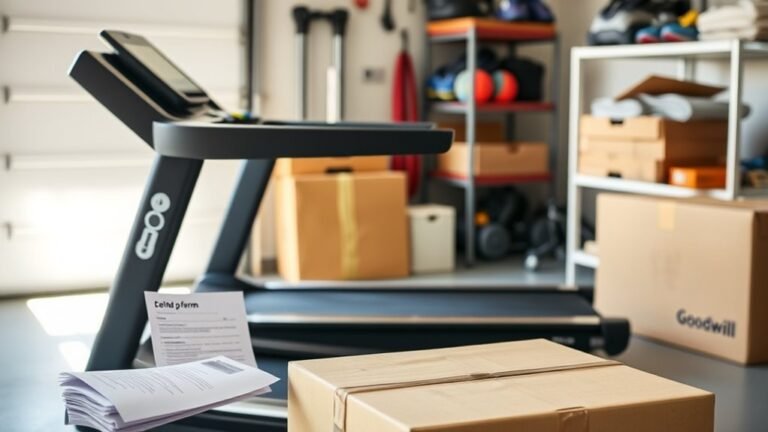
Gather moving blankets, a dolly, and straps to protect your treadmill and make it easier to handle. These tools really come in handy for a smooth move without scratches or bumps.
Now, disassemble removable components like handrails and the console. Make sure to keep all screws and small parts in a safe place so nothing gets lost.
Wrap the treadmill frame with padding and bundle up any loose cables. This extra protection keeps everything secure when you’re lifting or moving it around.
Finally, move the treadmill upright with the help of a friend or two. Once it’s in place, reassemble all the parts and give it a test run.
Keep going, and you’ll find tips to make the process even smoother!
Key Takeaways
- Unplug the treadmill, fold the deck if possible, and remove accessories for easier handling.
- Gather moving blankets, a furniture dolly, and straps to protect and stabilize the treadmill.
- Detach removable parts like the console and handrails, storing screws in labeled bags.
- Wrap the treadmill frame with blankets and bubble wrap, securing cables and electronics carefully.
- Transport upright using a dolly, then reassemble following manufacturer instructions and test functionality.
Prepare the Treadmill for Moving
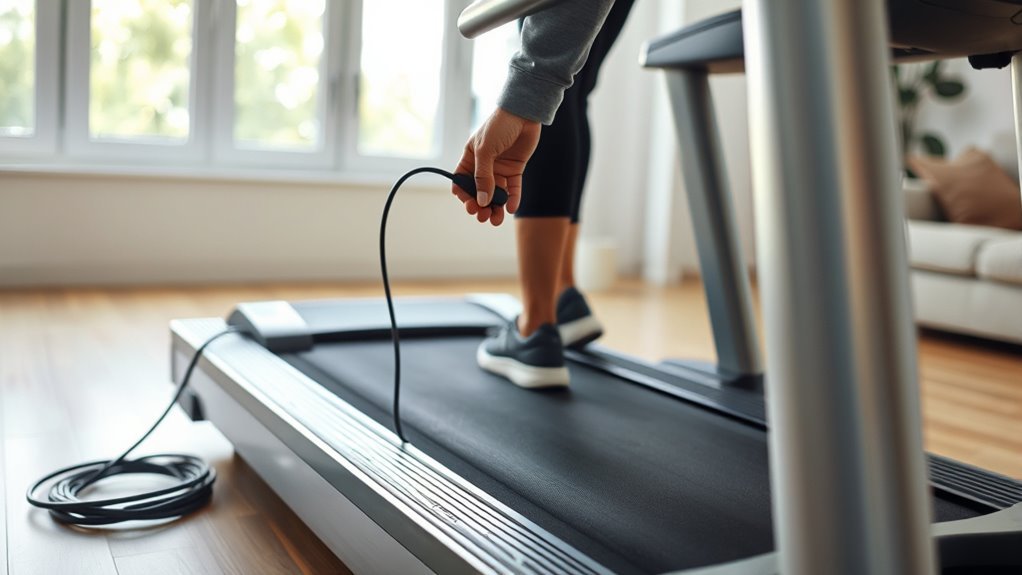
Before you start moving your treadmill, make certain to unplug it and give it a thorough cleaning. Dust and sweat can build up, so use a damp cloth to wipe down all surfaces, including the belt and console.
Always unplug your treadmill and clean it thoroughly before moving to keep it in top shape.
Next, check the treadmill’s manual for any specific instructions about preparing it for transport. Fold the treadmill deck if your model has a folding feature, securing it with any locking mechanisms to prevent it from unfolding during the move.
Remove accessories like water bottle holders or safety keys, and pack them separately. Also, inspect the power cord for any damage and coil it neatly to avoid tripping hazards.
Taking these steps ensures your treadmill stays in good condition. Plus, it makes the moving process smoother and safer.
Gather the Necessary Tools and Equipment

While preparing your treadmill is essential, you’ll also need specific tools and equipment to move it safely and efficiently. Having the right gear prevents damage and injury.
Make sure you gather everything before you start moving.
Here’s a quick checklist to help you:
| Tool/Equipment | Purpose | Tip |
|---|---|---|
| Moving blankets | Protects treadmill surface | Wrap tightly to avoid scratches |
| Furniture dolly | Easier transport on wheels | Secure treadmill with straps |
| Ratchet straps | Keeps treadmill stable | Use around frame and base |
Once you have these, you’ll be ready to handle the treadmill with confidence. Plus, you’ll keep it protected throughout the move.
Disassemble Removable Parts

Since moving a treadmill can be cumbersome, you’ll want to disassemble any removable parts to make it lighter and easier to handle. Start by unplugging the treadmill and removing the safety key.
Next, detach the console according to your model’s instructions—usually by unscrewing a few bolts or unclipping connectors. Remove the handrails and any accessory trays or holders.
Also, take off the motor cover if it’s easily detachable. Keep all screws, bolts, and small parts in labeled bags to avoid losing anything.
This step reduces the treadmill’s bulk and prevents damage to delicate components during transport. By carefully disassembling these parts, you’ll make carrying and loading much simpler, setting you up for a smoother move.
Secure and Protect the Treadmill
Although you’ve disassembled the treadmill, you still need to secure and protect its main frame to prevent damage during transport. Start by wrapping the frame with moving blankets or thick padding to cushion against bumps.
Disassemble the treadmill, then wrap its frame with moving blankets to protect it from bumps during transport.
Use strong packing tape or straps to keep the padding firmly in place. Cover any exposed electronics or delicate parts with bubble wrap for extra protection.
Secure loose cables by bundling them and taping them down to avoid tangling or snagging. Finally, place the treadmill on a dolly or sturdy cart to keep it stable as you move it.
- Wrap frame with moving blankets
- Tape padding securely
- Bubble wrap electronics
- Bundle and tape cables
- Use a dolly for stability
Transport and Reassemble Safely
After securing your treadmill, focus on transporting it carefully to avoid damage. Use a dolly or enlist help to move it steadily, keeping it upright to protect internal parts.
Once at the destination, unpack all components and lay them out for reassembly. Follow the manufacturer’s manual closely, tightening bolts and reconnecting cables securely to prevent malfunctions.
Test the treadmill before regular use to ensure everything works smoothly.
| Step | Action | Tip |
|---|---|---|
| Transport | Move upright | Use a dolly or extra helpers |
| Unpack | Lay out parts | Keep hardware organized |
| Reassemble | Follow instructions | Tighten bolts, reconnect cables |
Frequently Asked Questions
Can I Transport a Treadmill on a Plane?
You generally can’t transport a treadmill on a plane due to size and weight restrictions. It’s just too big and heavy for standard airline baggage rules.
Instead, consider shipping it via freight services. Or, you could use a moving company that handles large exercise equipment safely and securely. That way, your treadmill gets to where it needs to go without any hassle.
How Do I Dispose of an Old Treadmill?
Did you know over 300 million tons of electronic waste is generated yearly?
To dispose of your old treadmill, you can donate it, recycle it at a facility, or contact your local waste management for bulk pickup options.
Don’t just toss it! There are better ways to get rid of it responsibly.
What Is the Average Weight of a Treadmill?
The average treadmill weighs between 150 to 250 pounds. You’ll find lighter models around 100 pounds, while heavy-duty ones can exceed 300.
Knowing this helps you plan for moving or transporting it safely and efficiently. It’s always good to be prepared before you try to lift or carry one!
Are There Professional Treadmill Moving Services?
Yes, you can hire professional treadmill moving services that specialize in safely transporting heavy fitness equipment. They’ll handle disassembly, secure packing, and delivery.
This saves you effort and ensures your treadmill arrives without damage. It’s definitely worth considering if you want a hassle-free move!
How Often Should I Maintain My Treadmill?
You should maintain your treadmill at least once a month unless you want it to become a stylish, expensive paperweight.
Regular lubrication, belt alignment, and cleaning keep it running smoothly and extend its lifespan—don’t skip it!
Conclusion
Moving your treadmill is like guiding a ship through calm and stormy seas. By preparing it carefully and gathering your tools, you’re already setting a course for safe passage. Disassembling parts is like lowering sails to make the journey smoother.
Securing and protecting your “vessel” guarantees it weathers the trip without damage. Think of it as wrapping your treadmill in a protective shield. Once you reach your destination, reassembling it is like anchoring in a new harbor, ready for the next adventure.
Follow these simple steps to transport a treadmill safely and efficiently. With proper preparation, disassembly, and protection, your treadmill will stay in great shape during the move. Whether you’re relocating to a new home or just rearranging your space, these tips ensure your treadmill is ready to carry you forward wherever you go.